



HOMEland
Coming Soon
HOMEland Events & Collaborations
Coming Soon
 Signature Boutique


Professional birth companions improve outcomes for mothers and babies.
If I could do it all over again, I’d have a doula by my side during childbirth and those first few days at HOME with a newborn.
I learned about these trained, professional birth companions when my three children were already school-aged and when I worked on a public relations team for a birth center that had doulas on staff. I witnessed informed, helpful and caring support for women in childbirth and their families that I would have loved.
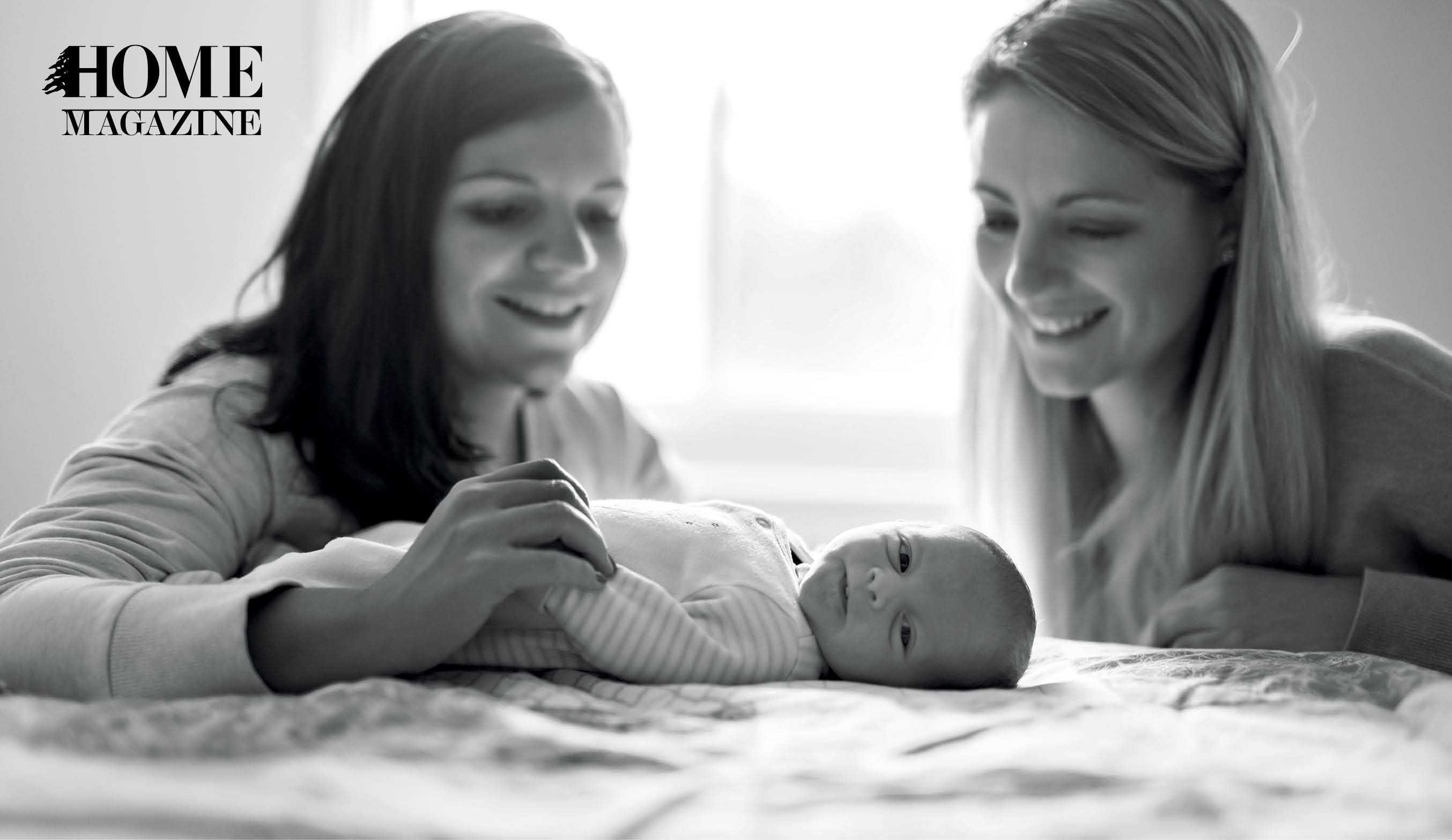
A doula becomes a companion for new mothers before, during and after the birth of their child, and that continuous support makes all the difference. Numerous studies show having a doula is good for mothers and babies, even if you already have a great doctor and a supportive family nearby—and especially if you don’t! These non-medical caregivers are growing in popularity worldwide for good reason.
The Cochrane Review, which summarizes and interprets medical research, and represents the highest level of evidence on which to base clinical treatment decisions, has shown the presence of a doula at birth results in shorter labors, a greater than 50 percent drop in cesarean sections, a decrease in a mother’s need for pain medication, decreased postpartum depression, more satisfying birth experiences and more successful breastfeeding. Such strong findings prompted renowned pediatrician and researcher Dr. John Kennell to say, “If a doula were a drug, it would be unethical not to use it.”
Famous for his research on maternal-infant bonding and attachment, Dr. Kennell championed the use of doulas in birth and the early postpartum period. He and fellow researchers, neonatologist Dr. Marshall H. Klaus and psychotherapist Phyllis H. Klaus, wrote The Doula Book: How a Trained Labor Companion Can Help You Have a Shorter, Easier, and Healthier Birth. With Penny Simkin and Annie Kennedy, they also founded DONA International, the world’s leading professional doula association.
Doulas meet with parents-to-be during pregnancy to help parents create a birth plan. While we can’t control how long or easy labor will be, we can plan how we want to be cared for and who we want to participate. You’ll want select family members because “family brings something no one else can give. They are connected to the mother and baby; they love them,” said Melissa Harley of Florida, DONA International president elect. “A doula is a different, helpful connection. It is not either-or; family members and a doula make a good team.”
Harley decided to become a doula after having her own children. “I had my sister and my husband with me, but I felt like there was another layer of support missing. Now I know how doulas can improve maternal health outcomes and how they can play a positive role in affecting memories of birth and the entrance into parenthood.”
Doulas are knowledgeable and are trained to share information without judgment or leading, said Ann Grauer, a doula, a past president of DONA International, an international doula trainer and the first DONA International Advanced Birth and Advanced Postpartum Doula.
During childbirth, doulas provide emotional support through their continuous presence, reassurance and praise. They can suggest coping techniques like walking and taking warm showers, encourage women to drink enough liquids or offer a massage. They know how labor progresses and can assure women and their partners that they are right on track, helping women feel confident in their own strength and ability to give birth and to settle in with their newborn.
The use of doulas is on the rise worldwide because “women are realizing birth is supposed to be more than a medical event,” said Grauer.
Still, only 6 percent of women have doulas during childbirth, according to the 2013 Listening to Mothers Survey, the latest of a survey of women who gave birth in U.S. hospitals about their childbirth and early parenthood experiences. “That means 94 percent don’t have doulas,” said Harley. DONA is working to change that by training more doulas, not only in the U.S. but globally.
A doula is not just another person to give new parents advice and she doesn’t replace anyone else on the team– doctor, nurses, husband or grandma, said Grauer. “In fact, fathers and grandmothers are more comfortable and involved because doulas suggest meaningful ways they can help during labor. Also, doulas can cover for them when they take a much-needed break.”
What’s more, a doula can give her full attention to a mother’s needs, she said. “Doctors focus on medical needs. Nurses, who are responsible for assisting in medical care, work in shifts and often have more than one patient at a time. A doula is onboard from start to finish, helping the parents-to-be create the birth experience they want.”
“We work with them in the moment to focus on how they are going to remember the moment,” said doula and doula trainer Rina Rios of New York City. “We aim, whatever their wishes are, to help them have the birth that they want. And if it is not happening as they wished, we work on how to make it positive.”
“If a doula were a drug, it would be unethical not to use it.”
Doulas can also help new parents prepare for and navigate the challenges of caring for a newborn, said Grauer. “People think we are going to come in and help them with breastfeeding and tidying up. We do all that, but that is just the tip of the iceberg. The bottom of the iceberg is all the stuff we know coming into it about how to make that adjustment.”
For example, said Grauer, “so many couples are not on the same page. You get married and make a commitment to each other. So, you imagine you are on the same page about raising a child, but haven’t spoken once about the realities that are coming your way.
“Maybe you have planned to divide all the chores 50/50. Then a baby comes along and doesn’t care about 50/50. They need one person to keep them alive and they are going to focus on that one, who is typically the mother. It becomes a heavy burden on the mother and everything else is thrown off. Then, right away, a couple will realize they are not on the same page.”
Add to that mothers and mothers-in-law, each telling the couple about how things “should be done.” Now the new parents must negotiate how they are going to do things.
“A doula allows parents to receive information on parenting in a way they get to choose what they are going to do, without any guilt, without any strings attached. ‘Yes, your mom did it this way and your mom did it that way. Here is what we know from the research. Now you two get to choose.’
“For a lot of new parents, I think part of what that postpartum doula does is explain why it is difficult for them right now, amid all the pressures,” said Grauer.
These days, “the postpartum period is not respected,” said Rios, who was just back from Dubai and Abu Dhabi where she led a doula training. “New mothers jump right back into their full responsibilities—expected to cook for and take care of everyone.” A doula can be there for the new mother, to remind her to eat and rest, to take some of the load.
Having doula support also frees grandmas to enjoy being grandmas, said Grauer. “She can pass on traditions without the pressure of having to help with everything all at one time.”
“A doula can take care of tidying up while grandma cooks and shows her love that way, if that is what she wants to do. Or grandma can snuggle with her grandchild and have one-on-one time, while mom is in the shower and the doula prepares a nutritious meal.
“There is plenty to do for everyone. I have never met a human being who told me they had too much support after childbirth.”
Signature Boutique
Lebanon, in your inbox


HOMEland Magazine
We firmly believe that the internet should be available and accessible to anyone, and are committed to providing a website that is accessible to the widest possible audience, regardless of circumstance and ability.
To fulfill this, we aim to adhere as strictly as possible to the World Wide Web Consortium’s (W3C) Web Content Accessibility Guidelines 2.1 (WCAG 2.1) at the AA level. These guidelines explain how to make web content accessible to people with a wide array of disabilities. Complying with those guidelines helps us ensure that the website is accessible to all people: blind people, people with motor impairments, visual impairment, cognitive disabilities, and more.
This website utilizes various technologies that are meant to make it as accessible as possible at all times. We utilize an accessibility interface that allows persons with specific disabilities to adjust the website’s UI (user interface) and design it to their personal needs.
Additionally, the website utilizes an AI-based application that runs in the background and optimizes its accessibility level constantly. This application remediates the website’s HTML, adapts Its functionality and behavior for screen-readers used by the blind users, and for keyboard functions used by individuals with motor impairments.
If you’ve found a malfunction or have ideas for improvement, we’ll be happy to hear from you. You can reach out to the website’s operators by using the following email
Our website implements the ARIA attributes (Accessible Rich Internet Applications) technique, alongside various different behavioral changes, to ensure blind users visiting with screen-readers are able to read, comprehend, and enjoy the website’s functions. As soon as a user with a screen-reader enters your site, they immediately receive a prompt to enter the Screen-Reader Profile so they can browse and operate your site effectively. Here’s how our website covers some of the most important screen-reader requirements, alongside console screenshots of code examples:
Screen-reader optimization: we run a background process that learns the website’s components from top to bottom, to ensure ongoing compliance even when updating the website. In this process, we provide screen-readers with meaningful data using the ARIA set of attributes. For example, we provide accurate form labels; descriptions for actionable icons (social media icons, search icons, cart icons, etc.); validation guidance for form inputs; element roles such as buttons, menus, modal dialogues (popups), and others. Additionally, the background process scans all the website’s images and provides an accurate and meaningful image-object-recognition-based description as an ALT (alternate text) tag for images that are not described. It will also extract texts that are embedded within the image, using an OCR (optical character recognition) technology. To turn on screen-reader adjustments at any time, users need only to press the Alt+1 keyboard combination. Screen-reader users also get automatic announcements to turn the Screen-reader mode on as soon as they enter the website.
These adjustments are compatible with all popular screen readers, including JAWS and NVDA.
Keyboard navigation optimization: The background process also adjusts the website’s HTML, and adds various behaviors using JavaScript code to make the website operable by the keyboard. This includes the ability to navigate the website using the Tab and Shift+Tab keys, operate dropdowns with the arrow keys, close them with Esc, trigger buttons and links using the Enter key, navigate between radio and checkbox elements using the arrow keys, and fill them in with the Spacebar or Enter key.Additionally, keyboard users will find quick-navigation and content-skip menus, available at any time by clicking Alt+1, or as the first elements of the site while navigating with the keyboard. The background process also handles triggered popups by moving the keyboard focus towards them as soon as they appear, and not allow the focus drift outside it.
Users can also use shortcuts such as “M” (menus), “H” (headings), “F” (forms), “B” (buttons), and “G” (graphics) to jump to specific elements.
We aim to support the widest array of browsers and assistive technologies as possible, so our users can choose the best fitting tools for them, with as few limitations as possible. Therefore, we have worked very hard to be able to support all major systems that comprise over 95% of the user market share including Google Chrome, Mozilla Firefox, Apple Safari, Opera and Microsoft Edge, JAWS and NVDA (screen readers).
Despite our very best efforts to allow anybody to adjust the website to their needs. There may still be pages or sections that are not fully accessible, are in the process of becoming accessible, or are lacking an adequate technological solution to make them accessible. Still, we are continually improving our accessibility, adding, updating and improving its options and features, and developing and adopting new technologies. All this is meant to reach the optimal level of accessibility, following technological advancements. For any assistance, please reach out to