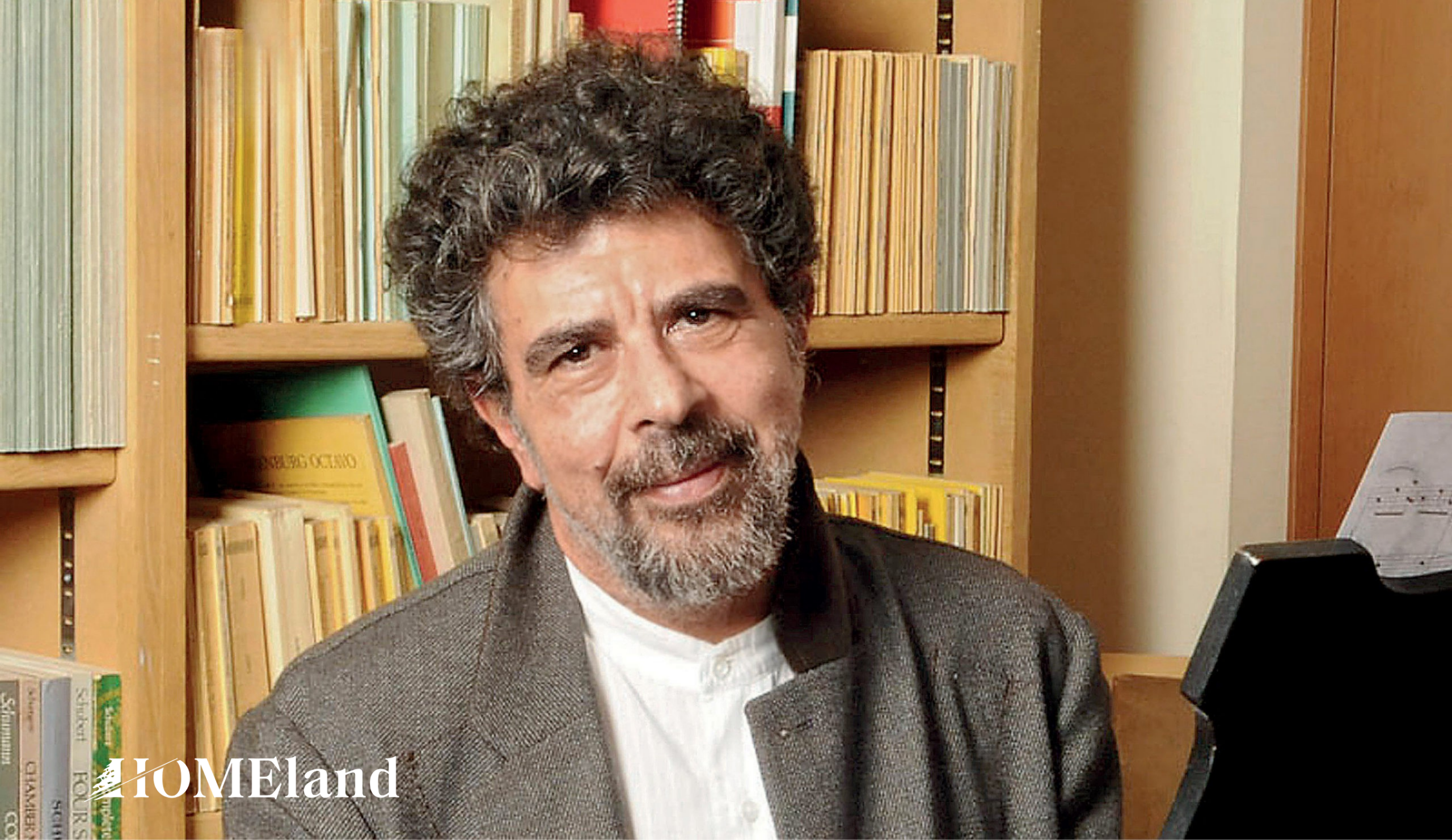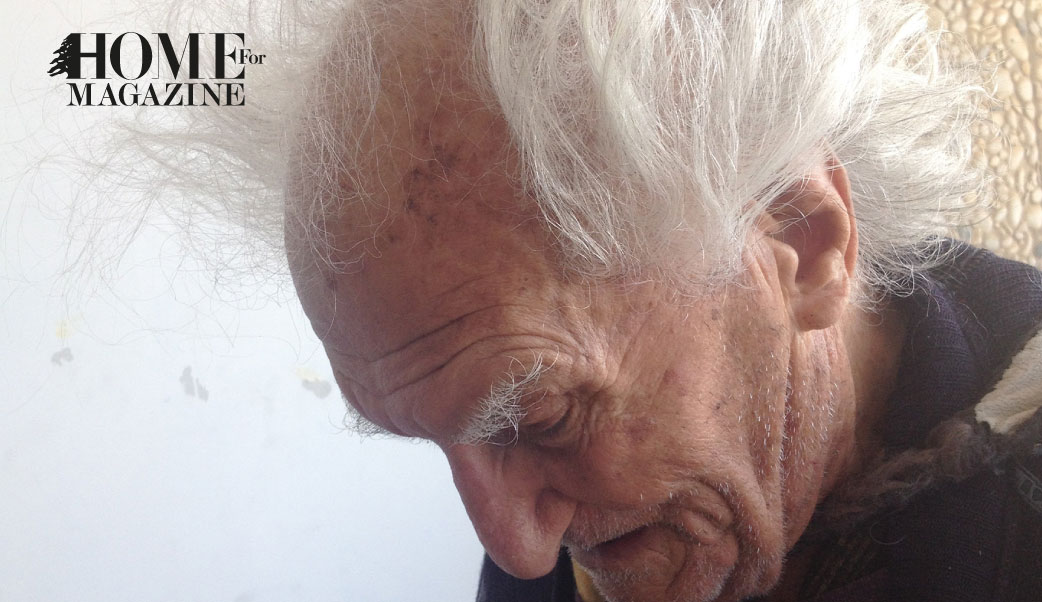
After studying in France and Italy, Guvder came back HOME to transmit his passion to a new generation of painters and sculptors.
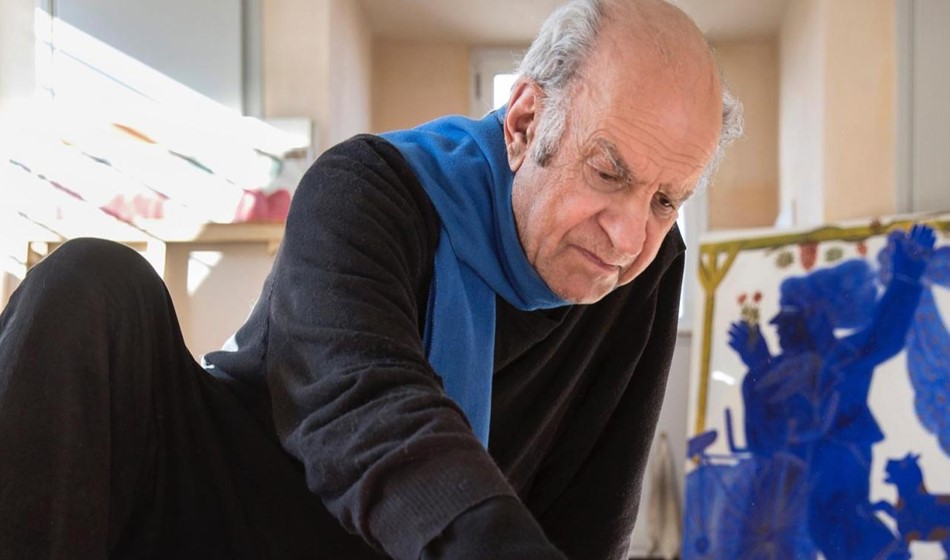
When we consider the works of Jean Guvdérelian, best known by his pseudonym Guvder, we wonder if from now on, we are not condemned to be but amazed in front of this great, gross and anti-academic body of work: the fruit of such alive and timeless art. Perhaps the endless work of Guvder, should be considered as a human artistic reference, made superhuman by his incomparable contribution in quality and quantity? Like his many exhibitions and hisl ong teaching career, we are still constrained to assess and evaluate his income since the whole creation is neither dated nor identified or even classified. Is it a will or negligence? For Guvder, as transposed from Dubuffet: “if all he has achieved is called art, his best moments are when he forgot what it’s called”. Starting with or without historical references, his tireless desire to break with the academic tradition has often led him to an interest in nature. For him, nature provides fertile material for his explorations, drawings and montages. Guvder does not find himself constrained by the four seasons of nature. He once said to me: “Every morning is a new season for me, a new era”.
With a lavish indifference, the periods of his creative work multiply, diverge and intersect. They don’t let themselves be bound by a stereotypical type nor by a constant style. Drawing a line between these multiple periods is impossible. Details show that Guvder often works simultaneously on various themes, as he often takes a theme, reworks it several times, right after exploration.
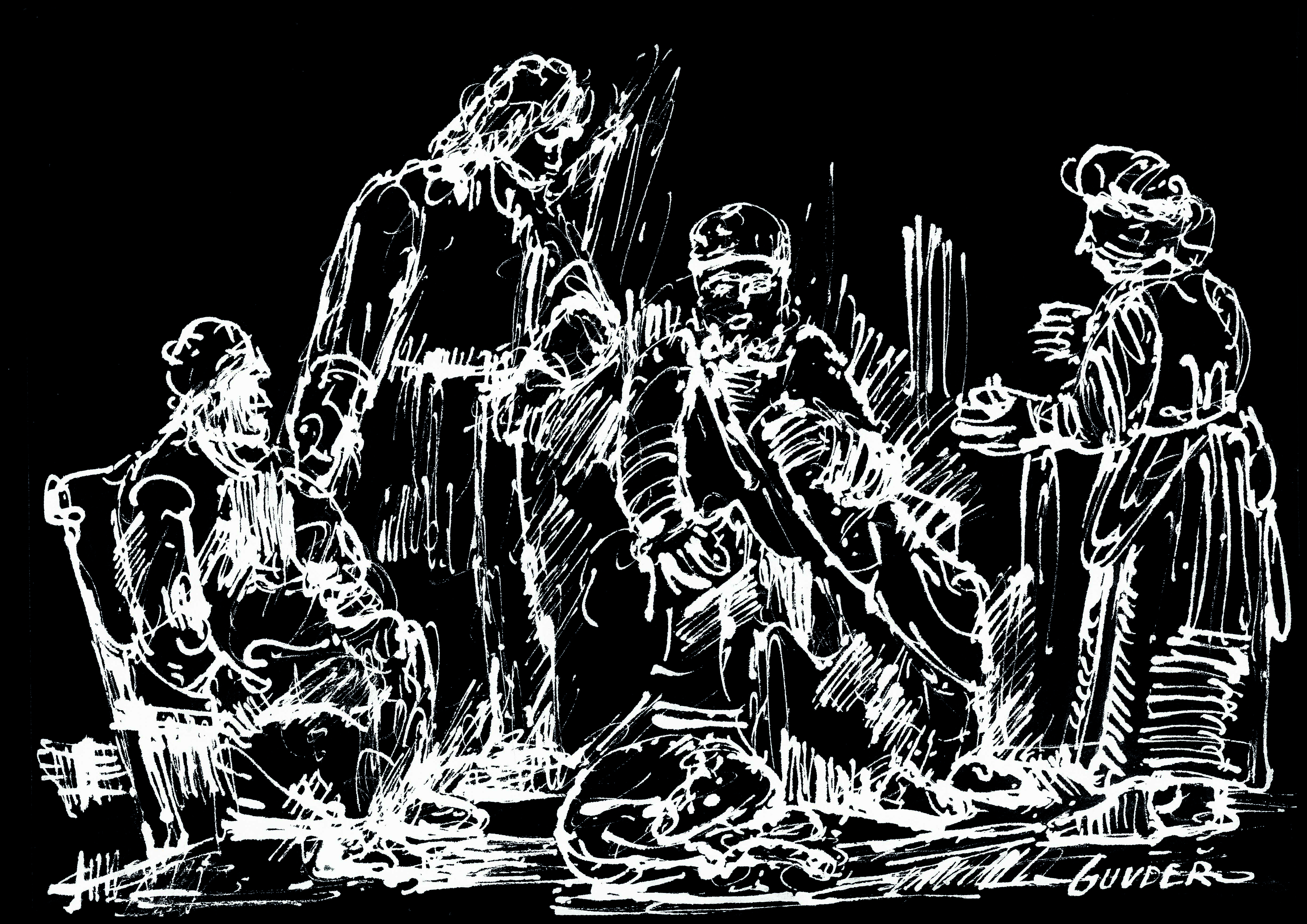
As he has repeated to me, “thinking in art is a vast field of investigation for which many media are possible, opening on multiple courses”. It didn’t matter whether it was understood or not. He supports his argument with Montaigne’s quote that has always been hung somewhere in his studio on the third floor of the Académie Libanaise des Beaux-Arts (ALBA): “it’s always permitted to never understand anything of nothing.”
During his life, Guvder’s creations were plentiful and extremely varied. At the venerable age of 98, he easily produces 10 to 40 designs per day; a family of drawings that has resemblance without being identical.Tons of sculptures; a century of architecture. Never classical nor contemporary, he prefers the term “timeless” in describing his work.
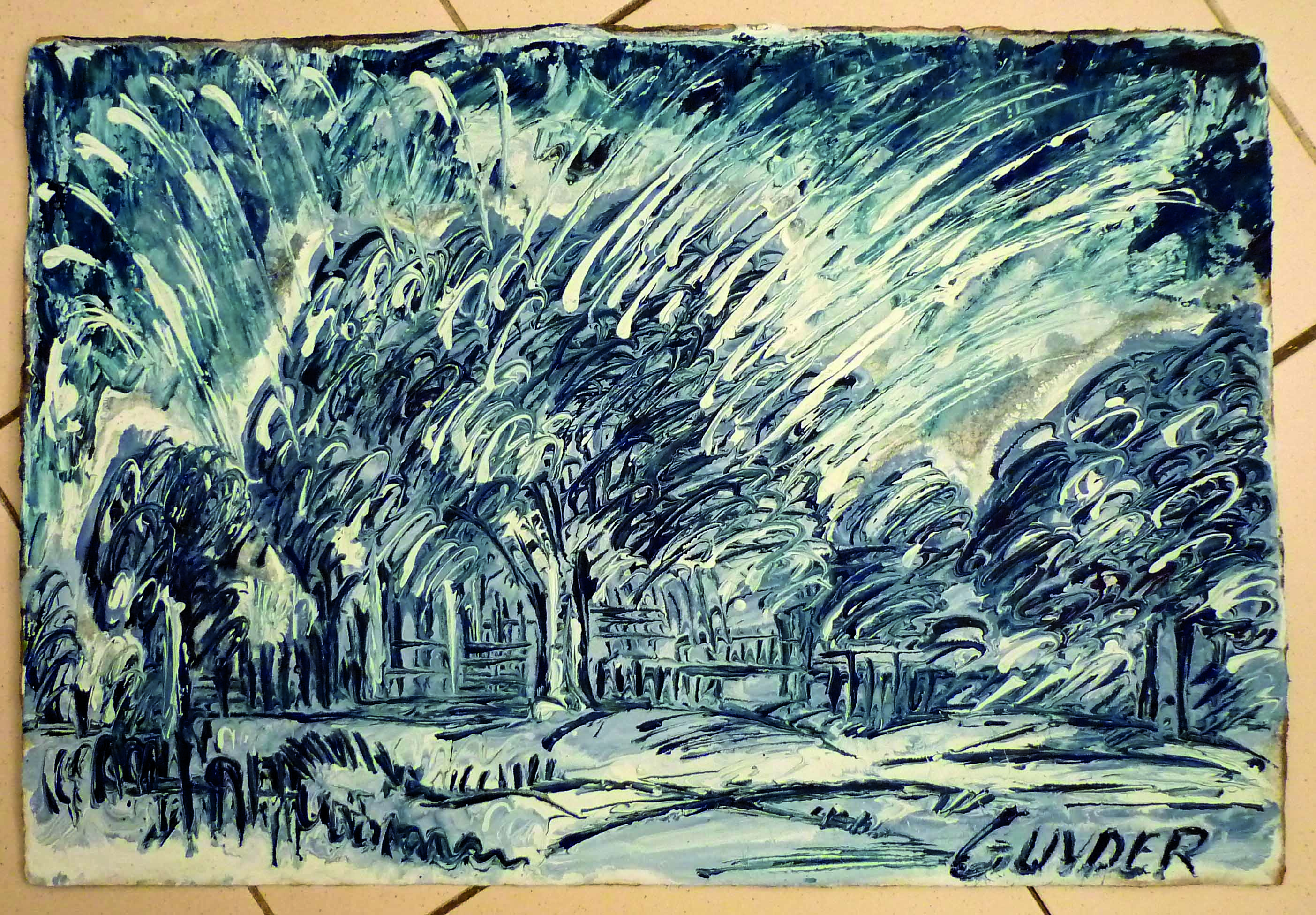
The reference to nature, especially trees, enters very early in his graphic work. Having started with extremely varied studies around the olive, this exploration has taken on another dimension after exploring the drawings of Rembrandt. In fact, none of the landscapes drawn by the latter has escaped, at least a dozen times, the reed pen of Guvder. Some were done in gouache, others in watercolor and reed; and number in the thousands. Moreover, artistic studies on plants and many other flora elements are also part of Guvder’s artistic experimentation; an experiment that feeds his sculptural work, graphic design and painting. Two working principles stand out: one that follows an intuitive approach working through breaks, extended lines and stiff shots to generate a motion in static image, another based on a regulatory path that directs and manages the proportions of the drawing. A fairly systematic route, to which Guvder sometimes seems to be unfaithful.

Apart from the elements brought from nature, the empathy with Rembrandt is supreme. The influence of this great artist on Guvder is read on the personal level more than the artistic one. I even dare to say a spirital kinship. Guvder analyzed the complete works of this artist for over 50 years, creating a detailed biography, criticisms, drawings and paintings. Every Rembrandt sketch, at least those of his complete works of drawing, was visited at least a dozen times by the reed pen of Guvder. It should be recalled that an exhibition in homage to Rembrandt was mounted by Guvder in 1997. The main subject was about maternity. The mother, idealized, has a sleeping child, in agitation or revolt. The seemingly chaotic lines in other subjects prove to be clearly defined when it comes to maternity.
The energy Guvder puts into exploring human figures and their posture is unparalleled. What is striking about this; it is not only the abundance of studies. We’re talking about thousands of studies on this topic and only a few hundred for each subject.
A preliminary calculation of the past four deacades, he has approximately more than three hundred thousand human figures.
Nearly 100 years old, there is no last word about Guvder; but “in the process”.
HOMEland Magazine
We firmly believe that the internet should be available and accessible to anyone, and are committed to providing a website that is accessible to the widest possible audience, regardless of circumstance and ability.
To fulfill this, we aim to adhere as strictly as possible to the World Wide Web Consortium’s (W3C) Web Content Accessibility Guidelines 2.1 (WCAG 2.1) at the AA level. These guidelines explain how to make web content accessible to people with a wide array of disabilities. Complying with those guidelines helps us ensure that the website is accessible to all people: blind people, people with motor impairments, visual impairment, cognitive disabilities, and more.
This website utilizes various technologies that are meant to make it as accessible as possible at all times. We utilize an accessibility interface that allows persons with specific disabilities to adjust the website’s UI (user interface) and design it to their personal needs.
Additionally, the website utilizes an AI-based application that runs in the background and optimizes its accessibility level constantly. This application remediates the website’s HTML, adapts Its functionality and behavior for screen-readers used by the blind users, and for keyboard functions used by individuals with motor impairments.
If you’ve found a malfunction or have ideas for improvement, we’ll be happy to hear from you. You can reach out to the website’s operators by using the following email
Our website implements the ARIA attributes (Accessible Rich Internet Applications) technique, alongside various different behavioral changes, to ensure blind users visiting with screen-readers are able to read, comprehend, and enjoy the website’s functions. As soon as a user with a screen-reader enters your site, they immediately receive a prompt to enter the Screen-Reader Profile so they can browse and operate your site effectively. Here’s how our website covers some of the most important screen-reader requirements, alongside console screenshots of code examples:
Screen-reader optimization: we run a background process that learns the website’s components from top to bottom, to ensure ongoing compliance even when updating the website. In this process, we provide screen-readers with meaningful data using the ARIA set of attributes. For example, we provide accurate form labels; descriptions for actionable icons (social media icons, search icons, cart icons, etc.); validation guidance for form inputs; element roles such as buttons, menus, modal dialogues (popups), and others. Additionally, the background process scans all the website’s images and provides an accurate and meaningful image-object-recognition-based description as an ALT (alternate text) tag for images that are not described. It will also extract texts that are embedded within the image, using an OCR (optical character recognition) technology. To turn on screen-reader adjustments at any time, users need only to press the Alt+1 keyboard combination. Screen-reader users also get automatic announcements to turn the Screen-reader mode on as soon as they enter the website.
These adjustments are compatible with all popular screen readers, including JAWS and NVDA.
Keyboard navigation optimization: The background process also adjusts the website’s HTML, and adds various behaviors using JavaScript code to make the website operable by the keyboard. This includes the ability to navigate the website using the Tab and Shift+Tab keys, operate dropdowns with the arrow keys, close them with Esc, trigger buttons and links using the Enter key, navigate between radio and checkbox elements using the arrow keys, and fill them in with the Spacebar or Enter key.Additionally, keyboard users will find quick-navigation and content-skip menus, available at any time by clicking Alt+1, or as the first elements of the site while navigating with the keyboard. The background process also handles triggered popups by moving the keyboard focus towards them as soon as they appear, and not allow the focus drift outside it.
Users can also use shortcuts such as “M” (menus), “H” (headings), “F” (forms), “B” (buttons), and “G” (graphics) to jump to specific elements.
We aim to support the widest array of browsers and assistive technologies as possible, so our users can choose the best fitting tools for them, with as few limitations as possible. Therefore, we have worked very hard to be able to support all major systems that comprise over 95% of the user market share including Google Chrome, Mozilla Firefox, Apple Safari, Opera and Microsoft Edge, JAWS and NVDA (screen readers).
Despite our very best efforts to allow anybody to adjust the website to their needs. There may still be pages or sections that are not fully accessible, are in the process of becoming accessible, or are lacking an adequate technological solution to make them accessible. Still, we are continually improving our accessibility, adding, updating and improving its options and features, and developing and adopting new technologies. All this is meant to reach the optimal level of accessibility, following technological advancements. For any assistance, please reach out to