Ray LaHood, Former U.S. Congressman and Secretary of Transportation
ay LaHood rose from a Lebanese-American family in Peoria to serve as Congressman and U.S. Secretary of Transportation.

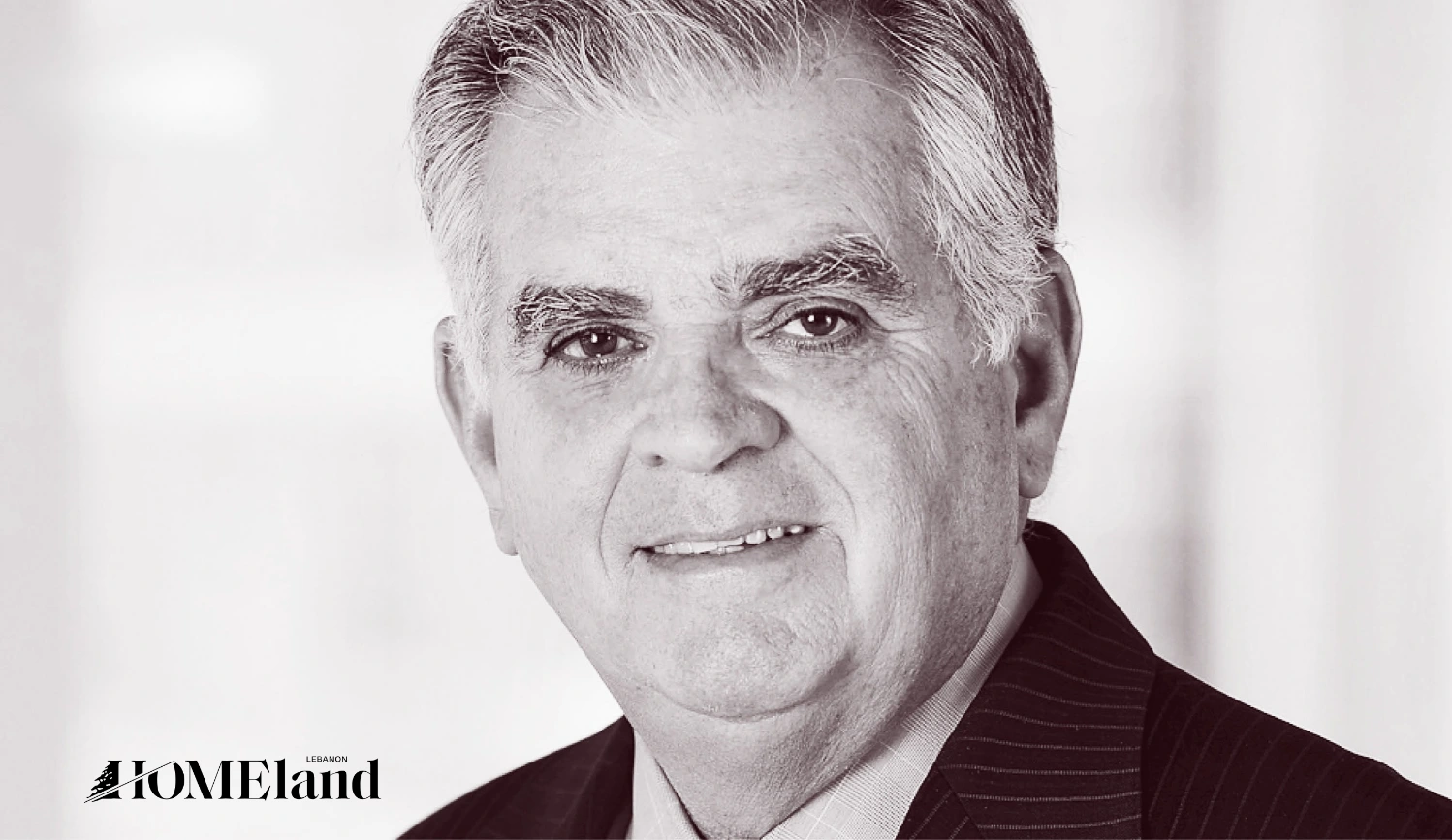
Photo by DLA Piper
Article by: Wil Disabatino and Sandra Whitehead
As a champion of bipartisanship, the long-time Congressman and U.S. Secretary of Transportation Ray LaHood worked with Democrats and Republicans alike “to serve the people who sent us to Washington in the first place.” In a recent interview with HOMEland Lebanon, Secretary LaHood shared how his Lebanese parents and grandparents influenced his brand of leadership.
Lebanese-American Ray LaHood distinguished himself as a Republican leader in the United States House of Representatives, elected for seven terms, serving on, among others, the two most powerful committees: the House Appropriations Committee and the House Intelligence Committee.
Then, as a Republican in Democratic President Barack Obama’s cabinet, LaHood served as the 16th Department of Transportation Secretary. He was responsible for 55,000 employees and a more than $70 billion annual budget.
Under his leadership, improvements to America’s infrastructure included building or replacing 350,000 miles of highway, repairing 20,000 bridges and renewing or constructing 6,000 miles of rail track. Secretary LaHood also achieved new regulations to make fuel more efficient, took steps to address airline pilot fatigue and turned the problem of distracted driving into a national concern.
LaHood’s decades of public service have been marked by the appreciation of colleagues and constituents. In 2013, his portrait was placed in the Abraham Lincoln U.S. Department of Transportation Building. In 2016, Peoria airport’s new international terminal was named the Ray LaHood International Terminal. At its dedication, Karen Jensen, chairwoman of the Metropolitan Airport Authority of Peoria, said, “Secretary LaHood has done so much for central Illinois. He has been an earnest and humble public servant for more than a quarter of a century. It is our honor to recognize his career of public service by putting his name on this public building, a building with ties not only to his HOMEtown, but also his prestigious appointment as a U.S. Secretary of Transportation.”
Secretary LaHood is one of very few public servants in U.S. history who worked both in a president’s cabinet and in the House. He is rarer still for serving across party lines, putting party politics aside to work together for the common good.
“People sometimes ask me, ‘Why would you—a life-long Republican—sign up to be part of a Democratic administration?’” said LaHood, the U.S. Secretary of Transportation at the time, in a speech to the 2011 Boston College graduating class.
“I’ll tell you why: Because I’m an American first. Because I believe in America. Because I believe that no one should turn their back on an opportunity to serve the American people. Period.
“I accepted President Obama’s invitation to serve our country because we share the conviction that the common good is more important than political gain.”
“I accepted President Obama’s invitation to serve our country because we share the conviction that the common good is more important than political gain.
“We share commitments to listening and learning, to treating people fairly and respectfully. We share a capacity to cross party lines without surrendering principles—to recognize that others might have valid, understandable points of view that simply are based on different experiences.”
LaHood joined President Obama’s cabinet as Secretary of Transportation in 2009 after 14 years as a Congressman from Illinois in the House of Representatives, from 1995-2009. He served in the cabinet until 2013.
In today’s polarized politics in the United States (and much of the world), the conciliatory spirit of brave leaders who work with opposition parties to better serve their constituents is in short supply. LaHood showed how it could be done.
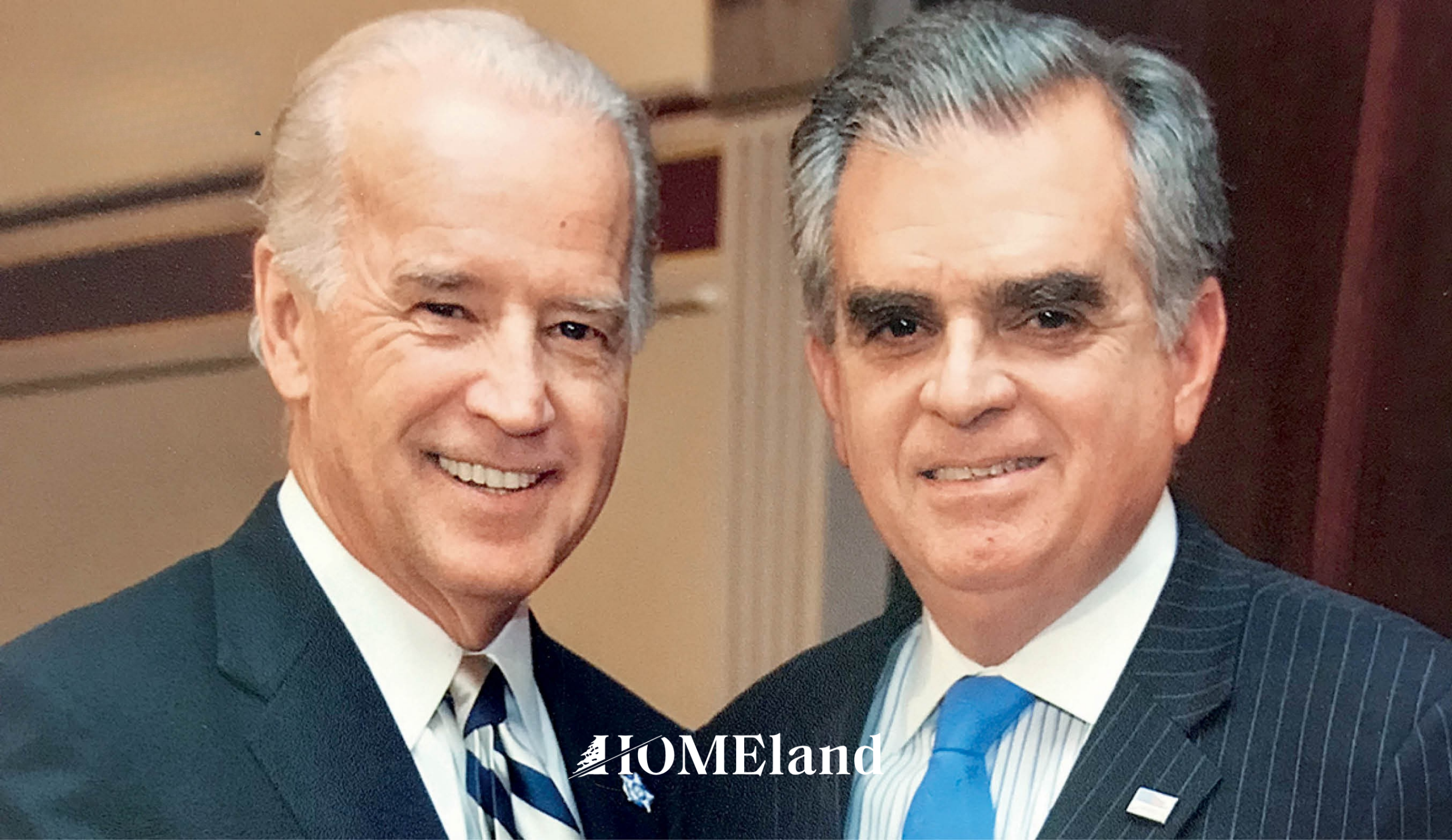 U.S. Secretary of Transportation Ray LaHood with Vice President Joe Biden
LaHood grew up in Peoria, Illinois, right in the middle of America. Peoria is best known for being “an average American city,” wrote LaHood in his autobiography, Seeking Bipartisanship: My Life in Politics. Peoria is considered so typically American in its culture that “today,companies use Peoria as a test market for new products, services, even public policy polling.”
But Peoria is also very Lebanese. LaHood’s grandparents moved to Peoria in 1895 from the Lebanese village Aitoo, which is north of Tripoli on the way to The Cedars. And so did relatives of the other 6,000 Lebanese in Peoria today, according to the Itoo Society, a local philanthropic and social organization formed in 1914 by Lebanese from Aitoo. The society’s name is an Americanized spelling of LaHood’s ancestral HOME, he explained. “We have a very large Lebanese community in Peoria, and we’ve stayed close.”
LaHood grew up within an extended family that included dozens of Lebanese uncles, aunts and cousins, in addition to his father, mother and two brothers. They lived in “a close-knit, working class neighborhood,” he recalled. “Our lives revolved around family, friends and church—not politics.
“We share a capacity to cross party lines without surrendering principles—to recognize that others might have valid, understandable points of view that simply are based on different experiences.”
“I’m very proud that my father helped found the Maronite church in Peoria,” said LaHood. “We’ve been very active in that church, although we grew up with strong ties to the St. Bernard Roman Catholic Parish. We’ve participated in lots of activities at St. Charbel Church.” His parents were in the restaurant business, as his grandparents before them, and what LaHood remembers most is how hard they worked. Theirs was a working-class restaurant with a standard American menu named Sam LaHood’s Tavern, established before Lebanese restaurants became so popular in the U.S. His father worked 12-hour days and his mother helped as much as she could while also raising three boys. LaHood called his father “the hardest working man I have ever known.”
“My parents and grandparents were good examples of how to be successful. They taught me to always give my best effort, to play by the rules and to stay close to family.” They were deeply religious. These values guided LaHood throughout his career, he said.
And like many Lebanese parents, they insisted on the importance of education. LaHood had started working at an early age, with several jobs in addition to working in the family restaurant; he saw little need for a college degree, “but Dad pushed me to get an education,” he wrote in his memoir. To please his father, he studied two years in a community college, but left without a degree.
“Bradley University saved me,” he said of the high quality, private university located near his HOME. LaHood taught in schools during the day and took classes at night. He met Kathleen Dunk, the woman who became his wife, at a Catholic campus ministry event meant to entertain Bradley students stuck on campus during a snowstorm that blanketed Peoria. Kathy was also working during her university years. They married in 1967 while they were still students.
LaHood’s first steps into politics soon followed. In 1970, he ran for a position on a local committee for the Republican party and won. Although he admired John F. Kennedy at the time, he found the Republican party more in line with his own conservative views, he said. In 1971, he graduated with a bachelor of science degree in education and sociology.
In 1972, at the age of 26, he was the first director of the Rock Island County Youth Services Bureau, a delinquency prevention program, working in that position for two years. Then he became chief planner for social services of the Bi-States Metropolitan Planning Commission from 1974 to 1977. He worked with local and county governments, schools, police departments and juvenile courts on law enforcement issues. He made two runs for the school board in 1975 and 1976, but lost both. He became the district administrative assistant for U.S. Congressman Tom Railsback from 1977 to 1982. He served as chief of staff to U.S. House Minority Leader Robert Michel from 1982 to 1994. When Michel announced his retirement in 1994, LaHood ran for and won his seat in the House, representing Illinois’s 18th congressional district.
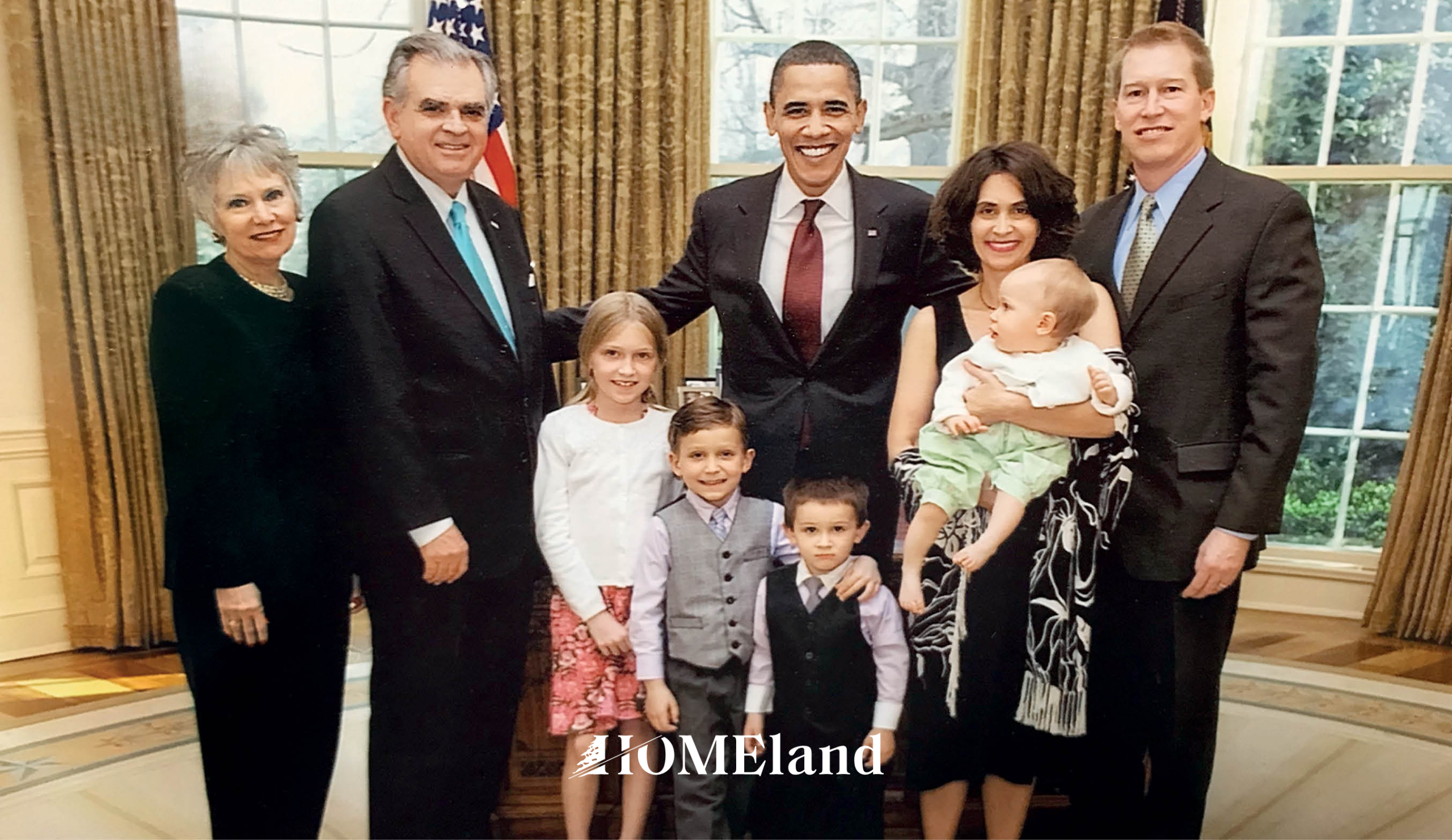 Ray and Kathy LaHood and their daughter Amy and her family with President Barack Obama in the Oval Office
LaHood’s 36-year tenure in public service extended through some of the most tumultuous years of American politics. All the while, LaHood worked across the Democratic–Republican political divide to solve problems. “That’s what the people who elected me expected and wanted,” he said.
The Lebanese-American’s election in 1994 to the United States House of Representatives as a Republican congressman from Illinois coincided with the Gingrich Revolution. Republicans, led by then Speaker of the House Newt Gingrich, took control of both houses of Congress for the first time in 40 years, and brought a “ruthlessly partisan, combative style” of politics to Washington, D.C., according to Professor Steve Gillon of the University of Oklahoma, one of the United States’ leading experts on modern U.S. history.
LaHood was one of three Republicans elected to the House that year who had not signed Gingrich’s Contract with America, an agreement among Republicans made prior to the election outlining legislation to be enacted by the House within the first 100 days of the new Congress, seen by many as a very conservative agenda. Peoria’s Journal Star newspaper listed his refusal to sign the contract as one of his accomplishments, as Republicans were under pressure to sign on. LaHood was also a member of the moderate Republican Main Street Partnership, a coalition of members of Congress from more centrist “swing districts,” who say they are in favor of “responsible, results-oriented government.”
“We can only solve our challenges if our sense of community is as strong as our commitment to civility—to disagreeing without being disagreeable.”
LaHood had a front row seat to many of the most heated events of our times, including a contested presidential election, the 9/11 terrorist attack, the Iraq War, the 2008 financial crisis (the worst economic disaster since the Great Depression) and the increasing political polarization that continues in the U.S. to this day. Through it all, he earned respect as a skilled conciliator in a fractious political environment.
As Speaker Pro Tempore, a key leadership position in the House of Representatives, he presided over many debates among the legislators, including the fierce debate in 1998 over the impeachment of President Bill Clinton.
In an effort himself to further cooperation between the Democrats and the Republicans, LaHood organized bipartisan retreats for members of Congress.
“We can only solve our challenges if our sense of community is as strong as our commitment to civility—to disagreeing without being disagreeable,” he told the Boston College graduates. “We’ve learned that citizens must balance the things that make them different with the things that let them live side-by-side. In a democracy, someone will always believe something different from what you do.”
LaHood served from 1995 to 2009 in the U.S. House of Representatives for the 18th District of Illinois. During those years, he served on various House committees, among them the powerful House Appropriations Committee and the House Intelligence Committee, which oversees the nation’s espionage organizations, including the Central Intelligence Agency and the National Security Agency.
Serving on the House Intelligence Committee for eight years took LaHood all over the world. “I traveled to Lebanon every year. My first trip was in 1995 and I have been every year since.
“When I got elected to Congress, I took an interest in Lebanon and it has paid dividends. When I was first elected, the travel ban was in existence. (The U.S. government did not allow Americans to travel to Lebanon.) I worked with the Clinton administration to get it lifted and we did. I feel good about that.”
“What I tell people about Lebanon is that it is the hospitality capital of the world. The Lebanese are wonderful people. People ask me if it is dangerous to go there. The answer is no, it’s not dangerous. We always felt very safe there. I take my family—my children and now my grandchildren.”
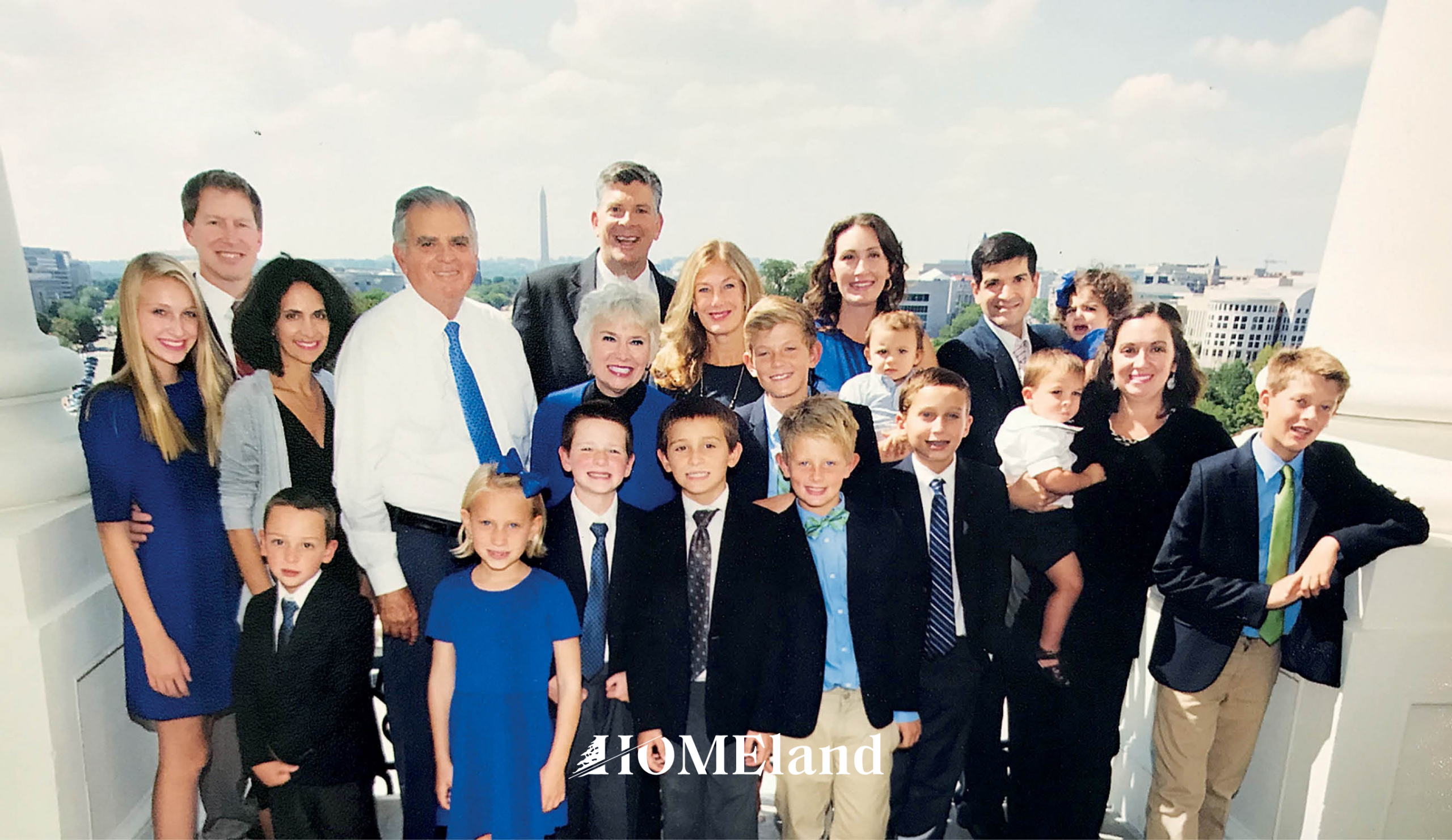 The LaHood Family
When President Barack Obama was elected in 2008, he invited LaHood to serve in his cabinet as the Secretary of Transportation.
“The way I see it,” LaHood said in the Boston College commencement address, “President Obama didn’t ask me to switch from one side to the other.
He asked me to help solve problems. He asked me to join a team that’s saying ‘enough.’ Enough of politics as a zero-sum game in which nobody can find room to negotiate. Enough of disagreement yielding distrust rather than dialogue. Enough of the shouting that drowns out the real objective: serving the people who sent us to Washington in the first place.”
His tenure as Secretary of Transportation was marked by landmark efforts to improve safety in every mode of transportation. “Every day people get into a car or on a bus or a train or a plane and they don’t really think about safety because they assume it will be safe.
“We felt that putting safety as the number one issue in transportation would let people know that we were looking out for them. We traveled to all 50 states, visited 225 cities and 18 countries. Everywhere we went, we emphasized safety.
“When I got elected to Congress, the travel ban was in existence. (The U.S. government did not allow Americans to travel to Lebanon.) I worked with the Clinton administration to get it lifted and we did.”
“One safety program we started that I’m particularly proud of is the Distracted Driving program,” LaHood said. It began with pilot programs in Syracuse, New York and Hartford, Connecticut, testing the impact of a combination of tougher laws about cell phone use when driving, highly visible police enforcement and high-profile public awareness campaigns. After the pilots showed significant reductions in texting while driving and cell phone use, the U.S. Department of Transportation promoted these measures at the state level, supported by both federal and state funding. “When we started, only 18 states had laws . By the time I left that position, they had been enacted in all 50 states, potentially saving thousands of lives,” he said.
In his cabinet role, as in Congress, LaHood was known as a bipartisan leader and skilled conciliator who aimed to solve problems. Accepting his resignation on Jan. 29, 2013, President Obama thanked him for his service and added: “Years ago, we were drawn together by a shared belief that those of us in public service have an obligation not to party or faction, but to the people we were elected to represent. And Ray has never wavered in that belief.”
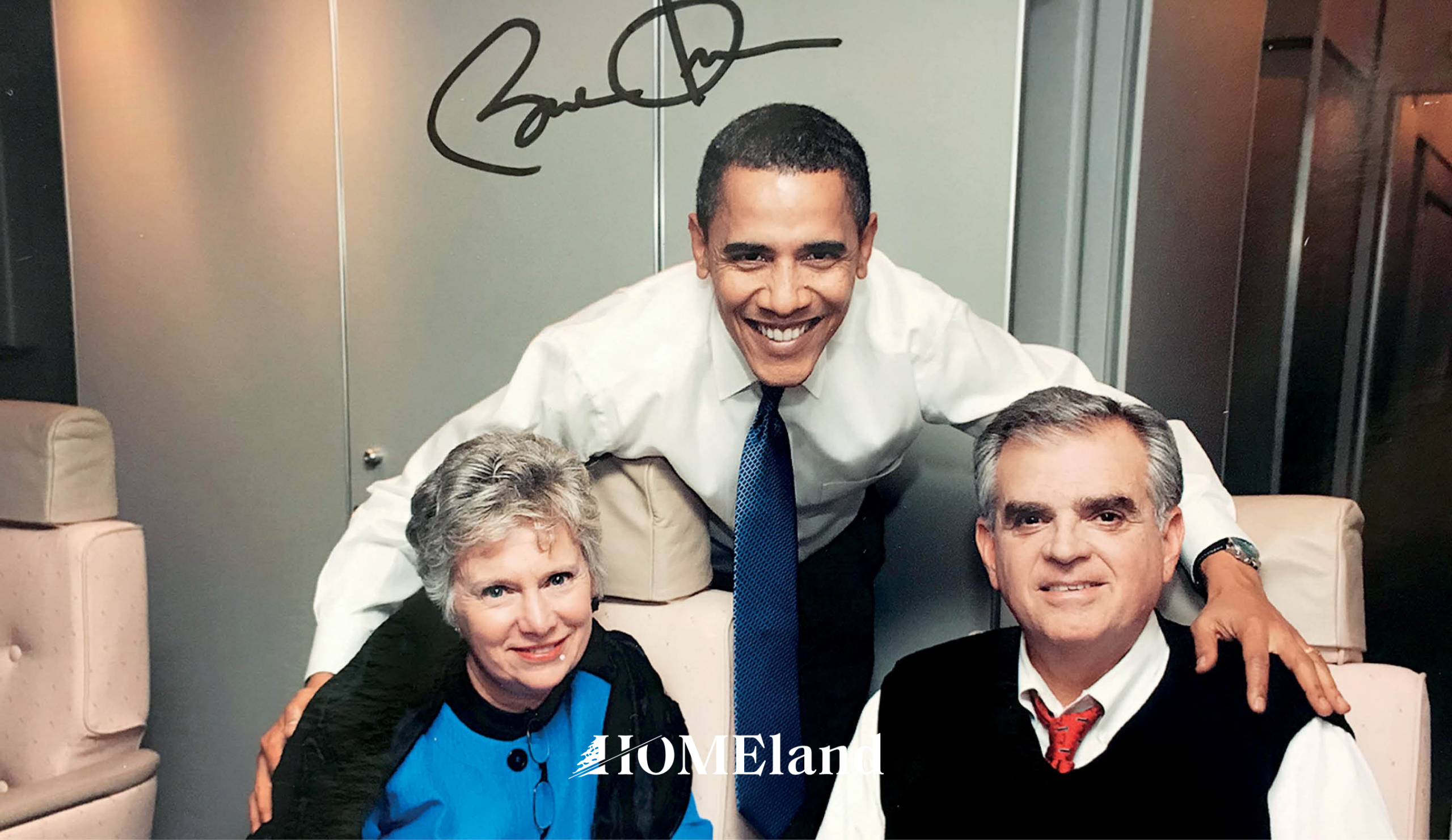 Ray and Kathy LaHood with President Barack Obama on Air Force One
LaHood and his wife Kathy have four children and 15 grandchildren. When LaHood’s successor in Congress announced his resignation in 2015, his son Darin was elected as the new representative to the House from Illinois’ 18th congressional district. As his father before him, Darin won the responsibility of representing central Illinois, known as “the Land of Lincoln,” after Abraham Lincoln who had also served this district.
LaHood’s other son Sam is also involved in politics. Sam earned a master’s degree from the American University of Beirut and now lives in Washington, D.C., working in the International Republican Institute (IRI) as the Director for Government and External Affairs. He had previously worked for the IRI in Cairo and Phnom Penh, Cambodia.
The lesson Ray LaHood wants to pass on to his children, grandchildren and others is that “when you have any position, whatever it is, appointed or elected, any position in which you have responsibility–do it honestly, with integrity and hard work,” the same lesson he learned from his own parents and grandparents.


 Signature Boutique