
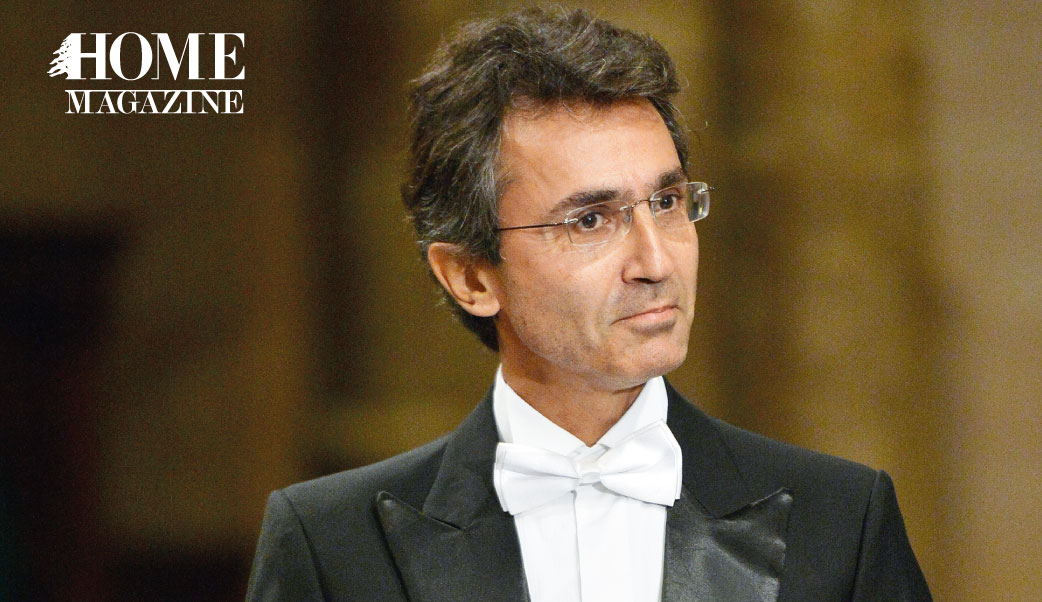
The Lebanese National Philharmonic Orchestra (LPO) is one of the great cultural treasures of Lebanon. It is an important legacy of Dr. Walid Gholmieh, then the Director of the Lebanese National Higher Conservatory of Music, who led the initiative that established the Lebanese National Symphony Orchestra in 1998.
According to Dr. Walid Moussallem, the current Director, Dr. Gholmieh had both the vision and the commanding character to achieve that vision. In October 2009, the name was changed to the Lebanese Philharmonic Orchestra. Since the Lebanese National Philharmonic Orchestra began, it has maintained an almost weekly schedule of free concerts between September and June, and has also performed in all the major festivals in Lebanon, including the Baalbeck International Festival, Byblos International Festival, Beiteddine Art Festival, Zouk Mikael International Festival, and Al Bustan Festival.
“Since the Lebanese National Philharmonic Orchestra began, it has maintained an almost weekly schedule of free concerts between September and June”
In 2014, Dr. Walid Moussallem became the Director of the Lebanese National Higher Conservatory making him also the Director of the orchestra, responsible for the selection of its members, programs and conductors, and promoting its development. Dr. Moussallem studied piano at the National Conservatory of Music and at the Conservatoire de Meudon (France), and obtained a Doctorate in Philosophy from the Sorbonne. He has taught Philosophy at the Lebanese University for over 20 years and was the head of the piano section of the conservatory before becoming its director. As director, Dr. Moussallem initiated the efforts to establish a new music center for the conservatory.
As with national symphonies all over the world, highly qualified musicians from other countries have joined, contributing to the richness of the orchestra. A large number of them are from Eastern Europe. Another source is Armenia, since the Armenian musicians feel at HOME with the large community of Lebanese Armenian citizens. Many of the LPO members teach in the conservatory as well as play in the orchestra.
Dr. Moussallem explains, it is difficult to get students of the conservatory to play some of the more unusual, large, or difficult instruments – like the contrabass, tuba, bassoon, or French horn. Most parents want their children to play the violin or piano – though they might stretch their vision to other traditional instruments. Part of their resistance is that they do not think of these more unusual instruments or they are very expensive, or too large to transport. On the other hand, a child who excels in one of these instruments is much more likely to be accepted into advanced groups or even the LPO.
In addition to performing the works of all the great composers of classical music, the LPO includes in its programs the works of Lebanese classical composers. The orchestra has also featured many soloists and conductors of Lebanese heritage including: Abdel Rahman El Bacha (France-Piano), Fouad Fakhouri (United States-Conductor), Simon Ghraichy (Lebanese-Mexican pianist living in Paris, France -Piano), Naji Hakim (France-Organ), Mauricio Haneine (Mexico-Piano), Ibrahim Maalouf (France-Trumpet) and the Uruguayan Lebanese tenor Eduardo Fleitas Amir.
Often LPO concerts have been partially sponsored by embassies in Lebanon that cover the costs of a soloist and/or conductor from their country. In addition to broadening the repertoire of the orchestra with music from around the world, these concerts often attract people living in Lebanon from these countries who have never attended an LPO concert.
Dr. Moussallem notes that visiting conductors have been very impressed with the quality of the orchestra and the enthusiastic spirit, the willingness to learn, and the passion that orchestra members bring to their playing.
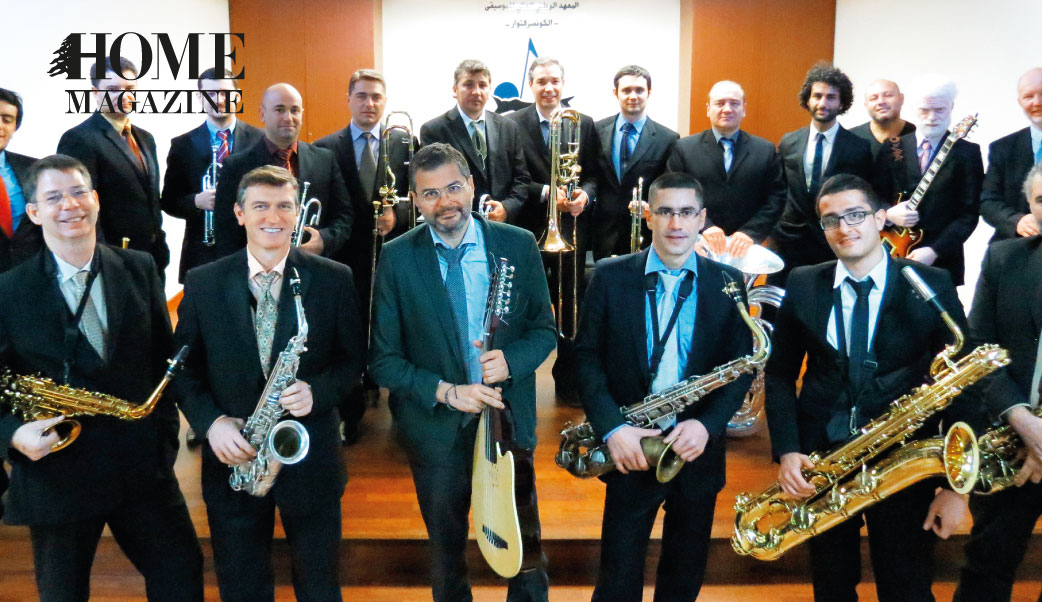
The concert season this year began on September 30th with a concert that was held in collaboration with the Embassy of China. A pianist from China was the soloist and most of the program was by Chinese composers. At that concert it was announced that the Chinese government has pledged to fully finance the construction of a new music center for the conservatory that will include a state-of-the-art concert hall.
The schedule for the 2016-2017 season includes 33 free concerts done on Fridays, all but one performed at St. Joseph Church in Monot. The exception was the second concert of the season that was performed in the beautiful gardens of the École Supérieure Des Affaires, in honor of the ESA Business School’s 20th anniversary.
It is important to also recognize importance of the Lebanese National Orchestra for Oriental Arabic Music which was established by the conservatory in July 2000. The oriental orchestra will have 13 concerts in the 2016-17 season that take place at the Pierre Khatar Auditorium of St. Joseph University. In addition, the conservatory has also established three youth orchestras for different ages and talents, a jazz band, and a variety of smaller ensembles.
Jeunesse Musicale, an independent musical organization, shares the mission of the conservatory and the Lebanese Philharmonic Orchestra to spread the culture of classical music. The current head of Jeunesse Musicale, Anne Claire Khoury, who is the head of the second violin section of the orchestra and a teacher at the conservatory, has noted that JM is actively working to encourage schools to bring their students to attend the orchestra’s dress rehearsals that take place from 10 am-12 noon on the day of each concert and are open to the public.
Lebanese Philharmonic Orchestra 2016-2017 Concert Season
St. Joseph Church – Monot – Achrafieh
| Date 2017 | Conductors |
| Friday Jan. 13 | M. Mussauer |
| Friday Jan. 20 | J. Mora |
| Friday Jan. 27 | G. Fratta |
| Friday Feb. 3 | L. Baalbaki |
| Friday Feb. 17 | M. Kheirallah |
| Friday Feb. 24 | H. Fazlian |
| Friday Mar. 3 | W. Moussallem |
| Friday Mar. 10 | J. Mora |
| Friday Mar. 17 | W. Czepiel |
| Friday Mar. 24 | H. Fazlian |
| Friday Mar. 31 | G. Avessian |
| Friday Apr. 7 | David Molard |
| Friday Apr. 21 | T. Maatouk |
| Friday Apr. 28 | H. Fazlian |
| Friday May 5 | J. Zarzycki |
| Friday May 12 | J. Mora |
| Friday May 19 | H. Fazlian |
| Friday May 26 | L. Baalbaki |
| Friday Jun. 9 | M. Kheirallah |
| Friday Jun. 16 | F. Fakhouri |
| Friday Jun. 23 | L. Baalbaki |
Lebanese National Orchestra for Oriental-Arabic Music
Pierre Khater Auditorium, St. Joseph University
2017
Thursday Jan. 19
Thursday Feb. 2
Thursday Mar. 2
Thursday Mar. 23
Wednesday Apr. 12
Thursday May 4
Wednesday May 24
Thursday Jun. 15
Schools that want to bring their students to a dress rehearsal on the morning of one of the scheduled performances should contact the Conservatory office to make arrangements (01-489530).
For more info:
http://www.conservatory.gov.lb

HOMEland
Coming Soon
HOMEland Events & Collaborations
Coming Soon
 Signature Boutique
 Signature Boutique



Speaking Truth to Power: Pierre Sadek Foundation