


HOMEland THEMES
Coming Soon
HOMEland Events & Collaborations
Coming Soon
 Signature Boutique

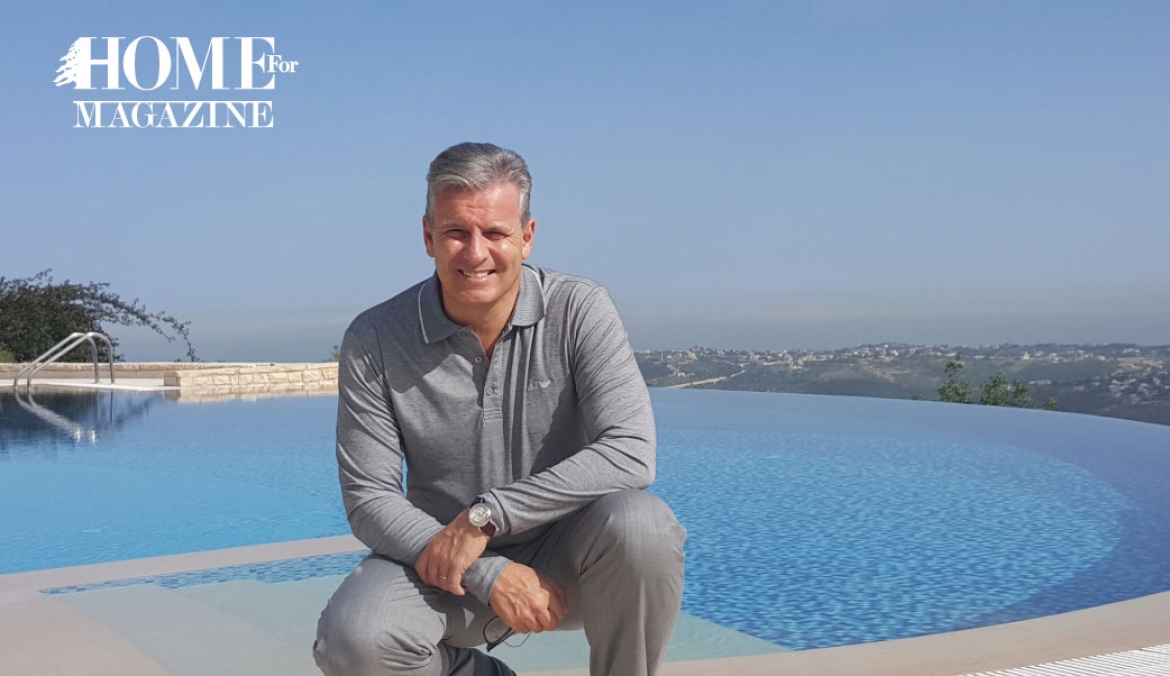
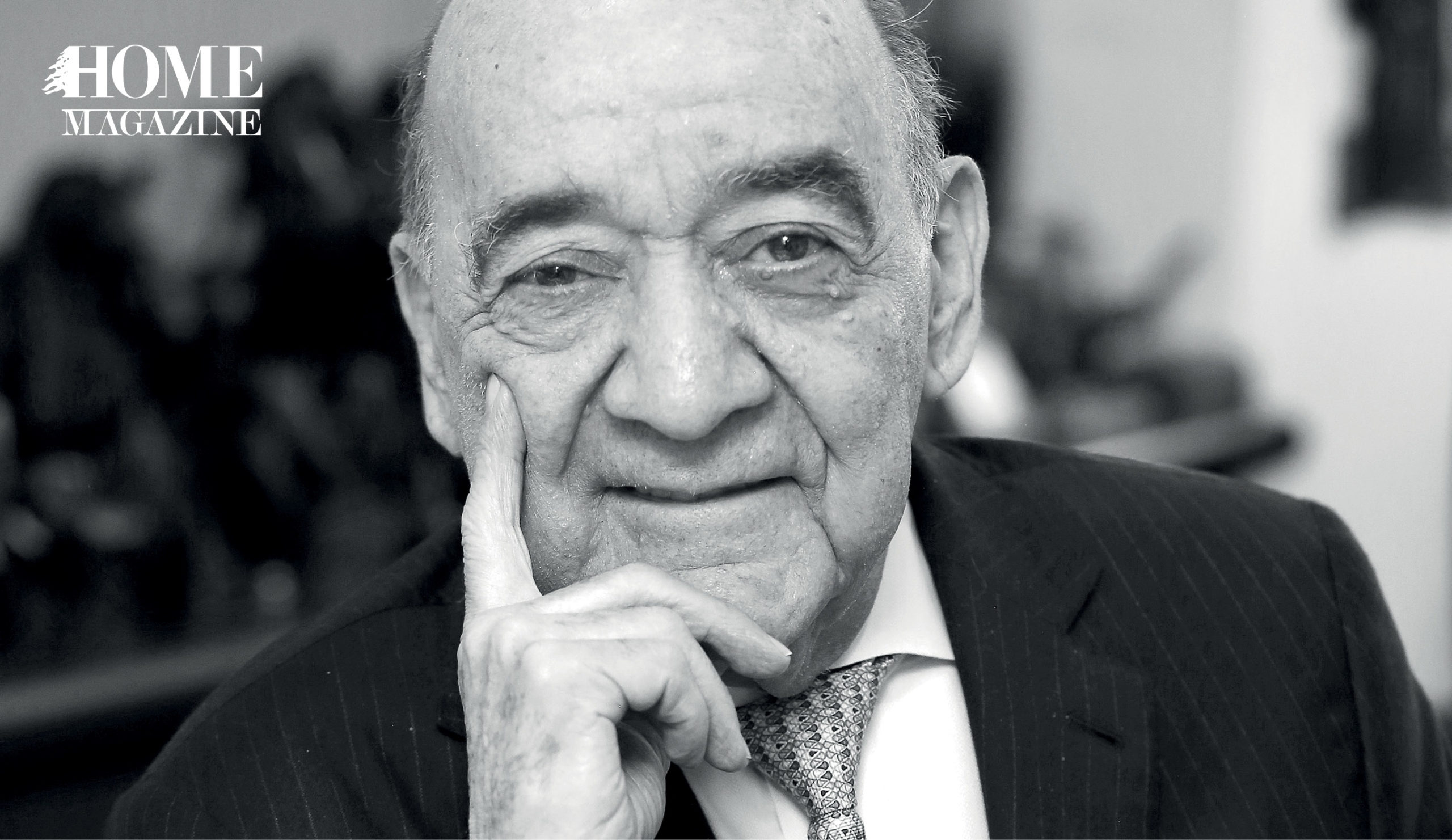
The first Lebanese Member of Parliament in South Africa, Michael Louis, was born to be a visionary and to make a difference. He studied law and headed up some of South Africa’s great corporate property companies before accepting a call to politics at the start of the Mandela era when he served in government. He is currently serving in the family business, The Louis Group which has been around for three generations, working as the Strategic Director for International Development. Michael Louis is a peacemaker and strategist equipped with a combination of business, political and legal skills. He wrote to HOME Magazine.
My story is a generational story. It begins in 1912 when my grandfather escaped from Lebanon during the war and settled in South Africa. I was born there in 1958, in a country no less divided than Lebanon and deeply entrenched in a political system called “Apartheid”, segregation on grounds of race. Growing up during Apartheid and being the third generation of my family to have experienced great conflict, I decided I wanted to make a difference.
It was in 1994, the year of South Africa’s first democratic elections, that I was witness to a spiritual calling to enter politics. I later became one of the foundational leaders of the African Christian Democratic Party and entered into the arena of government. Later that year I got a call from the Lebanese Foreign Minister, Farès Boueiz, to congratulate me on being the first Lebanese Member of Parliament in South Africa. It was with great surprise and enthusiasm that I thanked him, little did I know that this was a call that would change my destiny.
In November 1994, I attended a diplomatic function in Cape Town, hosted by the Honorary Consul to Lebanon, George Issa, and his lovely wife Samia. This gathering was the first time my wife and I would meet part of the Lebanese diaspora. The exchange immediately touched our hearts and I accepted an invitation from the Foreign Minister to visit Lebanon. I landed in Beirut in May 1995 and as I got off the plane, entered the airport and set foot on Lebanese territory, I knew I was HOME. It was a love affair of the first order and I have never been the same again. In honour of this spiritual event, we made George and Samia Issa godparents to our son, Michael Elijah. God’s ways are not our ways and for years He had prepared my heart to cross paths with outstanding Lebanese families like the Issa’s.
However, without realising it, the Lebanese culture had long been a part of my family. My father instilled in us a love for Lebanese cuisine and, in particular, my grandmother’s “spinach pies” and “zataar bread”. However, the most redeeming and outstanding quality of my grandmother was that she was a woman of prayer. As a young boy I used to pick her up at our cathedral after she had spent the whole day there praying. Today, I have no doubt regarding the power of prayer and believe that it was through the prayer of our spiritual forefathers that Lebanon rose again.
By now, my wife and I have travelled many times to Lebanon, drawn most of all by the Lebanese people and their generous souls. I am privileged to now know the huge strength and character of the Lebanese diaspora, especially those involved in Africa. There is no African country that has not been host to the entrepreneurial spirit and courage of the Lebanese; they are the leaders in finance, property and technology.
I applaud the latest vision of the Lebanese Foreign Minister,Gebran Bassil, to inaugurate a Lebanese Diaspora Forum, calling all Lebanese descendants from all over the world to attend. I believe this has added great value to our ‘Lebanity’. I believe the future is not dictated, but invented. We are Lebanon in the world, we are the world in Lebanon. We are Lebanon.
The characteristics of our ‘Lebanity’ are that we are spirited, entrepreneurial, courageous, hospitable, warm and loving. A country born to love and not to hate. There is a hunger within the new generation to stand for who they are, and not just for what they have achieved. The time is now for the Lebanese to stand up and be authentic as to who they really are.
“The characteristics of our ‘Lebanity’ are that we are spirited, entrepreneurial, courageous, hospitable, warm and loving”
In the final season of my life, I would like to contribute to my country of origin and motivate and inspire the diaspora to be peacemakers and bridge-builders with other countries in a desperate and confused world. I am in love with Lebanon and its people and want to dedicate my time and energy with other diaspora leaders to make Lebanon great again.
I encourage, not only to claim back the souls of Lebanon, but for our own soul, our own identity, and finally, to make our generational forefathers, who suffered to secure our future, smile. I believe the “best is yet to come”.
Let us unite to make Lebanon blossom again.
Signature Boutique 

HOMEland Magazine
We firmly believe that the internet should be available and accessible to anyone, and are committed to providing a website that is accessible to the widest possible audience, regardless of circumstance and ability.
To fulfill this, we aim to adhere as strictly as possible to the World Wide Web Consortium’s (W3C) Web Content Accessibility Guidelines 2.1 (WCAG 2.1) at the AA level. These guidelines explain how to make web content accessible to people with a wide array of disabilities. Complying with those guidelines helps us ensure that the website is accessible to all people: blind people, people with motor impairments, visual impairment, cognitive disabilities, and more.
This website utilizes various technologies that are meant to make it as accessible as possible at all times. We utilize an accessibility interface that allows persons with specific disabilities to adjust the website’s UI (user interface) and design it to their personal needs.
Additionally, the website utilizes an AI-based application that runs in the background and optimizes its accessibility level constantly. This application remediates the website’s HTML, adapts Its functionality and behavior for screen-readers used by the blind users, and for keyboard functions used by individuals with motor impairments.
If you’ve found a malfunction or have ideas for improvement, we’ll be happy to hear from you. You can reach out to the website’s operators by using the following email
Our website implements the ARIA attributes (Accessible Rich Internet Applications) technique, alongside various different behavioral changes, to ensure blind users visiting with screen-readers are able to read, comprehend, and enjoy the website’s functions. As soon as a user with a screen-reader enters your site, they immediately receive a prompt to enter the Screen-Reader Profile so they can browse and operate your site effectively. Here’s how our website covers some of the most important screen-reader requirements, alongside console screenshots of code examples:
Screen-reader optimization: we run a background process that learns the website’s components from top to bottom, to ensure ongoing compliance even when updating the website. In this process, we provide screen-readers with meaningful data using the ARIA set of attributes. For example, we provide accurate form labels; descriptions for actionable icons (social media icons, search icons, cart icons, etc.); validation guidance for form inputs; element roles such as buttons, menus, modal dialogues (popups), and others. Additionally, the background process scans all the website’s images and provides an accurate and meaningful image-object-recognition-based description as an ALT (alternate text) tag for images that are not described. It will also extract texts that are embedded within the image, using an OCR (optical character recognition) technology. To turn on screen-reader adjustments at any time, users need only to press the Alt+1 keyboard combination. Screen-reader users also get automatic announcements to turn the Screen-reader mode on as soon as they enter the website.
These adjustments are compatible with all popular screen readers, including JAWS and NVDA.
Keyboard navigation optimization: The background process also adjusts the website’s HTML, and adds various behaviors using JavaScript code to make the website operable by the keyboard. This includes the ability to navigate the website using the Tab and Shift+Tab keys, operate dropdowns with the arrow keys, close them with Esc, trigger buttons and links using the Enter key, navigate between radio and checkbox elements using the arrow keys, and fill them in with the Spacebar or Enter key.Additionally, keyboard users will find quick-navigation and content-skip menus, available at any time by clicking Alt+1, or as the first elements of the site while navigating with the keyboard. The background process also handles triggered popups by moving the keyboard focus towards them as soon as they appear, and not allow the focus drift outside it.
Users can also use shortcuts such as “M” (menus), “H” (headings), “F” (forms), “B” (buttons), and “G” (graphics) to jump to specific elements.
We aim to support the widest array of browsers and assistive technologies as possible, so our users can choose the best fitting tools for them, with as few limitations as possible. Therefore, we have worked very hard to be able to support all major systems that comprise over 95% of the user market share including Google Chrome, Mozilla Firefox, Apple Safari, Opera and Microsoft Edge, JAWS and NVDA (screen readers).
Despite our very best efforts to allow anybody to adjust the website to their needs. There may still be pages or sections that are not fully accessible, are in the process of becoming accessible, or are lacking an adequate technological solution to make them accessible. Still, we are continually improving our accessibility, adding, updating and improving its options and features, and developing and adopting new technologies. All this is meant to reach the optimal level of accessibility, following technological advancements. For any assistance, please reach out to