
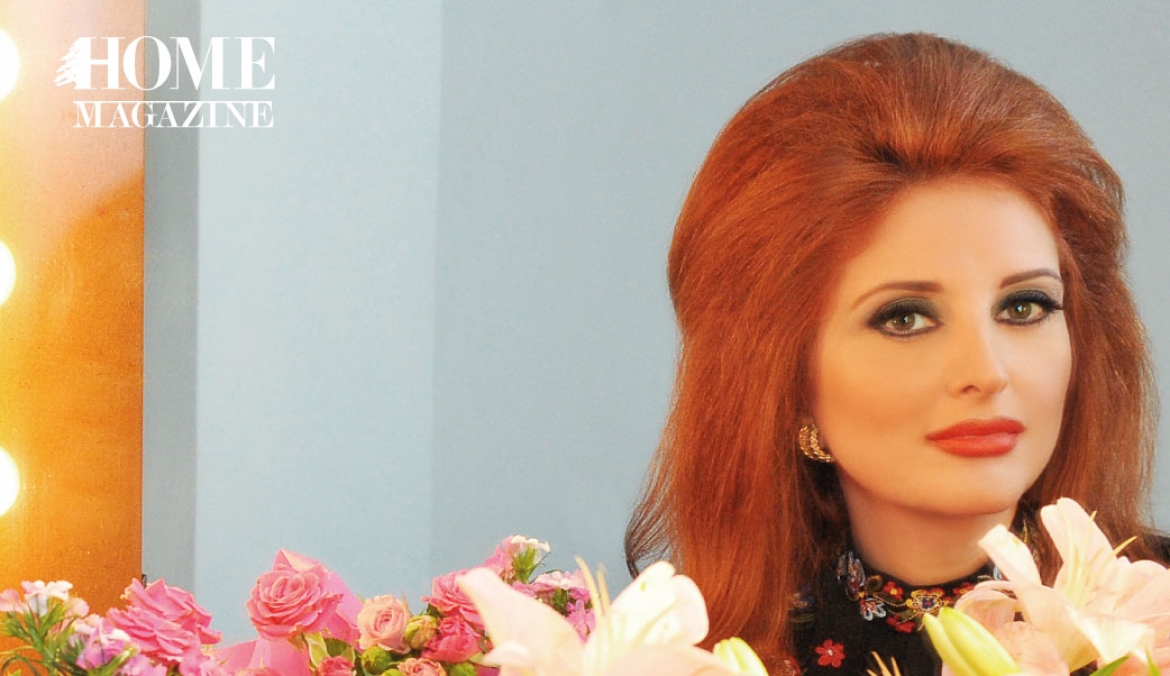
HOMEland THEMES
Coming Soon
HOMEland Events & Collaborations
Coming Soon
 Signature Boutique

PiDRAYA The Publisher: Let there be light
HOME Magazine is published by PiDRAYA. PiDRAYA is the Phoenician goddess of light. The name was carefully chosen for a variety of different reasons.
Firstly, she is Canaanite – Phoenician; secondly, PiDRAYA “fille de lumière” puts light on your work, your initiatives; third, she is a goddess with the power to facilitate a change, to disperse darkness; and lastly she is a “she,” believing in the role women have to play in life.
The name was well researched and re-discovered; Apart from light PDRY, the third daughter of Ba’al brought rain and fertility. It was written as PDRY because the Phoenician alphabet used only consonant with no vowels. You would find many variations of the name later on like PiDROYO, PADRAYA or Pidray.
Casting light is the role of HOME Magazine and its publisher PiDRAYA— highlighting positive initiatives, things that matter, people who are making a change, making a difference and contributing to life.
HOME is not elitist. HOME is where every dream is possible.
Young people, deprived people, the distressed, the less fortunate, the needy and the well-to-do, the powerless and the tough; we all dream.
HOME covers brilliant success stories of people who started from the bottom, who followed their natural curiosity, who found their passion or maybe, as I like to believe, their passion found them. HOME is about lifting each other up as a nation. No matter where you are in the process, HOME is here for you. Maybe you started your dream, or you are already pursuing it. Maybe your dream is becoming a reality or maybe you have already landed where you were heading. Wherever you are, HOME is here to inspire you. If you have stopped dreaming for now, join us in supporting others until your own spark returns. Wherever you are in your own journey, you can grow with the spirit of giving back, of supporting entrepreneurs, new talents, young talents, new ideas. It is good to applaud each other and to admire each other but what about giving a hand? Especially if it is within your reach.
There is plenty of room for everyone in life. I praise competition. I believe in a magical multiplier effect that makes life much more interesting, much more abundant. Bettering each other’s future is the best therapy.
We are never ready to grow; we are forced to grow. Just keep moving. Fuel your dreams with the fear of failure; if your dreams don’t scare you, then they are not big enough. Live in the ecstasy of new encounters and the delight of overcoming challenges. Be interested in everything. Go to new places and let them mold you, and bring your experiences back HOME. Be ready to pay the price; success tastes sweeter when it is well deserved.
Surround yourself with positivity and a support system; work hard, very hard et voilà.
HOME the platform—putting thinkers, dreamers and doers together to make a difference.
HOME is also a platform to highlight achievements of the government, municipalities and the public sector. Sometimes they do good things and other times they could excel. They make history possible and, change institutional. HOME needs the knowledge of scholars, thinkers and academics which are crucial in any inquiry, they are the backbone of every theory of evolution. HOME needs artists, the ones who break barriers smoothly, unpretentiously and without excuses. Don’t undermine artists; they never die. HOME needs doers, those in the corporate world, to finance the change, execute it and to be socially responsible.
Can you imagine the positive power if we were all put on the same platform? If these different worlds crossed, if they learnt to talk to each other, accepted, understood each other and knew about each other’s work? And why not to collaborate.
We don’t need to be similar. It would be such a poor experience, such a flat passage. We don’t need to be typical, not even neuro typical. We need everybody, with the full range of abilities, including those with special needs. Never underestimate how much each and every one of us has to give, if he or she worked to be the best version of himself or herself.
We need everyone to make this world complete. HOME invites you to become larger than life.
Patricia Bitar Cherfan
Social Entrepreneur| Founder
Signature Boutique 

HOMEland Magazine
We firmly believe that the internet should be available and accessible to anyone, and are committed to providing a website that is accessible to the widest possible audience, regardless of circumstance and ability.
To fulfill this, we aim to adhere as strictly as possible to the World Wide Web Consortium’s (W3C) Web Content Accessibility Guidelines 2.1 (WCAG 2.1) at the AA level. These guidelines explain how to make web content accessible to people with a wide array of disabilities. Complying with those guidelines helps us ensure that the website is accessible to all people: blind people, people with motor impairments, visual impairment, cognitive disabilities, and more.
This website utilizes various technologies that are meant to make it as accessible as possible at all times. We utilize an accessibility interface that allows persons with specific disabilities to adjust the website’s UI (user interface) and design it to their personal needs.
Additionally, the website utilizes an AI-based application that runs in the background and optimizes its accessibility level constantly. This application remediates the website’s HTML, adapts Its functionality and behavior for screen-readers used by the blind users, and for keyboard functions used by individuals with motor impairments.
If you’ve found a malfunction or have ideas for improvement, we’ll be happy to hear from you. You can reach out to the website’s operators by using the following email
Our website implements the ARIA attributes (Accessible Rich Internet Applications) technique, alongside various different behavioral changes, to ensure blind users visiting with screen-readers are able to read, comprehend, and enjoy the website’s functions. As soon as a user with a screen-reader enters your site, they immediately receive a prompt to enter the Screen-Reader Profile so they can browse and operate your site effectively. Here’s how our website covers some of the most important screen-reader requirements, alongside console screenshots of code examples:
Screen-reader optimization: we run a background process that learns the website’s components from top to bottom, to ensure ongoing compliance even when updating the website. In this process, we provide screen-readers with meaningful data using the ARIA set of attributes. For example, we provide accurate form labels; descriptions for actionable icons (social media icons, search icons, cart icons, etc.); validation guidance for form inputs; element roles such as buttons, menus, modal dialogues (popups), and others. Additionally, the background process scans all the website’s images and provides an accurate and meaningful image-object-recognition-based description as an ALT (alternate text) tag for images that are not described. It will also extract texts that are embedded within the image, using an OCR (optical character recognition) technology. To turn on screen-reader adjustments at any time, users need only to press the Alt+1 keyboard combination. Screen-reader users also get automatic announcements to turn the Screen-reader mode on as soon as they enter the website.
These adjustments are compatible with all popular screen readers, including JAWS and NVDA.
Keyboard navigation optimization: The background process also adjusts the website’s HTML, and adds various behaviors using JavaScript code to make the website operable by the keyboard. This includes the ability to navigate the website using the Tab and Shift+Tab keys, operate dropdowns with the arrow keys, close them with Esc, trigger buttons and links using the Enter key, navigate between radio and checkbox elements using the arrow keys, and fill them in with the Spacebar or Enter key.Additionally, keyboard users will find quick-navigation and content-skip menus, available at any time by clicking Alt+1, or as the first elements of the site while navigating with the keyboard. The background process also handles triggered popups by moving the keyboard focus towards them as soon as they appear, and not allow the focus drift outside it.
Users can also use shortcuts such as “M” (menus), “H” (headings), “F” (forms), “B” (buttons), and “G” (graphics) to jump to specific elements.
We aim to support the widest array of browsers and assistive technologies as possible, so our users can choose the best fitting tools for them, with as few limitations as possible. Therefore, we have worked very hard to be able to support all major systems that comprise over 95% of the user market share including Google Chrome, Mozilla Firefox, Apple Safari, Opera and Microsoft Edge, JAWS and NVDA (screen readers).
Despite our very best efforts to allow anybody to adjust the website to their needs. There may still be pages or sections that are not fully accessible, are in the process of becoming accessible, or are lacking an adequate technological solution to make them accessible. Still, we are continually improving our accessibility, adding, updating and improving its options and features, and developing and adopting new technologies. All this is meant to reach the optimal level of accessibility, following technological advancements. For any assistance, please reach out to