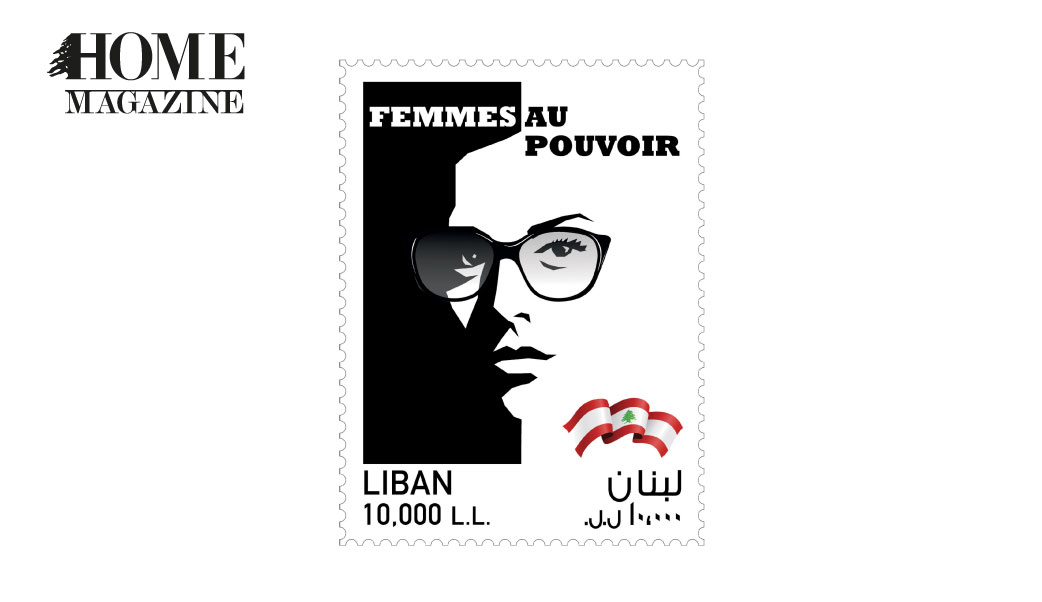
LibanPost’s championing of Lebanese culture at home and abroad.
As the national postal company of Lebanon, LibanPost is a facilitator for the shipping needs of all Lebanese, both at home and within the diaspora. Founded in 1996, the company is known as a pioneer for its efforts in rehabilitating the country’s destroyed postal infrastructure and later expanding into governmental service facilitation, currently delivering two million formalities annually on behalf of citizens to 12 different ministries. And through LibanPost’s commemorate stamp collections, this versatile company is quickly becoming synonymous with something else: a promoter of Lebanese culture and history worldwide.
A postal stamp serves as so much more than simply a government duty used to send mail domestically or abroad. Stamps are also pieces of art that bear images intrinsically related to the soul of their country of origin, leading them to be popular collectable cultural souvenirs. With four of its latest commemorative stamp collections, LibanPost, a private company (or a PPP modelled company), is taking the leading in championing pride and interest in Lebanon’s rich history and diverse culture.

Women Pioneers
LibanPost sought to trumpet the important contribution of Lebanese women in the country’s history with their “Pioneering Women” collection. The stamps featured six of the country’s ‘‘first timers’’, including the first woman Member of Parliament (Myrna al- Boustany) government ministers (Leila el-Solh Hamadeh and Wafaa el-Dika Hamza), lawyer (Nina Trad), medical graduate from the American University of Beirut (Adma Ilyas Abu Shadid) and engineer to join the Syndicate (Saniyyah Zaytoun). The stamps were debuted in a ceremony organized in conjunction with the American University of Beirut and attended by Lebanon’s Minister of Women’s Affairs Jean Ogasapian, who used the occasion to advocate for the increased participation of women in decision-making across all institutions.

Lebanon’s Top Explorer
LibanPost’s third recently released collection honored adventurer Maxime Chaya in recognition of his exploration achievements in the name of Lebanon. In 2006, Chaya planted the Lebanese flag on Mount Everest after completing the Seven Summits Challenge. The daredevil later went on to complete the Three Poles Challenge, a rowing voyage across the Indian Ocean from Australia to Mauritius, and, in a world first, a cycling journey across the Empty Quarter of the Arabian Peninsula.
Chaya’s drive and exploits around the world serve as a perfect representation for the universal nature and global reach of LibanPost, and of the success Lebanese communities have achieved in every far-flung corner of the globe.

Cultural Treasures
Debuting in late May in celebration of International Museum Day, Libanpost’s latest commemorative stamp collection highlighted three of Lebanon’s top cultural exhibitions: the National Museum (archaeology), Mim Museum (minerals) and Sursock Museum (modern and contemporary art). The stamps display just a small fraction of the rich history and works of art on display at these museums, all located in the capital Beirut, and hope to promote increased patronage of institutions that foster interest in Lebanese heritage and culture.
Heroes of Independence
On the occasion of Lebanese Independence Day, LibanPost debuted 15 postal stamps featuring the founding fathers of the Lebanese Republic. These historical icons, who struggled together to end the French Mandate and establish an independent country, serve as an example of what can be achieved when Lebanese work together in unity toward a common goal. The collection not only celebrates and preserves Lebanon’s history, but also acts as an educational tool to help the country’s younger generations and diaspora learn about the achievements of their forefathers.

Education for a Brighter Future
With LibanPost handing 20 million shipments and 2,000 tons of mail annually, stamps are sent across all of Lebanon and serve as a gateway to connect the Lebanese homeland with expatriate communities worldwide.
Within this large audience, LibanPost’s stamps serve as a source of pride and a tool to enhance awareness surrounding Lebanon’s history and culture. The educational aspect within the commemorative stamps is a noble service to all Lebanese, generating interest in Lebanon’s past among the country’s youth and members of the diaspora. It is only through education and a respect for the achievements of the past that societies can work toward building a brighter future, and here in Lebanon, the country’s favorite mailman has become an invaluable teacher.

HOMEland Magazine
We firmly believe that the internet should be available and accessible to anyone, and are committed to providing a website that is accessible to the widest possible audience, regardless of circumstance and ability.
To fulfill this, we aim to adhere as strictly as possible to the World Wide Web Consortium’s (W3C) Web Content Accessibility Guidelines 2.1 (WCAG 2.1) at the AA level. These guidelines explain how to make web content accessible to people with a wide array of disabilities. Complying with those guidelines helps us ensure that the website is accessible to all people: blind people, people with motor impairments, visual impairment, cognitive disabilities, and more.
This website utilizes various technologies that are meant to make it as accessible as possible at all times. We utilize an accessibility interface that allows persons with specific disabilities to adjust the website’s UI (user interface) and design it to their personal needs.
Additionally, the website utilizes an AI-based application that runs in the background and optimizes its accessibility level constantly. This application remediates the website’s HTML, adapts Its functionality and behavior for screen-readers used by the blind users, and for keyboard functions used by individuals with motor impairments.
If you’ve found a malfunction or have ideas for improvement, we’ll be happy to hear from you. You can reach out to the website’s operators by using the following email
Our website implements the ARIA attributes (Accessible Rich Internet Applications) technique, alongside various different behavioral changes, to ensure blind users visiting with screen-readers are able to read, comprehend, and enjoy the website’s functions. As soon as a user with a screen-reader enters your site, they immediately receive a prompt to enter the Screen-Reader Profile so they can browse and operate your site effectively. Here’s how our website covers some of the most important screen-reader requirements, alongside console screenshots of code examples:
Screen-reader optimization: we run a background process that learns the website’s components from top to bottom, to ensure ongoing compliance even when updating the website. In this process, we provide screen-readers with meaningful data using the ARIA set of attributes. For example, we provide accurate form labels; descriptions for actionable icons (social media icons, search icons, cart icons, etc.); validation guidance for form inputs; element roles such as buttons, menus, modal dialogues (popups), and others. Additionally, the background process scans all the website’s images and provides an accurate and meaningful image-object-recognition-based description as an ALT (alternate text) tag for images that are not described. It will also extract texts that are embedded within the image, using an OCR (optical character recognition) technology. To turn on screen-reader adjustments at any time, users need only to press the Alt+1 keyboard combination. Screen-reader users also get automatic announcements to turn the Screen-reader mode on as soon as they enter the website.
These adjustments are compatible with all popular screen readers, including JAWS and NVDA.
Keyboard navigation optimization: The background process also adjusts the website’s HTML, and adds various behaviors using JavaScript code to make the website operable by the keyboard. This includes the ability to navigate the website using the Tab and Shift+Tab keys, operate dropdowns with the arrow keys, close them with Esc, trigger buttons and links using the Enter key, navigate between radio and checkbox elements using the arrow keys, and fill them in with the Spacebar or Enter key.Additionally, keyboard users will find quick-navigation and content-skip menus, available at any time by clicking Alt+1, or as the first elements of the site while navigating with the keyboard. The background process also handles triggered popups by moving the keyboard focus towards them as soon as they appear, and not allow the focus drift outside it.
Users can also use shortcuts such as “M” (menus), “H” (headings), “F” (forms), “B” (buttons), and “G” (graphics) to jump to specific elements.
We aim to support the widest array of browsers and assistive technologies as possible, so our users can choose the best fitting tools for them, with as few limitations as possible. Therefore, we have worked very hard to be able to support all major systems that comprise over 95% of the user market share including Google Chrome, Mozilla Firefox, Apple Safari, Opera and Microsoft Edge, JAWS and NVDA (screen readers).
Despite our very best efforts to allow anybody to adjust the website to their needs. There may still be pages or sections that are not fully accessible, are in the process of becoming accessible, or are lacking an adequate technological solution to make them accessible. Still, we are continually improving our accessibility, adding, updating and improving its options and features, and developing and adopting new technologies. All this is meant to reach the optimal level of accessibility, following technological advancements. For any assistance, please reach out to