

HOMEland
Coming Soon
HOMEland Events & Collaborations
Coming Soon
 Signature Boutique


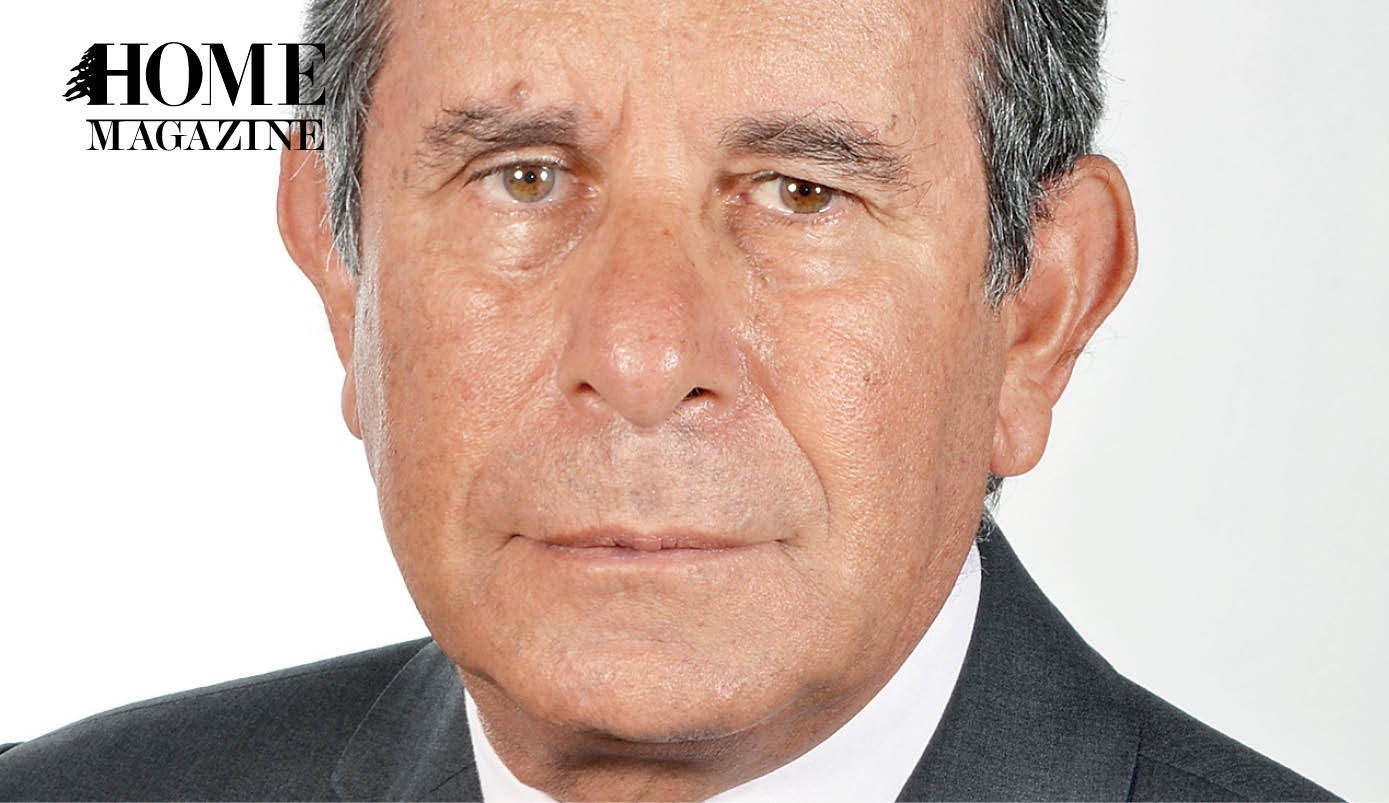
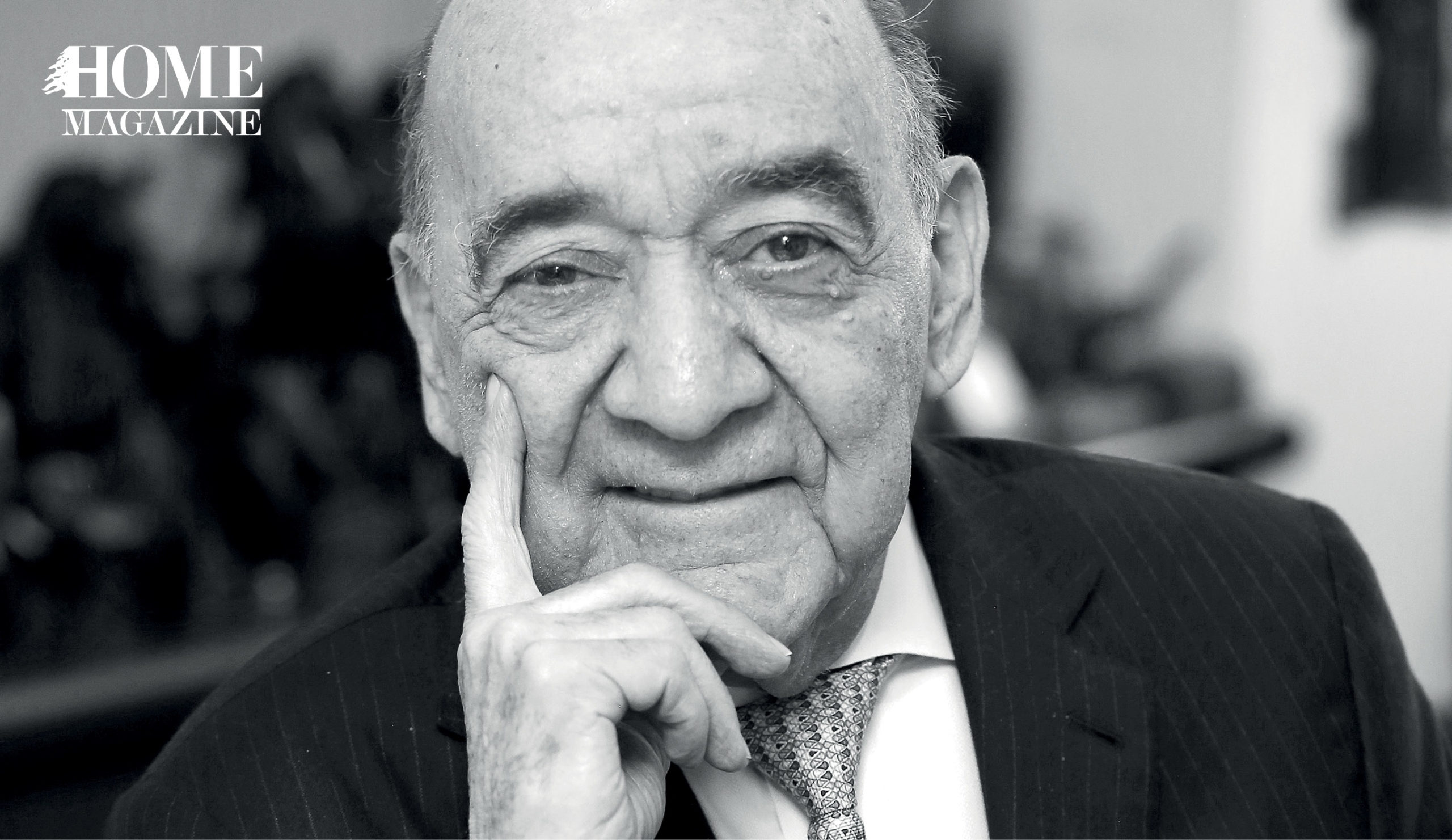
Joseph Khoury, M.D., spent most of his life in Ivory Coast. All the while, his heart beats for Lebanon. Now he wants to build houses, roads and bridges to link his two HOMEs.
Born in Lebanon, Dr. Joseph Khoury moved with his family to Ivory Coast as a young child. He attended primary school there but was back in Lebanon for his secondary education at the Collège des Frères Maristes, Byblos. Then back to Ivory Coast — he studied medicine at the Faculty of Medicine of Abidjan in the West African country’s bustling capital. He taught in the Faculty of Medicine for six years and has had a 35-year career in Ivory Coast as a surgeon.
In the more than 60 years he has lived in Ivory Coast, Khoury still sees Lebanon as his “mother country, having Lebanese blood in my veins,” he told HOME in a recent interview. At the same time, there’s something about Ivory Coast. “Once you discover this country, you cannot leave it,” he often said.
A Lebanese community has been in Ivory Coast for about a century, now reaching the fourth generation of Lebanese Ivorians, Khoury said. Although the first Lebanese migrated to the French colonies in Senegal and Ivory Coast in the 19th century, when the Lebanese silk industry was failing and some were suffering under the Ottomans, the Lebanese community did not develop until after World War I. Khoury calls those first Lebanese in Ivory Coast the “pioneers.”
The second generation started small businesses as traders between the locals and the French, during the French protectorate and colony, which lasted from 1843 to 1960. The third generation, who were joined by Lebanese migrating during Lebanon’s civil war, from 1975 to 1990, developed industries, said Khoury. They were very successful and could afford to send their children abroad to study. Their children, the fourth generation, included many professionals — doctors, lawyers and engineers.
There is no exact count of the number of people of Lebanese descent living in Ivory Coast today. Estimates range from tens of thousands to around 100,000, and it has fluctuated over the years, depending on the political and security situation in the country. Khoury estimates the current Lebanese community at about 60,000 – 80,000, the largest in West Africa.
In a meeting in 2011 with Lebanese Foreign Minister Ali Shami, during the minister’s four-day visit to the country, Khoury, founder and president of the Lebanese Chamber of Commerce for Trade and Industry in Abidjan, described the role of the Lebanese in the Ivory Coast economy. It was reported in The Daily Star that he said, Lebanese business makes up 35 percent of the Ivory Coast economy.
Lebanese own:
• 50 percent of the industrial sector
• 99 percent of malls
• 80 percent of the fish trade and export industry
• 60 percent of the construction sector
• 75 percent of the import trade
“Lebanese-owned business is now up to 40 percent of the economy.”
Lebanese also invested in real estate and were among the first to open hotels and restaurants in Ivory Coast.
And Lebanese are major employers, owning more than 4,000 institutions and employing about 300,000 workers.
In his recent interview with HOME, Khoury said Lebanese-owned business is now up to 40 percent of the economy. “We are very active, as Lebanese, in all industries in Ivory Coast,” he said. The opportunities there are significant, he added, with the Ivory Coast being the world’s largest producer of coffee and cocoa.
Despite these numbers, “the economic ties between Lebanon and Ivory Coast are unfortunately almost nonexistent, although the number of Lebanese businessmen showing interest in Africa is getting bigger,” Khoury said.
Khoury speaks Arabic fluently and keeps cherished memories from Lebanon. One favorite memory said he cannot forget is the port at Byblos, with the famous Pépé Abed and his restaurant. He longs for strong ties between the diaspora and the motherland.
“Unfortunately, the Lebanese diaspora living in Africa does not invest in Lebanon,” he said. “It is true the Lebanese buy apartments or real estate, or even spend money in the health or education sectors. Still, they do not invest in projects that create job opportunities. This is due in the first place to problems Lebanon faces (such as intermittent electricity and water) and the absence of the conditions that attract private investors.”
However, like Khoury, fourthgeneration Lebanese in Ivory Coast are deeply attached to Lebanon, where the majority have studied, he said. They had the chance to become familiar with their HOMEland and to develop an attachment. That’s why Khoury said he believes it is important to establish the Maison du Liban in Ivory Coast. Lebanese Ivorians need a cultural and social association where they can gather to celebrate, debate, socialize and engage in cultural activities.
In addition to the house, they plan to build a road — really. Plans are in the works to launch the Rue de Beyrouth, a road named after Lebanon, to warm the hearts of the Lebanese living so far from HOME. Khoury believes such projects will nurture the Lebanese identity among the diaspora and encourage them to take more interest in Lebanon.
“The economic ties between Lebanon and Ivory Coast are unfortunately almost nonexistent, although the number of Lebanese businessmen showing interest in Africa is getting bigger.”
The big project is an economic bridge. Khoury has a dream to “create a strong Lebanese economic lobby through the chambers of commerce all over the world in order to act as an economic force, and why not a political one.” Khoury, a renowned surgeon for 35 years, was elected president of the Lebanese chamber of commerce for Trade and Industry in Abidjan for two consecutive terms, and has served seven years. It is the first Lebanese chamber of commerce in Africa. Khoury described it as “a very dynamic one, having an influence on the national, regional and international levels.”
As president, Khoury has two main goals: “gathering the Lebanese business leaders together and establishing industrial and trade relations between Lebanon and Ivory Coast.
“I am totally convinced that the LDE Conference to be held in Feb. 2 and 3, 2018, in Ivory Coast, will stimulate business between the two countries,” he said. “The whole world is interested in exploring Africa, given that the 21st century will belong to this continent. It is also estimated that the population in Africa will reach 2 billion persons by 2050, with 65 percent of them less than 35 years old, creating a huge consumer market.”
And, unlike in Lebanon, one can establish a company in just one day in Ivory Coast, he said. Facilities are provided to the investors to help transactions progress. In addition, there is the security of the presence of the commercial court that defends the investors’ interests.
Khoury has good reason for his convictions. Economist Charles Robertson, lead author of “The Fastest Billion: The Story Behind Africa’s Economic Revolution,” predicts and offers well-supported arguments that “Africa’s current sustained growth level is set to not only continue but rise over the next four decades so that, come 2050, the continent’s GDP will equal the combined GDPs of the United States and the European Union at current prices,” reported African Business in 2013.
For more info: http://play.tojsiab.com/CJew5S11Ixw
Signature Boutique
Lebanon, in your inbox


HOMEland Magazine
We firmly believe that the internet should be available and accessible to anyone, and are committed to providing a website that is accessible to the widest possible audience, regardless of circumstance and ability.
To fulfill this, we aim to adhere as strictly as possible to the World Wide Web Consortium’s (W3C) Web Content Accessibility Guidelines 2.1 (WCAG 2.1) at the AA level. These guidelines explain how to make web content accessible to people with a wide array of disabilities. Complying with those guidelines helps us ensure that the website is accessible to all people: blind people, people with motor impairments, visual impairment, cognitive disabilities, and more.
This website utilizes various technologies that are meant to make it as accessible as possible at all times. We utilize an accessibility interface that allows persons with specific disabilities to adjust the website’s UI (user interface) and design it to their personal needs.
Additionally, the website utilizes an AI-based application that runs in the background and optimizes its accessibility level constantly. This application remediates the website’s HTML, adapts Its functionality and behavior for screen-readers used by the blind users, and for keyboard functions used by individuals with motor impairments.
If you’ve found a malfunction or have ideas for improvement, we’ll be happy to hear from you. You can reach out to the website’s operators by using the following email
Our website implements the ARIA attributes (Accessible Rich Internet Applications) technique, alongside various different behavioral changes, to ensure blind users visiting with screen-readers are able to read, comprehend, and enjoy the website’s functions. As soon as a user with a screen-reader enters your site, they immediately receive a prompt to enter the Screen-Reader Profile so they can browse and operate your site effectively. Here’s how our website covers some of the most important screen-reader requirements, alongside console screenshots of code examples:
Screen-reader optimization: we run a background process that learns the website’s components from top to bottom, to ensure ongoing compliance even when updating the website. In this process, we provide screen-readers with meaningful data using the ARIA set of attributes. For example, we provide accurate form labels; descriptions for actionable icons (social media icons, search icons, cart icons, etc.); validation guidance for form inputs; element roles such as buttons, menus, modal dialogues (popups), and others. Additionally, the background process scans all the website’s images and provides an accurate and meaningful image-object-recognition-based description as an ALT (alternate text) tag for images that are not described. It will also extract texts that are embedded within the image, using an OCR (optical character recognition) technology. To turn on screen-reader adjustments at any time, users need only to press the Alt+1 keyboard combination. Screen-reader users also get automatic announcements to turn the Screen-reader mode on as soon as they enter the website.
These adjustments are compatible with all popular screen readers, including JAWS and NVDA.
Keyboard navigation optimization: The background process also adjusts the website’s HTML, and adds various behaviors using JavaScript code to make the website operable by the keyboard. This includes the ability to navigate the website using the Tab and Shift+Tab keys, operate dropdowns with the arrow keys, close them with Esc, trigger buttons and links using the Enter key, navigate between radio and checkbox elements using the arrow keys, and fill them in with the Spacebar or Enter key.Additionally, keyboard users will find quick-navigation and content-skip menus, available at any time by clicking Alt+1, or as the first elements of the site while navigating with the keyboard. The background process also handles triggered popups by moving the keyboard focus towards them as soon as they appear, and not allow the focus drift outside it.
Users can also use shortcuts such as “M” (menus), “H” (headings), “F” (forms), “B” (buttons), and “G” (graphics) to jump to specific elements.
We aim to support the widest array of browsers and assistive technologies as possible, so our users can choose the best fitting tools for them, with as few limitations as possible. Therefore, we have worked very hard to be able to support all major systems that comprise over 95% of the user market share including Google Chrome, Mozilla Firefox, Apple Safari, Opera and Microsoft Edge, JAWS and NVDA (screen readers).
Despite our very best efforts to allow anybody to adjust the website to their needs. There may still be pages or sections that are not fully accessible, are in the process of becoming accessible, or are lacking an adequate technological solution to make them accessible. Still, we are continually improving our accessibility, adding, updating and improving its options and features, and developing and adopting new technologies. All this is meant to reach the optimal level of accessibility, following technological advancements. For any assistance, please reach out to