Article by Sandra Whitehead with additional reporting from Houda Houbeish.
Peace journalism is emerging in Lebanon through the efforts of the Media Association for Peace (MAP), an initiative, now in its fifth year, meant to counter conventional war reporting and the polarized media landscape in the country. Typically, the only reporting one sees about peace are photos of two people signing a treaty, but how did they reach that moment? How can the public support peace if they never hear about efforts to resolve conflicts? These are precisely the questions MAP aims to address.
About 25 journalists, students and others interested in media’s role in war and peace packed into a small room in Hamra’s Urban Gardens on the eve of International Human Rights Day to listen to British reporter-turned-academic Jake Lynch, Ph.D., talk about peace journalism. Practically everyone attending knew of Lynch and peace journalism from the Media Association for Peace.
MAP, as it is affectionately called by its community of young journalism trainees, and workshop and conference participants, has played the lead in introducing the concept of peace journalism to Lebanon. In the past four years, this non-governmental organization has aggressively sought to reach young people, journalists, academics and civil society in Lebanon with its message on conventional media’s coverage of conflict – that there must be a better way.
“Peace journalism is the alternative,” said Lynch, a pioneer in the field and a professor at the University of Sydney, Australia, and a mentor to MAP founder Vanessa Bassil. He projected a chart in the front of the room with two columns. On the left were the characteristics of violence/war/victory journalism and, on the right were conflict/peace journalism. Peace journalism recognizes that focusing on conflict is positive because it can lead to problem solving and resolution. “Conventional reporting treats conflicts and war like a zerosum game of two parties with winners and losers,” he said. Body counts are announced like goals in a football game. In contrast, peace journalists report on underlying causes and possible solutions. They ask, ‘what are they fighting about? How can it be resolved?’
Rather than acting as a cheerleader for peace, peace journalism reports facts that give peace a chance. “It’s about choices editors and reporters can make that create opportunities for society at large to consider and value non-violent responses to conflict,” Lynch explained.
Eminent peace scholar Johan Galtung, Ph.D., began exploring the concept in the 1960s, while researching why some events make the news and others don’t. He discovered four criteria to newsworthiness:
• Involves high-ranking countries
• Involves high-ranking people
• About actors rather than processes or structures
• And should be negative
“These criteria distort our image of the world rather than enlighten us,” Galtung wrote. To report on poor people in poor countries, the news must be massively negative – natural disasters, wars, coups. Consequently, countries in international low-standing are always depicted negatively. Peace journalism humanizes people on the low end of the scale and reports on positive events that are happening, which traditional reporting overlooks. To end violence, unresolved conflict or unreconciled trauma must be addressed; you can’t address it if you don’t know about it.
“In contrast, peace journalists report on underlying causes and possible solutions. They ask, ‘what are they fighting about? How can it be resolved?’”

MAP on a mission
MAP is a leading NGO in Lebanon, the Middle East and North Africa dedicated to working on media’s role in peace, conflict and social change. MAP Founder Bassil, who also serves as the organization’s president and executive director, believes media has an essential role to play in peacebuilding. She has devoted herself to advocating for this cause among journalists and citizen journalists.
“While MAP is fundamentally a peacebuilding organization, its unique identity lies in its commitment to media as a core tool,” she said.
MAP works to spread awareness and implement peace journalism through trainings, workshops, seminars and conferences, publications and other projects. Meanwhile, it has nurtured a strong network and community of journalists, activists and academics interested in peace journalism, both nationally and internationally.
Reflecting on MAP’s accomplishments to date, Bassil said: “we have provided free training and workshops for media students on conflict reporting, peace journalism and covering human rights issues. More than 300 have been trained so far with minimal resources. Networking opportunities were also created, giving participants the chance to meet other journalists, NGO leaders and experts.”
More than 30 people have interned or volunteered with VIP – Volunteer and Internship Program – giving them professional experience in NGO work, something Bassil said she wish she had before launching MAP.
Dozens of people have been given travel opportunities through MAP to take part in conferences and training programs abroad. For instance, two young people were sent to Palermo, Italy for nine months to conduct media work for an NGO. “These are life-changing experiences,” Bassil remarked.
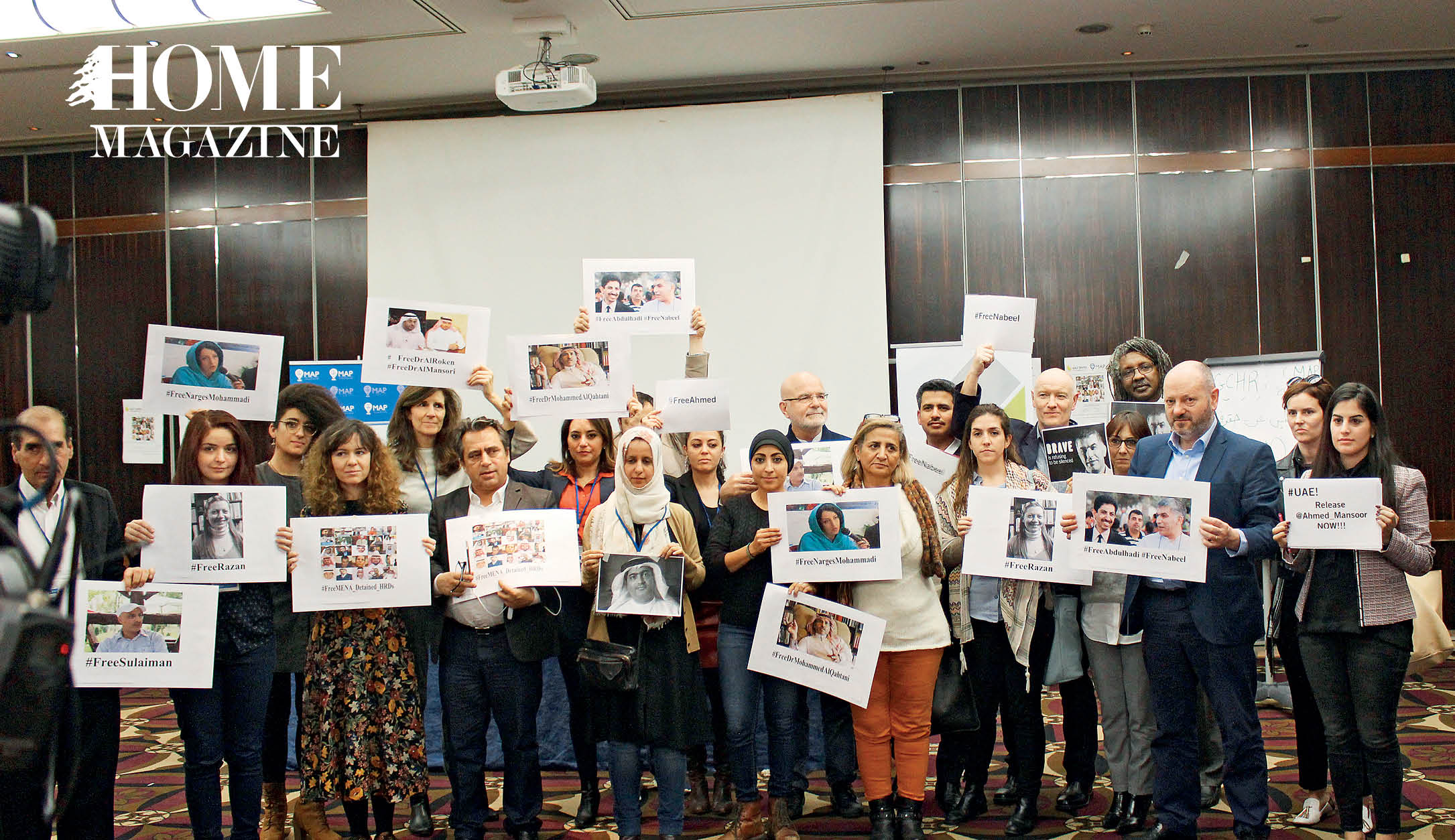
In addition to its core programs, MAP has created valuable opportunities for academics, journalists, activists and students by organizing conferences in Lebanon and abroad. On May 4, World Press Freedom Day, MAP organized a press conference to demand the release of detained journalists, bloggers and online activists and to call for the protection of freedom of the press in the Middle East and North Africa. Participants came from across the region, including representatives of the Gulf Center for Human Rights, Reporters without Borders, Bahrain Center for Human Rights, the Committee to Protect Journalists, as well as the MAP community.
MAP played key roles in several conferences in Lebanon, such as Notre Dame University’s A Voice of Our Own: Retelling the Stories of Gender-Based Violence in which a toolkit and a Code of Conduct were launched by the NGOs Female and Abaad on how to cover gender-based violence in the media.
Other recent engagements included: the Security Amidst Dissolution conference, organized by the Konrad-Adenauer- Stiftung and Maison du Futur, which addressed the security challenges in the Middle East; and Religious Diversity and Peacebuilding, a training organized by the Forum for Development, Culture and Dialogue and Danmission.
And MAP is taking its message abroad. Bassil recently served as the guest speaker at the Media as Public Service conference in Warsaw, Poland. She also provided training to youth ambassadors in Dushanbe, Tajikistan on Leadership for Peace.
Peace journalism in Lebanon today
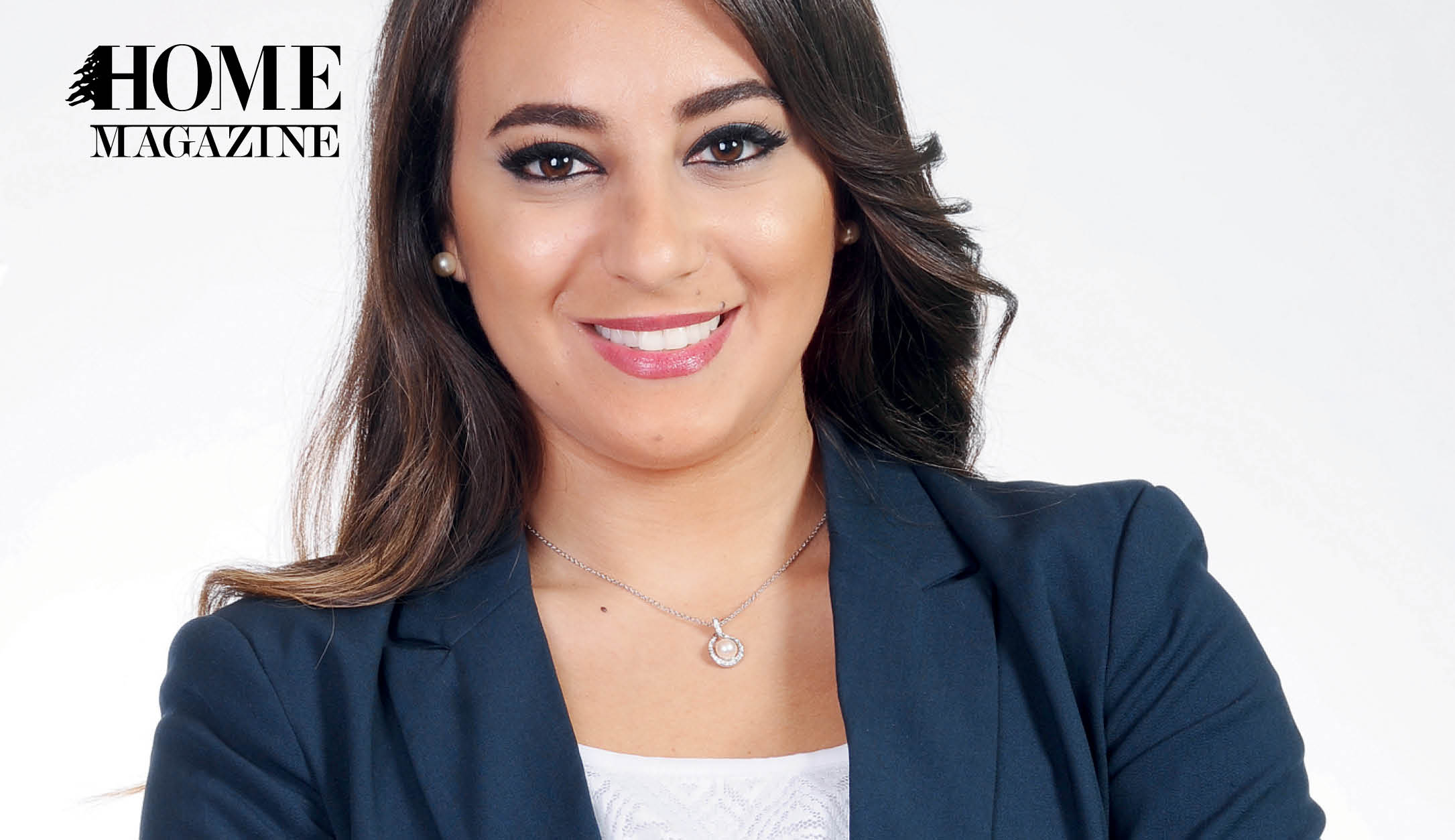
“In four years, because our activities really started in 2014, MAP introduced the concept of peace journalism and now we are seeing it spread,” Bassil said. “Students involved with us are sharing the concept in academia. They felt peace journalism was something very new and a good idea for their senior projects.
“We are very well connected with other organizations in civil society and now most of them know the importance of peace journalism and the importance of media in conflict resolution.
“MAP has made young media professionals aware of the impact they can have in peacebuilding and conflict transformation,” Bassil said. “Our trainees were very young – 19, 20, 21. Many of them have started to work in journalism, some with big media outlets – LBC, New TV, Al Akhbar, An-Nahar, Future TV. I am happy they received our training because they can apply what they have learned in their work.” MAP is also making citizen journalists aware of the impacts they have and the ethics of reporting.
Growing together
As a student at the Lebanese University, Bassil studied political science and journalism as an undergraduate, and media and communication science as a graduate student. She earned a second master’s degree in media, peace and conflict studies at the University for Peace in Costa Rica, run by the United Nations.
When Bassil launched MAP, she was 24. She saw the need for peace journalism in the region and found it a way to combine her interests in media, activism and social engagement.
“Being young myself, I have also been growing up with MAP. It is part of my own journey and that has been a kind of challenge. I was not established professionally and decided to start this NGO. I had not worked for anyone else in my life. I had not worked with an NGO to know how things go. It has been hard to take on such a big project, such a big responsibility.”
As it grows, so do the challenges, she explained. “In the beginning, you can be advocates and initiate events without many resources, but as you become larger, funding becomes crucial and funding has always been a challenge.
“I want MAP to be specialized, to have a clear identity. There is a price for this. We rely on international organizations and they all have their own priorities, which may not always fit with ours.”
Another challenge is finding the right people to work for this cause. “We work with young people because youth can be agents of change, especially those working in journalism. But they are still in search of their path.”
“Everything seems impossible until it is done.”
Nevertheless, she is hopeful. As MAP’s website eloquently puts it: “Everything seems impossible until it is done.”
For more info:
http://www.maplebanon.org
https://www.facebook.com/MapMediaAssociationForPeace@MapMediaAssociationForPeace

HOMEland THEMES
Coming Soon
HOMEland Events & Collaborations
Coming Soon
 Signature Boutique