Megalith
/ˈmɛɡəlɪθ/
Is this the type of construction that resembles Stonehenge, where great stones are used without mortar or concrete to build a monument or a structure? There definitely should be a mistake; we do not have such structures in Lebanon. Or do we?
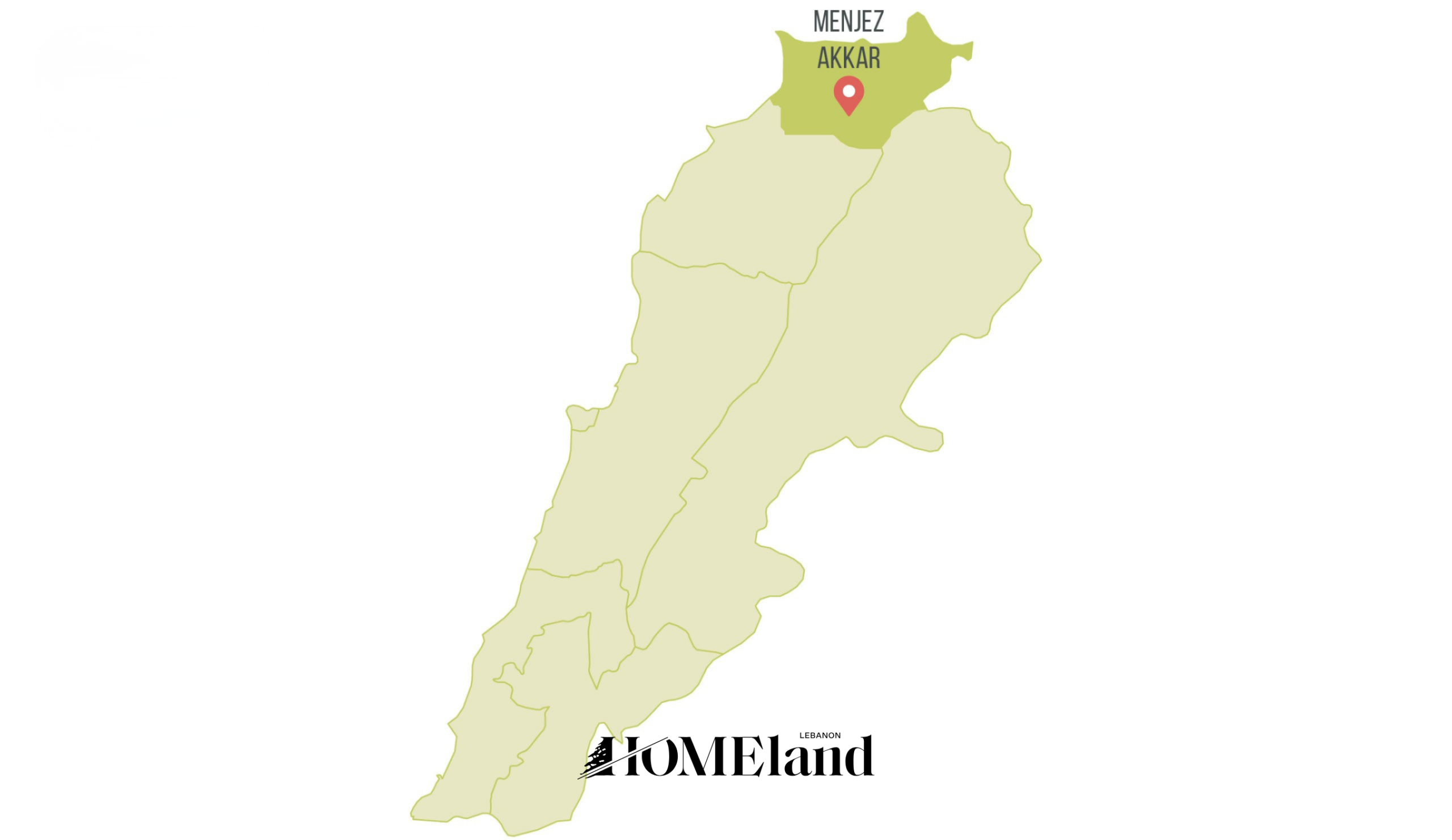
Menjez is a village in Akkar, in the north of Lebanon, some 130 kilometers from Beirut, and close to the Syrian border. The village is located on a plateau surrounded by fields, mainly populated with olive trees, overlooking the Nahr le-Kebir (the great Southern river between Lebanon and Syria). It is an ancient village, distinguished by its basalt constructions (a black stone that can only be found in Akkar), giving the village a special charm and character that is different from what can be found in other Lebanese villages.
The various archaeological excavations conducted in Menjez led to the discovery of numerous sites with a long history of human occupation. The artifacts collected dated the oldest human occupation to the Pottery Neolithic period (around 7,000 B.C.).
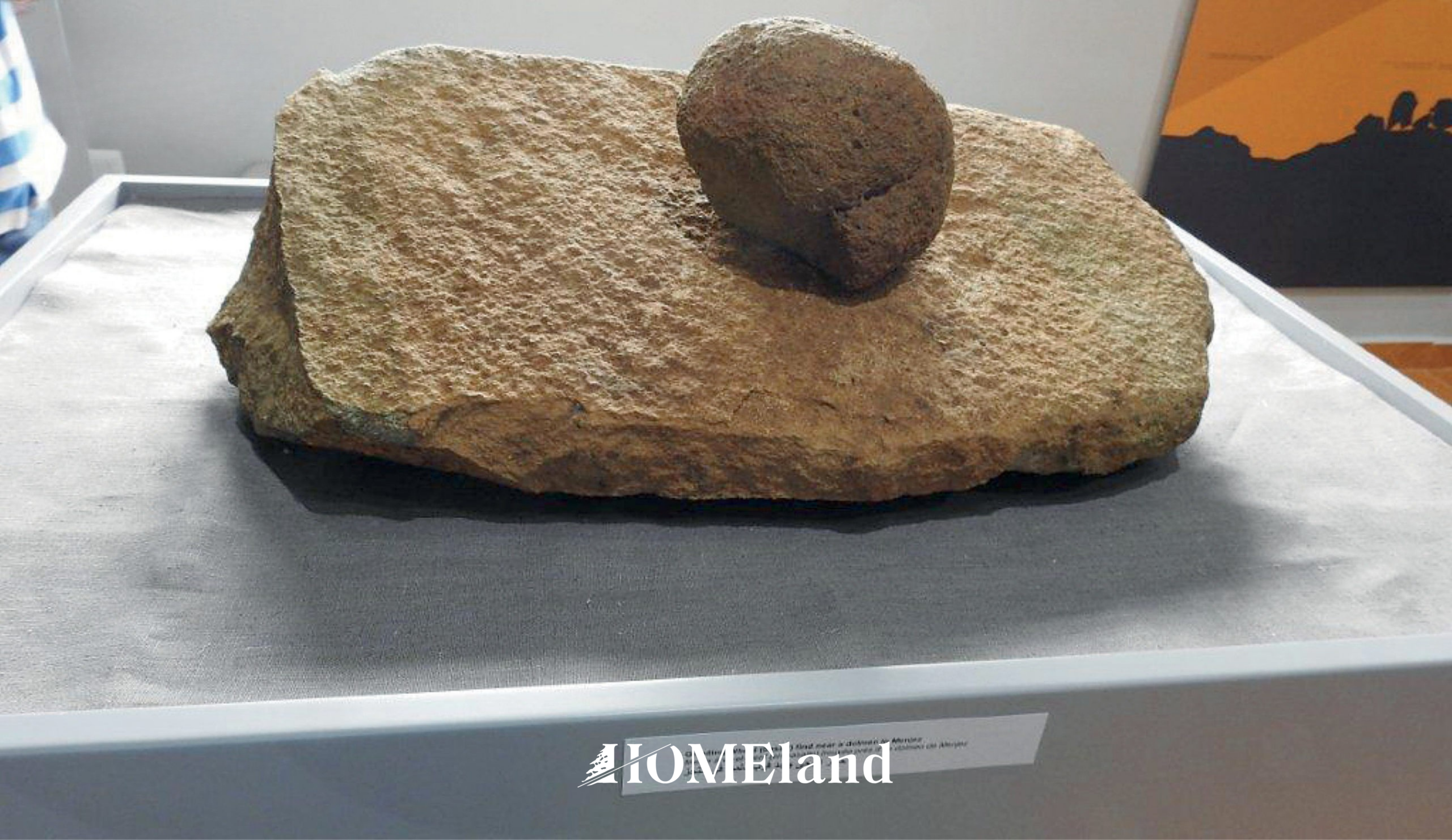
Photo by Oussama Kallab – Grinding wheel (basalt) found near a Dolmen in Menjez
The most spectacular archaeological findings in Menjez are the megalithic monuments, discovered in the 1940s by the Jesuit fathers. Father René Mouterde, Society of Jesus (S.J.), noted the presence of these monuments during his investigations in the Akkar region. In the 1950s and 1960s, Father Maurice Tallon, S.J., researched and registered these monuments and invested in extensive excavation and architectural investigations. He recorded some 100 megalithic monuments, in Menjez and other villages in its surroundings.
Several necropolises dating to the Chalcolithic or Early Bronze Age period were identified in the Menjez territory.
Each cemetery contained around 10 megalithic tombs — also known as dolmen chambers — all made of basaltic stone. The chambers are circular, semicircular, or quadrangular shape with a south-oriented passage. Great stone blocks of nearly 1.6 meters in height constitute the limits of the funeral space. The deceased laid on a pavement also made of slabs of great stone. Evidence to determine what the roofs looked like are very scarce; one possibility is that they were covered with great flat stones which constituted a corbelled cover. An enclosure made of great basalt blocks surrounded the main chamber.
During the excavation campaigns conducted by Père Tallon, very few human remains were found — most of which were fragmented — thus making it difficult to determine the funerary practices. The deceased were accompanied in their journey, with offerings for the dead: ceramics, seals, arrowheads, bracelets, and pearls made of various minerals were discovered in the dolmens. Thanks to the artifacts, the construction can be historically pegged to the end of the Chalcolithic or beginning of the Early Bronze Age (circa 3500 B.C.).
Some dolmens bear representations of snakes on their exposed slabs. Symbolically, snakes represent fertility, rebirth, immortality, and healing. They are also depicted as guardians of a sacred place.
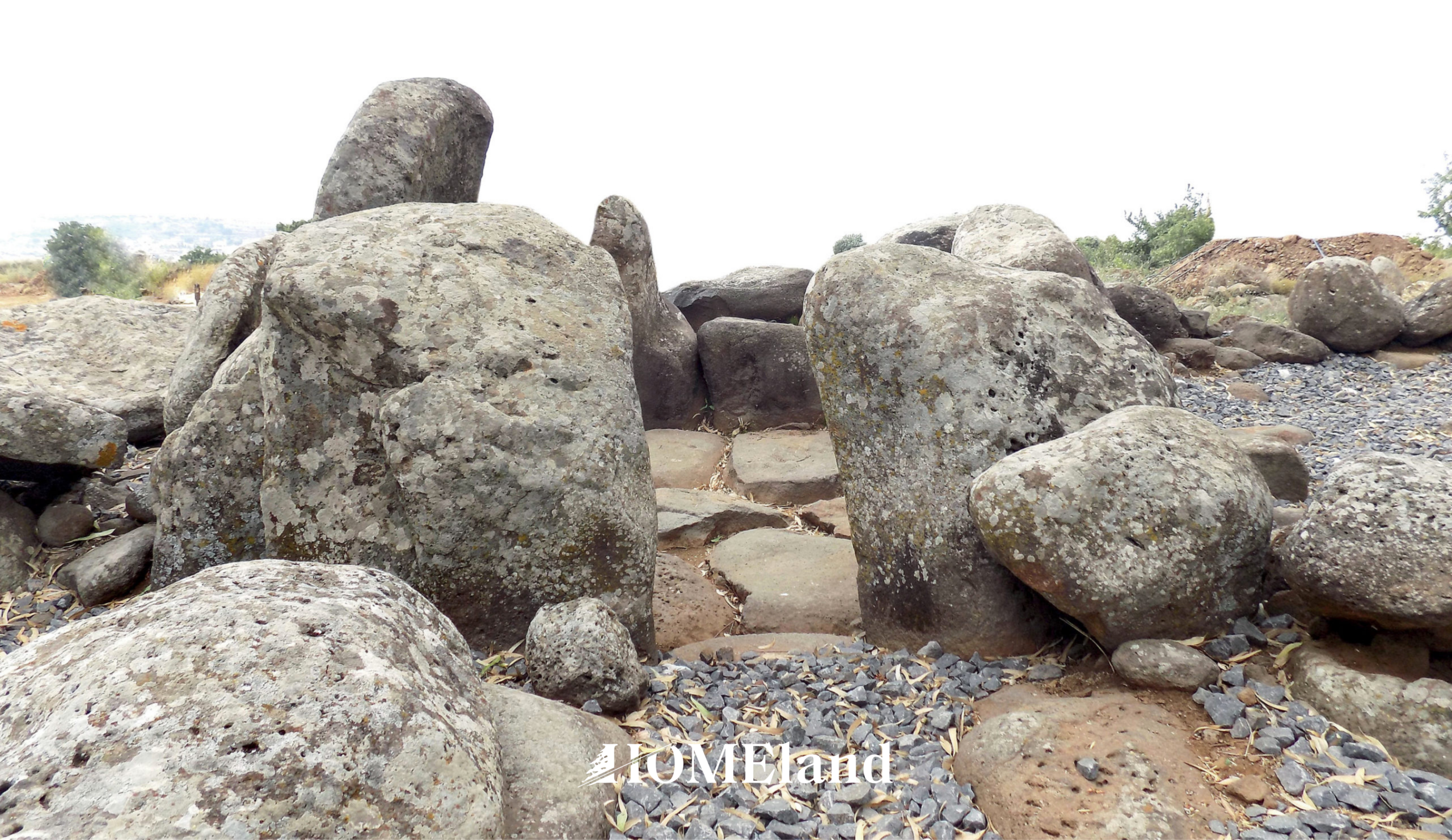
Several ruins of houses are also still visible near some of the dolmens. The houses are also made of megalithic blocks; some of them have a rectangular shape with a door facing south while others have double apses.
Taking a walking tour to discover those megalithic tombs is now possible thanks to the initiative of the Menjez municipality, in addition to the collaboration between scholars of different institutions toward conserving, preserving, and presenting the 11 dolmens in Menjez and its vicinity. With the financial aid by the British Councils “Small Grants for the Cultural Protection Fund,” The municipality, the Directorate General of Antiquities, the University of Geneva, the Museum of Lebanese Prehistory of Université Saint- Joseph de Beyrouth, and the Château- Musée of Belestia Prehistory Museum have put their efforts together to successfully promote Lebanon’s wealth.
Walking tours allow for the discovery of the megalithic necropolis. On the other hand, Beit Al-Tourath showcases some replicas of the artifacts found during the excavation campaigns of the dolmens, along with explanations of the megalithic monuments and societies, as well as other archaeological sites in the vicinity. Do not miss it. The two-hour-long trip to Menjez is worthwhile.
Practical information:
The Heritage House opening hours: Saturday and Sunday from 10 a.m. to 6 p.m. All year upon reservation.
Two tours are available: one-hour walking tour and two-hour hike.
You can book a local guide for the tours and to visit the heritage house by calling: +961 76 658606 or sending an email: menjez.heritage@gmail.com
HOMEland Magazine
We firmly believe that the internet should be available and accessible to anyone, and are committed to providing a website that is accessible to the widest possible audience, regardless of circumstance and ability.
To fulfill this, we aim to adhere as strictly as possible to the World Wide Web Consortium’s (W3C) Web Content Accessibility Guidelines 2.1 (WCAG 2.1) at the AA level. These guidelines explain how to make web content accessible to people with a wide array of disabilities. Complying with those guidelines helps us ensure that the website is accessible to all people: blind people, people with motor impairments, visual impairment, cognitive disabilities, and more.
This website utilizes various technologies that are meant to make it as accessible as possible at all times. We utilize an accessibility interface that allows persons with specific disabilities to adjust the website’s UI (user interface) and design it to their personal needs.
Additionally, the website utilizes an AI-based application that runs in the background and optimizes its accessibility level constantly. This application remediates the website’s HTML, adapts Its functionality and behavior for screen-readers used by the blind users, and for keyboard functions used by individuals with motor impairments.
If you’ve found a malfunction or have ideas for improvement, we’ll be happy to hear from you. You can reach out to the website’s operators by using the following email
Our website implements the ARIA attributes (Accessible Rich Internet Applications) technique, alongside various different behavioral changes, to ensure blind users visiting with screen-readers are able to read, comprehend, and enjoy the website’s functions. As soon as a user with a screen-reader enters your site, they immediately receive a prompt to enter the Screen-Reader Profile so they can browse and operate your site effectively. Here’s how our website covers some of the most important screen-reader requirements, alongside console screenshots of code examples:
Screen-reader optimization: we run a background process that learns the website’s components from top to bottom, to ensure ongoing compliance even when updating the website. In this process, we provide screen-readers with meaningful data using the ARIA set of attributes. For example, we provide accurate form labels; descriptions for actionable icons (social media icons, search icons, cart icons, etc.); validation guidance for form inputs; element roles such as buttons, menus, modal dialogues (popups), and others. Additionally, the background process scans all the website’s images and provides an accurate and meaningful image-object-recognition-based description as an ALT (alternate text) tag for images that are not described. It will also extract texts that are embedded within the image, using an OCR (optical character recognition) technology. To turn on screen-reader adjustments at any time, users need only to press the Alt+1 keyboard combination. Screen-reader users also get automatic announcements to turn the Screen-reader mode on as soon as they enter the website.
These adjustments are compatible with all popular screen readers, including JAWS and NVDA.
Keyboard navigation optimization: The background process also adjusts the website’s HTML, and adds various behaviors using JavaScript code to make the website operable by the keyboard. This includes the ability to navigate the website using the Tab and Shift+Tab keys, operate dropdowns with the arrow keys, close them with Esc, trigger buttons and links using the Enter key, navigate between radio and checkbox elements using the arrow keys, and fill them in with the Spacebar or Enter key.Additionally, keyboard users will find quick-navigation and content-skip menus, available at any time by clicking Alt+1, or as the first elements of the site while navigating with the keyboard. The background process also handles triggered popups by moving the keyboard focus towards them as soon as they appear, and not allow the focus drift outside it.
Users can also use shortcuts such as “M” (menus), “H” (headings), “F” (forms), “B” (buttons), and “G” (graphics) to jump to specific elements.
We aim to support the widest array of browsers and assistive technologies as possible, so our users can choose the best fitting tools for them, with as few limitations as possible. Therefore, we have worked very hard to be able to support all major systems that comprise over 95% of the user market share including Google Chrome, Mozilla Firefox, Apple Safari, Opera and Microsoft Edge, JAWS and NVDA (screen readers).
Despite our very best efforts to allow anybody to adjust the website to their needs. There may still be pages or sections that are not fully accessible, are in the process of becoming accessible, or are lacking an adequate technological solution to make them accessible. Still, we are continually improving our accessibility, adding, updating and improving its options and features, and developing and adopting new technologies. All this is meant to reach the optimal level of accessibility, following technological advancements. For any assistance, please reach out to