Interviewed by: Patricia Bitar Cherfan, Editor-in-Chief
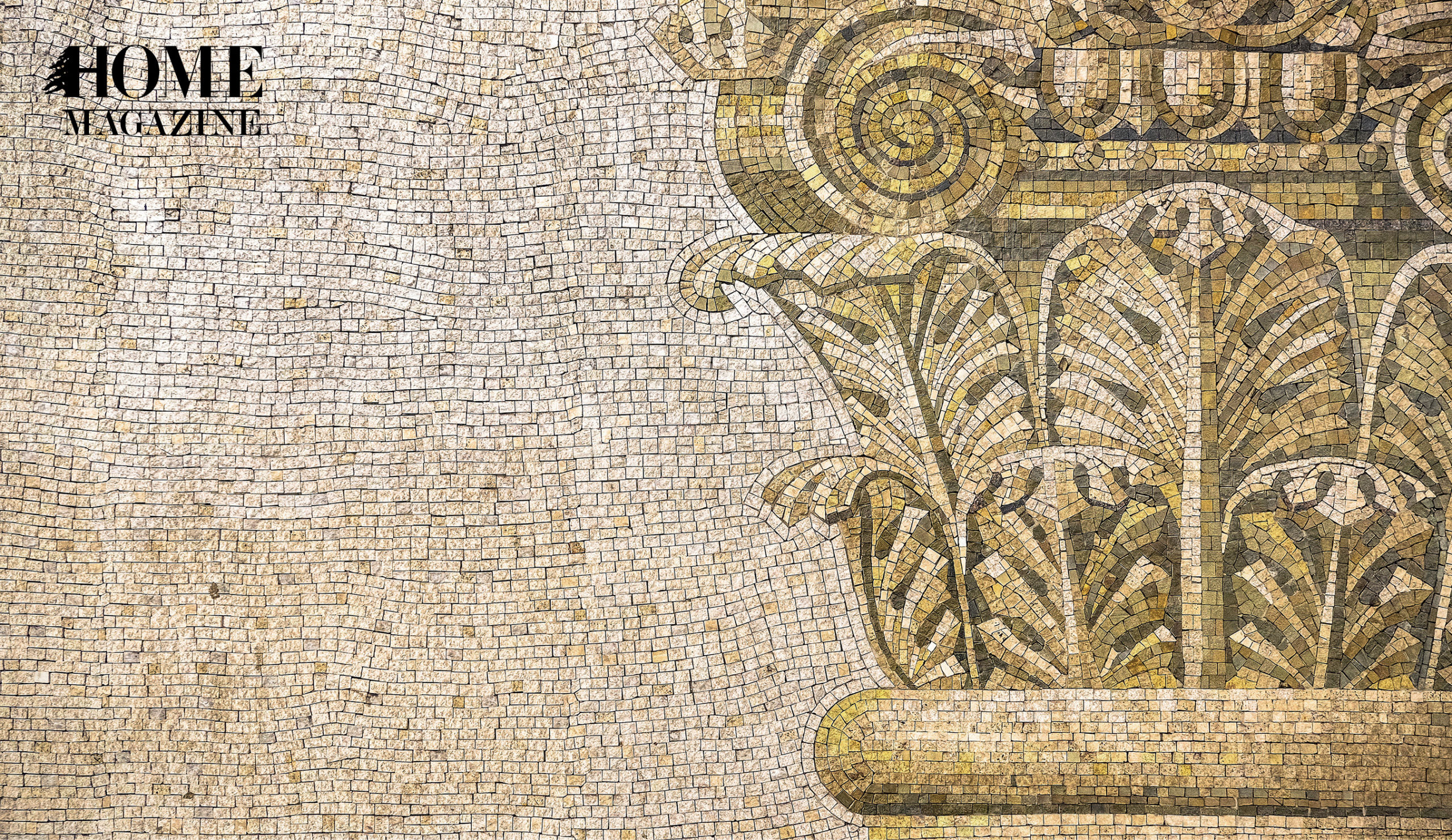
With 7,000 years of history to its name, a stunning array of civilizations have left their mark on Lebanon. Nada Helou is part of a group of archeologists who discovers, preserves, and fights for mosaics and frescos.
Based far away from the hustle and bustle of Beirut, Nada Helou enjoys a tranquil life in Hosrayel, Jbeil. During our conversation — one that lasted an hour, yet spanned the history of mosaics across the ages — it felt as though we’d been to the sites themselves without once getting up off the couch.
Academically, and on the ground, the study of religious mosaics — particularly, icons — has been the driving force in Helou’s life. However, this has not always been the case. After a brief foray in theater in Russia, a change of life track led her down a different path. “I decided to study art history instead. During my Ph.D., I had to choose an emphasis and chose to specialize in mosaics almost at random,” she confesses. “After that decision, it became a passion.” The past 30 years have been dedicated to teaching history of art and archeology at the Lebanese University, where she is the head of their Department of Art and Archeology. She is also one of the founding members of l’Association pour la Restauration et l’Etude des Fresques Médiévales du Liban (AREFML).
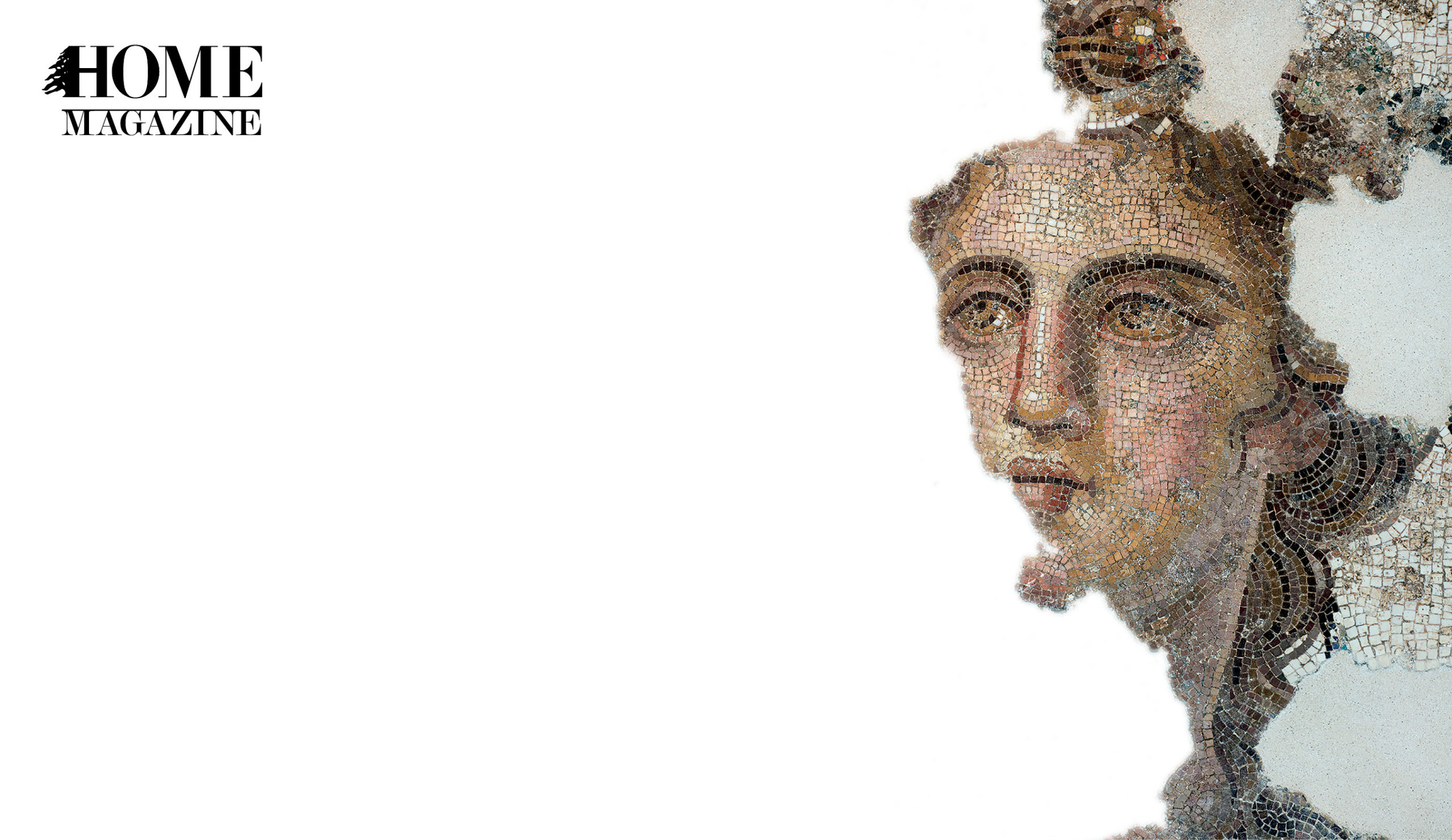 Dionysos, Roman Mosaic, 2nd Century, the Theatre of Jbeil, the National Museum of Beirut
As the last iconographer standing in Lebanon, Helou enjoys a privileged place in her field. “I am the only person in the domain here,” says Helou. Her book, Les Mosaiques Protobyzantines du Liban: Iconographie et Symbolisme, about Christian mosaics discovered in Lebanon between the fourth and seventh century was published earlier this year. With five books behind her, Helou is penning her upcoming book that spotlights frescoes found in Lebanon.
Piecing together history
The Roman empire marks the start of the story. “It all started with the Romans — particularly during the second and third century A.D.,” says Helou. “Mosaics specific to their era of rule covered the HOMEs of the wealthy, and could be found in Roman villas and amphitheaters.” For example, a mosaic of Dionysus, the Greek god of wine and festivity, was unearthed in the Roman theater of Jbeil.
Another prominent discovery was the mosaic with the rape of Europa from a house in Jbeil. “The myth goes like this:Zeus spots Europa for the first time and falls in love. He becomes a bull and carries her to the island of Crete. As legend has it, this was how Europe was conceived,” says Helou. This mosaic is now at the National Museum of Beirut.
Meticulous and precise, Roman stone setters used fine cubes (2 to 3 mm per side). “Looking at mosaics from this time, it is easy to mistake them for a fresco,” says Helou. Stone size is an indicator of the proprietor’s wealth. Apparently, the more fine-grained the stones in a mosaic, the richer the family who owned it.
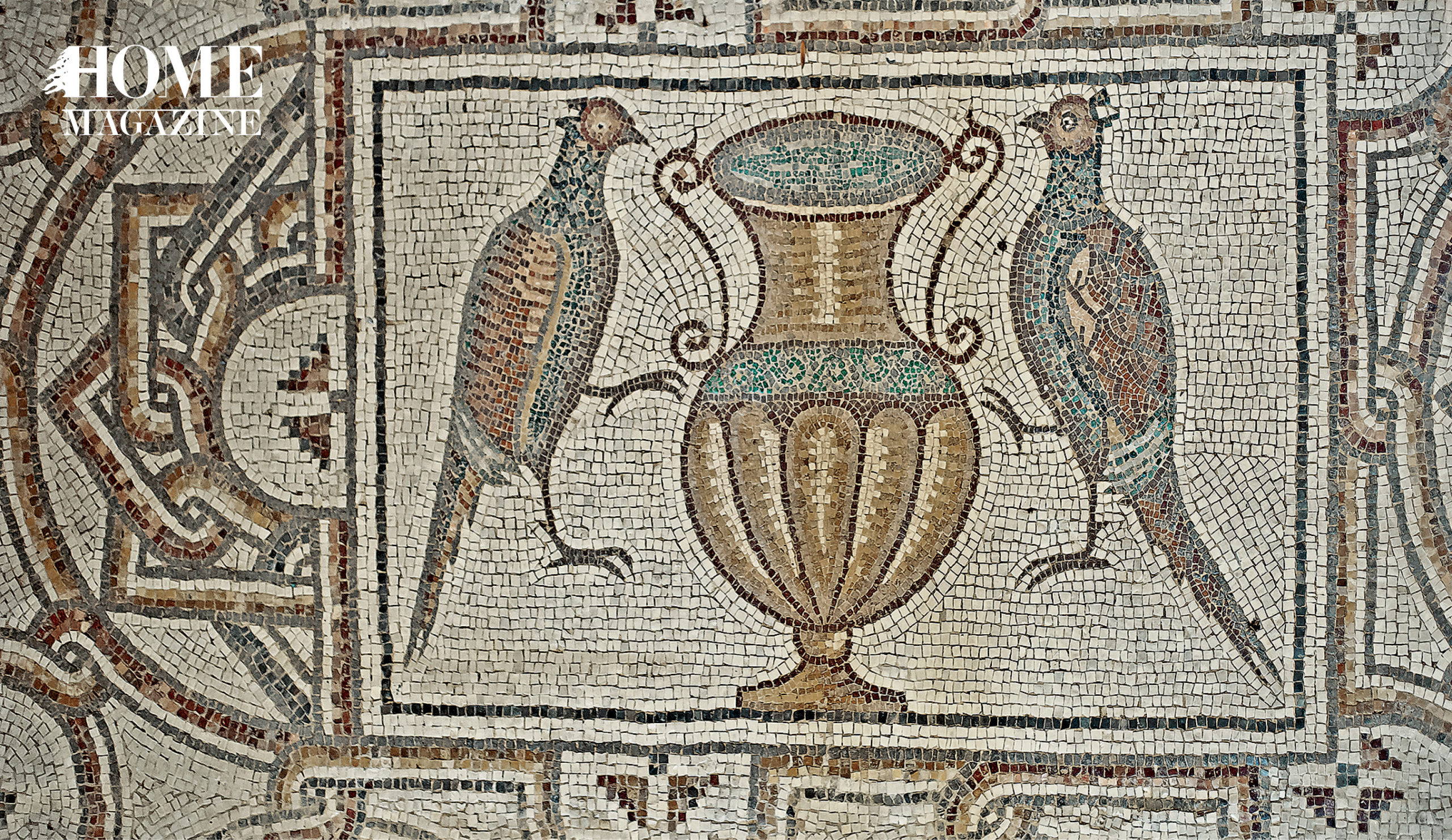 A Vase Between Two Peacocks, Christian mosaic, 6th Century A.D., a church in Jiyyeh, the Museum of Beiteddine
The fourth century heralded as the Christian era. “The emperor Constantine legalized Christianity in the Edict of Milano in 313 A.D. This gave people permission to practice their faith freely. Under Emperor Theodosius, Lebanon becomes Christianized and plays a very active role in Christian culture,” says Helou.
As more and more churches sprang up, so did the mosaics and frescoes decorating their interiors. “Mosaic-making became democratized and hence more rough. The cubes had grown to 1 cm per side and were juxtaposed less elegantly,” observes Helou, citing “A Vase Between Two Peacocks” as an example.
When asked to choose a favorite, Helou is quick to respond. “Qabr Hiram in the Louvre is one of the nicest mosaics from that bygone era,” she says. The philosopher, archeologist and homme de lettre, Ernest Renan, discovered it during his expedition in Lebanon in the 1860s. Having received permission from the Ottomans, Renan appropriated the piece. “I say better there than here. The Louvre Museum takes far better care of it than anybody would in Lebanon,” she comments.
A smaller number of frescos from the Middle Ages have been found, as a result of the Latin presence in Lebanon during the Crusades. A mixture of Byzantine and local aesthetics gain prominence. “The local style is very graphic — the drawing itself holds central importance. Byzantine is more delicate — figures are more spiritual and there is an interplay between lightness and darkness,” observes Helou.
“Stone size is an indicator of the proprietor’s wealth. Apparently, the more fine-grained the stones in a mosaic, the richer the family who owned it.”
In situ
Beyond the confines of academia, Helou is a founding member of the Association for the Restoration and Study of Medieval Frescos in Lebanon (AREFL), whose small team of 14 members has been advancing restoration efforts since 2007. “Every year, we restore one church,” says Helou. “We invite a group of professional restorers from Warsaw, Russia, and Italy.”
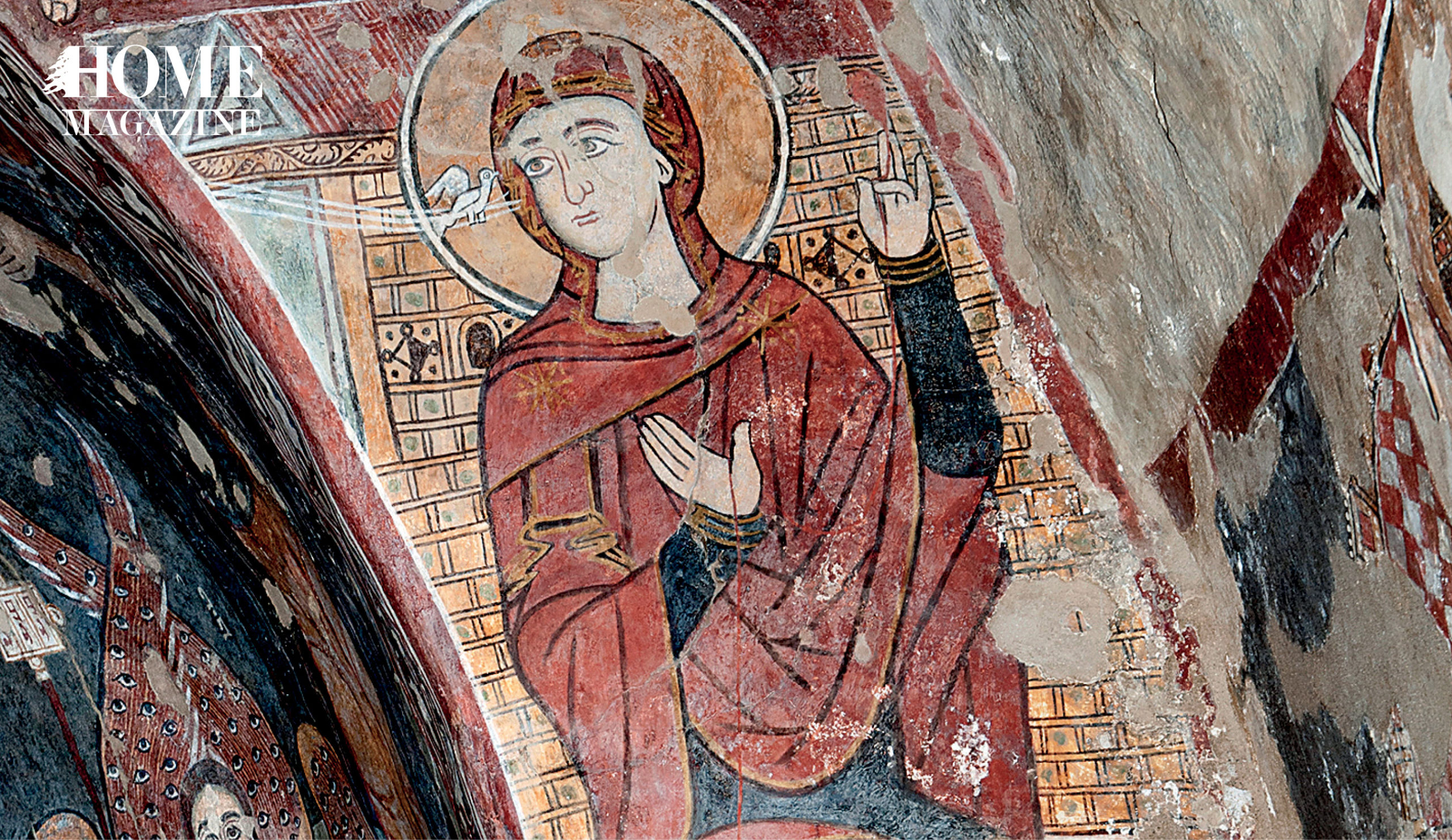 The Virgin from the Annonciation, fresco of Behdidat (Jbeil)
An element of randomness guides the work of an archeologist. “Dozens of places of worship have been found entirely by accident,” says Helou. “We have had successful digs in Beit Meri, Deir al-Alaa, Eshmoun in Saida and Nabha in Bekaa — to name some.” Byblos, Batroun, Koura, and Qadisha Valley are also known for their antiquated churches.” In the past, there was a tendency in archeology to move everything from the peripheries to the center. These days, we prefer to leave our findings in situ ,” says Helou.
The interiors of these derelict churches often contain frescoes that have reached advanced stages of decay, which is understandable considering the steep odds stacked against them: the ravages of time, climate (humidity, rain, heat), and human interference (graffiti and poorly executed renovations). In the absence of policies geared toward preserving frescoes and proper funding, it is a wonder that these artifacts have survived at all.
Helou’s eyes sparkle as she brushes over the discoveries made over the years; she details the arduous and meticulous work involved in resurrecting these neglected gems as close as possible to their former glory. “We use chemical products to clean the layers of grime off. However, Lebanon is especially difficult because of the limestone. In this case, we also use razors to scratch it off,” says Helou, whose efforts have helped unearth forgotten gems in Mar Faouka in Amiun, Kfarhalda Saidet el Kharayeb and Saidet el Rih in Anfeh. “These days, the convention when it comes to restoration is to clean and fix rather than paint over.” Helou’s team works alongside three groups of restorers from Varsovie, Russia, and Italy every year to restore a church. The Russian team apparently only uses organic substances, like egg yolks, in their restoration process and are so meticulous so that even questions like, “What did the chicken eat?” become relevant to their practice.
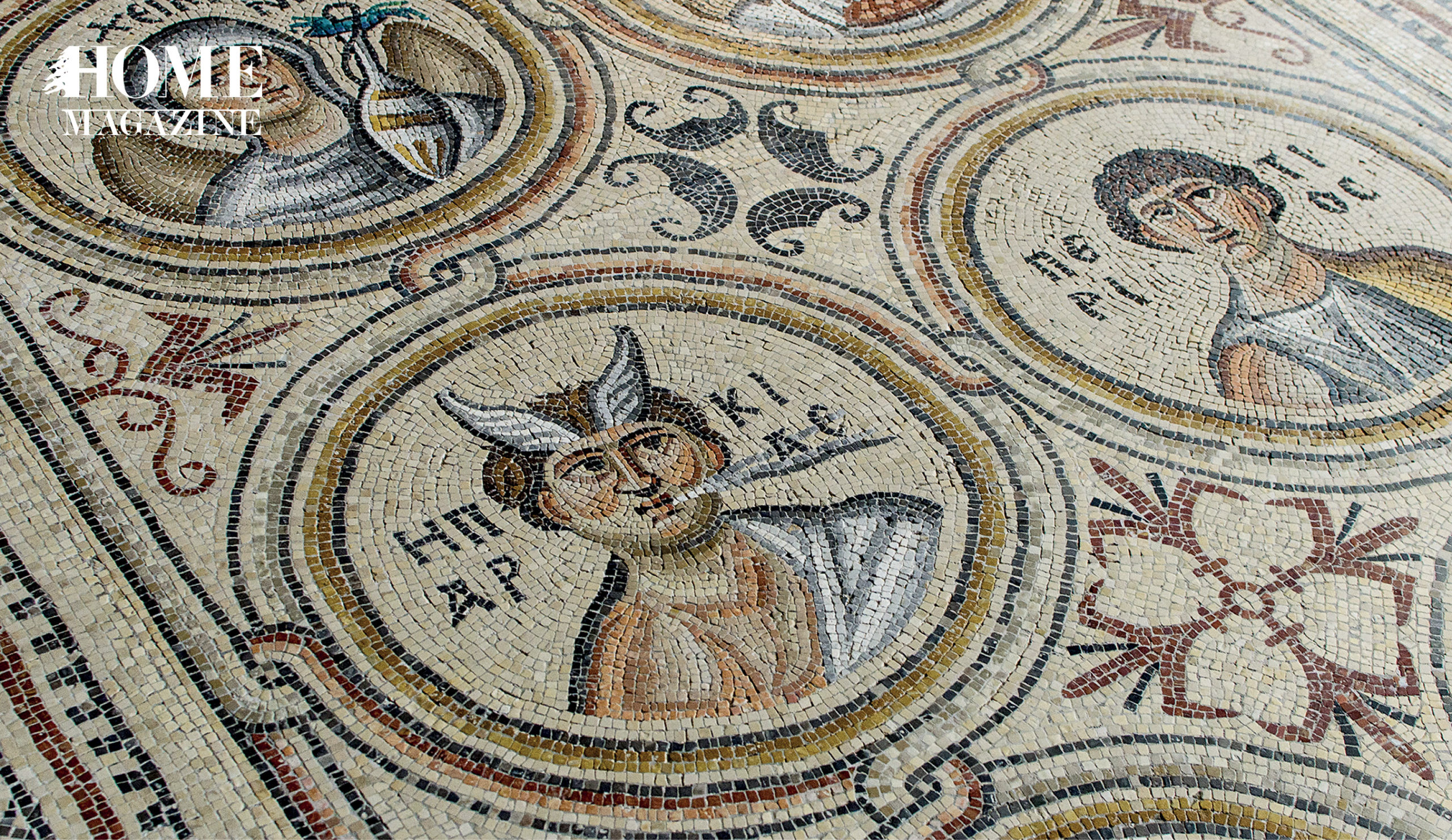 Pavement de Saint Christophe, 575 A.D., Qabr Hiram, Louvre Museum
In terms of endowment, public bodies, such as the Philippe Jaber Association in London and the Ministry of Culture in Lebanon, and private donors have lent a helping hand. In the absence of functional governance, foreign countries have stepped in to provide their support. Helou is critical of the Lebanese government who does little to nothing for the preservation of these national relics. Beside their inherent value, maintaining the sites of worship found by Helou and her dedicated crew could place Lebanon on the map for tourists as well as art history and archeology enthusiasts across the globe.
Her self-proclaimed love-hate relationship with Lebanon is one expressed by many locals who have resisted the pull of immigration. “Lebanon is disgusting but I cannot leave; something always pulls me back,” says Helou. “My husband wants to go to America. My son is leaving and won’t come back.” Motivated by her discontent, Helou has transformed her immediate surroundings into a place that brings her solace. “We have built our little paradise in our little corner of the world in Hosrayel.
We are building a swimming pool and are surrounded by greenery and fresh air,” she says in defiance of a system that fights actively against the interests of its own citizens.

HOMEland
Coming Soon
HOMEland Events & Collaborations
Coming Soon
 Signature Boutique
 Signature Boutique