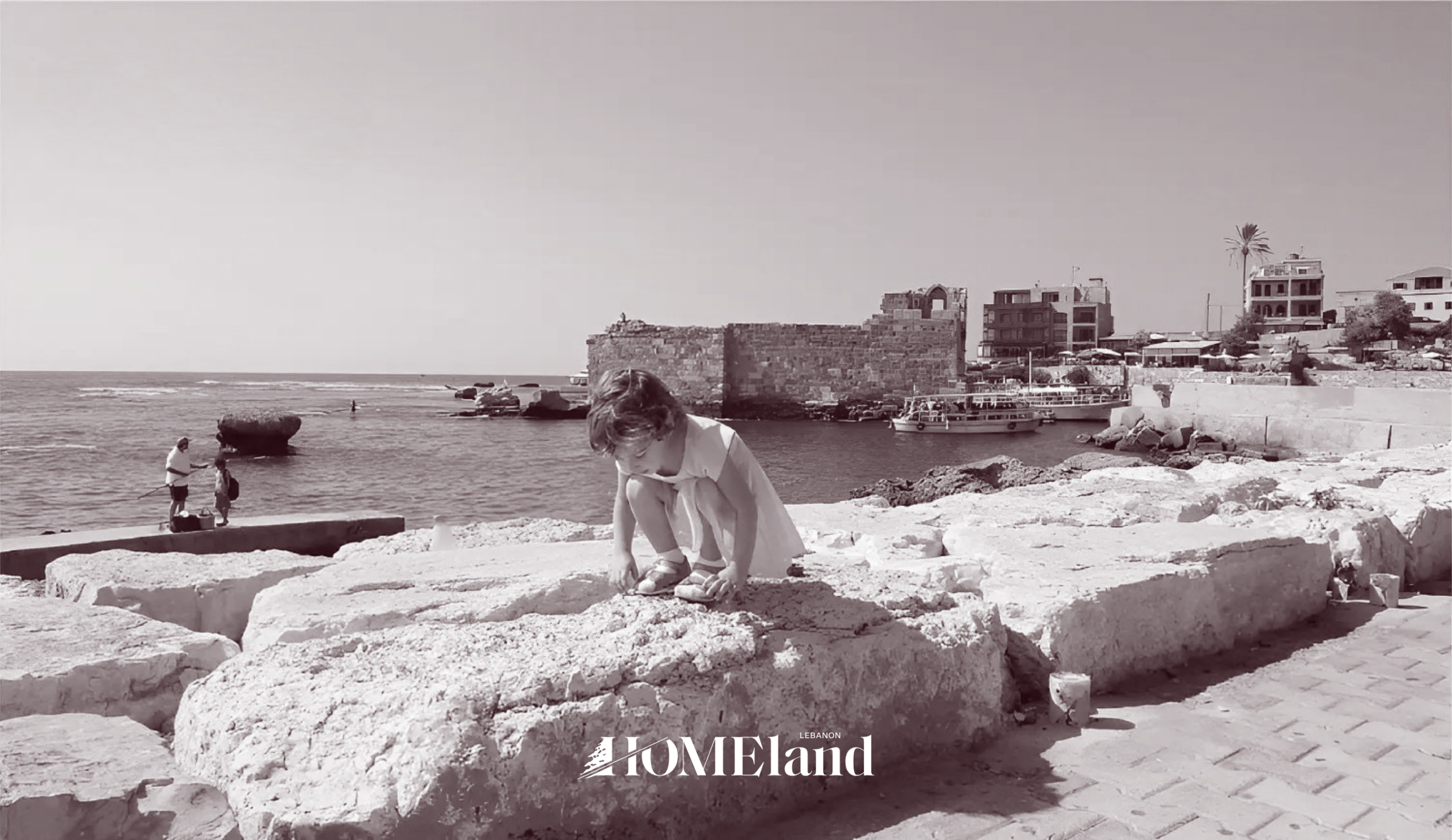
Jenny Ponnig gives her account of the challenging, frustrating and beautiful educational experience that you get from raising your kids in Lebanon.
The land of cedars is a country with an ancient past and an unpredictable future. Living in Lebanon’s present is a complexity that I want to discover and explore with my kids, so that we can learn more about this place we call HOME.
My Lebanese husband and I decided to bring up our children in Lebanon when we were married. We wanted them to be protected by the seclusion of family and the social overtone of tradition which Lebanon balances well with a very modern and cosmopolitan attitude, because it has been influenced for over a century by the Lebanese diaspora. We knew their education would be exceptional – most Lebanese are learning three languages by the time they are 5. But it’s hard to ignore the stress of living in an underdeveloped country when it’s a hassle to renew the children’s identity papers and maneuver around maniac drivers while driving over shoddy roads just to get the kids to school.
Still, the main challenge I face is the absence of my family. If I would have realized how difficult it is to raise kids without my own parents nearby I might have had second thoughts about starting a family in Lebanon in the first place. Fortunately my husband’s brothers and sisters readily accepted me as part of the family, and have always respected the way my husband and I are raising our girls. They aren’t anything like those domineering, controlling and evil in-laws that are depicted on popular Middle Eastern soap operas.
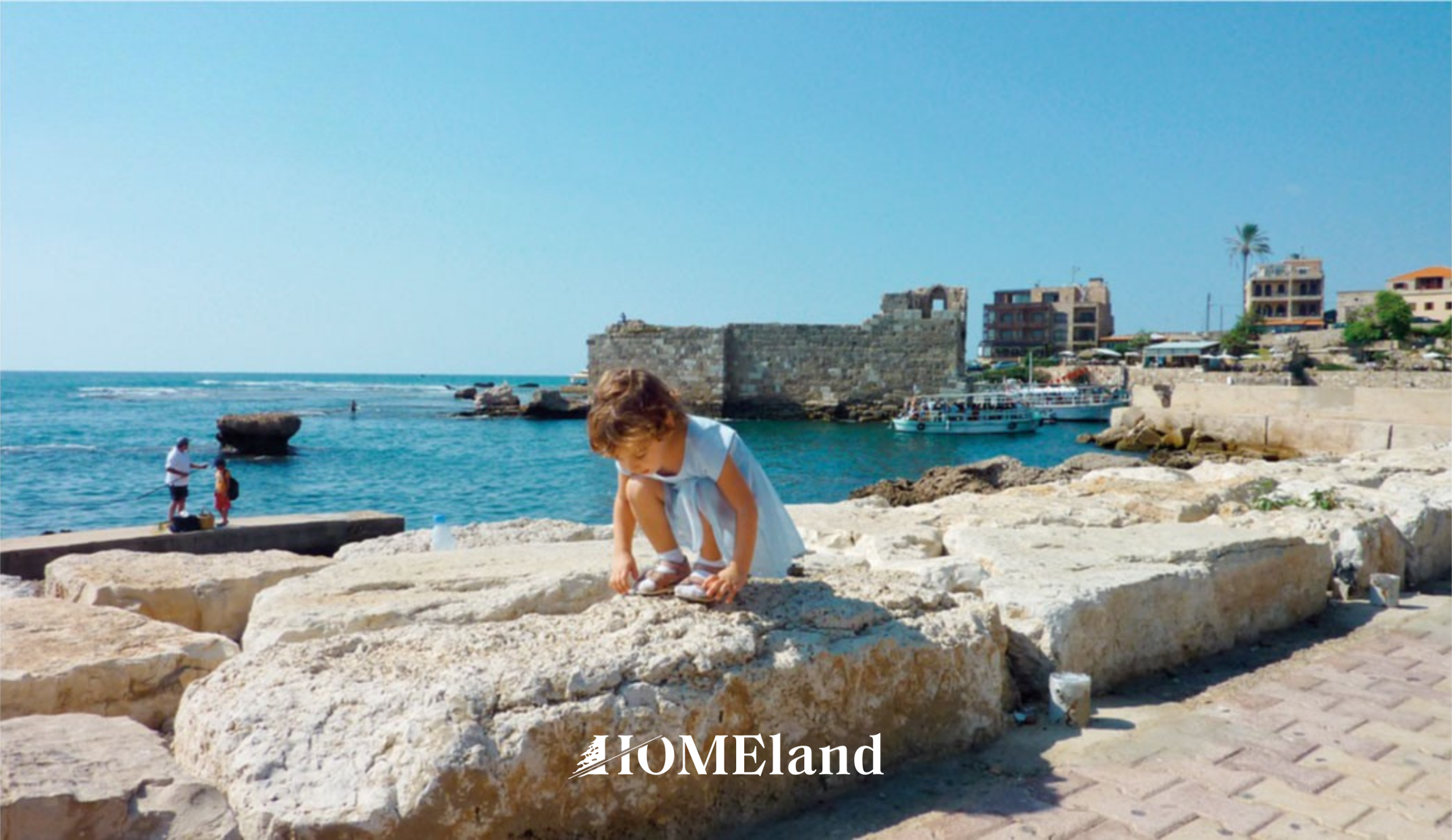
At mealtime we speak a Lebanese blend of Arabic and English over my sometimes successful kousa al-mahshi, my daughter’s favorite, or more often mjadara because it’s easier to make. We partake in all the traditions of Christmas, Ramadan, Easter and Eid al-Adha, and how they are celebrated in Lebanon. At Christmastime we’ll take the kids to Byblos to see the colossal tree and decorations that just keep getting more spectacular with every season. During Ramadan we’ll have iftar among family and friends.
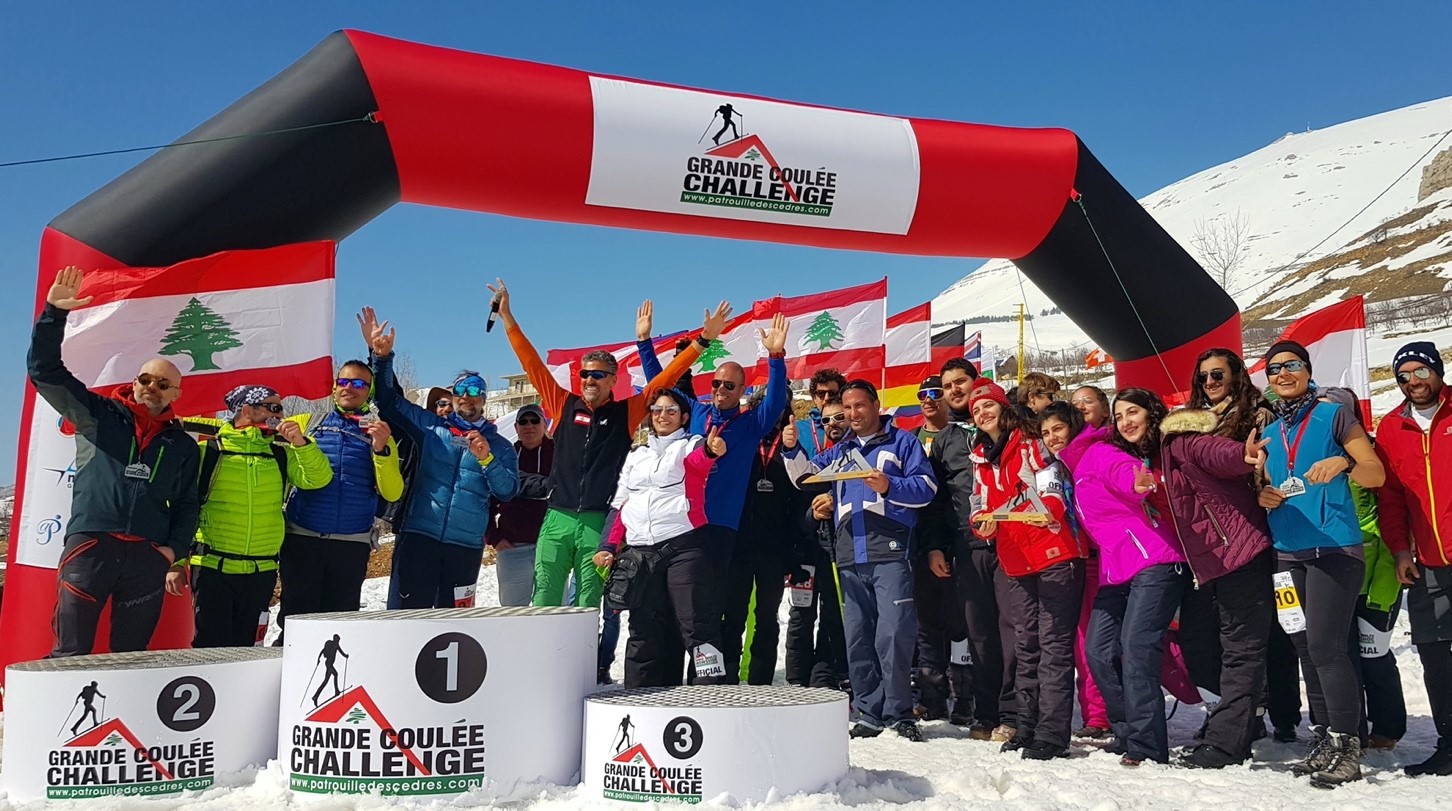
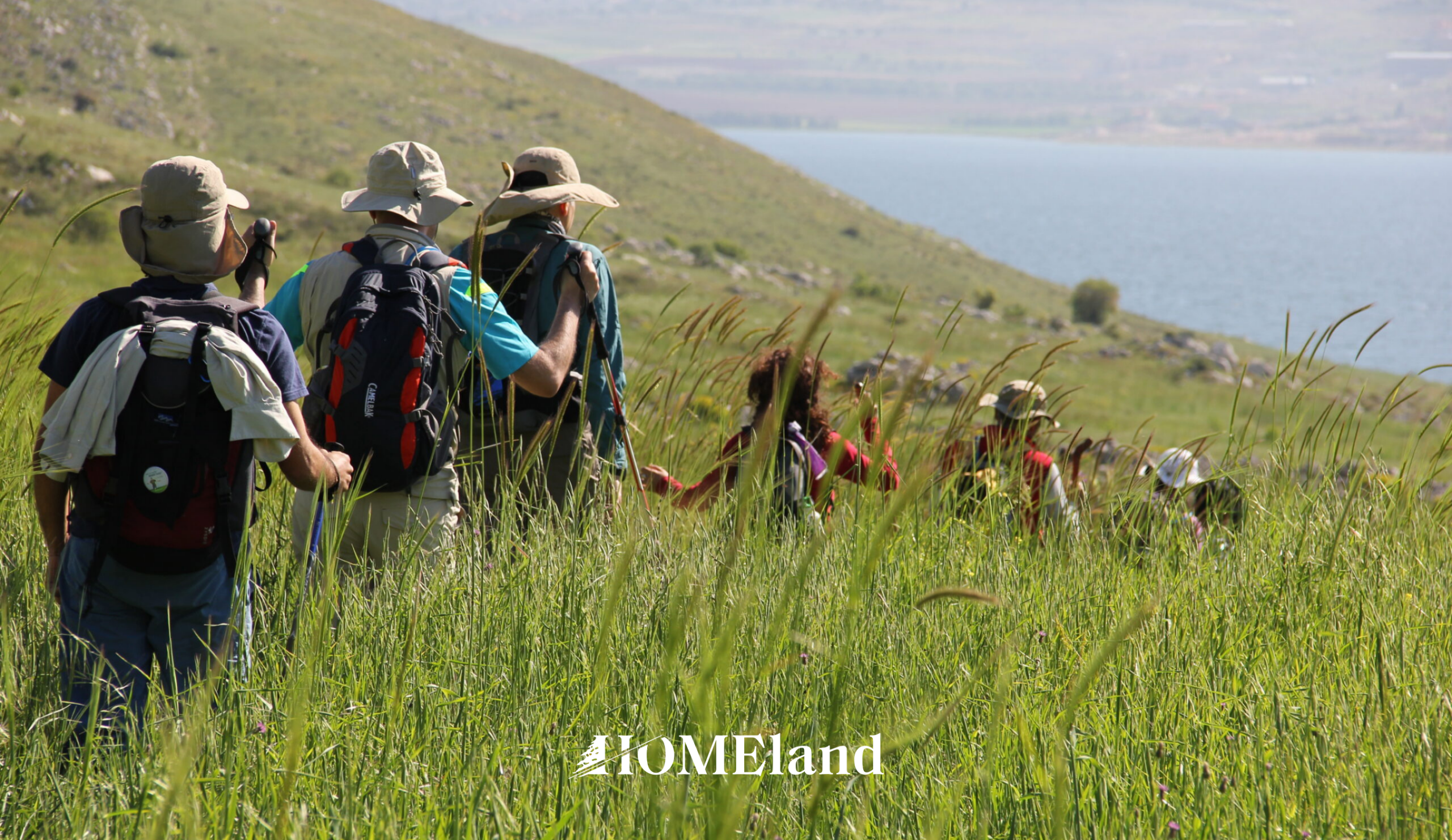
Weekdays usually revolve around school and work, but come the weekend we often try to explore different historic or cultural places of interest this small country has to offer, or take them on escapades until they’ve exhausted their youthful energy. Exploring the ancient ruins of Baalbek, Byblos, Faqra and Tyre, exceptional playgrounds, is on the top of our list of fun and educational activities. Jbeil’s Wagonpark is a public garden with beautiful grounds, equipped with modern safe play structures for kids. The private Yuppie Park, in Hazmieh, is an extensive awesome outdoor play palace complete with a wooden boat under a canopy of trees. My kids enjoy the Sanayeh Public Garden in Beirut, but it’s heaving with families on the weekend. Bicycle jaunts along the paved trail just north of Zaitounay Bay are pleasant in the morning. Dino City, in Ajaltoun has a small forest filled with life-size dinosaurs whose roars and grunts used to startle my eldest daughter.
One of my children’s favorite adventures is riding the teleferique from Jounieh up the steep mountainside to Harissa, which offers a splendid view of Jounieh Bay and Beirut. I try to stay focused on the beauty of this 15-minute journey in order to silence vertigo whispering in my ear. My daughter recently admitted to me that she’s always a little scared on the teleferique, but I suppose enthusiasm overcomes fear because we’ve been on it a dozen times.
I’ve realized that over the past 10 years making a life in Lebanon takes time and patience. It’s not always easy living in a country that is in constant flux: battling economic turmoil, pushing away storms of conflict on its borders and a near-stagnant bureaucracy. I decided soon after my first child was born that the only way for me to appreciate Lebanon for what it is, with all its downfalls and power outages, delicious cuisine and beach resorts, multilingualism and matchless fashion is to discover this multifaceted country with my children because it is a part of them and their identity. Lebanon is home.
HOMEland Magazine
We firmly believe that the internet should be available and accessible to anyone, and are committed to providing a website that is accessible to the widest possible audience, regardless of circumstance and ability.
To fulfill this, we aim to adhere as strictly as possible to the World Wide Web Consortium’s (W3C) Web Content Accessibility Guidelines 2.1 (WCAG 2.1) at the AA level. These guidelines explain how to make web content accessible to people with a wide array of disabilities. Complying with those guidelines helps us ensure that the website is accessible to all people: blind people, people with motor impairments, visual impairment, cognitive disabilities, and more.
This website utilizes various technologies that are meant to make it as accessible as possible at all times. We utilize an accessibility interface that allows persons with specific disabilities to adjust the website’s UI (user interface) and design it to their personal needs.
Additionally, the website utilizes an AI-based application that runs in the background and optimizes its accessibility level constantly. This application remediates the website’s HTML, adapts Its functionality and behavior for screen-readers used by the blind users, and for keyboard functions used by individuals with motor impairments.
If you’ve found a malfunction or have ideas for improvement, we’ll be happy to hear from you. You can reach out to the website’s operators by using the following email
Our website implements the ARIA attributes (Accessible Rich Internet Applications) technique, alongside various different behavioral changes, to ensure blind users visiting with screen-readers are able to read, comprehend, and enjoy the website’s functions. As soon as a user with a screen-reader enters your site, they immediately receive a prompt to enter the Screen-Reader Profile so they can browse and operate your site effectively. Here’s how our website covers some of the most important screen-reader requirements, alongside console screenshots of code examples:
Screen-reader optimization: we run a background process that learns the website’s components from top to bottom, to ensure ongoing compliance even when updating the website. In this process, we provide screen-readers with meaningful data using the ARIA set of attributes. For example, we provide accurate form labels; descriptions for actionable icons (social media icons, search icons, cart icons, etc.); validation guidance for form inputs; element roles such as buttons, menus, modal dialogues (popups), and others. Additionally, the background process scans all the website’s images and provides an accurate and meaningful image-object-recognition-based description as an ALT (alternate text) tag for images that are not described. It will also extract texts that are embedded within the image, using an OCR (optical character recognition) technology. To turn on screen-reader adjustments at any time, users need only to press the Alt+1 keyboard combination. Screen-reader users also get automatic announcements to turn the Screen-reader mode on as soon as they enter the website.
These adjustments are compatible with all popular screen readers, including JAWS and NVDA.
Keyboard navigation optimization: The background process also adjusts the website’s HTML, and adds various behaviors using JavaScript code to make the website operable by the keyboard. This includes the ability to navigate the website using the Tab and Shift+Tab keys, operate dropdowns with the arrow keys, close them with Esc, trigger buttons and links using the Enter key, navigate between radio and checkbox elements using the arrow keys, and fill them in with the Spacebar or Enter key.Additionally, keyboard users will find quick-navigation and content-skip menus, available at any time by clicking Alt+1, or as the first elements of the site while navigating with the keyboard. The background process also handles triggered popups by moving the keyboard focus towards them as soon as they appear, and not allow the focus drift outside it.
Users can also use shortcuts such as “M” (menus), “H” (headings), “F” (forms), “B” (buttons), and “G” (graphics) to jump to specific elements.
We aim to support the widest array of browsers and assistive technologies as possible, so our users can choose the best fitting tools for them, with as few limitations as possible. Therefore, we have worked very hard to be able to support all major systems that comprise over 95% of the user market share including Google Chrome, Mozilla Firefox, Apple Safari, Opera and Microsoft Edge, JAWS and NVDA (screen readers).
Despite our very best efforts to allow anybody to adjust the website to their needs. There may still be pages or sections that are not fully accessible, are in the process of becoming accessible, or are lacking an adequate technological solution to make them accessible. Still, we are continually improving our accessibility, adding, updating and improving its options and features, and developing and adopting new technologies. All this is meant to reach the optimal level of accessibility, following technological advancements. For any assistance, please reach out to