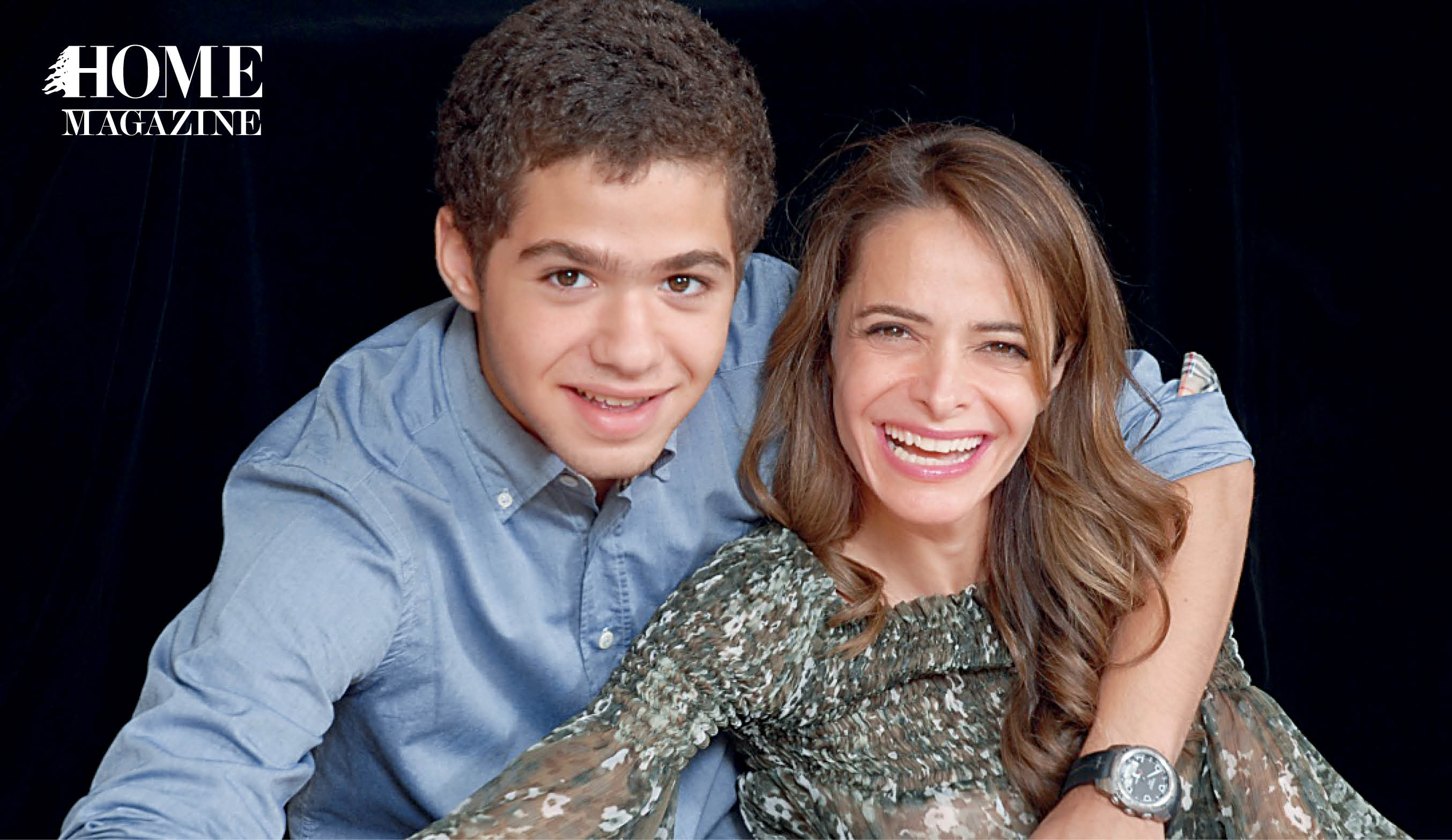
Photo by: Khaled Harb
Interviewed by: Patricia Bitar Cherfan, Editor-in-Chief
In the hierarchy of bereavement, nothing exceeds a mother’s grief. So what happens when a mourning mother steps out of the shadow of loss to shift gears and save lives?
Photographs of a bright-eyed teenage boy fill Zeina Kassem’s office. In 2010, 17-year-old Talal Kassem was killed by a reckless driver while crossing the road at 7 a.m. on his way to school. News of his tragic end sent ripples of shock through Talal’s family, friends and further.
The death of Zeina Kassem’s son split her life into two: the time before and after Talal’s passing. She saw in this painful experience the opportunity to spark nationwide reforms that would rescue countless lives from road-related trauma.
“When Talal went, he gave me all his power,” says his determined mother. “I decided to make a difference so that his death would not be in vain.”
From struggle to social change
Pedestrians and drivers alike are both highly vulnerable in Lebanon, a country where road rage is common and standardized trauma care is virtually non-existent. Archaic safety laws implemented remain unchanged. Despite these frustrating realities, Kassem’s work led to the implementation of a new traffic law in 2013, including reform that legally obliges instructors to obtain a certificate in order to teach driving.
“I lost hope trying to change laws in Lebanon,” Kassem shrugs. “I believe in education and training.”
With that goal in mind, Kassem launched a non-profit organization on her son’s one-year memorial called Roads for Life: The Talal Kassem Fund for Post-Accident Care.
“When Talal went, he gave me all his power.”
Trauma is the number one killer worldwide for individuals up to 44 years of age. In technical terms, a trauma patient is someone who has “suffered a serious and life-threatening injury potentially leading to shock, respiratory failure and death.” Swift and efficient intervention can prevent up to 40 percent of these unnecessary deaths. “Our mission is essentially to save lives,” says Kassem.
 Photo by Milad Ayoub
Recognizing the importance of implementing dependable emergency-care systems, the World Health Organization spearheaded the Global Emergency and Trauma Care Initiative in 2018. The lives of millions of patients will be saved as a direct consequence of implementing proven interventions and improving the quality emergency care in low- and middle- income countries.
“Swift and efficient intervention can prevent up to 40 percent of these unnecessary deaths.”
The full circle of trauma
The golden period of trauma begins at the scene of the accident and should end in the emergency room. The actors involved at every level and the steps taken during this brief window of time must be standardized, as they are critical to the victim’s survival.
Roads for Life intervenes by training paramedics, nurses and physicians at the American University of Beirut Medical Center (AUBMC), according to internationally recognized guidelines. The more closely each actor in the cycle of trauma sticks to these guidelines, the greater the chance of survival.
Those first appearing on the scene of trauma take the Pre-Trauma Hospital Life Support (PTHLS) course which trains Lebanese Red Cross paramedics based on a unified protocol. “The Civil Defense also need to know how to help on the spot since they arrive before the paramedics team,” says Kassem.
The Advanced Trauma Life Support (ATLS) and Advanced Trauma Care for Nurses (ATCN), respectively, train physicians and nurses how to provide immediate care for patients once they reach the hospital. “What beautiful news for a patient and the family when a doctor can say we saved the person,” says Kassem. During a weekend workshop, nurses and physicians gather at AUBMC to simulate emergency situations on medical mannequins using an array of trauma equipment.
While car accidents provided the original motive, the universality of the knowledge gained in Road for Life’s courses provide the skills necessary for intervention during any type of emergency situation.
More than 600 people across 90 hospitals have been trained since 2011—an impressive number for a single organization. However, it is impossible to know exactly how many lives have been saved as hospitals tend to keep their data private.
Ultimately, Kassem aspires to make ATLS and ATCN mandatory nationwide, and to implement an accreditation system for trauma in emergency rooms. “Beirut is better covered than other areas. Our goal is to reach of all Lebanon,” she says, perhaps overly optimistic. “There is a demand for these courses. Our classes are fully booked. Sadly, we cannot train everybody. That is beyond our capacity.”
What about the average person looking to learn best practice for emergency situations? The Roads for Life initiative Stop the Bleed is an upcoming public initiative that teaches the layperson three failproof methods to stop someone from bleeding. Think of it as a type of CPR for bleeding-related trauma. “Education is a snowball. You teach one person who will teach 10 people around them,” Kassem says. “We want to spread these ideas and make them go viral.”
“The oversaturation of causes to support has spurred a wave of empathy fatigue.”
Money matters
Civil society organizations based in Lebanon often shoulder more responsibility than they can handle. “NGOs take on the government’s role,” says Kassem, who worked with Brave Heart for eight years before kickstarting her own organization.
 Photo by Nabil Ismail
While sponsorships from UNICEF and others have given these initiatives momentum, Roads for Life depends on donations made by the average person to keep on track. However, the oversaturation of causes to support has spurred a wave of empathy fatigue. As a result, Roads for Life and other advocacy groups struggle to raise muchneeded funds. “Roads for Life will go on with this work as long as we can.
Most of all, we want people to know that every donation counts,” Kassem says.
“This is a cause that concerns us all,” she says. “It can happen to anybody. When someone gives to Roads for Life, that amount can end up helping a father, sister, neighbor or friend.”
Famous figures have been quick to lend their support to the cause. Fifteen artists, including Nada Debs, Bernard Khoury, Yazan Halwani and Roger Moukarzel, each reinterpreted one of 25 Harley Davidson helmets in their own style for Roads Have Stories, a Roads for Life awareness event. The show exhibited all newly decorated helmets to the public at a fundraising event. “Elie Saab was especially helpful and gifted us a motorcycle,” she added, appreciatively.
 Photo by Nabil Ismail
Healing powers of family and faith
Talal is survived by two brothers who are 21-year-old fraternal twins, and a 23-year-old sister, Chirine, who manages Road for Life’s social media.
As for her late son, Kassem believes in maintaining an open and honest attitude. “I don’t like how when there is a death, we stop talking about the deceased. It’s not healthy,” she says. “We talk about Talal. He is here and living with us all the time.”
In line with this open-hearted attitude, Kassem chronicled her journey in the autobiographical book Crossing, which was commercially released in English, French and Arabic.
“I strongly believe that our God took him because He loves him and wants to protect him,” she says. “We are kind of blessed. If he had to go, he went in the best way possible. He didn’t suffer. And now we have an angel with us who is helping us to save lives.”
For more info:
Facebook: https://www.facebook.com/RoadsForLife/
Instagram: https://www.instagram.com/roadsforlife/?hl=en
YouTube: https://www.youtube.com/user/RoadsForLife
Twitter: https://twitter.com/roadsforlife?lang=en


HOMEland THEMES
Coming Soon
HOMEland Events & Collaborations
Coming Soon
 Signature Boutique