Rodge – Liberated by the Music: The Story of Lebanon’s Biggest DJ Ever
How a boy who ducked shelling to reach the radio became DJ Rodge, Lebanon's biggest DJ and a quiet force for good.

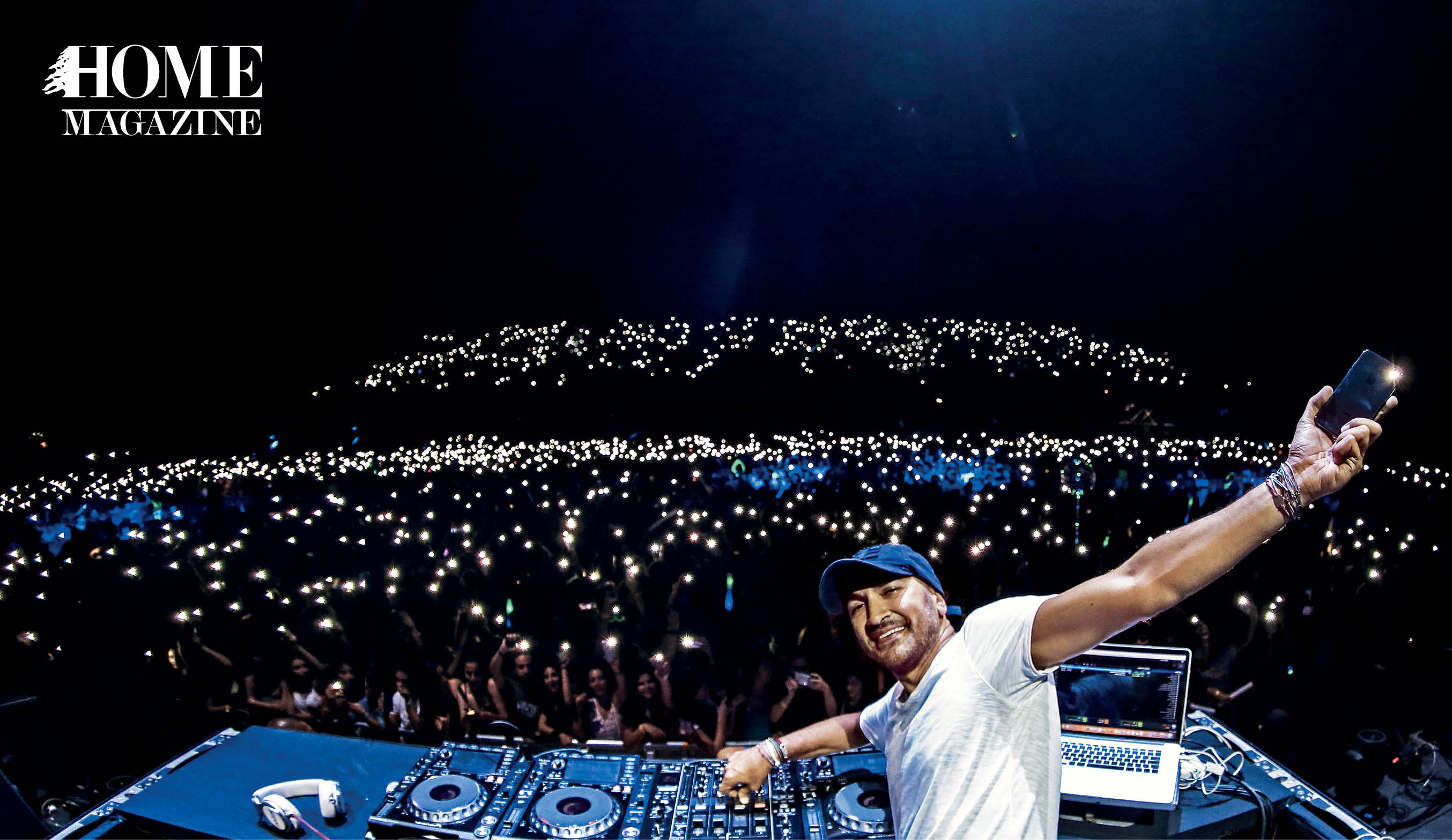
Now at the peak of his career, multifaceted music producer Rodge has recently added a string of hits to his long list of achievements.
Anyone who has had the privilege of experiencing a night out in Lebanon realizes its importance to the nation. With stylish beach parties and warehouse techno raves, spontaneous dabke lines and post-dinner table top moves, Lebanon’s night life is famed for its rich diversity.
Across this varied musical landscape, one figure is a towering presence. The biggest DJ in Lebanon, perhaps even the region, Rodge (real name Roger Saad) is also the founder of Mix-FM, one of Lebanon’s most popular radio stations.
A specialist in the art of feel-good music, Rodge told HOME: “The main concern of a DJ is to go into a room and make everyone there happy. The people have spent money and time to have a blast for three or four hours. It is the DJ’s job to give them a good time and make sure that when they leave, they have a huge smile on their face.”
Attending any of Rodge’s weekly residencies suggests he is succeeding in his goal. Thursdays’ 80s night at BO18, Fridays at The Village Dbayeh, and Saturdays at Igloo Mzaar are all immensely popular.
His followers attend religiously come rain or shine, traversing roads blocked with snow and vicious storms to unwind with their idol.
Rodge’s popular parties are only one aspect of his far greater contribution to Lebanon’s night life. His ability to attract international names to Lebanon is unmatched, having hosted and shared the stage with David Guetta, Sean Paul, Sia and Bryan Adams to name a few. As a promoter, Rodge has brought artists such as The Scorpions, Sting, Enrique Iglesias and Shakira to Lebanon. Although he downplays his international fame, he has opened for heavyweights such as Justin Bieber, Ed Sheeran and Jennifer Lopez.
Equally impressive is Rodge’s recent foray into producing his own songs, with 19 euphoric dance hits to date. His tried and tested formula remixes pop legends such as Aretha Franklin and Chris De Burgh, boosting their well-known lyrics with a bouncing bass and crisp synths guaranteed to get people on their feet. His original productions Beirut, Light Up the Sky (feat. Joe Killington) and It Starts with Love (feat. Gary Pine) took 2018 by storm.
“When I go and play music, it’s my haven,” said Rodge. “I don’t need anything else, because music is my drive. When I am mixing for my radio show, for that hour I am on my own trip.”
“My life has been dedicated to music,” he added. This dedication has been necessary on a journey that has not always been easy. While he knew he wanted to create music from an early age and started DJing as a teenager, like many other Lebanese youth Rodge had to work hard to convince his parents that music was a worthwhile pursuit.
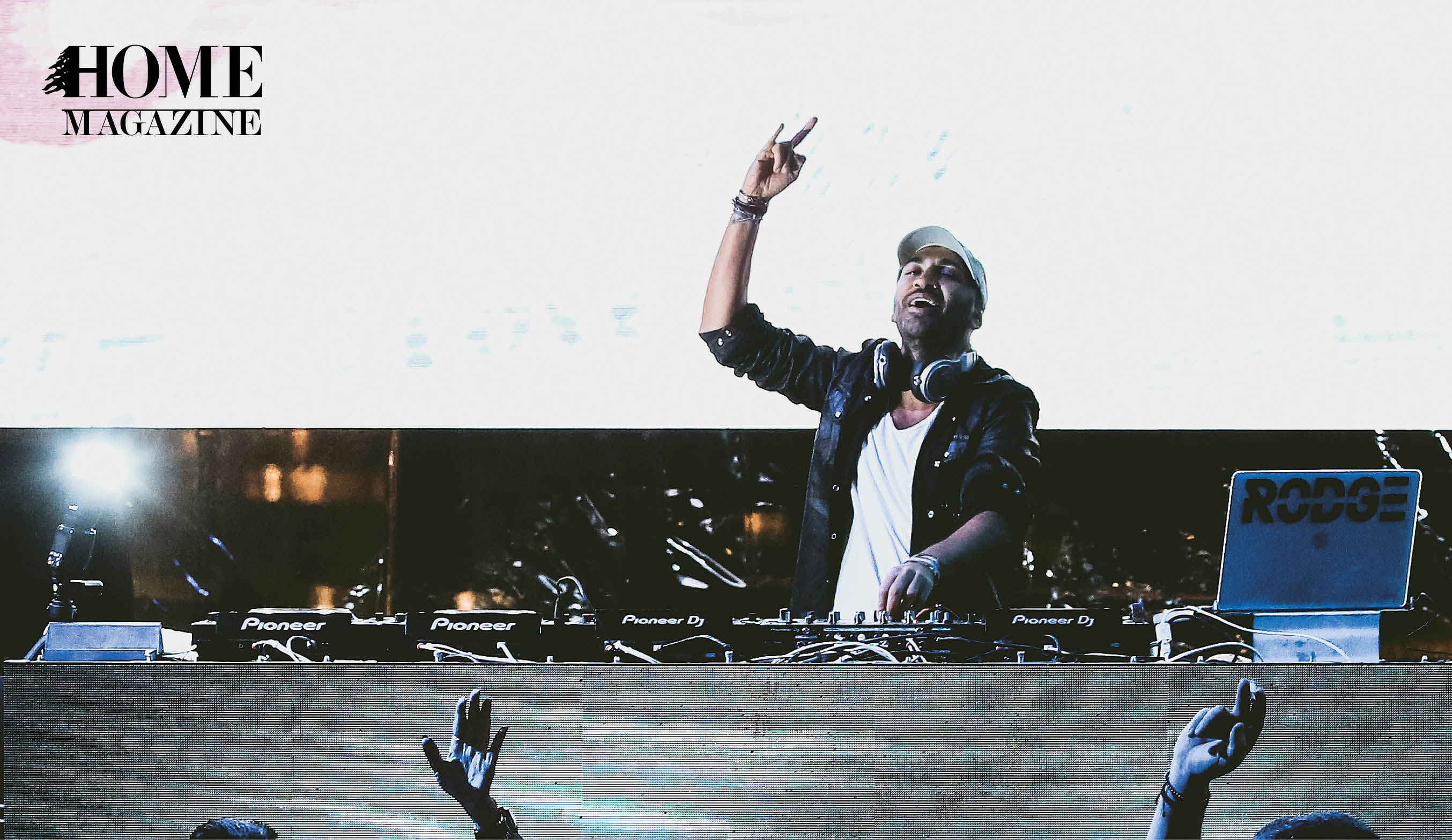
“My brother is an ophthalmologist, and my sister is a computer engineer,” both jobs traditionally valued in Lebanese society, explained Rodge. “I had a problem: I didn’t want to do anything except music, but I couldn’t study music because my parents didn’t want me to.” As a result, Rodge studied business and computing at Université Saint-Joseph (USJ), pursuing music in his free time.
Doing so during the 1980s required resilience. “When I used to play at Radio Fame, I would duck and dive under the shelling to get to the radio station,” Rodge recalled. “I would take the autostop from Ajaltoun to Mkalles, and I would play music. Nobody else dared to be there, so I would play music all day.”
“Music was my way to fight war, shyness, insecurities, traditions—everything. Music was my happy place. I was a bit shy growing up, so music was my platform to shine, to express myself.”
Rodge’s perseverance began to payoff in the late 1980s as he became a known DJ in Beirut, but it wasn’t until one night in 1991 that his career took off. The first Lebanese DJ competition was unfortunately being held on the same day as one of Rodge’s final university exams. “I went straight from winning the competition to the exam hall and aced my exams,” tells Rodge, a dual success which catapulted him to recognition while proving to his parents that he could balance music and studies. “When I won that competition, everything began to change in my life.”
Nevertheless, his financial difficulties continued, even after he “accidentally” founded Mix-FM in 1996, managing to pool together a few hundred dollars to rent Cool-FM, an unlicensed radio station back then, which later became Mix-FM.
“I started Mix-FM with my pocket money from DJing in the basement of Disco Number One. I didn’t have a house, so I slept at the radio for more than ten years,” explained Rodge. At that time, Mix-FM was only a small basement room and not the open-plan Ashrafieh office it is today.
During the early days of Mix-FM, Rodge would often resort to playing a whole radio show under different aliases: “I had the support of great friends and close ones, but I had difficulty recruiting DJs to cover shifts for the whole day, so I had to be the DJ that played under different names. I would play under Rodge, then another name, and another name.”
Rodge’s journey was also one of personal development. He embraced some of the trappings of fame when he first found success. “When I was young and I got famous all of a sudden, ego came to me.”
“Ego is man’s worst enemy: I don’t believe in ego. Maturity enables you to be a good person. I’m proud of being nice,” he added, after being asked whether his image as a nice guy was perceived as uncool in the world of night life and cliché bad-boy DJs. He tries to follow a simple philosophy: “Treat others how you want to be treated yourself.”
He maintains this mentality today, manifesting in his commitment to give back. Rodge has various roles with charities including Kunhadi and SOS and is the ambassador for the Brave Heart Fund, a Lebanese charity that pays the medical expenses for underprivileged Lebanese children suffering from congenital heart disease.
Brave Heart Fund Founder Joumana Ghandour expressed her gratitude for Rodge: “We value Rodge as a Brave Heart ambassador. His genuine concern, kindness and generosity are incredible.”
A collection of video testimonies from the charities that Rodge has worked with, collected by his team at Mix-FM as a birthday present, testify to his valuable contribution. Shaila Afzal Abou Khalil, the Brave Heart Fund committee chair, describes that through four fundraisers at BO18 alone, Rodge has directly saved the lives of twenty-six children.
“We couldn’t be more proud of his collaboration,” she explains. “Rodge’s fundraising parties have become one of the most anticipated parties in town. People always flock to them every time we organize them, and they do it because it’s fun and because it’s a good cause.
“The entire night people are celebrating, enjoying Rodge’s music, his tunes, and the energy in the room, and you’re saving lives doing that.”
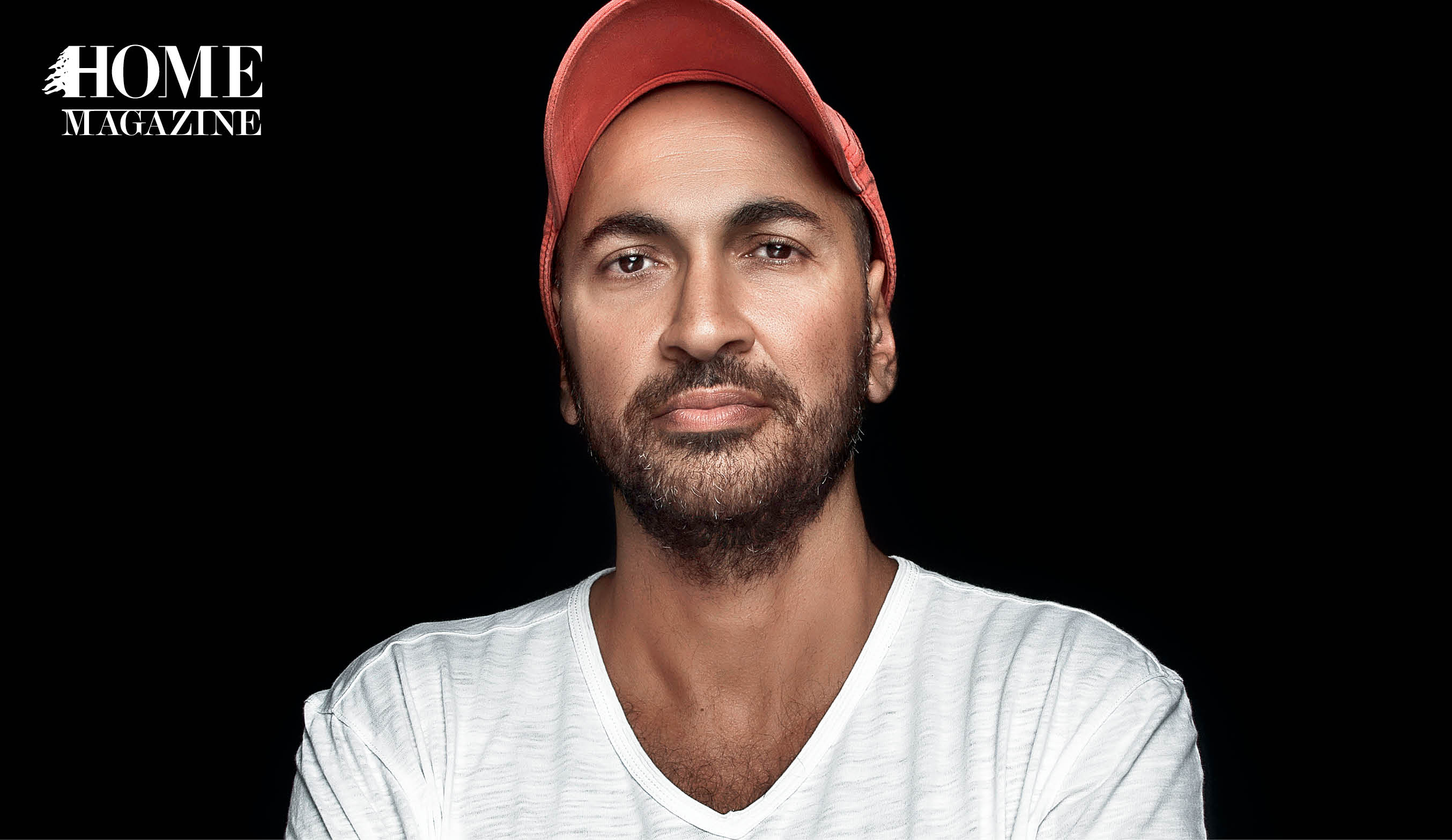
Rodge questions why anyone in his position wouldn’t try and make a difference. “If even only my ten-person team gave $10 to someone who came asking for help in our office, that’s already $100, and that can feed a person for a while,” he explained.
Rodge tries to extend this attitude into his work life. Although he describes himself as a strict and very demanding manager, he emphasizes his belief in treating his team well and offering them opportunities to thrive. “Working as part of a team, I learn something new every day,” said Rodge.
Juggling these commitments can be difficult and Rodge, a self-described perfectionist, tries to maximize the effectiveness of his time in both his personal and business life. “Now, I try to work only a few hours a day,” he explains.“But during those hours, I work effectively, I delegate more and focus on the tasks that matter the most.”
He also goes to the gym three to five days a week, a factor which “helps a lot” in keeping him energised enough to deal with his demanding lifestyle.
While the radio industry in Lebanon currently faces difficulties, Rodge’s success as a DJ has allowed him to continue growing Mix-FM and using it as a platform to promote other Lebanese artists. From 1996 to 2006, Rodge focused on the business side of Mix-FM, allowing other younger DJs to shine.
Presenting Lebanon in a positive light is a key part of Rodge’s mission. The video for his 2018 hit Beirut, which was top of the Lebanese charts for two consecutive weeks and has 482,700 plays on Anghami, is a showcase of all the positive aspects of life in Lebanon. Rodge is also aware of the country’s current shortcomings. “We’re a country that struggles; we’ve been governed by the same people for years and years,” he said.
Having tried his hand at various aspects of the DJ scene, Rodge’s next aim is to blow up internationally. He is a keen traveler and keeps a collection of snow globes in his office from countries he’s been to.
However, Rodge remains committed to staying in Lebanon, because he loves his country and wants to try and make it internationally from here. “I hope the Lebanese youth can see that if they work hard, they can be the next big DJ, the next Martin Garrix or whoever,” he said.
Through his pioneering work, Rodge has done more than anyone to be a role model for young Lebanese music lovers. From forging new paths to bringing international stars to Lebanon, Rodge’s achievements mean that up and coming artists can now dare to dream big. Wherever Rodge’s career takes him next, within Lebanon or across the globe, one thing is clear: Rodge has paved the way for the next generation of Lebanese DJs.

 Signature Boutique



Speaking Truth to Power: Pierre Sadek Foundation