Running for others is a passion that Ali Kedami has developed over the years. His strong relationship with his daughter has helped him to overcome obstacles and pursue his endeavors to help others.
Article by: Myriam Ramadanphy
Ali and Saria, Saria and Ali… a father/ daughter relationship that is made of steel – just like their characters, just like his love for artistic metalwork and his passion for running for others.
Ali Kedami was born in 1962 and raised in Ivory Coast by Lebanese parents.

He was never a born athlete; he only played soccer during his childhood, just like most boys. He studied math and found himself passionate for artistic metalwork. At the age of 33, Ali married Lina and moved to Lebanon. Strengthened by his experience in metalwork, Kedami opened his own workshop and began a career providing security for houses. This included building armored doors and safe deposit boxes, and basically providing safe environments wherever required.

Saria
Ali’s life was turned upside down after the birth of his daughter Saria in 2000. After a long wait of nine years to become parents, Ali and his wife learned that their seven month old child had been diagnosed with a mild physical handicap with risks of complications. After endless sleepless nights and doctors’ visits, and countless physiotherapy and rehabilitation sessions, Saria got stronger, and she is now a healthy and determined 17-year-old who attends a special school and is her dad’s most loyal fan.
“My destiny is God’s will and I will accept what He gives me as a gift.”
A few years ago, while out one morning, Ali encountered many posters advertising the Beirut Marathon: he saw this as a personal message and decided to enroll himself.

From the age of 46, and for the next five years, Ali dedicated his Beirut Marathon runs to his daughter, who awaited him at every finish line. They soon became a team in which he describes her as being the drive and the mental force, while he is the legs that will help her get through her pains and aches.
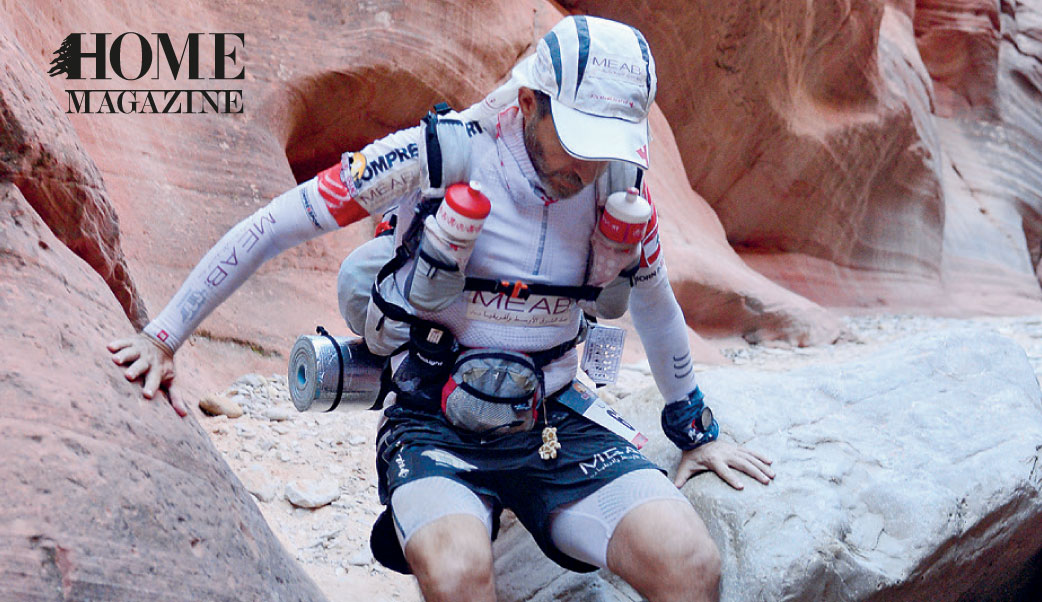
In 2007, Saria ran her first kilometer. The next year, Ali became a professional runner and started a series of marathons that would take him all around the globe to countries such as Chile, Egypt, Turkey, Australia, and many more. As much as geographically possible, Saria and her smile are supporting him along the way and at all the finish lines.
Running: a mix of hidden passion with a purpose
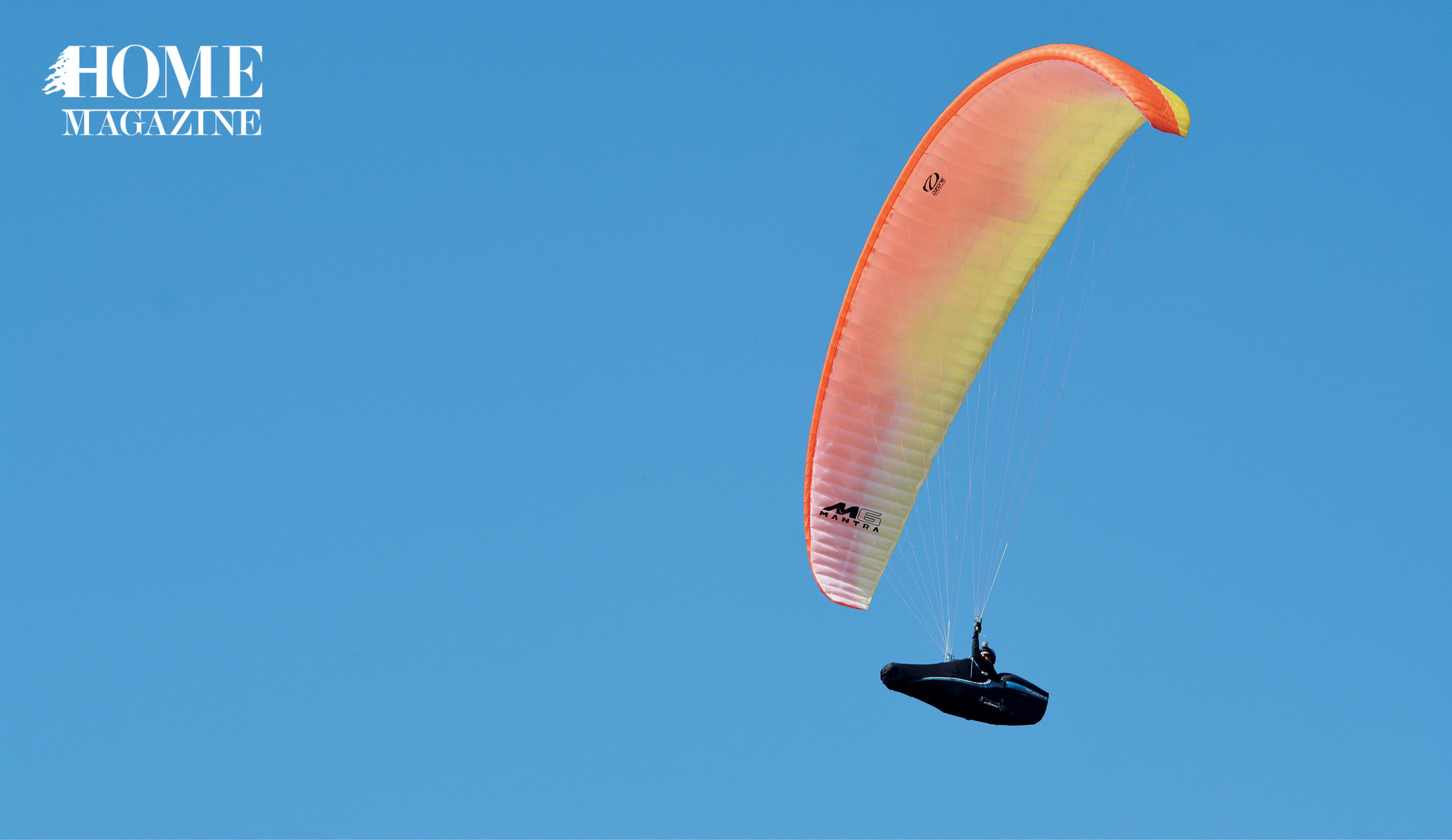
Today, Ali is a professional running coach, training non-professionals to attain their best and believe in themselves physically and mentally as they participate in marathons. Ali truly believes that his exceptional running ability (he even participated in two-day and three-day runs for Sanad, see below) is a gift which he should use to help others in need.

Some of Ali’s Major Runs
2005 to 2015: Beirut Marathon for Saria
2011: 111 km Damascus to Beirut
2008, 2009 and 2010: Paris Marathon
2010: Sahara Race – Racing the Planet – Egypt
2011: Atacama Crossing – Racing the Planet – Atacama, Chile
Gobi March – Racing the Planet – Gobi, China
2012: Jordan – Racing the Planet – Wadi Rum, Jordan
The Last Desert – Racing the Planet – Antarctica
2014: Ecotrail de Paris (80 km)
Iznik Ultra, Turkey (130 km) De-feet Cancer Run, Lebanon (210 km) Madagascar 2014 – Racing the Planet – Antsarinana, Madagascar (250 km)
2015: The Track Outback Race – Canal Adventure, Australia (522 km)
Grand to Grand Ultra Race – Grand Canyon, USA (273 km)
2016: 48 hours for Sanad (non-stop run, 265 km) Cappadocia Ultra Trail – Turkey (265 km)
2017: 72 hours for Sanad (non-stop run, 308 km)

Facebook: Ali Kedami
HOMEland Magazine
We firmly believe that the internet should be available and accessible to anyone, and are committed to providing a website that is accessible to the widest possible audience, regardless of circumstance and ability.
To fulfill this, we aim to adhere as strictly as possible to the World Wide Web Consortium’s (W3C) Web Content Accessibility Guidelines 2.1 (WCAG 2.1) at the AA level. These guidelines explain how to make web content accessible to people with a wide array of disabilities. Complying with those guidelines helps us ensure that the website is accessible to all people: blind people, people with motor impairments, visual impairment, cognitive disabilities, and more.
This website utilizes various technologies that are meant to make it as accessible as possible at all times. We utilize an accessibility interface that allows persons with specific disabilities to adjust the website’s UI (user interface) and design it to their personal needs.
Additionally, the website utilizes an AI-based application that runs in the background and optimizes its accessibility level constantly. This application remediates the website’s HTML, adapts Its functionality and behavior for screen-readers used by the blind users, and for keyboard functions used by individuals with motor impairments.
If you’ve found a malfunction or have ideas for improvement, we’ll be happy to hear from you. You can reach out to the website’s operators by using the following email
Our website implements the ARIA attributes (Accessible Rich Internet Applications) technique, alongside various different behavioral changes, to ensure blind users visiting with screen-readers are able to read, comprehend, and enjoy the website’s functions. As soon as a user with a screen-reader enters your site, they immediately receive a prompt to enter the Screen-Reader Profile so they can browse and operate your site effectively. Here’s how our website covers some of the most important screen-reader requirements, alongside console screenshots of code examples:
Screen-reader optimization: we run a background process that learns the website’s components from top to bottom, to ensure ongoing compliance even when updating the website. In this process, we provide screen-readers with meaningful data using the ARIA set of attributes. For example, we provide accurate form labels; descriptions for actionable icons (social media icons, search icons, cart icons, etc.); validation guidance for form inputs; element roles such as buttons, menus, modal dialogues (popups), and others. Additionally, the background process scans all the website’s images and provides an accurate and meaningful image-object-recognition-based description as an ALT (alternate text) tag for images that are not described. It will also extract texts that are embedded within the image, using an OCR (optical character recognition) technology. To turn on screen-reader adjustments at any time, users need only to press the Alt+1 keyboard combination. Screen-reader users also get automatic announcements to turn the Screen-reader mode on as soon as they enter the website.
These adjustments are compatible with all popular screen readers, including JAWS and NVDA.
Keyboard navigation optimization: The background process also adjusts the website’s HTML, and adds various behaviors using JavaScript code to make the website operable by the keyboard. This includes the ability to navigate the website using the Tab and Shift+Tab keys, operate dropdowns with the arrow keys, close them with Esc, trigger buttons and links using the Enter key, navigate between radio and checkbox elements using the arrow keys, and fill them in with the Spacebar or Enter key.Additionally, keyboard users will find quick-navigation and content-skip menus, available at any time by clicking Alt+1, or as the first elements of the site while navigating with the keyboard. The background process also handles triggered popups by moving the keyboard focus towards them as soon as they appear, and not allow the focus drift outside it.
Users can also use shortcuts such as “M” (menus), “H” (headings), “F” (forms), “B” (buttons), and “G” (graphics) to jump to specific elements.
We aim to support the widest array of browsers and assistive technologies as possible, so our users can choose the best fitting tools for them, with as few limitations as possible. Therefore, we have worked very hard to be able to support all major systems that comprise over 95% of the user market share including Google Chrome, Mozilla Firefox, Apple Safari, Opera and Microsoft Edge, JAWS and NVDA (screen readers).
Despite our very best efforts to allow anybody to adjust the website to their needs. There may still be pages or sections that are not fully accessible, are in the process of becoming accessible, or are lacking an adequate technological solution to make them accessible. Still, we are continually improving our accessibility, adding, updating and improving its options and features, and developing and adopting new technologies. All this is meant to reach the optimal level of accessibility, following technological advancements. For any assistance, please reach out to