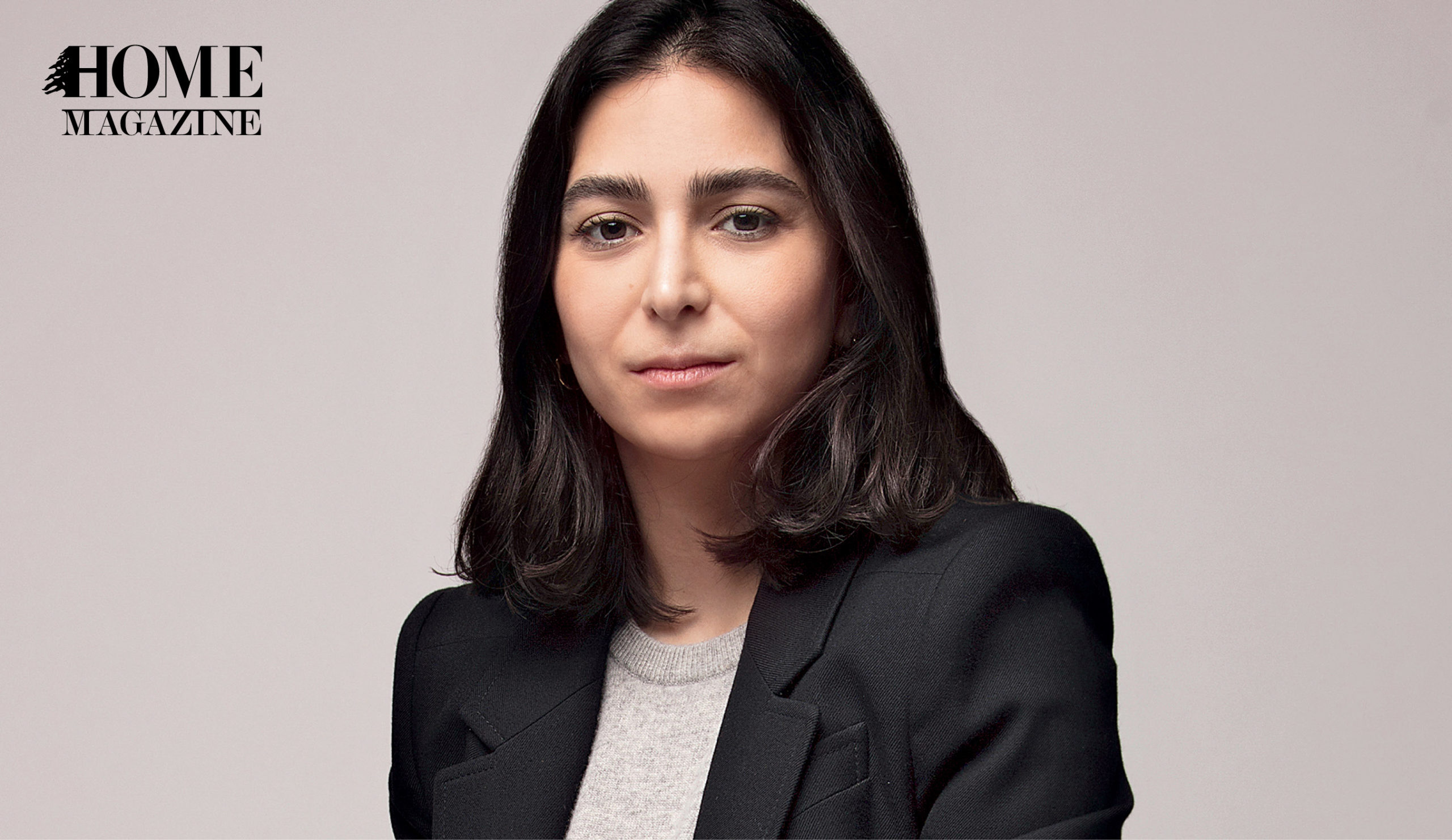
Interviewed by: Patricia Bitar Cherfan, Editor-in-Chief
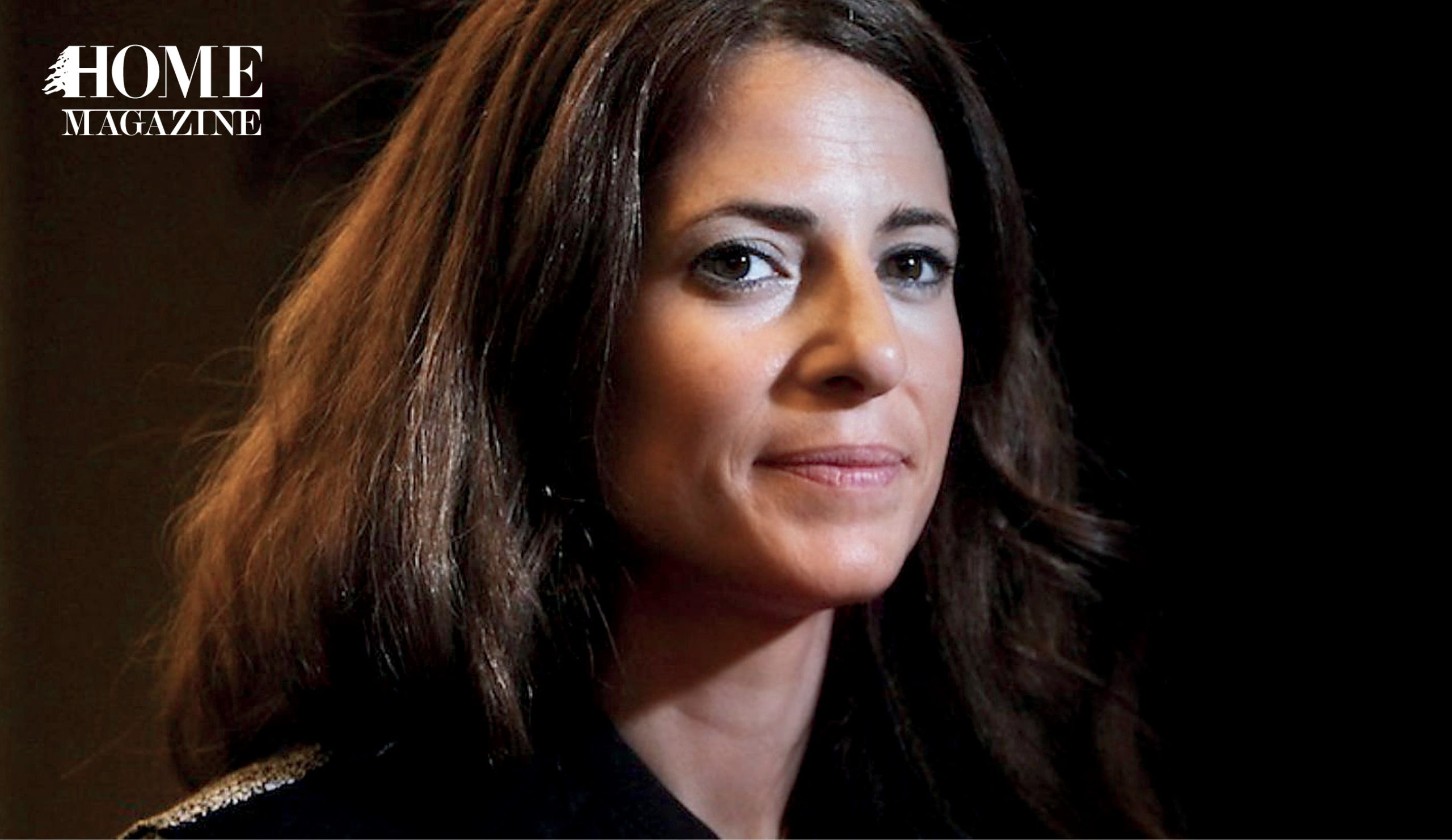
With hard work, dedication, and a strong vision, the Beirut-based designer rose through the ranks of the competitive world of the fashion industry. Today, Sandra Mansour’s fairytale creations are highly coveted in the Middle East and beyond. Sandra Mansour candidly shares her inspiring story with HOME.
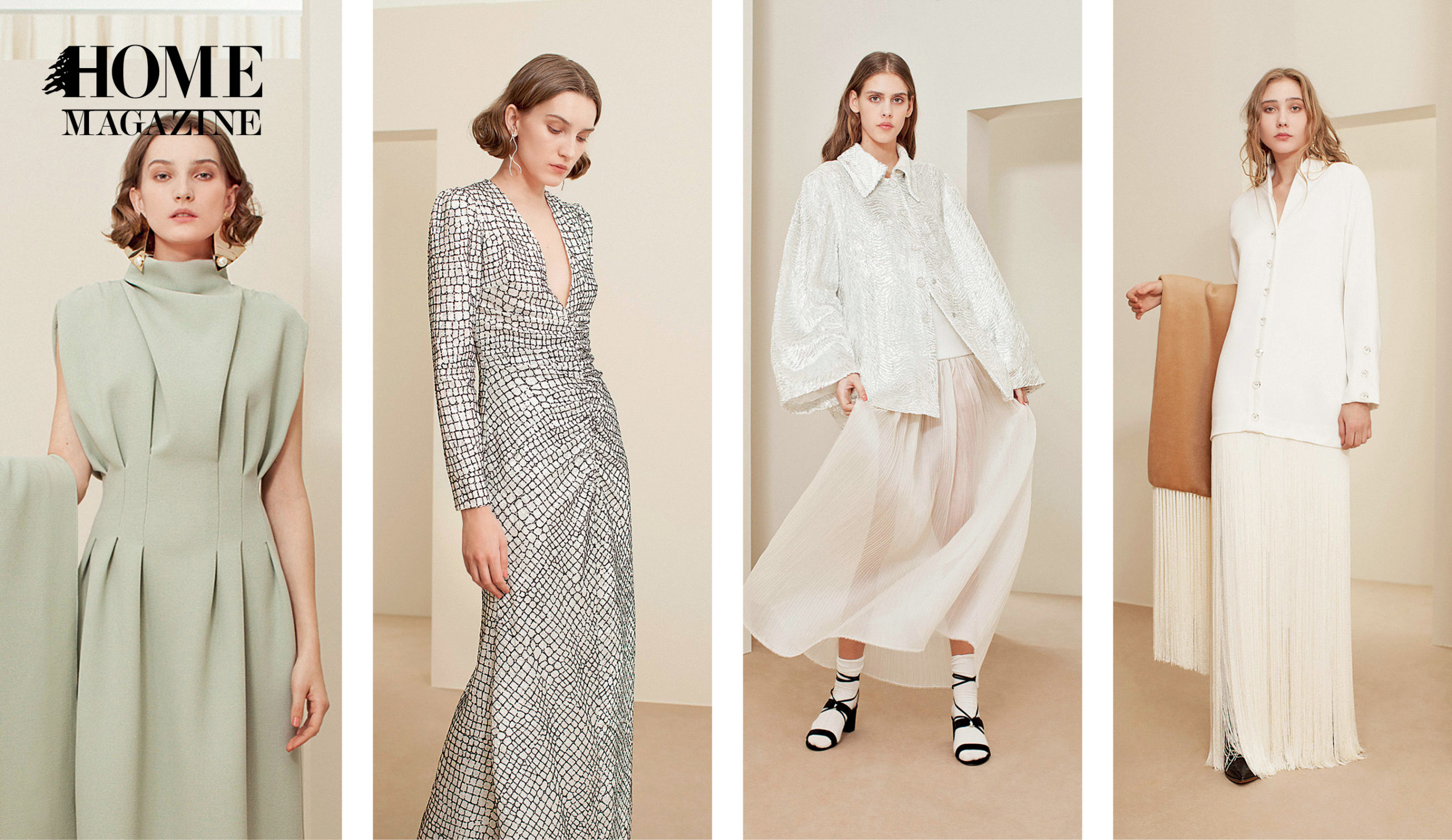
It has been 10 years since Sandra Mansour launched her eponymous prêt à porter label in Beirut which also provides sur mesure items. Today, she has become the goto designer for outfits with a distinct artistic flair. Elegant but by no means ostentatious, Mansour describes her creations as “luxurious ready-to-wear not haute couture.” In her delightful spacious, pastel hued showroom, elegant maxi gowns embellished with intricate embroidery and beadwork hang alongside playful fringed mini cocktail dresses and flowing floral print dresses.
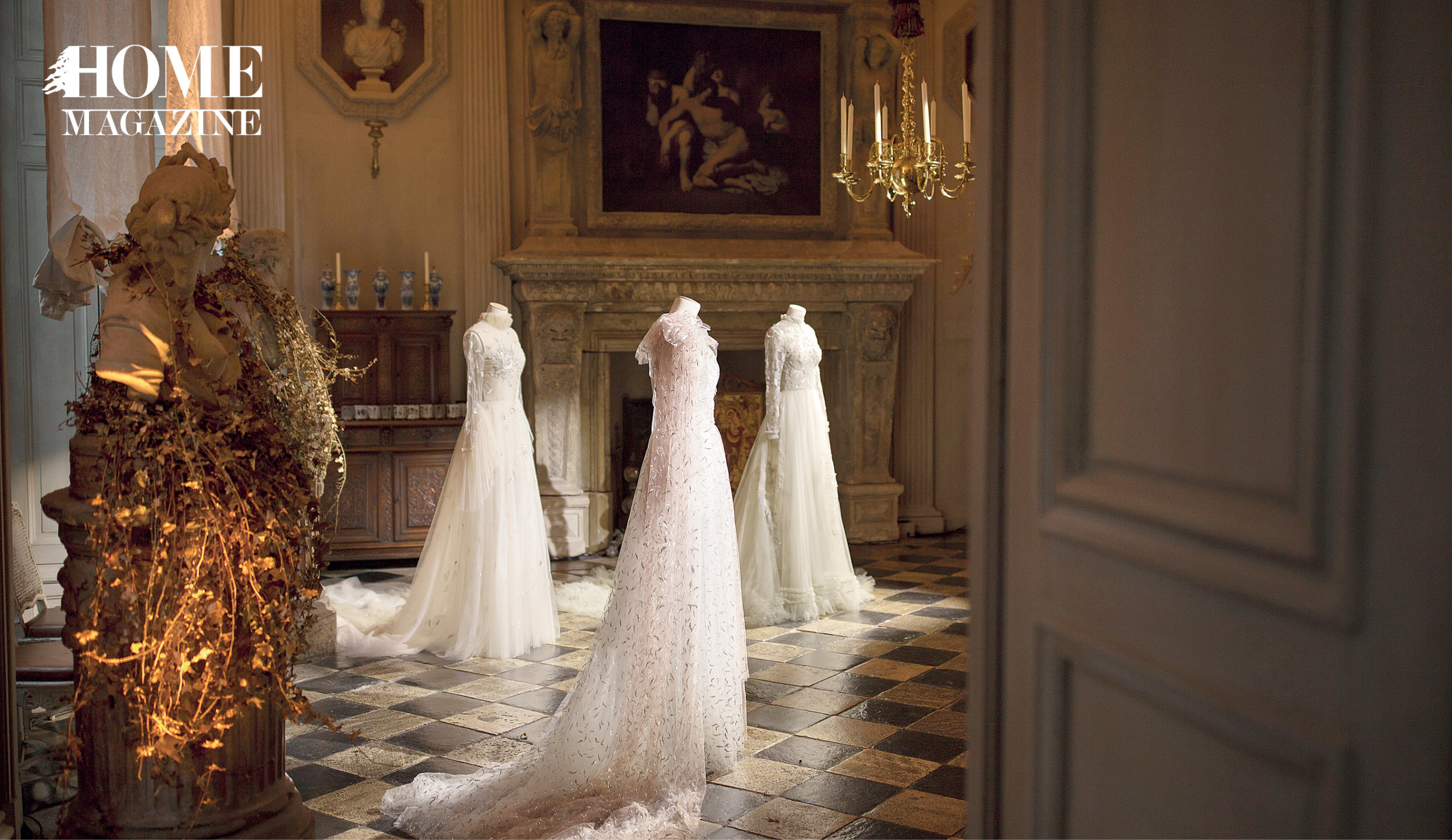
Prolific, the designer unveils no less than 40 looks per season. Interestingly, each dress is assigned a name. Her creations hit the runway twice a year during Paris Fashion Week, and her delicately crafted hand sewn dresses are stocked in numerous high-end international boutiques, such as Moda Operandi, Harvey Nichols, and Luisa Via Roma. In January, she also launched her very first ready-to-wear bridal collection L’Ombre d’un Miracle. The collection was inspired by The Book of Miracles, the 16th century Renaissance manuscript. “The entire collection is currently in China for a trunk show,“ explains Mansour in French-accented English.
Destined to create
Born in Switzerland to a Lebanese father and a Lebanese-French mother, Mansour spent her formative years in Geneva. At age 12, she relocated to Lebanon where she studied at the Collège Louise Wegmann. Upon graduating from high school, Mansour returned to Geneva and enrolled at Webster University where she received her bachelor’s degree in business management. “I really wanted to paint at this point, but my family insisted that I study business,” she explains.
However, soon after Mansour followed her heart and switched to what she loved most: sketching and painting. Her portfolio got her admitted into the École Supérieure des Beaux-Arts in Geneva. When visiting Beirut over Easter break, she had a fortuitous meeting with Elie Saab that led to a summer internship with the prominent haute couture designer. “After this work experience, I realized that I did not actually want to be a painter, but that I needed to create,” says Mansour. “That’s when I realized that fashion design was my calling.”
Determined to pursue fashion, Mansour left art school and attended a one-year intensive fashion design course at Istituto Marangoni in Paris where she learned the techniques to develop a collection, from pattern making to constructing a complete ensemble. Armed with a business degree, an internship with Lebanon’s most famous fashion expert and the practical know-how to make a collection, the 25-year-old designer Mansour was ready to hit the ground running.
“I was young and naïve thinking this is going to be easy.”
Learning to set up a business
She returned to Beirut in 2009 to launch her fashion brand and used the conference room of her father’s office as her initial workspace. “I was young and naïve thinking this is going to be easy,” she recalls. Soon, she was hustling from one supplier to another, going back and forth to tailors and seeing clients in their HOMEs, with swatches of fabric always on hand. “It was kind of crazy when I look back,” she muses. “I was driving all around Beirut to get things done.” While completing a handful of made-to-order requests for local clients (starting with cousins and later their friends), Mansour put together her first capsule collection of 15 outfits. She boldly took her collection to Paris during Fashion Week and rented a room at The Four Seasons Hotel. “I had zero orders that first year I went to Paris, I had only four boutiques visiting me,” she says.
Mansour began with a $10,000 investment from her family to launch her business. This amount enabled her to buy luxurious fabrics and hire skilled tailors and embroiderers. She soon realized that, in order to make money, she had to work on bespoke client orders or sur mesure in French. “It wasn’t my first choice, but I had to do it to generate an income,” she concedes. Soon after, she prepared her second collection of 20 looks and also took it to Paris. Instead of renting a hotel room on her own, she collaborated with a fashion public relations agency equipped with a showroom for buyers and press. This time she came back more victorious she tells HOME, “I had three orders. One boutique in Greece, one in Hong Kong, and one in France,” says Mansour.
Over time, Mansour needed to further expand her business. She wanted a larger permanent space, but her overhead costs were escalating. With the help of Kafalat (a Lebanese financial company that assists small- and medium- sized enterprises to access funding), she took out a low-interest loan of $200,000. This allowed her to rent a small studio and hire three full-time staff members. Four years later she paid back the loan in full and has since been debt free.
Seven years ago, Mansour and her team moved to their current location in the heart of Gemmayzeh, taking over a former wood factory and completely refurbishing the interior. Twenty-six full-time staff members work with her, of which the majority are tailors. “I am a bit of a workaholic,” Mansour says regarding her choice to live on the floor directly above her office.
Creating fairy tale dresses for European royalty
With each passing year, Mansour’s exquisite ready-to-wear brand goes from strength to strength. A leading public relations and consultancy agency in France currently represents her. Its Paris-based showroom permanently holds her latest collection.
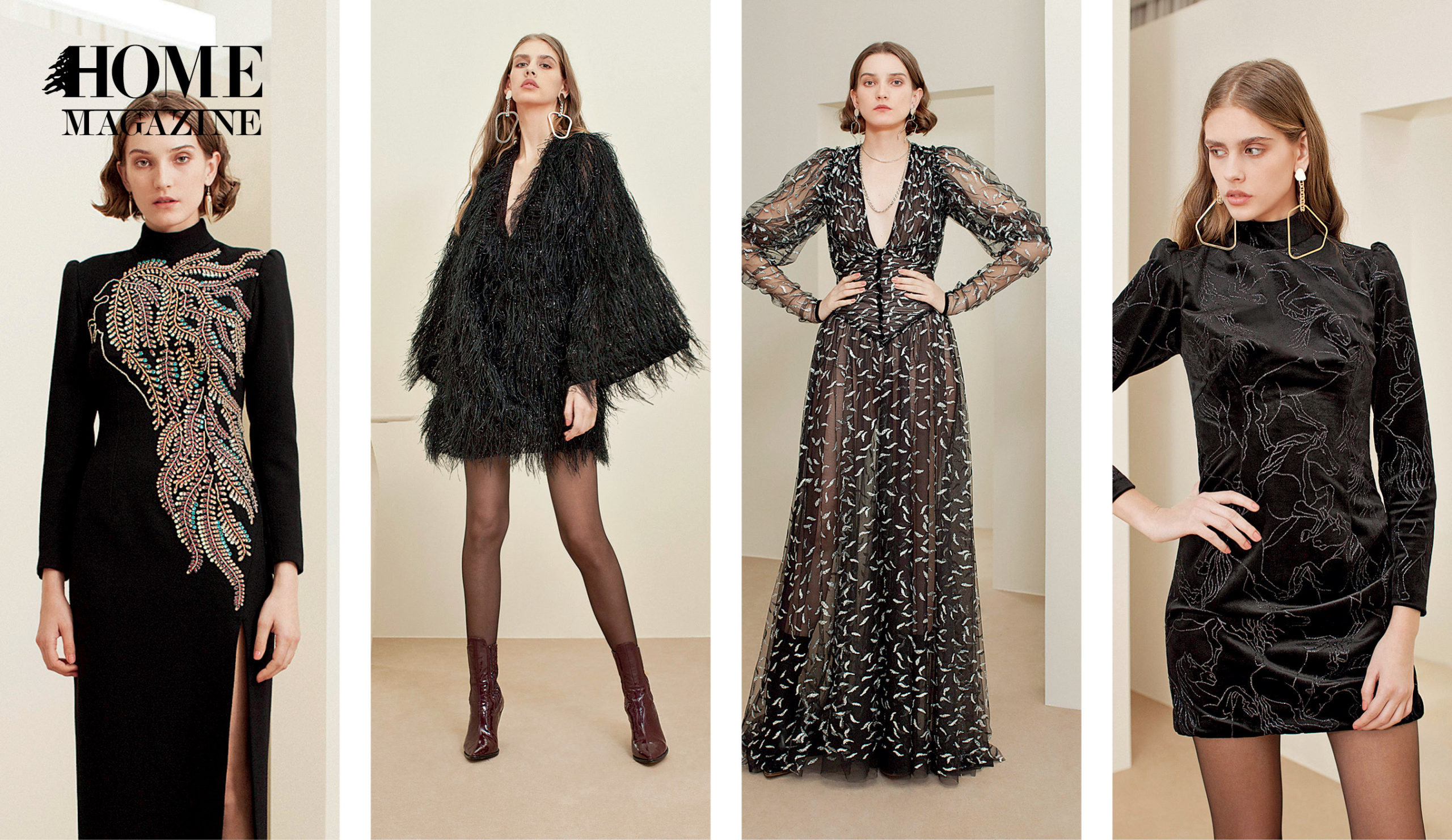
“This way, my pieces can get sent to photo shoots, to fashion magazines and to actresses to wear at film premiers and so forth,” she explains. Mansour was asked to design the wedding dress of Ekaterina Malysheva who wed Prince Ernst August of Hanover. She has also dressed plenty of other royalty, like Crown Princess Mette-Marit of Norway and the former actress Cleopatra of Oettingen who married a German Bavarian Prince.
More recently, she dressed the daughter of Princess Caroline of Monaco, Princess Alexandra of Hanover, for the prestigious Bal de la Rose. While she has become quite a favorite among young European royals, Mansour points out that these royal commissions are more about exposure opportunities than profitability; the dresses are created for free while her brand gets extensive press coverage in return.
Mansour’s biggest market is in the Middle East followed by the United States and Europe. Sales via her own website and through various e-commerce platforms such as Moda Operandi make up 40 percent of her total sales today. She personally manages her own Instagram account. Most of the brand’s marketing is done in-house. While she does not have a flagship boutique, her website provides the closest thing to the Sandra Mansour experience. She releases short videos with each collection that poetically capture the spirit and the mood of the looks. “This way we can test the market first.” Is there an in-store concept we can expect soon? “Well, we are working on something,” she says without revealing anymore details.
A storyteller with fashion, influenced by art and books
Mansour has been drawing all her life she tells HOME. “I used to draw portraits of people as a child. I was mesmerized by eyes as they show all the emotions,” says Mansour. Today, her penchant for drawing and deep love for art is reflected in her work. No doubt, there is a painterly quality in her dresses. Her dresses are like her canvases where she expresses her ideas with vibrant colors, prints, and stunning designs woven into the fabrics. She says the neo-expressionist German artist Anselm Kiefer as her favorite painter. Books also play a pivotal role in her life. She reads profusely in her spare time and enjoys books by French writer Alexandre Dumas and Austrian writer Stefan Zweig. With each collection, she attempts to tell a story — albeit with clothing and short, artistic films.
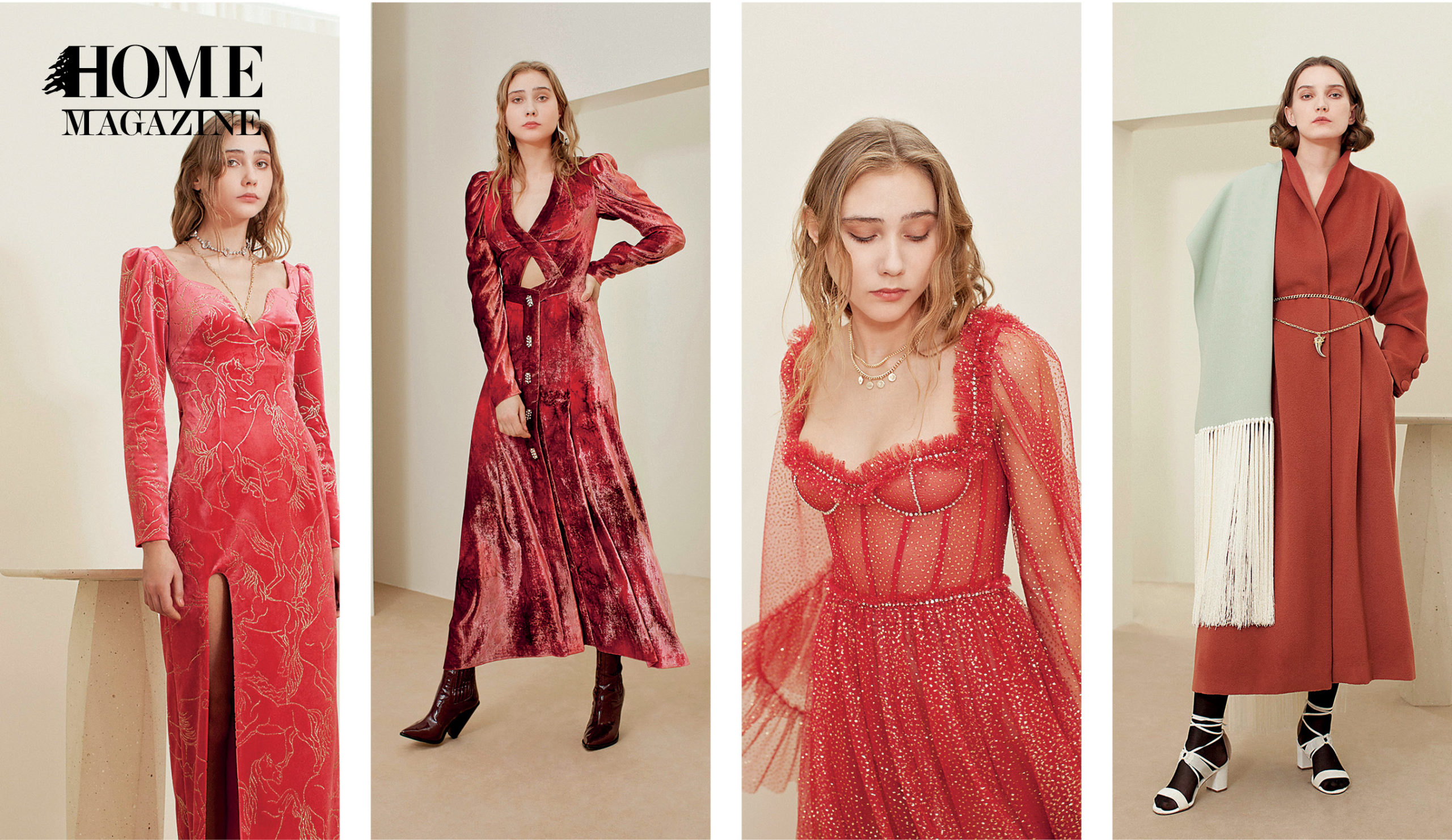
In a final revelation, Mansour says that she would like to become a full-time painter one day. However, fans need not worry; Mansour, now at the age of 35, is nowhere near retiring from fashion anytime soon. This rising star will no doubt continue to expand her reach, while proudly putting Lebanon on the world map.


HOMEland THEMES
Coming Soon
HOMEland Events & Collaborations
Coming Soon
 Signature Boutique