
Some say the Lebanese are natural entrepreneurs. Success stories are plentiful. Here’s a sample of some Lebanese-owned startups that have recently earned the spotlight.
Modeo
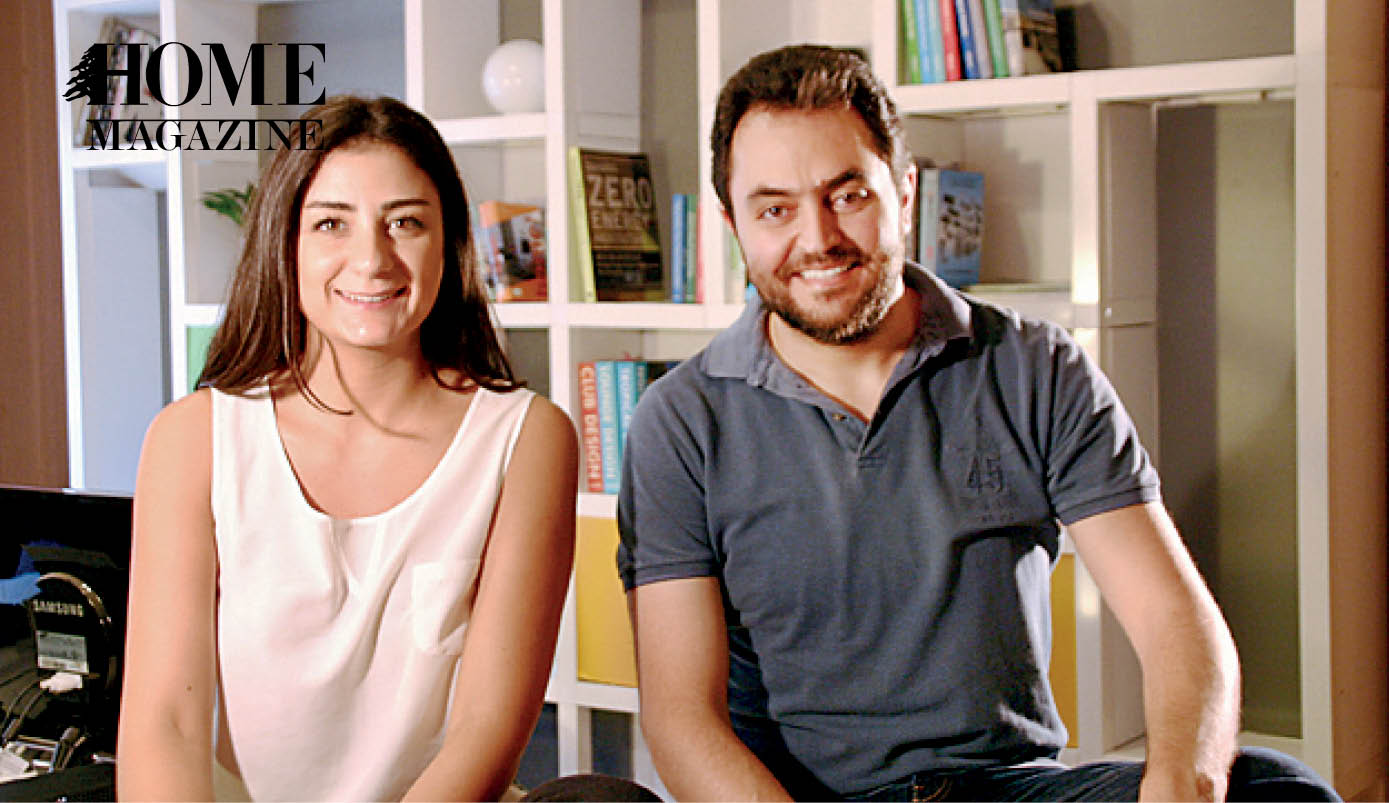
Modeo is a startup that allows customers to use a mobile app to design, visualize in 3D and order modular furniture. It uses augmented reality to allow users to see their designs virtually in their own personal spaces.
Emile Arayes and Aline Gemayel, a married couple who are both architects and graduates of the Lebanese University, co-founded Modeo in 2015 and launched their app in 2017.
Modeo won the 2017 Best Disruptive Startup Award at the GITEX Technology Week in Dubai, an annual consumer computer and electronics trade show, and was among the six Lebanese startups that participated in Speed@BDD’s first three-month acceleration program in 2016.
http://www.modeosystems.com
Sharp Minds
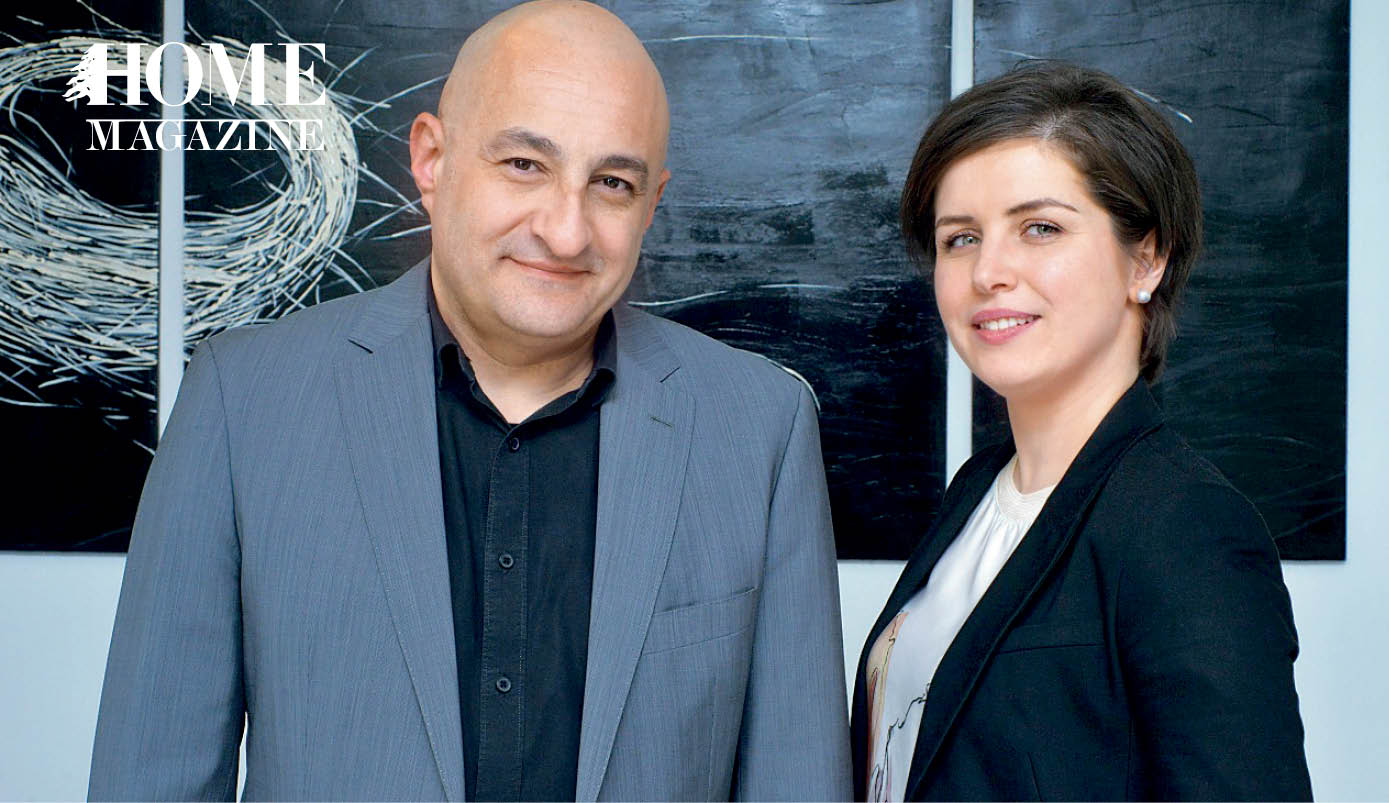
Sharp Minds is an energy company that develops innovative energy solutions for residential, commercial, industrial and governmental clients. Its trademark project, Energy24 (or E24), provides cost-effective solutions for intermittent power in developing countries by collecting energy from solar panels or the grid, and storing it into a battery for use when the power is out.
Antoine Saab and Nadia Moussouni cofounded Sharp Minds in 2011. Saab, an engineer with decades in the industry, developed the energy storage unit.
“Sharp Minds is opening a factory in Bulgaria to help the company scale up — Saab expects to have a presence in North America and Europe by mid- 2018,” Forbes Middle East reported in September. It has already started regional expansion, with new projects in the pipeline in Iraq and one in Kenya for a nonprofit organization.
Sharp Minds won several awards and recognitions, including Executive Magazine’s Top 20 Startups in Lebanon, the World Energy Council’s 100 Arab Startups Shaping the Fourth Industrial Revolution, the 2014 Bader Startup Cup and Forbes Magazine’s Top 100 Startups in the Arab World.
https://www.e24solutions.com

Cherpa
Cherpa, an online platform that teaches robotics, named after the skilled mountain guides who help trekkers in the Himalayas, launched in March 2017. The software teaches building and coding robotics, while benefiting from pre-existing kits and components available in the market.
Mechanical engineer Ibrahim Ezzeddine and computer engineer Basel Jalaleddine discovered their mutual passion for robotics as students at the Lebanese American University.
As a club activity, they taught robotics engineering to school and university students, leading them to discover the gap between would-be inventors and available learning tools.
Their final-year project morphed into a business when they won the $50,000 prize in the Seed Boost Competition from Speed@BDD, a startup accelerator in the Beirut Digital District. It provided the young entrepreneurs with funding, office space, mentorship, workshops and exposure for three months.
In October, Cherpa won the 2017 Best Youth Startup Award at the GITEX Technology Week in Dubai, an annual consumer computer and electronics trade show.
https://cherpa.io/beta
Lexium
Lexium is a legal tech startup that enables users to get fast, easily accessible and reliable legal answers, documents and services through a website and mobile app. It has developed a huge database of questions and answers, and has about 40 committed lawyers to answer questions online, according to a report in October in An-Nahar. It is based in Paris with offices in Beirut, Dubai and Cairo.
Rami Alamé and Magda Farhat cofounded Lexium in February 2017. Alamé is a financial services lawyer with a law degree from the New York Law School and a bachelor’s degree in business from the American University of Beirut. Farhat is a corporate lawyer who graduated from Harvard Law School.
Lexium won a big boost from UK Lebanon Tech Hub’s flagship program, The Nucleus, a venture-building program designed to turn tech ideas into marketable products and services, offering $20,000 cash and $30,000 in services in return for a 5 percent equity stake in the company. It also received support from Flat6Labs Beirut, a startup seed program and early-stage fund, and Kafalat, a Lebanese financial company that assists small-to-medium enterprises. In addition, it was a finalist in the 2017 international HiiL Innovating Justice Awards and was a member of the Lebanese GITEX Future Stars 2017 delegation.
http://lexium.ai
Synkers
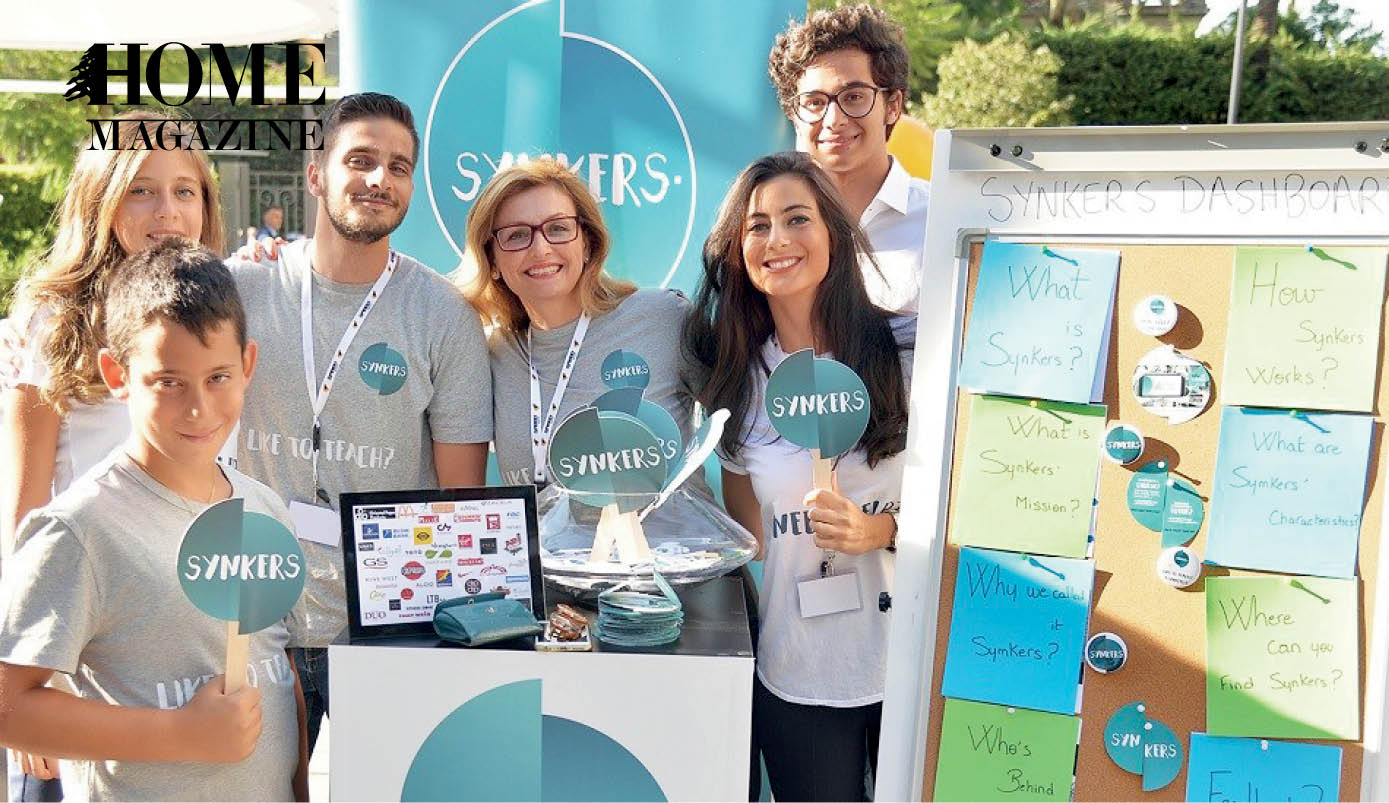
As university students in finance at Concordia University in Canada, sisters Audrey and Sibylle Nakad struggled to find tutors whose background, prices and schedules fit their needs. That’s when the idea for Synkers was born.
Synkers is a tutor-booking service offered through a mobile app. University and high school students seeking tutors can find prescreened tutors, book private sessions, chat with tutors online, rate the tutoring session afterwards and, if they wish, make online payments.
Tutors listed through the app may post classes or subjects, schedule and rates. Synkers charges tutors a commission of 15 percent of revenues generated through the app.
The Nakads and Zeina Sultani cofounded Synkers in 2016. Sultani brought 15 years of business and marketing experience, and degree in international marketing from the American University in Paris. The fourth member of the team is tech lead Adam Ghani.
An-Nahar reported in January that Synkers has about 3,000 users and 300 tutors in Lebanon. The company intends to expand to become a regional and, eventually, global platform.
Synkers won a spot in the BlackBox program, a Silicon Valley-based accelerator. It was also recently selected by Dubai Future Accelerators to participate in an intensive threemonth accelerator program, which pairs innovative technology companies with leading government organizations to create solutions.
http://www.synkers.com
KwikSense
When a United Nations agency hosted the 2016 Innovating Response Hackathon to inspire tech innovators to create solutions for problems faced by refugees in Lebanon and the organizations serving them, one team came up with an unprecedented solution to a life-threatening problem.
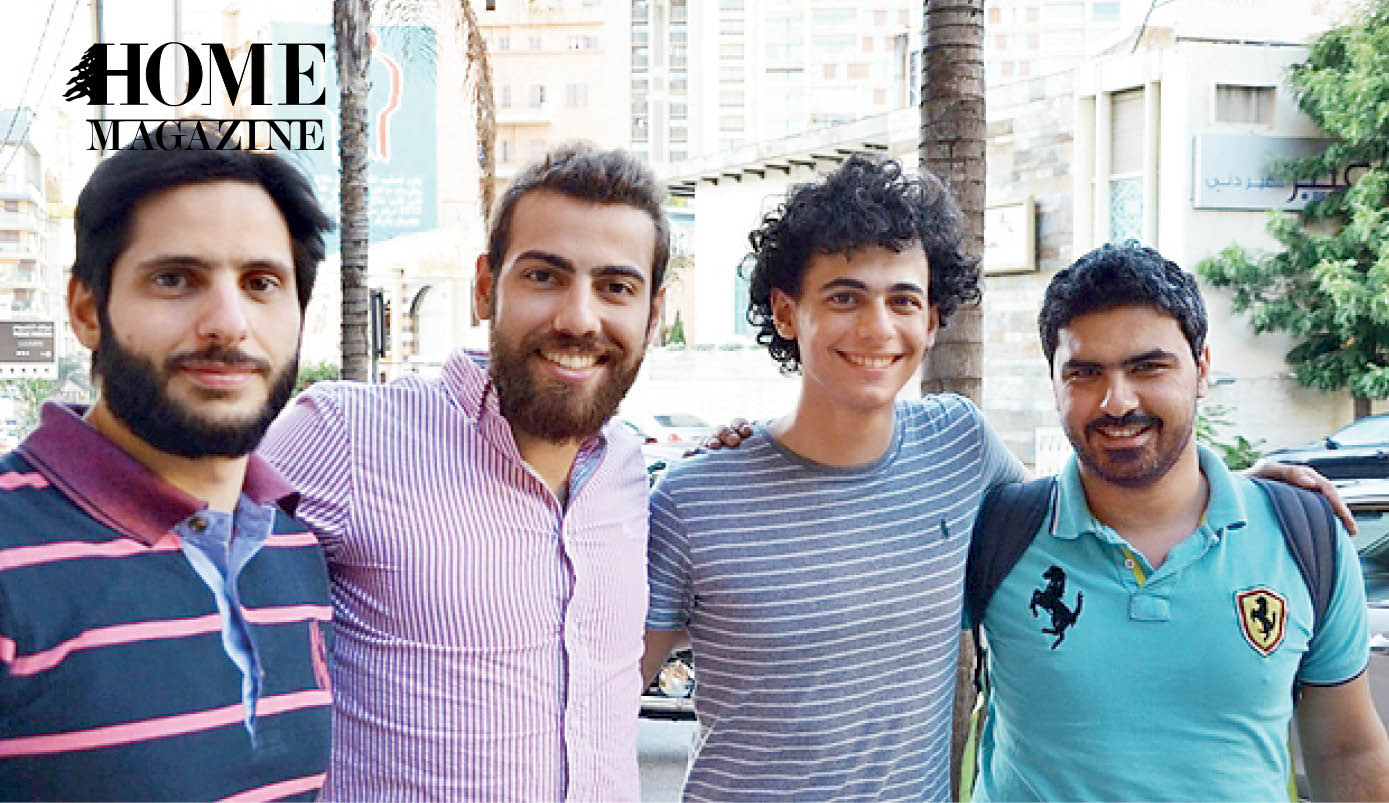
Salwan Alwan, Marwan Ghamlouch, George Najjar, Hassan Salem and Rayan Zaatari created KwikSense, cost-efficient smart sensor boards and IoT (Internet of Things) frameworks to monitor real-time temperature conditions within vulnerable refugee shelters and share data through a remote dashboard, accessed on a computer or mobile device. (IoT refers to a network of objects embedded with electronics, software, sensors, actuators and network connectivity that enables connection and exchange of data.)
Through IoT, monitors can see temperature fluctuations in real time on an interactive map, with a red warning signal appearing when conditions are dangerous. For Syrian refugees in temporary shelters in Bekaa and other locations that face harsh winter conditions, KwikSense can save lives.
As one of the hackathon’s three winning teams, KwikSense entered an incubation period at the UNHCR’s Humanitarian Innovation Lab (HiL), where the team further developed their ideas and prototypes into scalable, field-tested solutions.
Of the selected teams, KwikSense was chosen as one that demonstrated great progress, and it continued to be incubated and supported at HiL beyond the initial period.
http://kwiksense.co


HOMEland THEMES
Coming Soon
HOMEland Events & Collaborations
Coming Soon
 Signature Boutique