Technology is defining what it means to be human
Mankind is undergoing one of the biggest transformations in its history, driven by exponential technology and the digital revolution now reshaping every industry and aspect of life.


Mankind is undergoing one of the biggest transformations in its history due to the digital revolution currently underway. The explosion of exponential technologies or what has become known as “the fourth industrial revolution” is drastically changing all sectors across the economy and every aspect of our lives. Digitization no longer applies to the field of computers and communications per se. On the contrary, digital breakthroughs have proliferated throughout the economic landscape.
Gordon Moore, one the co-founders of Intel, coined a theory in the 1960s which has held up until this day and has become known as Moore’s Law. It is the fundamental law underlying the acceleration of technology and explains the mind-boggling speed of technological advances we are currently witnessing. Moore said that computational power will double in capability while simultaneously decreasing in price every couple of years. He mentioned that this will happen due to the continuous innovation in the integrated circuit industry, which will allow the number of transistors on microchips to keep doubling every two years and the cost of computers to drop by half during the same tenure.
As digitization went cross-discipline, Moore’s law has become applicable to finance, education, manufacturing, healthcare and so on. The scope, speed and scale of change have become unfathomable, specifically to experts in their respective fields, as the economic model they’re familiar with has been upended. This trend has democratized and demonetized many products and services, and no industry is safe from the disruption it is causing. Artificial Intelligence is considered the mother of all exponential technologies, which also includes nanotechnology, the internet of things, 3D printing, virtual/augmented reality and the codification of money and weapons.
Biotechnology is a particularly interesting field that has been difficult for humans to grapple with as it has essentially turned life into information. Synthetic biology has given us one of the best examples that we can use as a reference to try and understand the exponential nature of Moore’s Law. It has shown us how it could creep into a domain we haven’t traditionally associated with technology.
Towards of the end of the 20th century, the United States under its former president Bill Clinton led a multi-government effort to sequence the human genome, to understand the complete set of DNA, the blueprint for building a person! The goal was to determine the 3.2 billion letters base pairs of the DNA that identify the hair color, height, propensity to disease and so on. It took nearly seven years and close to $1 billion to sequence the first 1%. Critics, many of whom were well versed in the biomedical sector, raised their voices and said the funds could be directed at more viable research. They sighted that it would take 700 years and trillions of dollars to complete. Their comments later proved their ignorance of Moore’s Law; the process kept doubling in speed and diminishing in cost. The entire human genome was sequenced for $3.7 billion and was completed in about a decade. Since 2001, the cost of sequencing a human genome has dropped dramatically, outpacing Moore’s Law threefold. From its initial cost, it has consistently decreased to $10 million in 2006, $1,500 in 2015 and plummeted to less than $600 today.

This rapid pace of technological innovation is penetrating all conventional modes of business. As futurist Peter Diamandis says, “An expert might be reasonably good at predicting the growth of a single exponential technology (e.g. the Internet of Things), but try to predict the future when A.I., Robotics, VR, Synthetic Biology and Computation are all doubling, morphing and recombining … You have a very exciting (read: unpredictable) future.” This phenomenon leads to unintended convergent consequences and is what happens when all the different exponential technologies explode onto the scene at once, we have a very exciting future ahead.
The demonetization of technology has led to the democratization of historically capital-intensive industries. This in turn has led the disruption of well-established operational methodologies and major corporations by agile upstarts. Two good examples are the collapse of Kodak in the face of digital photography and Blockbuster closing its thousands of locations when Netflix emerged.
The average age for a company on the Fortune 500 in the 1920s was 85 years; today a company’s average tenure on the Fortune 500 is 10 years due to the continuous change.
The threat of becoming obsolete has urged corporations to rethink their legacy cultures, acquire more nimble, younger companies in their respective fields and launch corporate venture capital arms to invest in startups leveraging cutting edge technologies. According to a study by Washington University’s Olin Business School, 40% of Fortune 500 companies will be non-existent in 10 years. The average age for a company on the Fortune 500 in the 1920s was 85 years; today a company’s average tenure on the Fortune 500 is 10 years due to the continuous change.
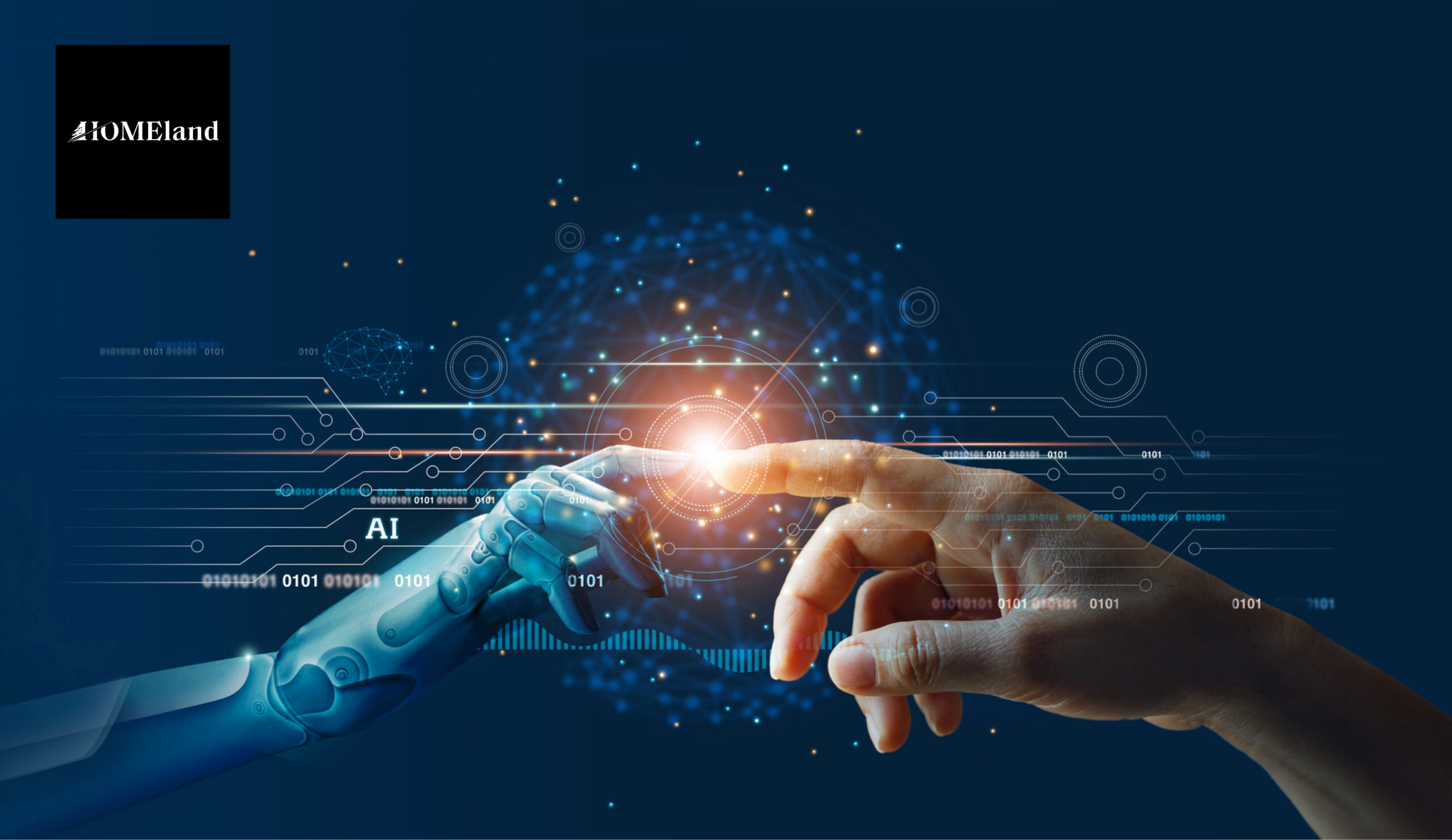
This drastic transformation will bring about immense opportunities and uplift humanity out of its historically unsolvable problems. Today we still have 1 billion unidentified people who can’t open a bank account, travel or have a formal education. We have 1.3 billion persons without access to electricity and 4.6 billion without an internet connection. That being said, everyone is expected to be online in five years. Once the entire human race is integrated into the global economy via the internet, it will be our species’ greatest economic equalizer. The currently unconnected, also referred to as the rising billions, will be immediately leap frogging to high speed fiber connections, which will give them access to the abundance of information, knowledge and expertise the internet carries. Imagine the potential!
We have 1.3 billion persons without access to electricity and 4.6 billion without an internet connection. That being said, everyone is expected to be online in five years. Once the entire human race is integrated into the global economy via the internet, it will be our species’ greatest economic equalizer. The currently unconnected, also referred to as the rising billions, will access to the abundance of information. Imagine the potential!
Entrepreneurs from the developing world will emerge with outstanding ideas to solve humanity’s grand challenges. Due to their divergent thinking, someone in a remote area somewhere will put us all in awe with an innovation that is in our blind spot. As technology begins to solve all the conventional issues we’ve been struggling with, new dilemmas will sprout, such as the automation of jobs, the intellectual dominance of humans by artificial intelligence and the ethical implications that underlie this planetary tsunami. Humanity has been very resilient and flexible throughout its evolution and is currently at a major crossroads. Interesting times are ahead and how we will deal with them could redefine what it means to be human.



 Signature Boutique