While the commercial achievements of men of the family led to its aristocratic status, it is notable that women of the family have been particularly active in civil society – from the call for Lebanese independence to women’s rights, environmental stewardship, and rural development.
The primary unit in Lebanese society is the extended family, whether one is considering its social, economic, or political dimensions. Such familial identity is interwoven with religious and geographic identity, to give people a sense of who they are in the social fabric of Lebanon. Added to this is each individual’s personal stamp on the fabric in terms of his or her personality and professional role. Because of the importance of family, HOME has chosen to explore a different Lebanese family in each issue of the magazine.
The Bustros family of Achrafieh is quite different from those featured in earlier issues of HOME (Maaluf, Shihab, Sinno, and Hamade). It is a much smaller family with less structural cohesion in that there is no Bustros family association, website, or Facebook page. Nevertheless, the family has considerable significance in the country relative to its size. And, because of the importance of family in Lebanon, a number of members of the Bustros family have been very keen to trace its history and genealogy. The two genealogies that were shared with this author have common threads, though both are incomplete. Females in both genealogies are either absent or their lines end with them, as is common in most genealogies in the region, since the family name itself ends with them. (It should be noted here that this article is only about the Greek Orthodox Bustros family that has been central to the history of Achrafieh. No relationship has been established between them and Lebanese families with the name of Bustros who are not Greek Orthodox.)
Origins and Aristocratic Status in Lebanon
The primary narrative of the family’s origin in Lebanon is that the family has Greek roots, which were planted in Lebanon by way of Cyprus. According to the story, the archbishop/bishop/ patriarch of Antioch, a man named Salvestros (written “Salbestros” in Arabic) came from Cyprus to Anfe, a small coastal village between Shikka and Tripoli, in 1557. While historical records are unclear as to why he left Greece, Antioch or Cyprus or what his ultimate relationship with the Church was, it is noted that he married, built a church dedicated to St Catherine, and died around 1600. In time, the first syllable “Sal” was dropped and the family became known as Bustros.
The Bustros family entered Lebanon through migration from outside the region, and its migration continued with family members settling as merchants in London (Salim Bustros), Manchester (Abu Raji Bustros), and Cairo (Fadlallah Bustros), as well as moving internally within Lebanon. In the eighteenth century, the family engaged in the lucrative and highly restricted salt trade in the Ottoman Empire. By the mid-nineteenth century, they owned a bank, traded in silk, spices, soap, tobacco and a wide variety of other products, and had amassed considerable land holdings in various areas of the Ottoman Empire.
Their economic and social achievements led to the Bustros family becoming one of the seven aristocratic families of Beirut, along with the Sursocks, Ferneinis, Fayads, Gebeilis, Trads, and Tuenis, all concentrated in the Achrafieh area. As such, they were part of an international aristocracy with significant connections to royalty and diplomats of England, France, Germany, and Russia, as well as the Ottoman Empire. They received visitors such as Grand Duke Serge of Russia, the German Emperor William II, and the local Ottoman governors Youssef Franco-Pacha and Jamal Pasha in their sumptuous HOMEs.

Nicolas Branch and de Bustros
One branch of the family has added “de” before the name, which in France has the meaning “of the house of.” According to family history, however, the “de” of “de Bustros” was an honorific bestowed on Habib Bustros by Grand Duke Serge of Russia, who had stayed at the Bustros HOME many times. Based on that understanding, Habib’s grandson Nicolas (Nicolas Michel Habib Bustros / de Bustros) officially changed the family name to de Bustros in 1965, which is why the founder of Chateau Kefraya winery was Michel de Bustros (Michel Nicolas Michel Habib de Bustros), while cousins in the Fadlallah branch of the family are Bustros without the “de.” It is also why he named his son Serge – after the Grand Duke.
Michel de Bustros started vineyards on Bustros land in the Bekaa Valley in 1951 and Chateau Kefraya started producing its own wine in 1979, despite the civil war, winning international recognition in the 1980s and, in time, exporting its wines worldwide. Michel’s son, Serge de Bustros, MD, is a nationally recognized retina expert who settled in Illinois, while his wife Andrée Bustros is an accomplished endocrinologist.
Fadlallah Branch of the Family
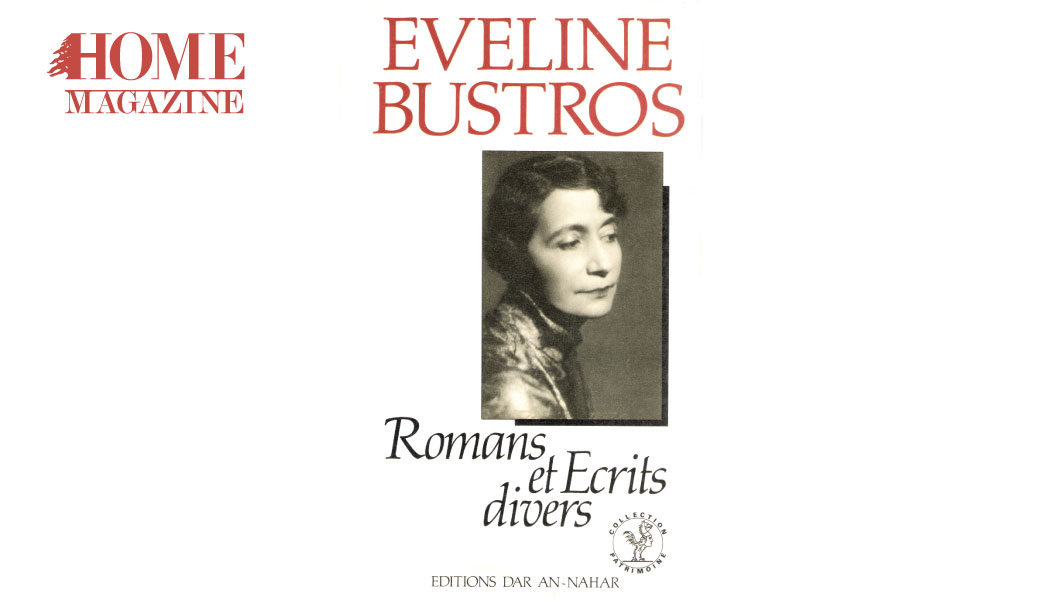
One of the most notable members of the Bustros family was not originally a Bustros. Eveline (Evelyne) Bustros (1878–1971), the daughter of Gerios Tueni and Katbé Sursock and wife of Gabriel (Jubran) Fadlallah Bustros was a highly respected author and feminist. She was also a leading political activist for Lebanese independence, women’s rights, Muslim–Christian rapprochement, and rural development. She hosted artists, feminists, and activists for Lebanese independence in her HOME, the Bustros Palace.
Also, it is said that the first Lebanese flag was crafted there. Eveline and her husband Gabriel lived in the Bustros Palace until after independence when Salim Takla, first foreign minister of independent Lebanon, asked Gabriel if the government could temporarily rent it and have the ministry in a place with appropriate grandeur. The Bustros Palace, a historical landmark in Beirut, continues to house the Ministry of Foreign Affairs and Emigrants in Achrafieh on “Rue Michel Bustros’’ – also known as Talaat al-Akkawi.
After independence, Eveline continued her activism and hospitality in the Tueni family HOME where she was born, which subsequently became known as the Bustros HOME, since she inherited it as the only child in her family. Eveline presided over many women’s associations, led delegations of Lebanese women abroad, and cofounded the Association for Rural Development that established free schools in villages throughout Lebanon. Before her death in 1971, she was awarded the Lebanese Gold Medal of Merit in tribute to her remarkable contributions to Lebanese society. She continues to be acknowledged annually by the Mouna Bustros Foundation through the “Eveline Bustros Award” which “honors and sheds light on impactful women that are leaving their mark on the Lebanese society.”
Eveline’s four grandchildren, through her only child Fadlallah/Fady, are Mouna, mother of former minister Nicolas Sehnaoui; Nayla, director of the Mouna Bustros Foundation; Fady, director of the Lebanon Renaissance Foundation, who was formerly a banker and consultant; and Gaby, artist, film director, and activist. Gaby memorialized her mother and siblings, as well as their HOME in Achrafieh, in the award-winning documentary film she co-produced with Jennifer Fox titled Beirut: The Last HOME Movie. Filmed in 1981 in the midst of the Lebanese civil war, it is a fascinating record of the determination of the family to stay in their HOME despite the chaos that surrounds them. Partying and social activities are juxtaposed against sounds of the fighting. In fact, during the war, seven shells landed in the gardens and four inside the building. Many times during the film, Mouna asserts her determination to stay in their HOME even if she dies there – and, in fact, a missile killed her there in 1989, only a year after the movie premiered. Gaby went on to cofound the SOS Environment organization, one of the first environmental advocacy organizations in Lebanon, in the 1990s.
The Mouna Bustros Foundation was founded in 2009 by family members to continue the social activist efforts of both Mouna and her grandmother Eveline. The core mission of the Foundation “is based on the belief that sports, education, and arts are the best way to steer youth away from violence and inspire a sense of commitment among them.” It is headed by Nayla Bustros, Mouna’s sister, and is actively supported by Mouna’s son and former Minister of Telecommunications Nicolas Sehnaoui.
While Minister Sehnaoui is not a Bustros by name, he clearly identifies with the family in the memorial association he helped establish in his mother’s name. This identification is also reflected in the extensive research he has done to preserve the history of both the Bustros and Sehnaoui families in a book he wrote for his children.

Abdallah Branch
Another Bustros of note is the famed dancer and singer Dany Bustros, who shares a common ancestor with Michel de Bustros and Eveline’s husband Gabriel seven generations back. Dani was known for her fusion of traditional belly dance, flamenco, and modern dance styles.
The Abdallah Bustros Palace in Achrafieh, another legacy of nineteenth-century aristocracy, has been renovated to house the upscale Metropolitan Club, the Metropolitan Art Society, and the Liza restaurant.
Four hundred and sixty years have passed since Silvestros landed in Anfe and planted the Bustros family in the soil of Lebanon. While the commercial achievements of men of the family led to its aristocratic status, it is notable that women of the family have been particularly active in civil society – from the call for Lebanese independence to women’s rights, environmental stewardship, and rural development. They have also excelled in artistic expression in writing, art, film and dance. Through the documentary film Beirut: The Last HOME Movie, the Bustros family has preserved a record of the resilience of the Lebanese to continue to engage in serious discussions, to party, and carry on with life, even when war surrounds them and intrudes on the sanctity of their HOME. It also illustrates the contrast between those who emigrated or took up residence in safer areas of Lebanon, at least temporarily, to escape the ravages of war, and those who refused to leave their HOME at the cost of risking – even losing – their lives.

HOMEland THEMES
Coming Soon
HOMEland Events & Collaborations
Coming Soon
 Signature Boutique