Democratization of the Arts with BeMA, Beirut Museum of Art
The Beirut Museum of Art is coming to Beirut's Mathaf district, and HOMEland Lebanon Magazine sat down with the team behind BeMA to learn how it is becoming a platform for peace on Museum Mile.
HOMEland Lebanon Magazine sits with the new Beirut Museum of Art to learn how it is becoming a platform for peace on Museum Mile.
For a city teeming with artistry, it is surprising that Beirut has no dedicated national museum of art. True, the National Museum, Sursock Museum, Dar el-Nimer and other institutions currently provide a plethora of cultural activities for locals and visitors alike, but Beirut has no Louvre, no unifying hub to bring the whole scene together.
For now, at least. But change is coming. Beirut Museum of Art (BeMA), a multidisciplinary platform dedicated to establishing a museum in Beirut’s Mathaf district, is moving closer to achieving its goal. BeMA has secured funding for the construction of the Beirut Museum of Art, designed by award-winning Lebanese-American architect Amale Andraos and set for completion in 2023.
While BeMA has received support from a range of artists and officials, the campaign has been sustained primarily by the drive of two women. Rita Nammour and Sandra Abou Nader are the project’s leading advocates and two of the founders of the Association for the Promotion and Exhibition of the Arts in Lebanon (APEAL), the organization from which BeMA emerged.
For them, the museum is about more than just art. “Art is a vehicle of peace,” says Abou Nader. “It is a way to overcome differences and conflict.”
“BeMA means platform in Greek,” adds Nammour. “This is the meaning of the museum: it is going to be a platform,” citing the museum’s symbolic location on the Green Line, the old dividing line between East and West Beirut during the civil war. “Through BeMA, we are aiming to create an institution for reconciliation and a platform for dialogue,” she explains.
Their idea for the museum emerged out of APEAL’s previous work hosting exhibitions to promote Lebanese art around the world. In 2010, APEAL sponsored an art exhibition at the Katzen Arts Center in Washington, D.C., which featured 29 Lebanese artists and aimed to portray Lebanon in a positive light.
“The project was extremely well received,” says Nammour. “We followed it up with other exhibitions in London and elsewhere. Then the idea came to us that there should be a platform in Lebanon for education and for art.
Working on the project full-time since its inception, both Nammour and Abou Nader cite giving back to Lebanon as the motivation behind their commitment. “I always felt I had to give back,” Nammour told HOMEland Magazine, who lived in Washington D.C. most of her life but always felt at HOME in Lebanon, often vacationing here with her children. “This country lives on people setting an example by giving back. If not for all the NGOs and the individuals in Lebanon trying to make a difference, what would have happened?”
Abou Nader has an added sense of dedication after being injured in the 2005 bombing that killed Lebanon’s Prime Minister Rafiq Hariri and 21 others. “Of course, an event like that affects you, it gives you a sense of a mission in life,” she explained when asked of the event’s significance. “Everyone who goes through this sort of incident asks themselves why they survived, and what their purpose is.”
BeMA is located on a site owned by Université Saint-Joseph opposite the National Museum, part of the newly conceived Museum Mile. In 2015, APEAL hosted an architectural competition to design the museum.
The international panel was hosted by Lord (Peter) Palumbo, chairman of the Pritzker Prize for Architecture, while the jury was comprised of the BeMA Board of Trustees: curators Hans-Ulrich Obrist and Dame Julia Peyton-Jones; architects George Arbid, Dr.Fares el- Dahdah, Dr. Rodolphe El-Khoury, Rem Koolhaas and Lord Richard Rogers; artist Lamia Joreige; and Nammour in her capacity as APEAL president. Of the 68 applicants, all of which were Lebanese, the panel initially opted for French-Lebanese architect Hala Wardé’s firm HW Architecture, with honorable mention given to Andraos’ firm WORKac. In 2018, the panel chose Andraos to lead the design of the museum, after BeMA and Wardé could not come to an agreement concerning the future of the museum.
The co-founder of WORKac and a globally distinguished architect, Andraos is the first female dean of Columbia University’s Graduate School of Architecture Planning and Preservation (GSAPP). Born in Lebanon and a native Arabic speaker, she taught architecture at the American University of Beirut (AUB) and several American universities and is now based in New York.
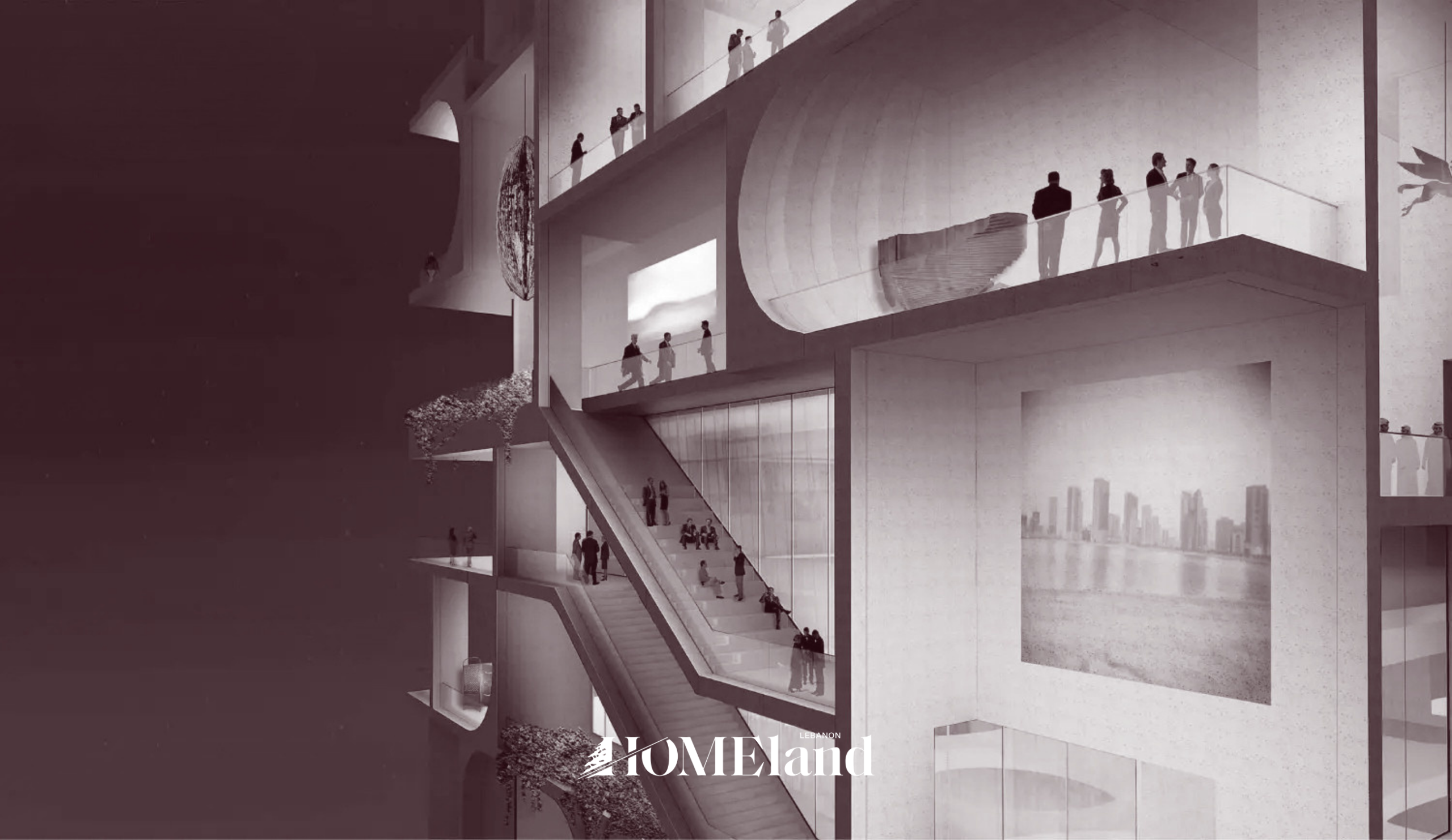
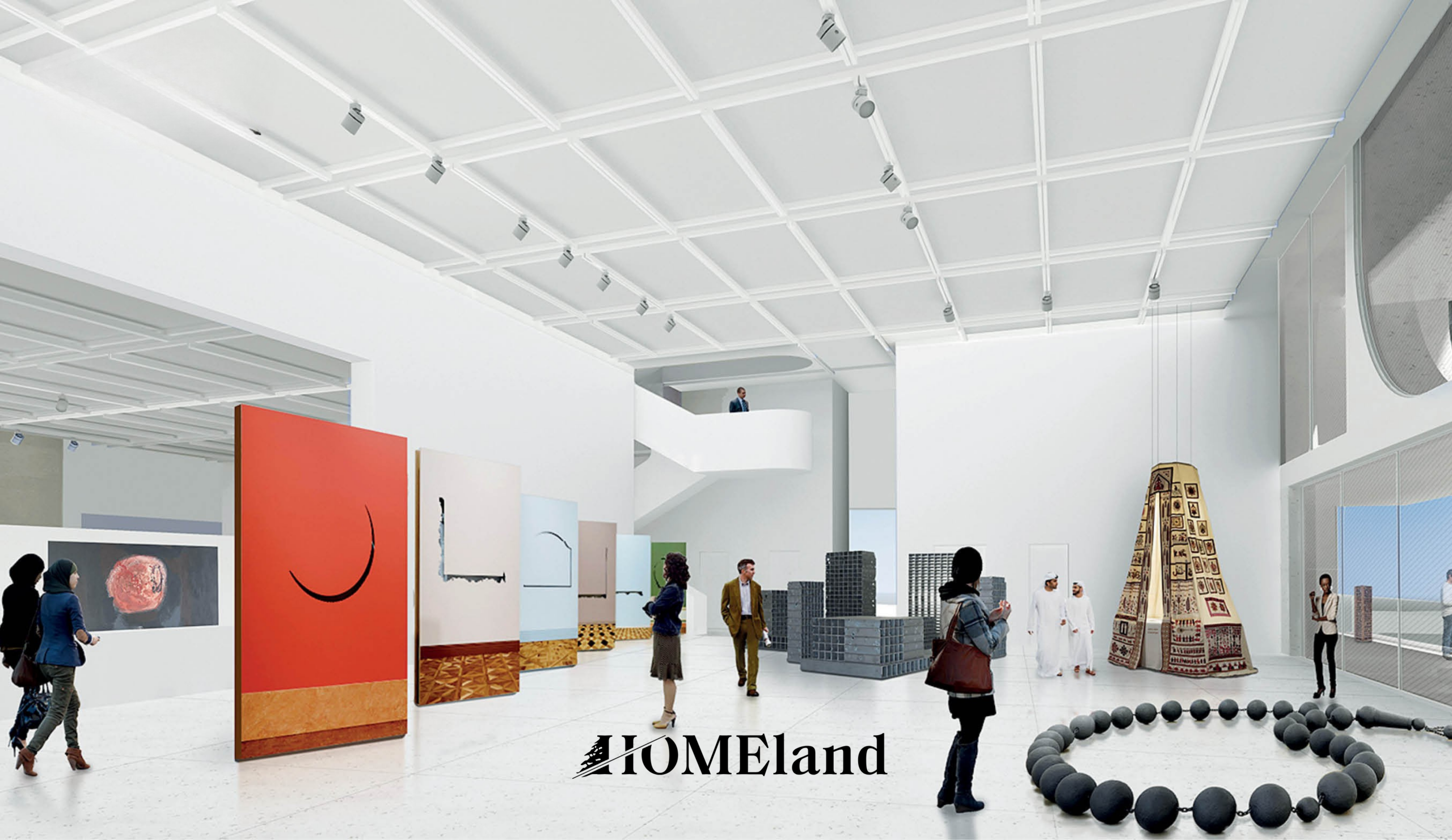
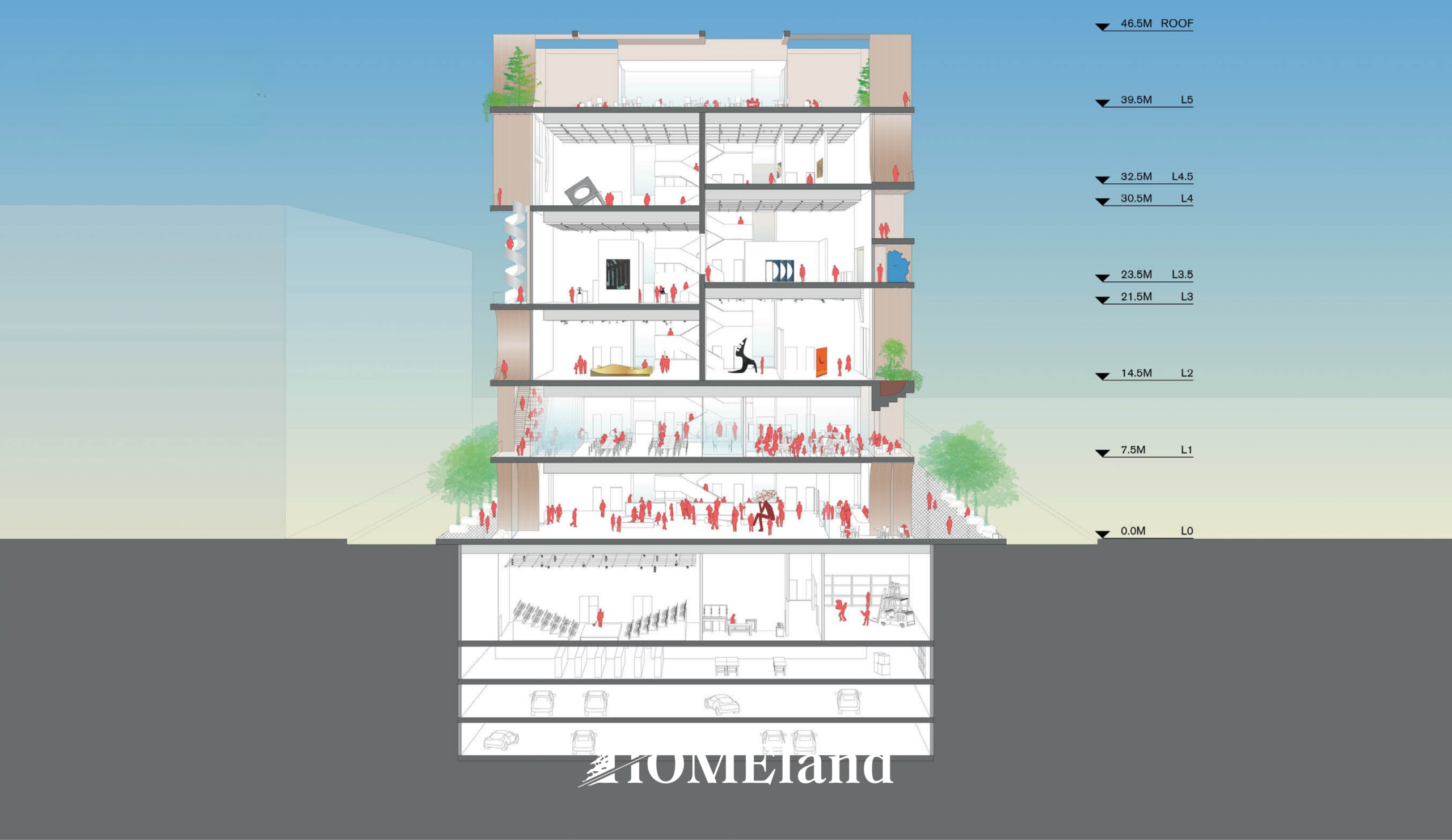
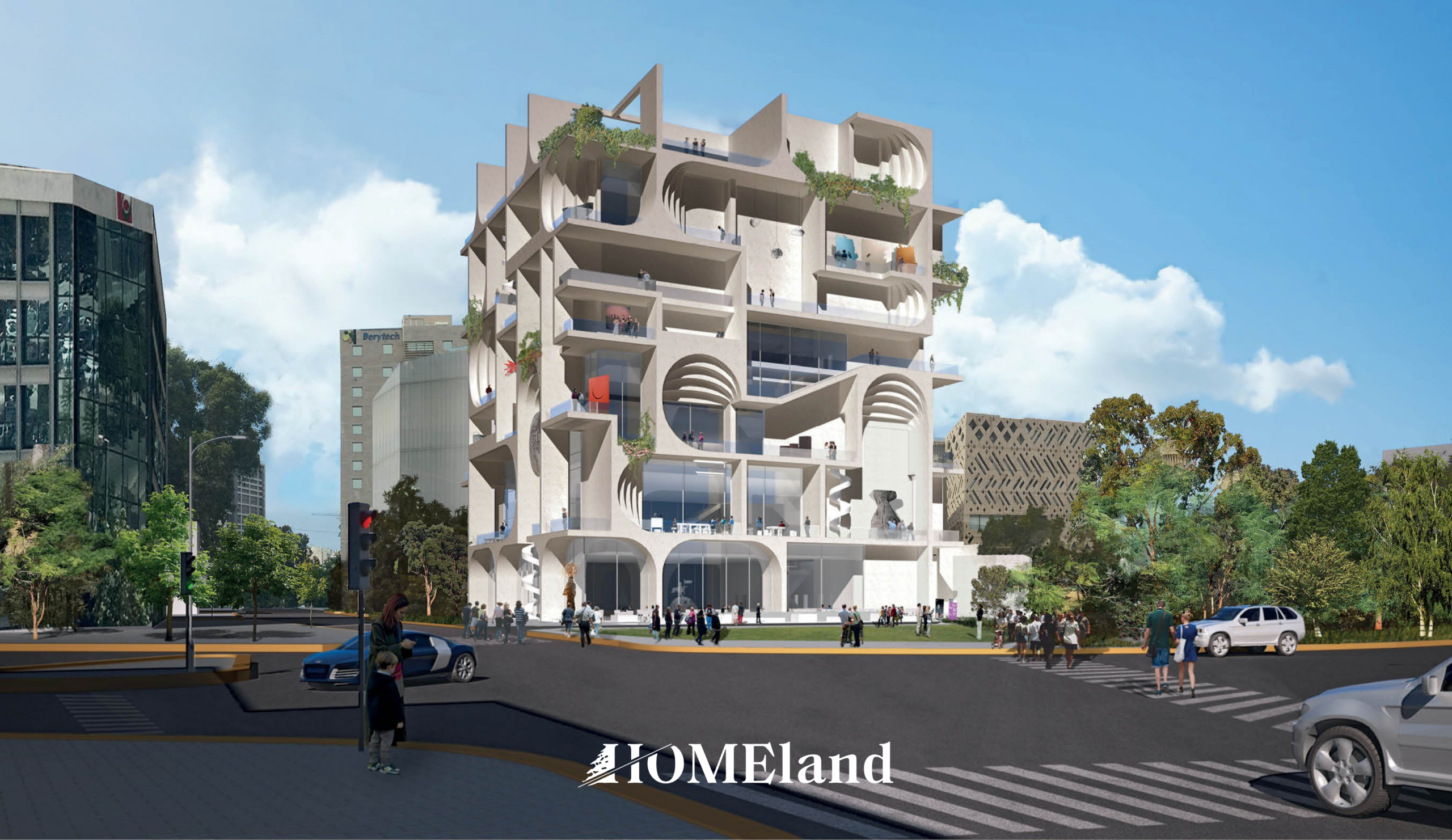
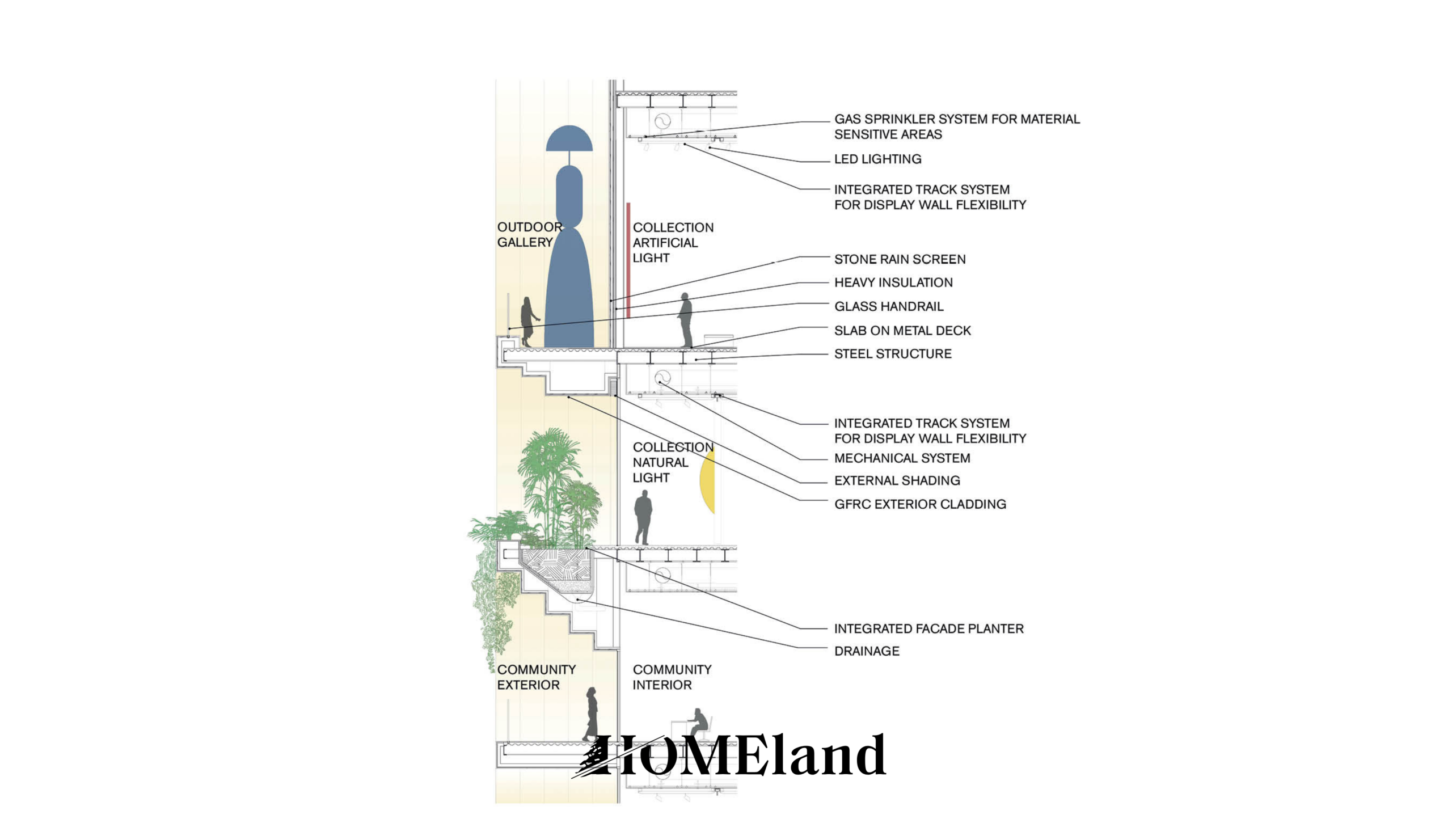
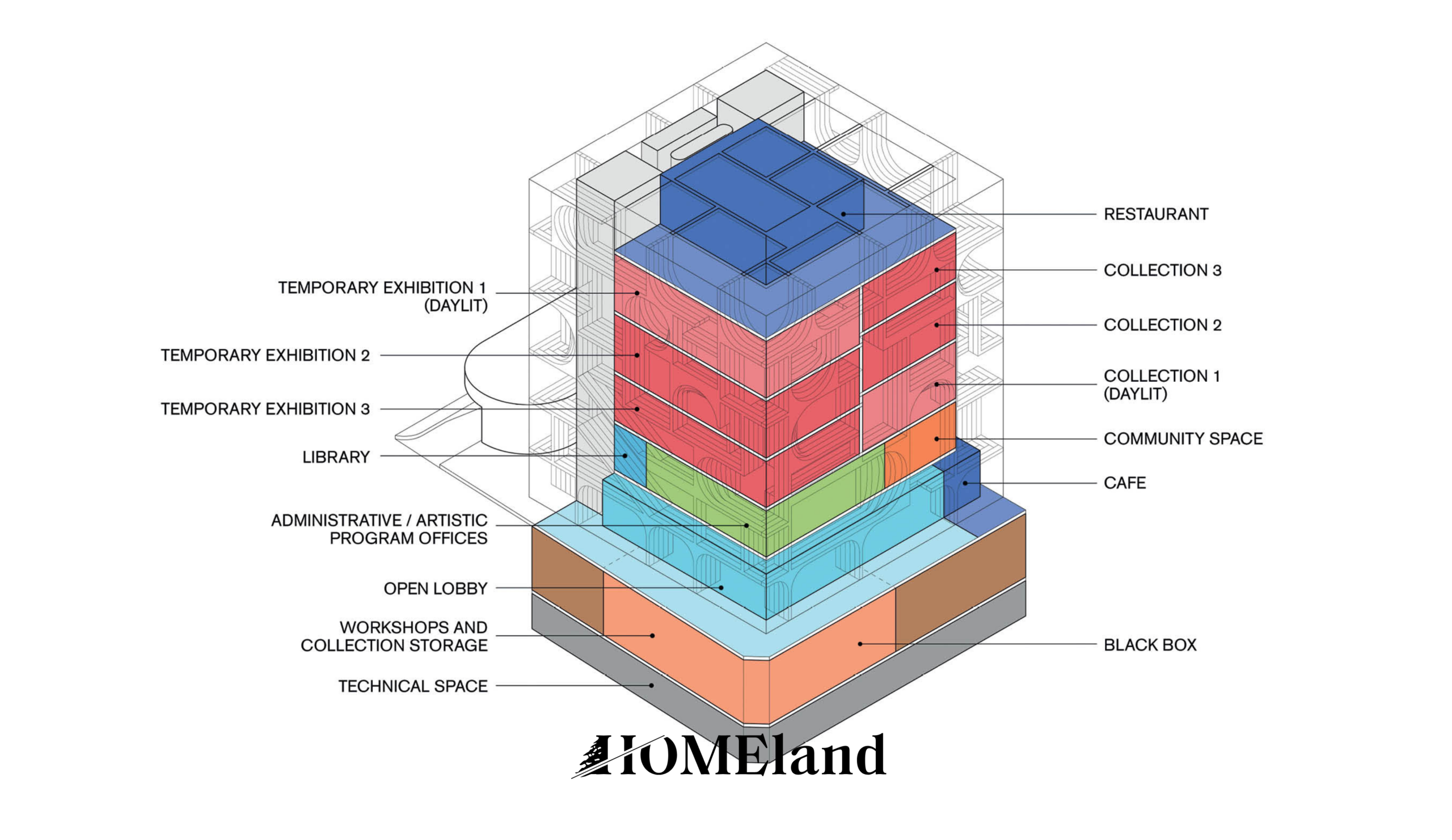
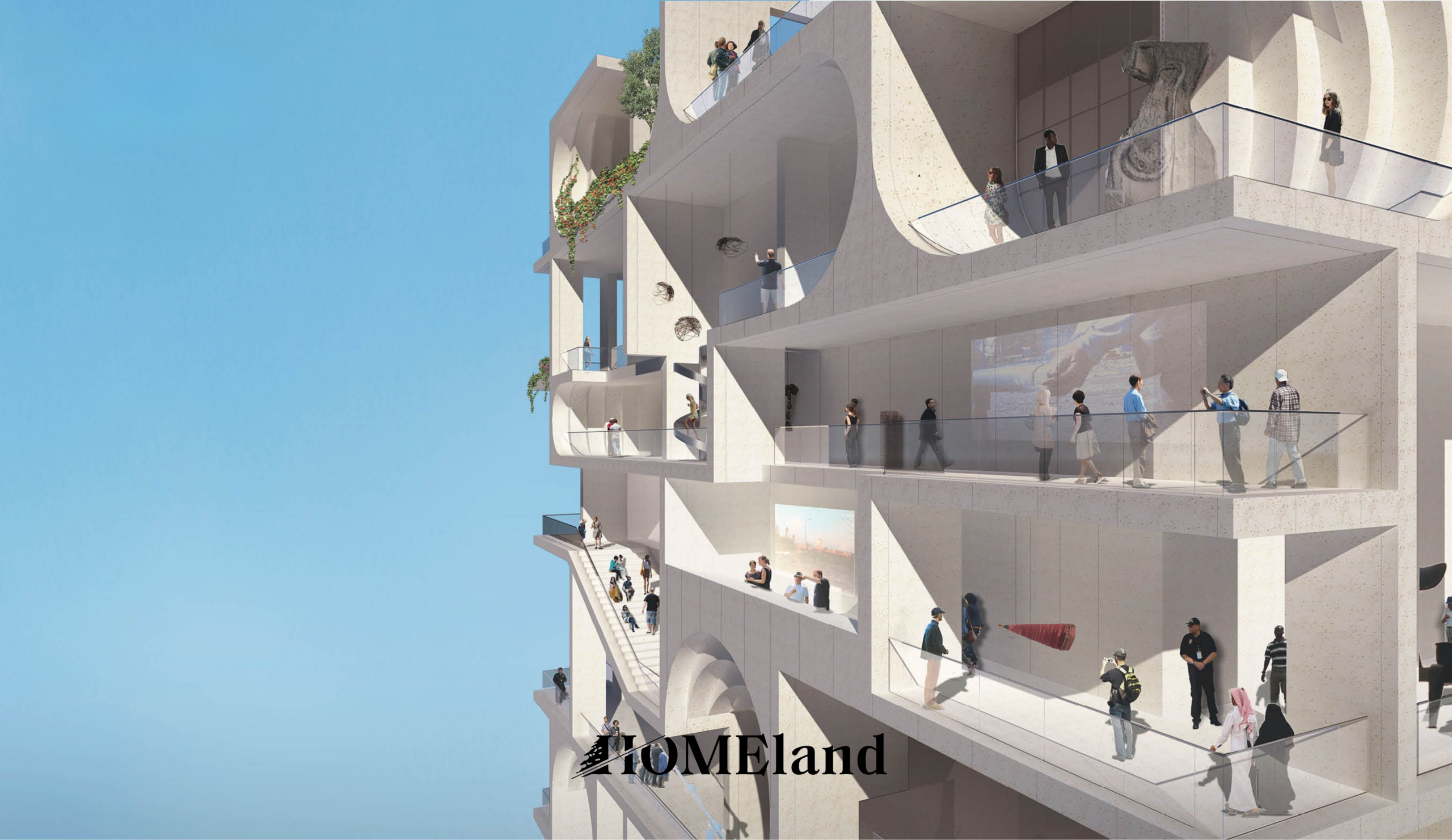
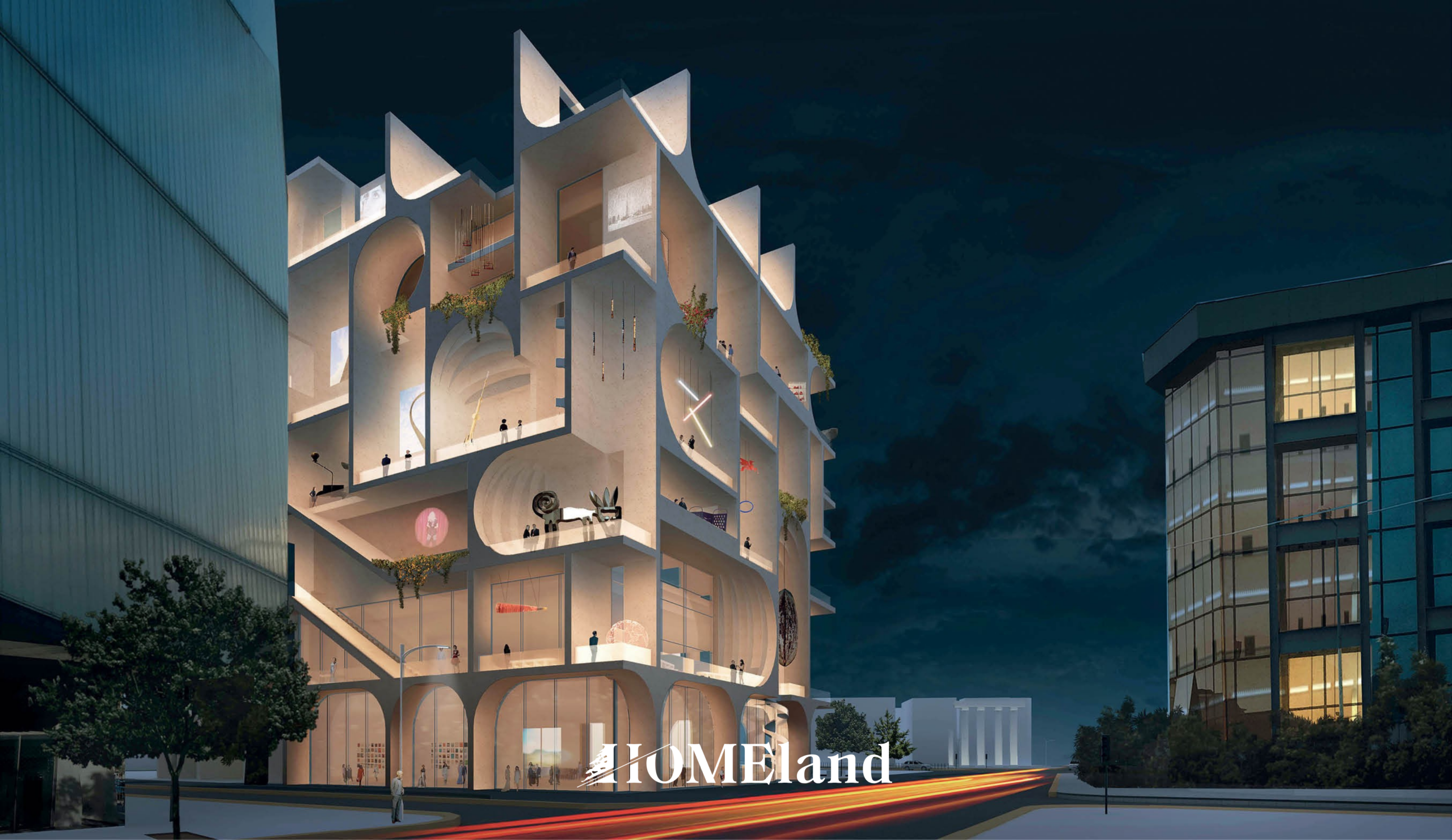
Andraos’ winning design, An Ode to the Balcony, features 70 balconies around a central six-story cube, combining to create a promenade that wraps around the building, blurring the distinction between inside and out to form an open museum of sorts. At 12,000 square meters, the museum will contain 2,700 square meters of exhibition space.
This space will initially house the Ministry of Culture’s Modern and Contemporary Art collection, comprising of more than 2,300 artworks from 470 Lebanese artists. Alongside two other private collections, the museum already hosts a digital collection courtesy of Dr. Fares el-Dahdah, professor director of the Humanities Research Center at Rice University, Texas.
Future commissions will be determined by the artistic director, to be chosen by BeMA’s Artistic Advisory Committee consisting of Sam Bardaouil, Till Fellrath, Jack Persekian, Venetia Porter, Christine Macel, Kim Benzel and Clare Davies.
The museum will also host archives, a media lab and a performance space. “It’s a museum which is going to be socially engaged,” says Abou Nader.
“It will have a cultural center, an educational centre, and relations with the diaspora and other institutions.”
BeMA’s focus on education aims to make art accessible to all by engaging with communities and schools. In partnership with the Lebanese Ministry of Education and Higher Education, the 2-year-old Artists in Residency program within the Lebanese Public School System organizes Lebanese artists to direct 6-8 weeks of art classes in 10 pilot schools. BeMA has secured a contract to continue the program for the next 10 years, expanding to 40 schools across the country.
Mathaf Mathaf, another BeMA outreach program, saw artist Annabel Daou encourage people to visit the National Museum through interactive workshops exploring the significance of treasures found within.
Outside of Beirut, this year BeMA facilitated a contemporary art exhibition in the Rashid Karami International Fair in Tripoli. Curated by Karina El Helou of STUDIOCUR/ART in partnership with the Anissa Touati Corporation for Mexico, the exhibition played on the run-down structures of the abandoned fair and aimed to rejuvenate interest in the cultural landmark. BeMA has also organized artists in residency and exhibitions in Baalbek, Tripoli, Jezzine and elsewhere.
“This is the democratization of the arts,” said Nammour. “What we are trying to do is let people become accustomed to the fact that there will be a museum, a very accessible museum, which they can use and engage with. We are also trying to sound them out, to see what their opinions are.”
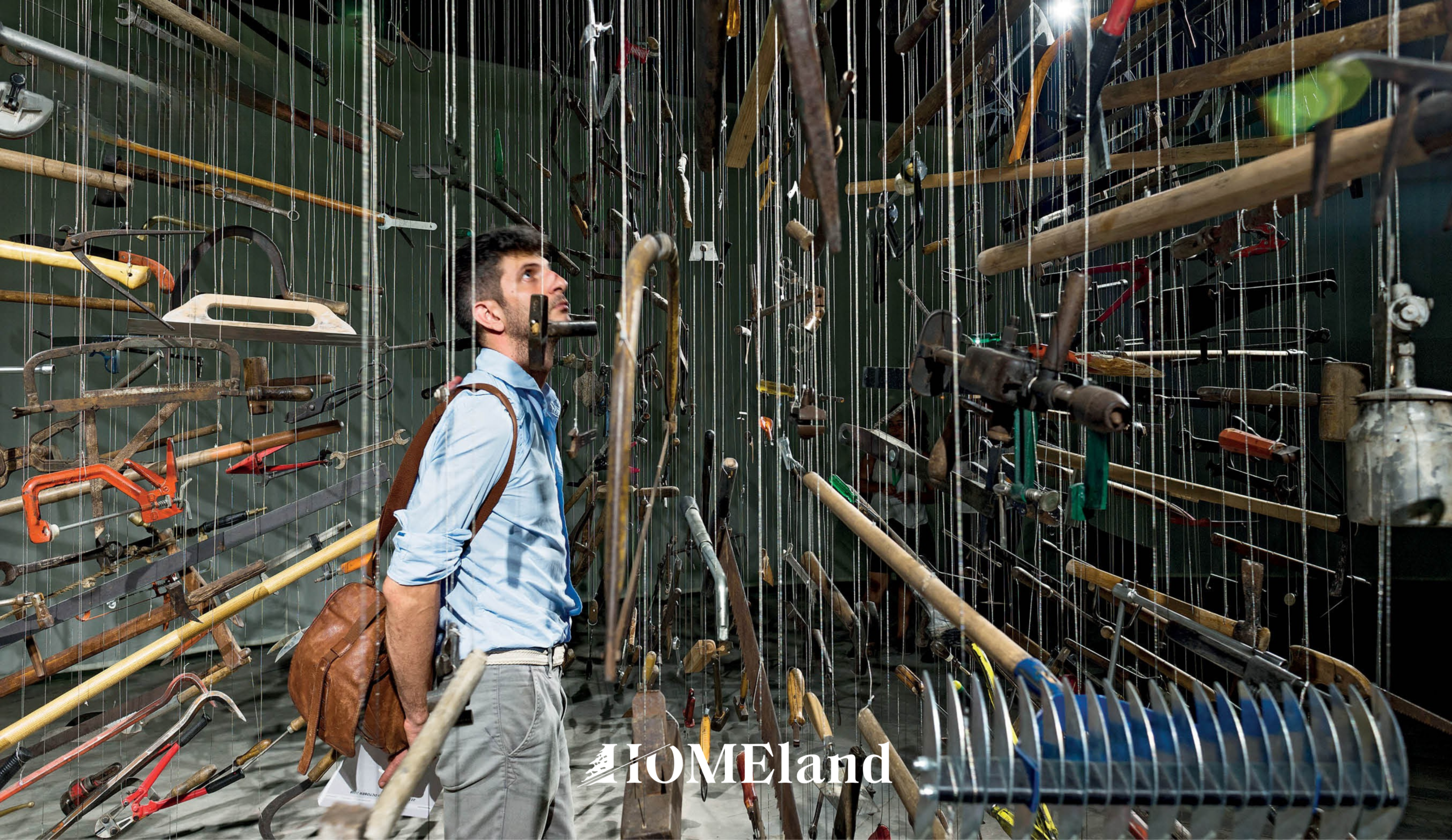
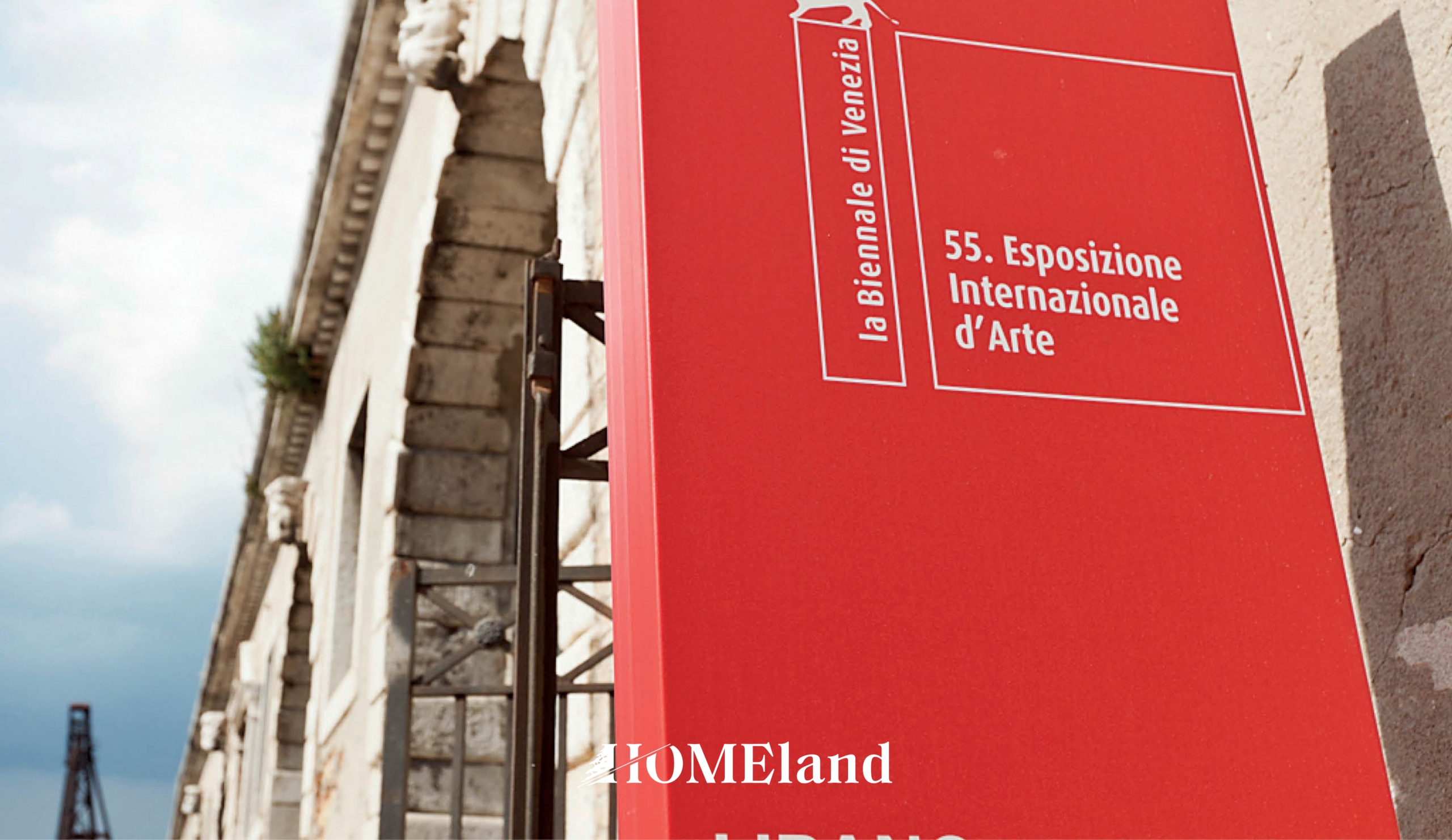
The museum is a continuation of APEAL’s work to promote Lebanese art to the world. In 2013, APEAL hosted Lebanon’s first pavilion, entitled Letter to a Refusing Pilot, at the 55th Venice Biennale. “It was a really great moment for Lebanon,” reflected Abou Nader. “The subject was very potent. It focused on an Israeli pilot ordered to hit a school in Lebanon, but he wouldn’t do it. People didn’t expect to see this in the Lebanese pavilion because of the political situation, but it was very well received.”
BeMA also intends to work with existing institutions. “It’s an embracing platform, not a competing one,” said Nammour.
“We’re not trying to fill a vacuum; existing institutions are already doing great work.”
Although the project is currently a fulltime job for both Nammour and Abou Nader, they are keen to emphasize that they’re part of a bigger team. “A lot of people are working hand-in-hand to do something cultural for the country,” said Abou Nader. “We have been helped voluntarily by people from a lot of different areas.”
Having come this far, they still have further to go. With construction due to begin this year, the next step is to secure an endowment for the project so that it is sustainable once open. Beirut can look forward to the new cultural center it deserves, and one that is here to stay.
This mode enables people with epilepsy to use the website safely by eliminating the risk of seizures that result from flashing or blinking animations and risky color combinations.
Visually Impaired Mode
Improves website's visuals
This mode adjusts the website for the convenience of users with visual impairments such as Degrading Eyesight, Tunnel Vision, Cataract, Glaucoma, and others.
Cognitive Disability Mode
Helps to focus on specific content
This mode provides different assistive options to help users with cognitive impairments such as Dyslexia, Autism, CVA, and others, to focus on the essential elements of the website more easily.
Blindness Mode
Allows using the site with your screen-reader
This mode configures the website to be compatible with screen-readers such as JAWS, NVDA, VoiceOver, and TalkBack. A screen-reader is software for blind users that is installed on a computer and smartphone, and websites must be compatible with it.
Online Dictionary
Readable Experience
Content Scaling
Default
Text Magnifier
Readable Font
Highlight Titles
Highlight Links
Font Sizing
Default
Line Height
Default
Letter Spacing
Default
Left Aligned
Center Aligned
Right Aligned
Visually Pleasing Experience
Dark Contrast
Light Contrast
Monochrome
High Contrast
High Saturation
Low Saturation
Adjust Text Colors
Adjust Title Colors
Adjust Background Colors
Easy Orientation
Mute Sounds
Hide Images
Hide Emoji
Reading Guide
Stop Animations
Reading Mask
Highlight Hover
Highlight Focus
Big Dark Cursor
Big Light Cursor
Cognitive Reading
Virtual Keyboard
Navigation Keys
Voice Navigation
Accessibility Statement
homelandlebanon.com
October 17, 2026
Compliance status
We firmly believe that the internet should be available and accessible to anyone, and are committed to providing a website that is accessible to the widest possible audience,
regardless of circumstance and ability.
To fulfill this, we aim to adhere as strictly as possible to the World Wide Web Consortium’s (W3C) Web Content Accessibility Guidelines 2.1 (WCAG 2.1) at the AA level.
These guidelines explain how to make web content accessible to people with a wide array of disabilities. Complying with those guidelines helps us ensure that the website is accessible
to all people: blind people, people with motor impairments, visual impairment, cognitive disabilities, and more.
This website utilizes various technologies that are meant to make it as accessible as possible at all times. We utilize an accessibility interface that allows persons with specific
disabilities to adjust the website’s UI (user interface) and design it to their personal needs.
Additionally, the website utilizes an AI-based application that runs in the background and optimizes its accessibility level constantly. This application remediates the website’s HTML,
adapts Its functionality and behavior for screen-readers used by the blind users, and for keyboard functions used by individuals with motor impairments.
If you’ve found a malfunction or have ideas for improvement, we’ll be happy to hear from you. You can reach out to the website’s operators by using the following email
Screen-reader and keyboard navigation
Our website implements the ARIA attributes (Accessible Rich Internet Applications) technique, alongside various different behavioral changes, to ensure blind users visiting with
screen-readers are able to read, comprehend, and enjoy the website’s functions. As soon as a user with a screen-reader enters your site, they immediately receive
a prompt to enter the Screen-Reader Profile so they can browse and operate your site effectively. Here’s how our website covers some of the most important screen-reader requirements,
alongside console screenshots of code examples:
Screen-reader optimization: we run a background process that learns the website’s components from top to bottom, to ensure ongoing compliance even when updating the website.
In this process, we provide screen-readers with meaningful data using the ARIA set of attributes. For example, we provide accurate form labels;
descriptions for actionable icons (social media icons, search icons, cart icons, etc.); validation guidance for form inputs; element roles such as buttons, menus, modal dialogues (popups),
and others. Additionally, the background process scans all the website’s images and provides an accurate and meaningful image-object-recognition-based description as an ALT (alternate text) tag
for images that are not described. It will also extract texts that are embedded within the image, using an OCR (optical character recognition) technology.
To turn on screen-reader adjustments at any time, users need only to press the Alt+1 keyboard combination. Screen-reader users also get automatic announcements to turn the Screen-reader mode on
as soon as they enter the website.
These adjustments are compatible with all popular screen readers, including JAWS and NVDA.
Keyboard navigation optimization: The background process also adjusts the website’s HTML, and adds various behaviors using JavaScript code to make the website operable by the keyboard. This includes the ability to navigate the website using the Tab and Shift+Tab keys, operate dropdowns with the arrow keys, close them with Esc, trigger buttons and links using the Enter key, navigate between radio and checkbox elements using the arrow keys, and fill them in with the Spacebar or Enter key.Additionally, keyboard users will find quick-navigation and content-skip menus, available at any time by clicking Alt+1, or as the first elements of the site while navigating with the keyboard. The background process also handles triggered popups by moving the keyboard focus towards them as soon as they appear, and not allow the focus drift outside it.
Users can also use shortcuts such as “M” (menus), “H” (headings), “F” (forms), “B” (buttons), and “G” (graphics) to jump to specific elements.
Disability profiles supported in our website
Epilepsy Safe Mode: this profile enables people with epilepsy to use the website safely by eliminating the risk of seizures that result from flashing or blinking animations and risky color combinations.
Visually Impaired Mode: this mode adjusts the website for the convenience of users with visual impairments such as Degrading Eyesight, Tunnel Vision, Cataract, Glaucoma, and others.
Cognitive Disability Mode: this mode provides different assistive options to help users with cognitive impairments such as Dyslexia, Autism, CVA, and others, to focus on the essential elements of the website more easily.
ADHD Friendly Mode: this mode helps users with ADHD and Neurodevelopmental disorders to read, browse, and focus on the main website elements more easily while significantly reducing distractions.
Blindness Mode: this mode configures the website to be compatible with screen-readers such as JAWS, NVDA, VoiceOver, and TalkBack. A screen-reader is software for blind users that is installed on a computer and smartphone, and websites must be compatible with it.
Keyboard Navigation Profile (Motor-Impaired): this profile enables motor-impaired persons to operate the website using the keyboard Tab, Shift+Tab, and the Enter keys. Users can also use shortcuts such as “M” (menus), “H” (headings), “F” (forms), “B” (buttons), and “G” (graphics) to jump to specific elements.
Additional UI, design, and readability adjustments
Font adjustments – users, can increase and decrease its size, change its family (type), adjust the spacing, alignment, line height, and more.
Color adjustments – users can select various color contrast profiles such as light, dark, inverted, and monochrome. Additionally, users can swap color schemes of titles, texts, and backgrounds, with over seven different coloring options.
Animations – person with epilepsy can stop all running animations with the click of a button. Animations controlled by the interface include videos, GIFs, and CSS flashing transitions.
Content highlighting – users can choose to emphasize important elements such as links and titles. They can also choose to highlight focused or hovered elements only.
Audio muting – users with hearing devices may experience headaches or other issues due to automatic audio playing. This option lets users mute the entire website instantly.
Cognitive disorders – we utilize a search engine that is linked to Wikipedia and Wiktionary, allowing people with cognitive disorders to decipher meanings of phrases, initials, slang, and others.
Additional functions – we provide users the option to change cursor color and size, use a printing mode, enable a virtual keyboard, and many other functions.
Browser and assistive technology compatibility
We aim to support the widest array of browsers and assistive technologies as possible, so our users can choose the best fitting tools for them, with as few limitations as possible. Therefore, we have worked very hard to be able to support all major systems that comprise over 95% of the user market share including Google Chrome, Mozilla Firefox, Apple Safari, Opera and Microsoft Edge, JAWS and NVDA (screen readers).
Notes, comments, and feedback
Despite our very best efforts to allow anybody to adjust the website to their needs. There may still be pages or sections that are not fully accessible, are in the process of becoming accessible, or are lacking an adequate technological solution to make them accessible. Still, we are continually improving our accessibility, adding, updating and improving its options and features, and developing and adopting new technologies. All this is meant to reach the optimal level of accessibility, following technological advancements. For any assistance, please reach out to
Jeddo
Ask about HOMEland
👋 Marhaba. Welcome to HOMEland Lebanon.
Here we share stories about Lebanon, its people, its heritage, and the Lebanese diaspora across the world. What would you like to explore today?


 Signature Boutique



Speaking Truth to Power: Pierre Sadek Foundation