Poet Lisa Luxx, Photo by: Robert Norbury
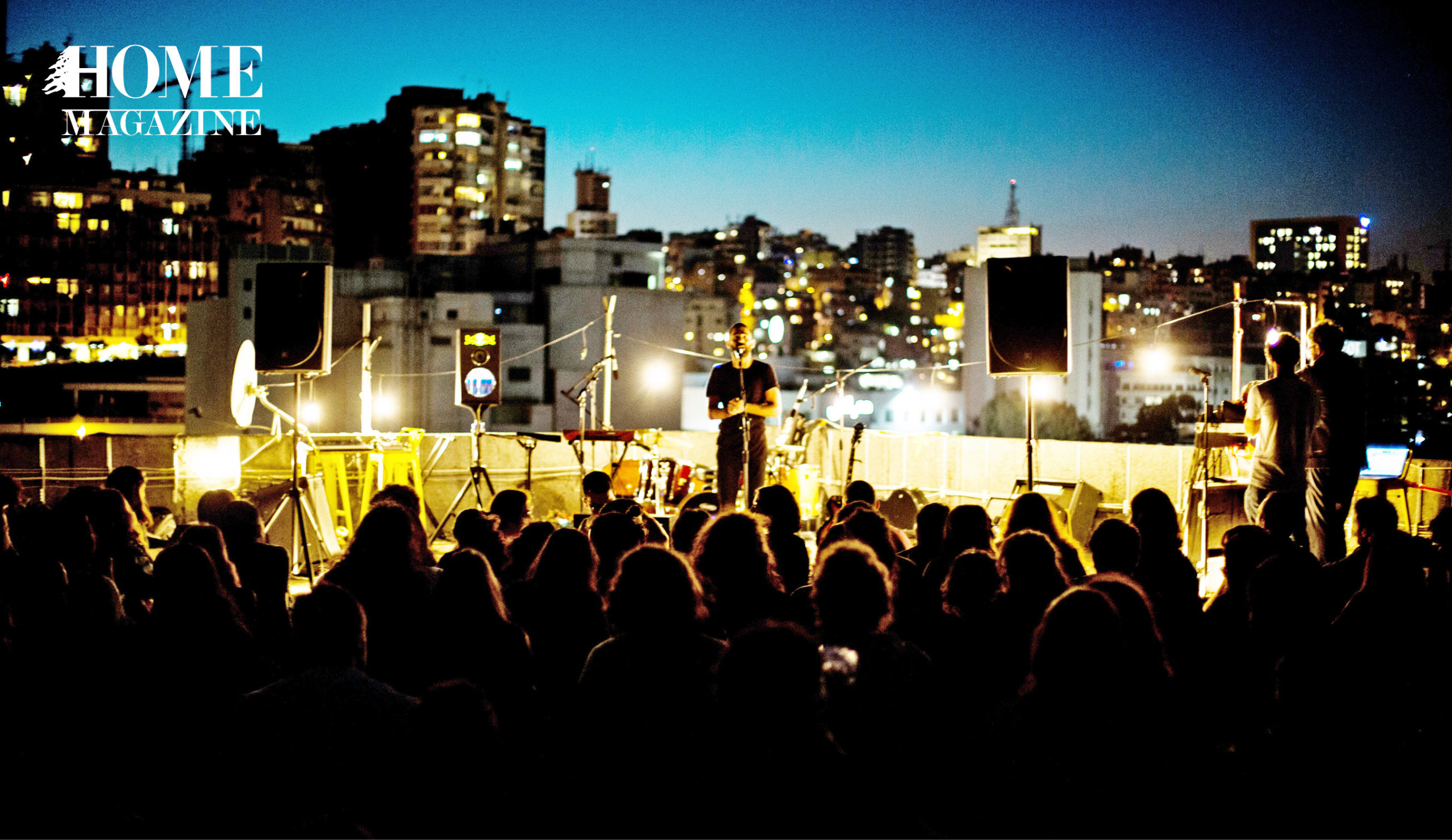
When performers step on the Sidewalk stage, they find a supportive and warm audience. As Beirut’s only weekly open mic, it has created a comfortable atmosphere for self-expression.
“It’s a family. Each enters with their own dynamic, bringing what only they can bring to the table,” said poet Lisa Luxx, defining the Sidewalk experience. The open mic provides performers a stage for sharing themselves with the audience, be it in poetry, comedy, drama, music or storytelling. The weekly forum is part of a recent wave of creative expression in Beirut, manifested in the mushrooming of artists’ cooperatives, and poetry, storytelling and music venues, that has blossomed in the past three or four years.Sidewalk Beirut, created by spokenword poet Maysan Nasser, takes place every Wednesday night, 8 – 11 p.m., at Riwaq, a venue in Mar Mikhael’s Geitawai neighborhood. When Nasser lived in Paris, she participated in Paris Lit Up; when she came back HOME, she felt she was missing something. So, she decided to create the same experience in her beloved Beirut.
“I think Beirut’s cultural scene is old and withstanding, but I feel that there is now a surge of many different events that are coloring the city with spaces for self-expression,” she said.
Sidewalk, which started as a four-week trial with Riwaq, has now become a regular event, running since fall 2017 to packed houses.
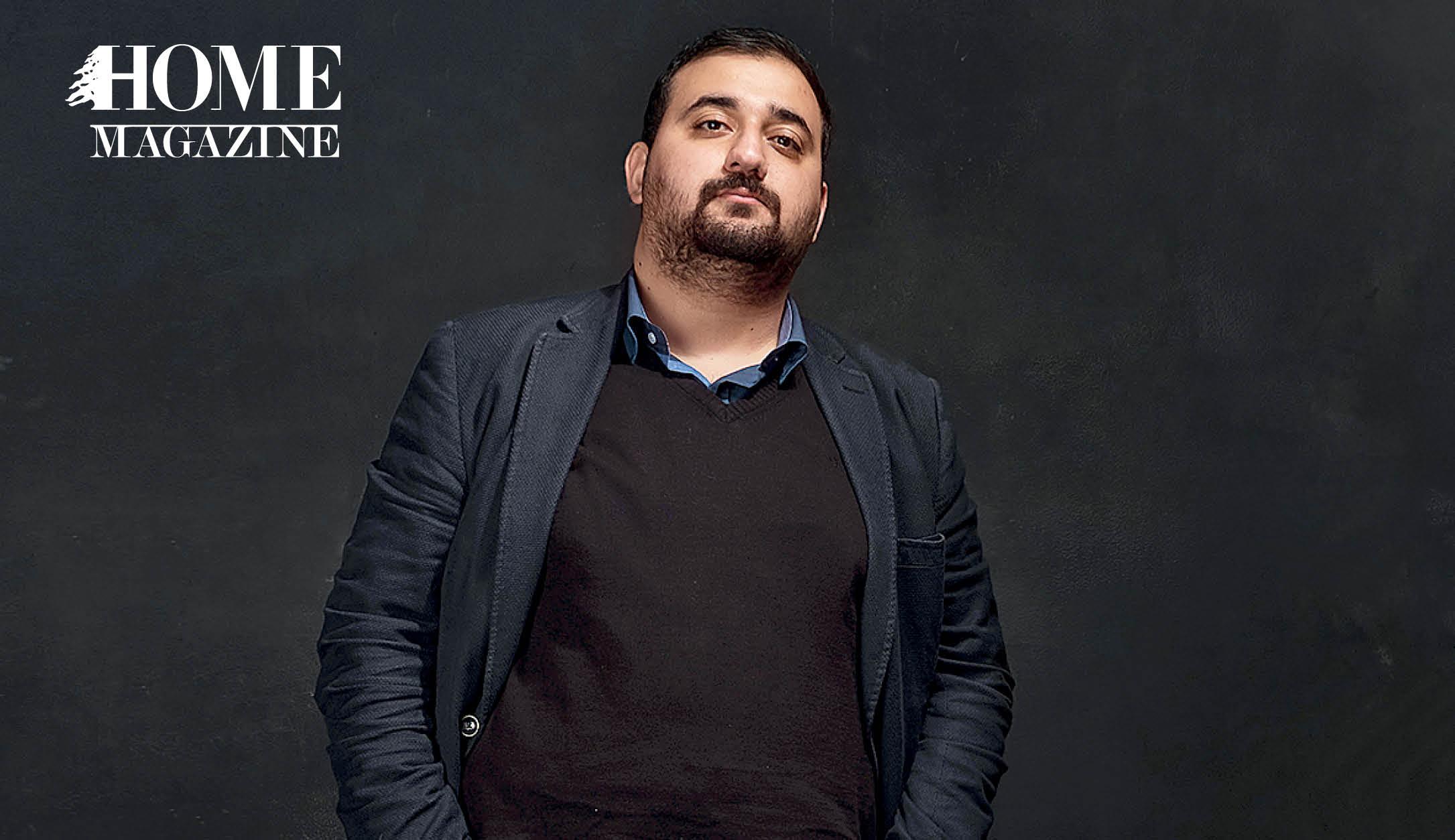
Comedian Wissam Kamal, Photo by: Comedy Central Arabia
The poet
Spoken-word poetry is one of today’s young generation’s leading art forms. It’s a style of poetry that celebrates freedom. At Sidewalk, there are no restrictions to what performers can say or how they say it.
“We can step more into our individualism because we respect our differences.”
Luxx, a Sidewalk regular, identifies herself as a poet, philosopher and activist. She has toured the world for more than seven years as a performance artist.
She likes Sidwalk because it “fosters a safe space to explore parts of the human experience that otherwise feel taboo.
“Through Sidewalk, we see that we are not on islands of feelings; feelings are the oceans that we share between us,” she said. “We can step more into our individualism because we respect our differences.”
The comedian
Wissam Kamal, the first Lebanese comedian to perform on Comedy Central Arabia, called Sidewalk “a miracle.” Stand-up comedians in Lebanon find it difficult to get constructive criticism or test out their material; they also struggle to find exposure, explained Kamal.
“The lack of mics forces us to produce full hour shows with untested material, and there’s lack of experience” he noted.
“Comedy is a unique medium, it doesn’t always come out the way the performer wants and having that happen on a main show can be debilitating,” he added.
“Sidewalk provides the platform and the audience for you to test, correct, edit, add and remove material,” said Kamal. You can express freely for 10 minutes. This platform is allowing me to fail, so I can succeed in the future; that’s the most important thing.”
Sidewalk supports Wissam in all his future endeavors, such as Lebanon’s first full sign language stand-up comedy set.
“Sidewalk supports Wissam in all his future endeavors, such as Lebanon’s first full sign language stand-up comedy set.”
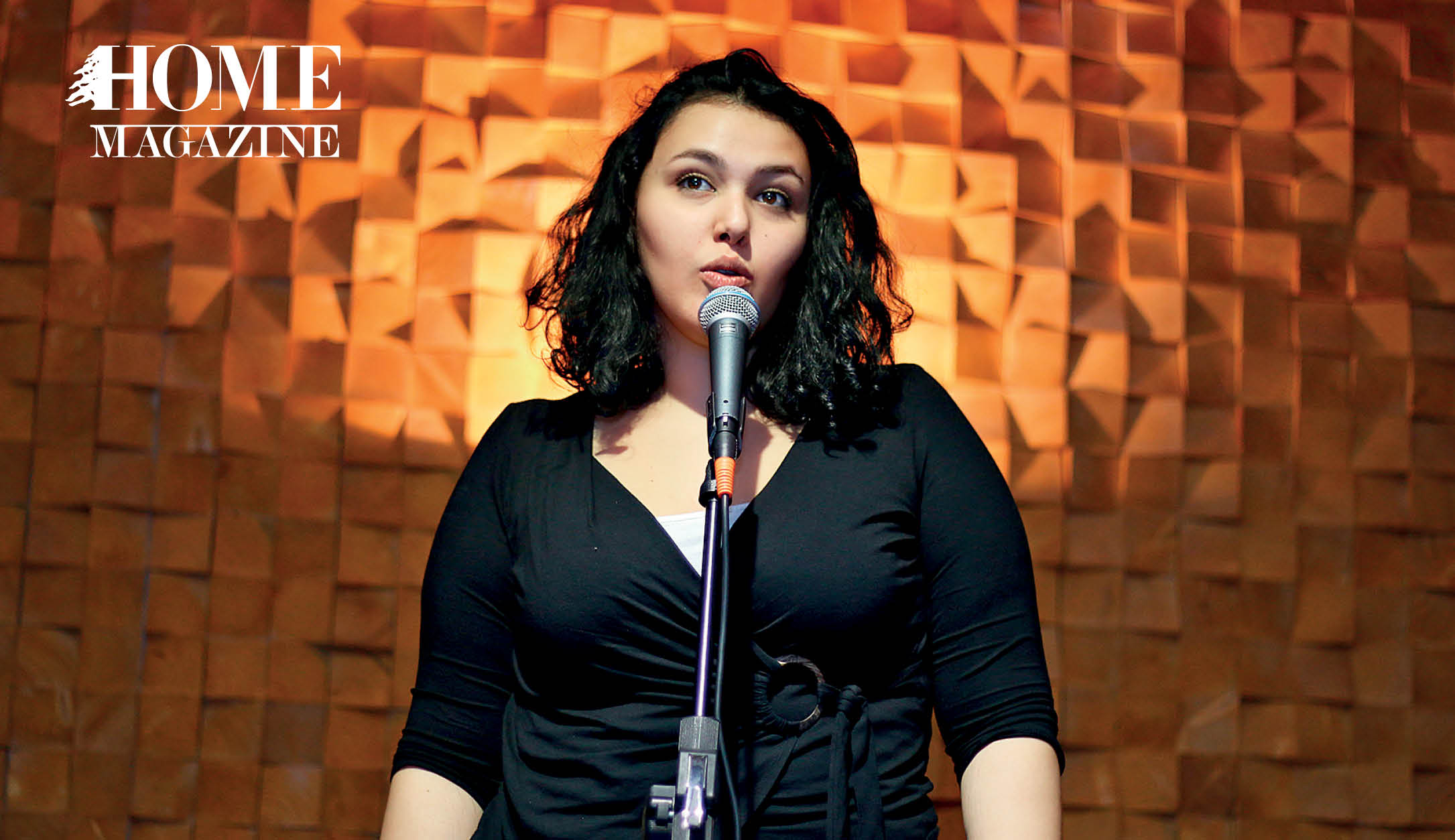
Maysan Nasser – Sidewalk Beirut Founder, Photo by: Bob Mattar
The musician
Sidewalk has begun organizing separate music events, yet its main weekly open mic has also included many musicians. In fact, many of the event’s main features have been musicians like Tarabeet and singer-songwriter Peter Chouchani, and bands such as Taxi 404.
Taxi 404 call themselves the “young members who want to express themselves, and pour their frustration and anger at the deranged world out onto the stage.”
As Hana Yazbeck of Taxi 404 said, “We think Sidewalk, as part of a cultural hub growing in Lebanon, is doing an important job in creating a platform for artists to express themselves and expose their creative work.”
The goal
Sidewalk is part of “a worldwide movement of artistic organizations bringing people together in a fear-dominated world,” said Nasser. Their efforts to create more space for self-expression are also promoting empathy and compassion.”
“Sidewalk endeavors to take care of its people. No matter what happens, Sidewalk is here,” said Beirut-based writer, professor and actor Dima Matta, dubbed “the storyteller of Beirut.” “Come rain or come shine, every week.”
HOMEland Magazine
We firmly believe that the internet should be available and accessible to anyone, and are committed to providing a website that is accessible to the widest possible audience, regardless of circumstance and ability.
To fulfill this, we aim to adhere as strictly as possible to the World Wide Web Consortium’s (W3C) Web Content Accessibility Guidelines 2.1 (WCAG 2.1) at the AA level. These guidelines explain how to make web content accessible to people with a wide array of disabilities. Complying with those guidelines helps us ensure that the website is accessible to all people: blind people, people with motor impairments, visual impairment, cognitive disabilities, and more.
This website utilizes various technologies that are meant to make it as accessible as possible at all times. We utilize an accessibility interface that allows persons with specific disabilities to adjust the website’s UI (user interface) and design it to their personal needs.
Additionally, the website utilizes an AI-based application that runs in the background and optimizes its accessibility level constantly. This application remediates the website’s HTML, adapts Its functionality and behavior for screen-readers used by the blind users, and for keyboard functions used by individuals with motor impairments.
If you’ve found a malfunction or have ideas for improvement, we’ll be happy to hear from you. You can reach out to the website’s operators by using the following email
Our website implements the ARIA attributes (Accessible Rich Internet Applications) technique, alongside various different behavioral changes, to ensure blind users visiting with screen-readers are able to read, comprehend, and enjoy the website’s functions. As soon as a user with a screen-reader enters your site, they immediately receive a prompt to enter the Screen-Reader Profile so they can browse and operate your site effectively. Here’s how our website covers some of the most important screen-reader requirements, alongside console screenshots of code examples:
Screen-reader optimization: we run a background process that learns the website’s components from top to bottom, to ensure ongoing compliance even when updating the website. In this process, we provide screen-readers with meaningful data using the ARIA set of attributes. For example, we provide accurate form labels; descriptions for actionable icons (social media icons, search icons, cart icons, etc.); validation guidance for form inputs; element roles such as buttons, menus, modal dialogues (popups), and others. Additionally, the background process scans all the website’s images and provides an accurate and meaningful image-object-recognition-based description as an ALT (alternate text) tag for images that are not described. It will also extract texts that are embedded within the image, using an OCR (optical character recognition) technology. To turn on screen-reader adjustments at any time, users need only to press the Alt+1 keyboard combination. Screen-reader users also get automatic announcements to turn the Screen-reader mode on as soon as they enter the website.
These adjustments are compatible with all popular screen readers, including JAWS and NVDA.
Keyboard navigation optimization: The background process also adjusts the website’s HTML, and adds various behaviors using JavaScript code to make the website operable by the keyboard. This includes the ability to navigate the website using the Tab and Shift+Tab keys, operate dropdowns with the arrow keys, close them with Esc, trigger buttons and links using the Enter key, navigate between radio and checkbox elements using the arrow keys, and fill them in with the Spacebar or Enter key.Additionally, keyboard users will find quick-navigation and content-skip menus, available at any time by clicking Alt+1, or as the first elements of the site while navigating with the keyboard. The background process also handles triggered popups by moving the keyboard focus towards them as soon as they appear, and not allow the focus drift outside it.
Users can also use shortcuts such as “M” (menus), “H” (headings), “F” (forms), “B” (buttons), and “G” (graphics) to jump to specific elements.
We aim to support the widest array of browsers and assistive technologies as possible, so our users can choose the best fitting tools for them, with as few limitations as possible. Therefore, we have worked very hard to be able to support all major systems that comprise over 95% of the user market share including Google Chrome, Mozilla Firefox, Apple Safari, Opera and Microsoft Edge, JAWS and NVDA (screen readers).
Despite our very best efforts to allow anybody to adjust the website to their needs. There may still be pages or sections that are not fully accessible, are in the process of becoming accessible, or are lacking an adequate technological solution to make them accessible. Still, we are continually improving our accessibility, adding, updating and improving its options and features, and developing and adopting new technologies. All this is meant to reach the optimal level of accessibility, following technological advancements. For any assistance, please reach out to