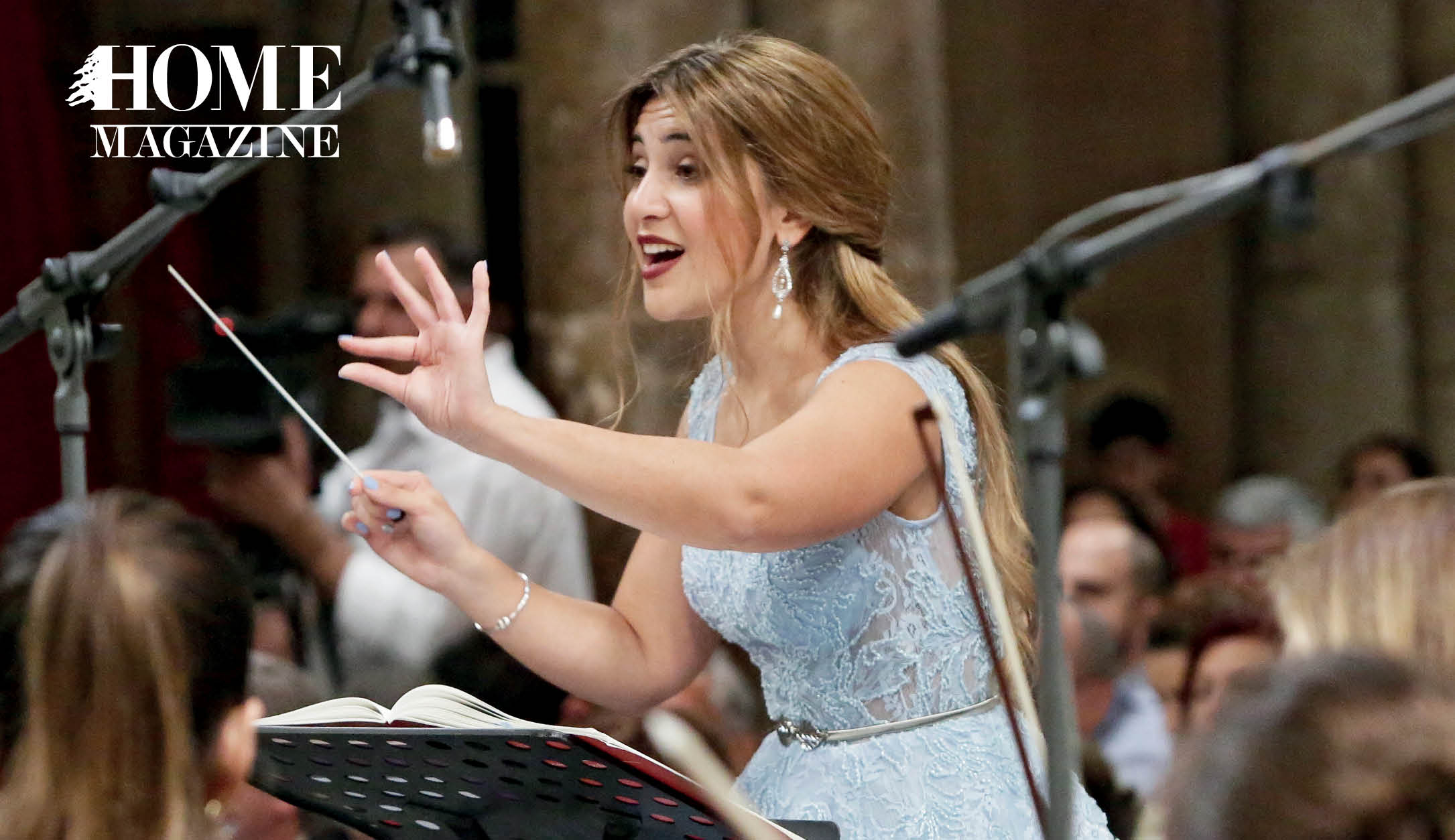
Her mother was a music teacher; she grew up surrounded by it. Yasmina Sabbah’s childhood was one of piano, flute and singing lessons. She joined a choir for the first time when she was 7 years old. Instant passion: “I knew that I wanted to study classical singing from the start.”
Twenty-two years and an entire musical journey later, Yasmina belongs to a rare breed of women music conductors, not just in the Middle East but in the world. In Lebanon, she directs three different choirs for adults and children of all levels and teaches at various institutions.
A soprano herself, on the side, she has been recognized with the Dubai ChoirFest Patrons’ Award, the Philippe Jabre Award and the Rosemarie Salhaney Haggar Music Award, to name a few.
“Music penetrates my skin.”
A conversation about music and love with Yasmina Sabbah:
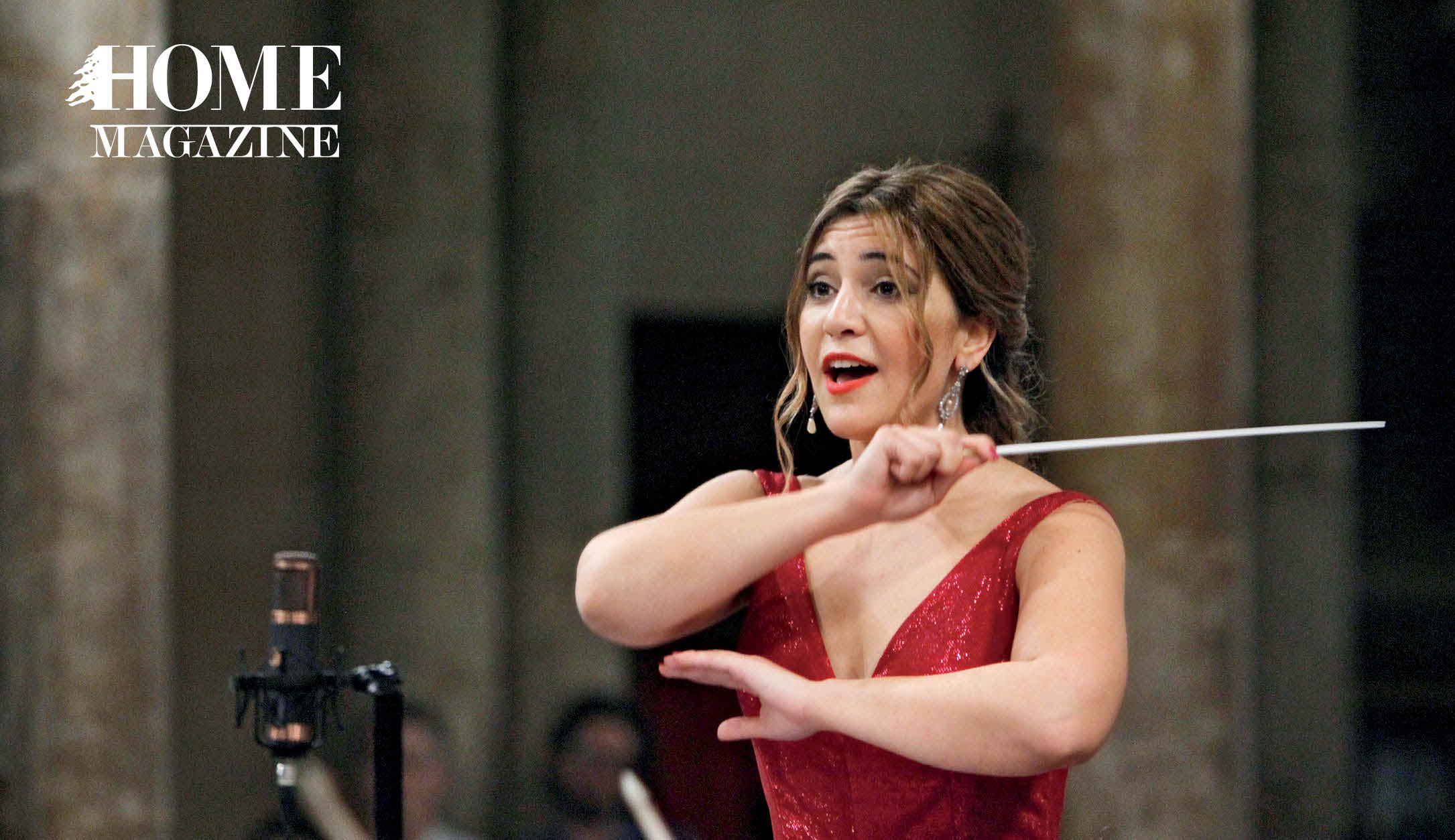
So where does this story begin?
In our family house, where my brother, cousins and I would spend our summer holidays. Every year, I would plan a “summer concert” in which everyone had to participate! I would assemble the music, write the play, develop the choreography, make the costumes … and impose three-hour rehearsals on my reluctant performers every day. I would even make posters, sell tickets and arrange a seating plan for my “audience.” I suppose it was not too difficult to guess what I was going to do when I grew up!
Yet you first pursued a degree in graphic design.
Yes. When I finished high school, though I knew I loved classical singing, I still had doubts about my future. I am not a risk taker, and being only 17, I was not ready to travel abroad to study music. So, I studied graphic design because it was the closest I could get to an artistic major and pursued a minor in music in parallel.
Even then, all my graphic design projects were either concert posters or visual pedagogical music aids for music.
My big break came when I was offered a part-time job to launch a children’s choir. It was completely random; I had never thought of myself as a choir conductor. But because I had strong choral singing experience, I accepted – and the rest is history!
“My closest friends are choir friends. When we all breathe at the same time and tune into each other – the feeling is indescribable.”
In 2012, you were among the six students admitted into Cambridge’s conducting schools, where you obtained your master’s degree in choral conducting. Tell us about that experience, and about living abroad.
My stay in Cambridge was extremely overwhelming. Culture shock was not an issue, but the 10-month program itself was intensive and very demanding. It took me a while to adapt, but I am grateful because the experience made me much stronger and more confident.
After Cambridge, nothing scares me. I even enjoyed it toward the end!
What was it like returning to Lebanon?
Very difficult at first, but I am grateful to be back and consider myself lucky to be doing what I do. The music scene is growing in Lebanon, especially choral singing, so I am glad to be contributing to that. I love waking up in the morning and going to work, because I simply love what I do.
What is it about music that moves you so deeply?
Harmony moves me. To me, it is more than just the melody; it’s the progression. Music penetrates my skin. I cannot imagine being me without music. It’s such a big part of who I am. As a child, it taught me discipline. It gave me a sense of identity and an outlet for my energy. Music is also therapy! When I sing I forget everything.
And choir?
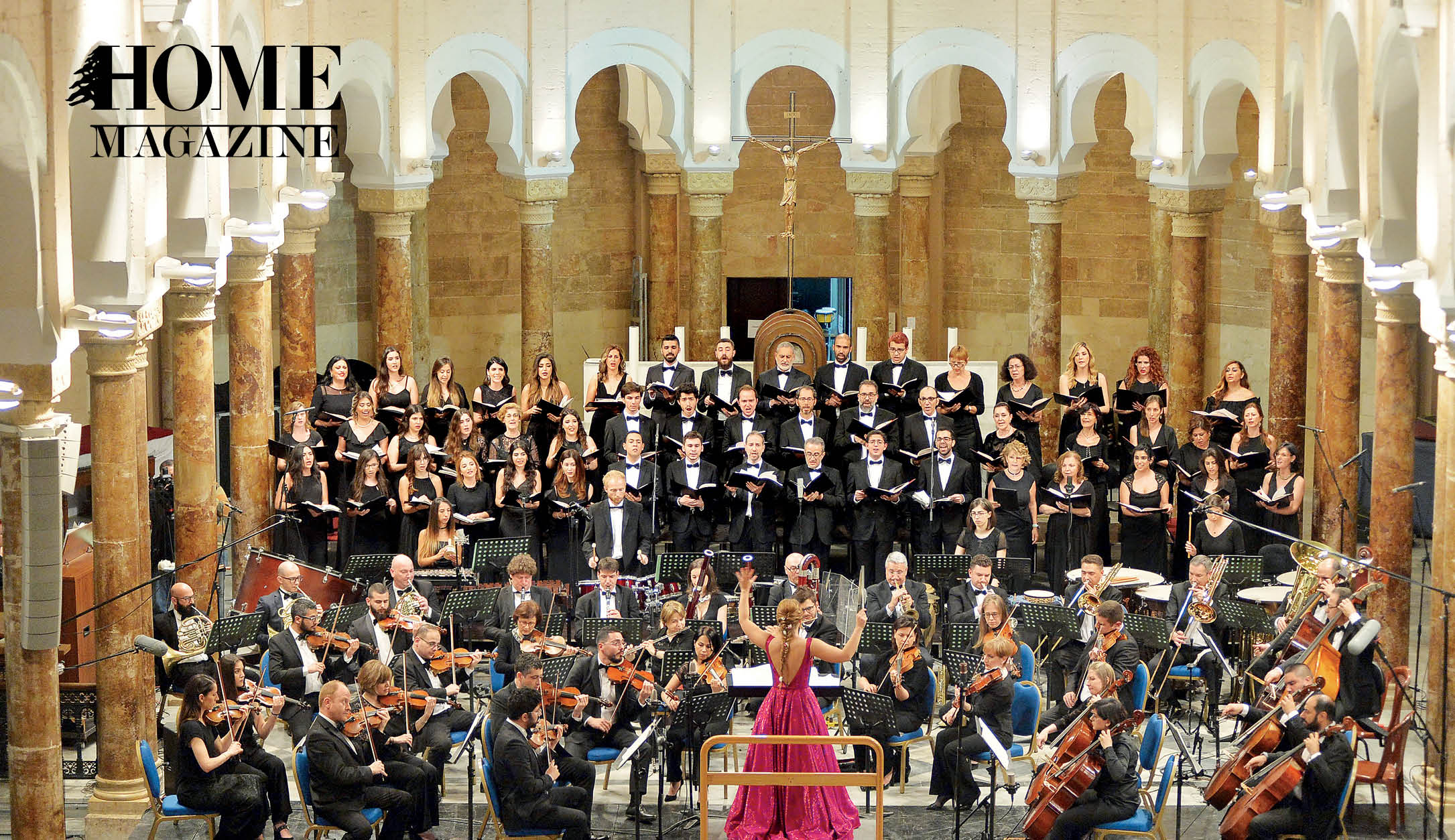
Choir is particularly amazing because it is also a social activity that involves teamwork and creates such strong human bonds. My closest friends are choir friends. When we all breathe at the same time and tune into each other – the feeling is indescribable.
With Lebanon in political turmoil and so much suffering all around us, what role can music and choir in particular play?
Music is an escape from the stress of daily life. My choral singers always tell me: “in choir, we forget everything” and “choir is what keeps me sane.”
Choir brings everyone together. No matter what faith, culture or background we come from, we are singing together as one voice. Our different voices make the beauty of the music. I wish people could follow this model for life!
“Our different voices make the beauty of the music. I wish people could follow this model for life!”
Speaking of models, is there someone who has particularly inspired you?
Besides my mother, who passed her love of music on to me, I had an amazing choir professor at AUB. He shaped my love for choral music and helped me connect the dots of my career path. He is a big reason why I am here today. I cannot thank him enough, and still follow the advice he gave me.
One more serious question, then a lighter one. First, what are your future plans?
I have so many! On the top of my list: a doctorate in music, conducting more orchestral works, expanding my choir and exploring different repertoires.
And last, what is playing in your headphones right now?
Other than classical music? Musical theatre! Especially Stephen Sondheim! I listen to French Baroque music on loop and cannot seem to get enough of Charpentier’s music. And when I go running, Bach is my best friend; he makes me forget that I am exercising.


HOMEland
Coming Soon
HOMEland Events & Collaborations
Coming Soon
 Signature Boutique