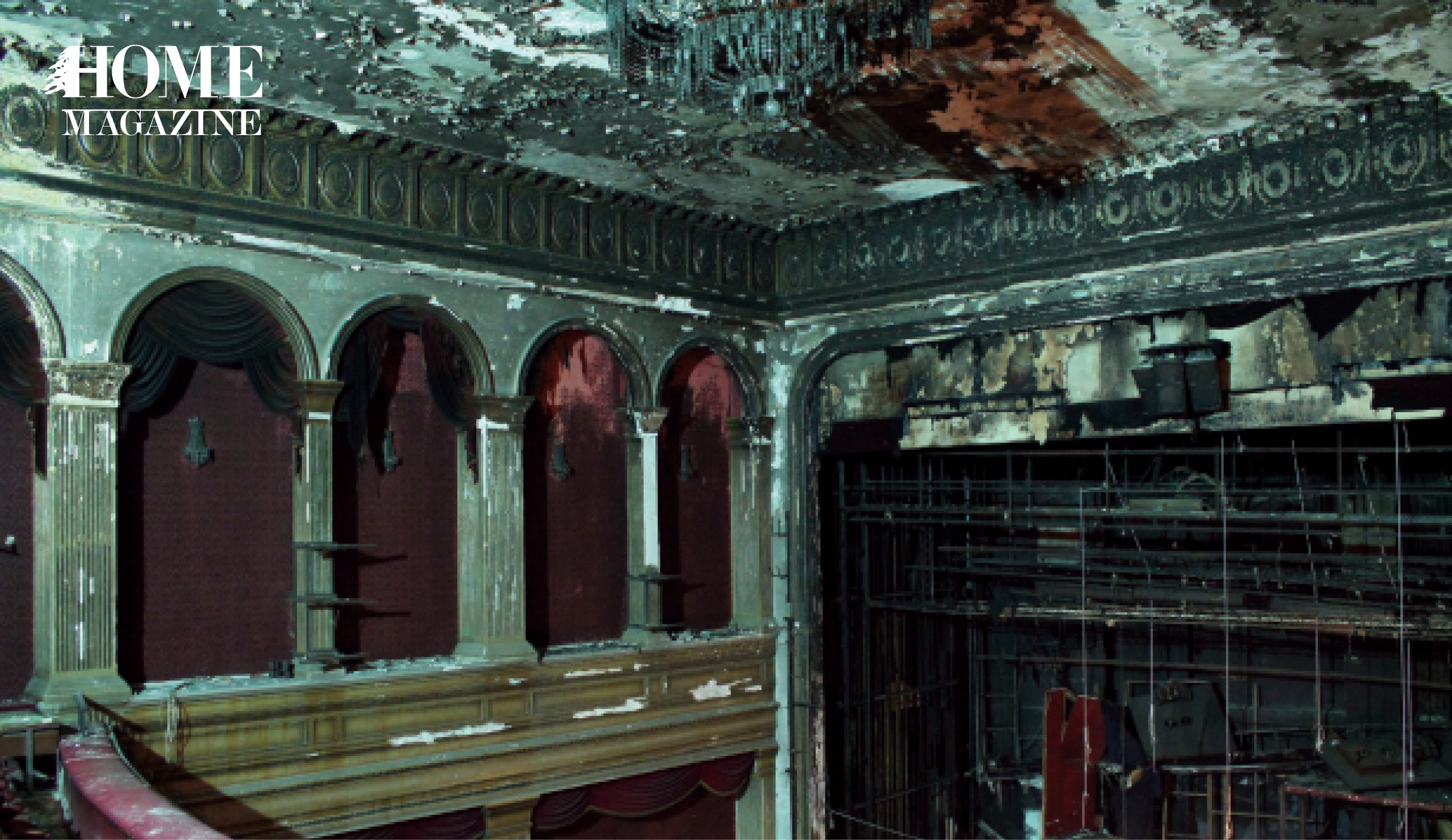
Photography by: Sara Zeidan. A special thanks to her, without which this article would not have been possible.
The Piccadilly was the first ever theater on Hamra Street. The theater opened its doors in 1965, at the height of the Golden Era, and played host to the brightest stars and biggest celebrities of Lebanon.
Locked away in a decaying time capsule, The Piccadilly Theater, located in Hamra, the heart of west Beirut, is a ghost of its former self. Once a grand stage graced by legends of music and theater in Lebanon, it is now a silent tomb, dark and abandoned.
Built by Lebanese architect William Sednaoui, and modeled after the famous Piccadilly Theater in London, the Piccadilly was the first ever theater on Hamra Street. The theater opened its doors in 1965, at the height of the Golden Era, and played host to the brightest stars and biggest celebrities of Lebanon. Legends like Omar Sharif, Soad Hosni, Fairuz, and Dalida gave memorable performances, as star-struck audiences watched from red velvet chairs.
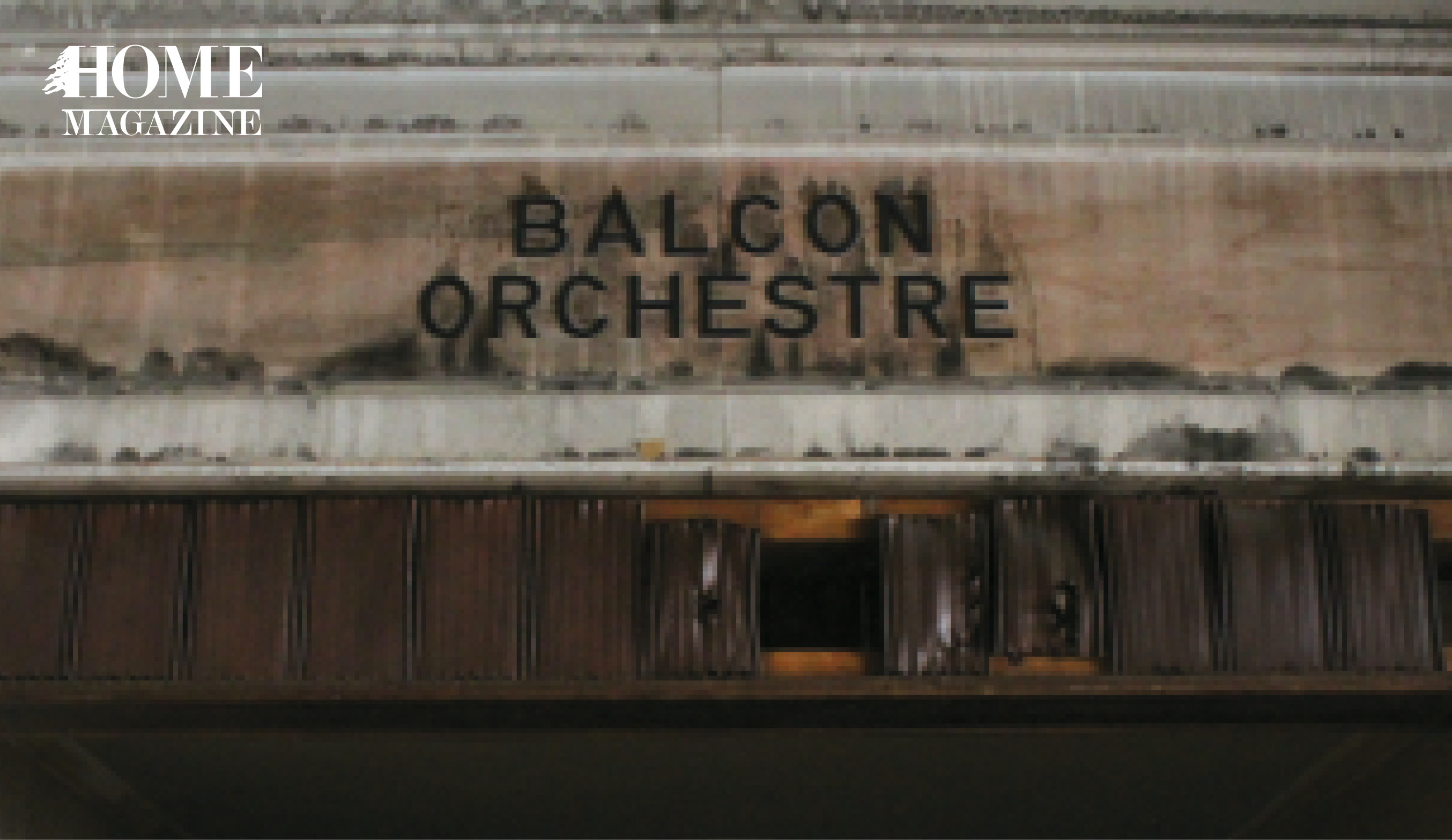
During a special interview, Mohamad Bibi, the former owner of the Piccadilly, shared his fond memories of the past. “When I first stepped into the Piccadilly I felt as if I was entering a castle. It was something so beautiful when you saw the enthusiasm in people’s eyes when they were buying the tickets and entering the theater, so excited to see the show. Men all dressed in tuxedos and women well dressed with jewelry and nice perfume filling the place,” he remembered.
After the Civil War erupted in the 1970s, the Piccadilly temporarily closed its doors with the hope of reopening after the war, and reopen it did, but not for long.
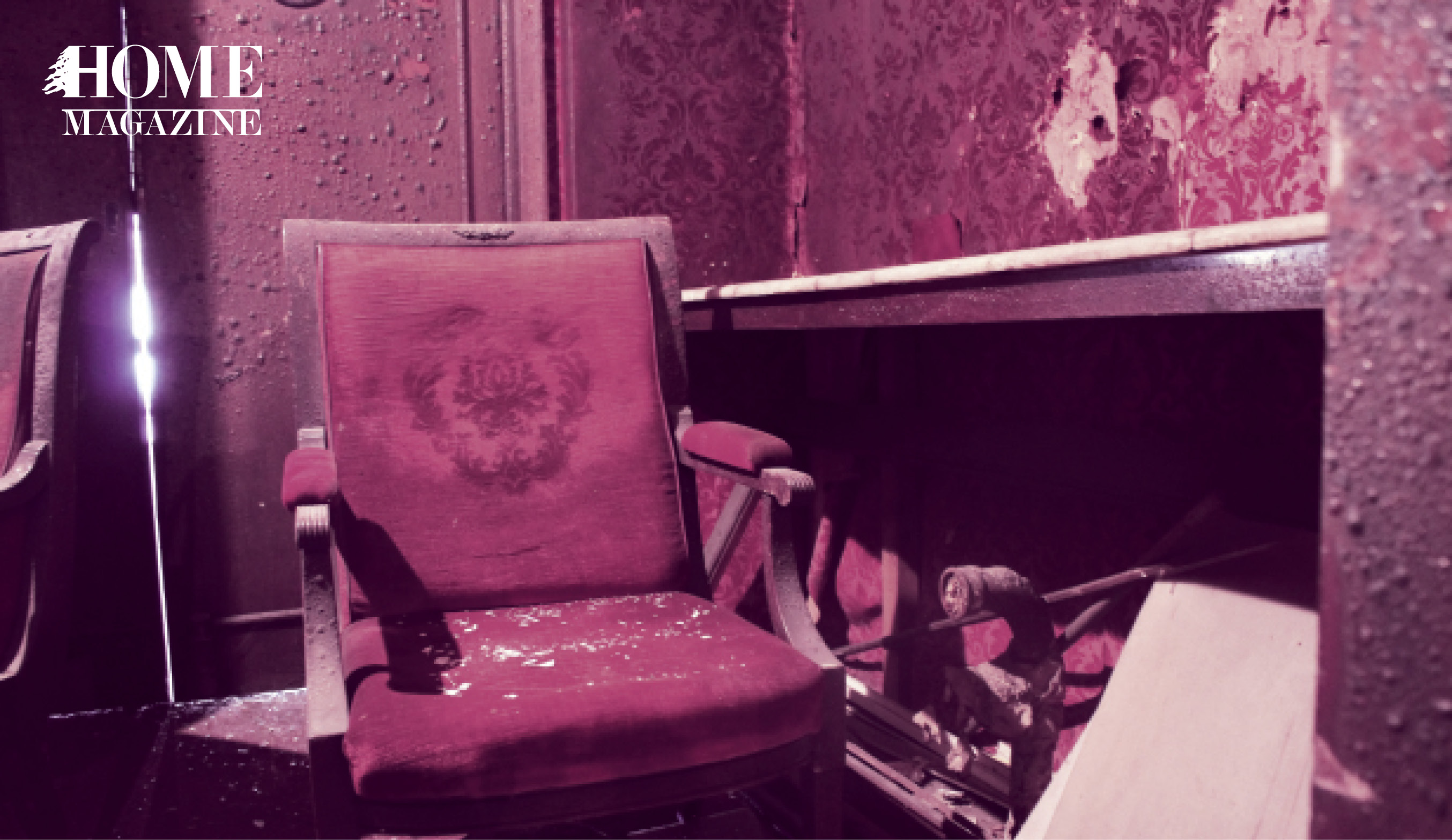
On 19 Aug., 2000, during the preparation of the play “Kabset Zer” by Marwan Najjar, a fire started on the stage and seriously damaged it, as well as badly burning the décor. Although we will never really know for sure what started the fire, some say it was due to old wiring, while others say it was from a cigarette. What we know for sure is that on that fateful day the Piccadilly was closed and never reopened again.
The owners wanted to restore it, but after they saw the extent of the damage, they realized how difficult it would be to fund the reconstruction. “The walls were made of gold cement and we couldn’t afford renovating the theater,” said Bibi. Many offers came in from people wanting to convert the Piccadilly into a brand-new cinema, theater or building, but the owners rejected them all.
Milad Haddad, the current owner of the Piccadilly Theater opened up about his feelings of the Piccadilly: “Whenever I enter the theater I feel really sad and disappointed because it’s burnt; it’s totally different. The rotten smell due to the smoke from the fire frustrates me the most because it shows the bitter state of the Piccadilly nowadays. But for the memories I will always remember Lebanon as the rich cultural country where people used to come to Lebanon to visit the Piccadilly.”
To some, the Piccadilly Theater is a landmark and reminder of Lebanon’s Golden Era, to others it will remain a painful memory of what once was. Beautiful in darkness as well as in the light, the theater is a symbol of a once-thriving industry and a witness to one of the most thriving eras in Lebanon’s history. In our hearts and memories it will remain beautiful forever.
HOMEland Magazine
We firmly believe that the internet should be available and accessible to anyone, and are committed to providing a website that is accessible to the widest possible audience, regardless of circumstance and ability.
To fulfill this, we aim to adhere as strictly as possible to the World Wide Web Consortium’s (W3C) Web Content Accessibility Guidelines 2.1 (WCAG 2.1) at the AA level. These guidelines explain how to make web content accessible to people with a wide array of disabilities. Complying with those guidelines helps us ensure that the website is accessible to all people: blind people, people with motor impairments, visual impairment, cognitive disabilities, and more.
This website utilizes various technologies that are meant to make it as accessible as possible at all times. We utilize an accessibility interface that allows persons with specific disabilities to adjust the website’s UI (user interface) and design it to their personal needs.
Additionally, the website utilizes an AI-based application that runs in the background and optimizes its accessibility level constantly. This application remediates the website’s HTML, adapts Its functionality and behavior for screen-readers used by the blind users, and for keyboard functions used by individuals with motor impairments.
If you’ve found a malfunction or have ideas for improvement, we’ll be happy to hear from you. You can reach out to the website’s operators by using the following email
Our website implements the ARIA attributes (Accessible Rich Internet Applications) technique, alongside various different behavioral changes, to ensure blind users visiting with screen-readers are able to read, comprehend, and enjoy the website’s functions. As soon as a user with a screen-reader enters your site, they immediately receive a prompt to enter the Screen-Reader Profile so they can browse and operate your site effectively. Here’s how our website covers some of the most important screen-reader requirements, alongside console screenshots of code examples:
Screen-reader optimization: we run a background process that learns the website’s components from top to bottom, to ensure ongoing compliance even when updating the website. In this process, we provide screen-readers with meaningful data using the ARIA set of attributes. For example, we provide accurate form labels; descriptions for actionable icons (social media icons, search icons, cart icons, etc.); validation guidance for form inputs; element roles such as buttons, menus, modal dialogues (popups), and others. Additionally, the background process scans all the website’s images and provides an accurate and meaningful image-object-recognition-based description as an ALT (alternate text) tag for images that are not described. It will also extract texts that are embedded within the image, using an OCR (optical character recognition) technology. To turn on screen-reader adjustments at any time, users need only to press the Alt+1 keyboard combination. Screen-reader users also get automatic announcements to turn the Screen-reader mode on as soon as they enter the website.
These adjustments are compatible with all popular screen readers, including JAWS and NVDA.
Keyboard navigation optimization: The background process also adjusts the website’s HTML, and adds various behaviors using JavaScript code to make the website operable by the keyboard. This includes the ability to navigate the website using the Tab and Shift+Tab keys, operate dropdowns with the arrow keys, close them with Esc, trigger buttons and links using the Enter key, navigate between radio and checkbox elements using the arrow keys, and fill them in with the Spacebar or Enter key.Additionally, keyboard users will find quick-navigation and content-skip menus, available at any time by clicking Alt+1, or as the first elements of the site while navigating with the keyboard. The background process also handles triggered popups by moving the keyboard focus towards them as soon as they appear, and not allow the focus drift outside it.
Users can also use shortcuts such as “M” (menus), “H” (headings), “F” (forms), “B” (buttons), and “G” (graphics) to jump to specific elements.
We aim to support the widest array of browsers and assistive technologies as possible, so our users can choose the best fitting tools for them, with as few limitations as possible. Therefore, we have worked very hard to be able to support all major systems that comprise over 95% of the user market share including Google Chrome, Mozilla Firefox, Apple Safari, Opera and Microsoft Edge, JAWS and NVDA (screen readers).
Despite our very best efforts to allow anybody to adjust the website to their needs. There may still be pages or sections that are not fully accessible, are in the process of becoming accessible, or are lacking an adequate technological solution to make them accessible. Still, we are continually improving our accessibility, adding, updating and improving its options and features, and developing and adopting new technologies. All this is meant to reach the optimal level of accessibility, following technological advancements. For any assistance, please reach out to