
HOMEland THEMES
Coming Soon
HOMEland Events & Collaborations
Coming Soon
 Signature Boutique

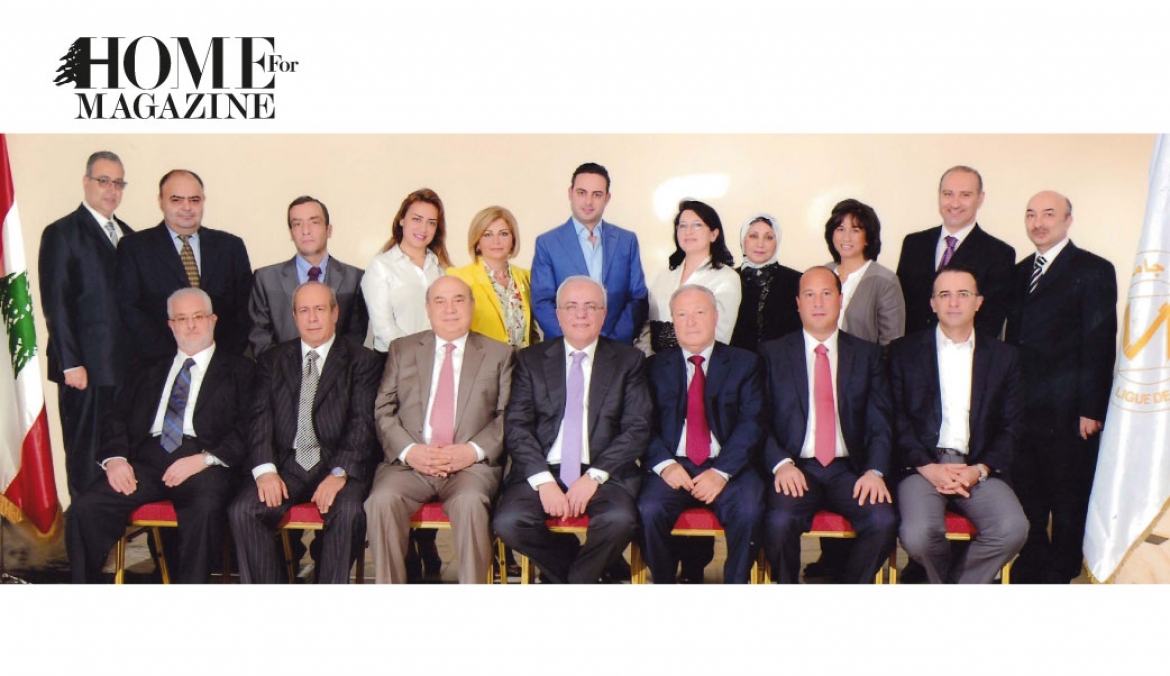
The Sinno family has a strong sense of its own identity as a social unit through history, with its own association, website, Facebook page, and Twitter handle.
It is generally accepted that the original name of the family was “Sunna” referring to the family’s strong commitment to Islam and the Sunna (doctrine of the Prophet). The family originated in Morocco and migrated to Beirut over 600 years ago. According to Dr. Yussef Bin Ahmad Bin Ali Al Husseini, the Sinno family was among the seven families of Beirut who made a historical agreement with the governor of the city in 1351 to defend the city against the Crusaders. From the 2003 book “Beirut and its Seven Families” by Dr. Husseini.
In 1920 two men almost got into a fight in Beirut. When someone came to mediate, it was found that both men were members of the Sinno family who didn’t know each other. Efforts to mediate the conflict led to the establishment of the Sinno family association in 1921. In 1998 the official name of the association became the Sinno Family League. In 2007 a further amendment established the number of board members as 18 of which six seats each were reserved for male and female members under the age of 40. A review of the amendments to the charter have documented the evolution of social changes within one of the oldest families in Beirut and possibly the most experienced in family organization.
The most noted changes in the boundaries of inclusion are:
1937: All male adults of the Sinno family (18 years and above)
1965: Male and female members, from a Sinno father, even when the female is married outside the Sinno family
1998: Wives of Sinno family members are included Since its establishment, the association has been concerned with creating stronger bonds among family members and settling intra-family disputes. The current president, Faisal Badraddin Sinno (who is also vice president of the Makassed Islamic Philanthropic Association) notes that as much as 90% of the work of the Sinno Family League is to collect alms, “zakat” from its wealthier members to provide for the health and social needs of its most needy members, as well as supporting the educational development of its most capable.
Kamal Sinno – Lebanese Food Bank
Kamal Sinno is the co-founder and president of the Lebanese Food Bank (LBF) that was established in 2011 to eliminate hunger in all Lebanon. LFB collects unserved food from hotels, restaurants and catering companies as well as dry foods, and surplus produce from farmers markets, distributing the food (as well as clothes, furniture, and appliances) to those who need it most, through a network of some 65 NGOs all over Lebanon.
Tarek Sinno – Fashion Designer
Tarek Sinno was born into a family actively involved in the textile industry with factories and shops in Beirut and beyond. He launched his first workshop at the age of 20. Tarek Sinno Haute Couture creations, which have been shown in Lebanon, Paris, New York and elsewhere, include high end fashion evening dresses and bridal gowns, many with exquisite embroidery.
Hamed Sinno – Lead singer of Mashrou’ Leila
The band Mashrou’ Leila, formed in 2008, has consciously chosen not to conform to standards of sound and appearance that would garner the support of the mainstream musical industry or media.
To the contrary the Arabic lyrics of Mashrou’ Leila music provocatively challenge the status quo by addressing controversial themes related to Lebanese society, politics and sexuality. The band has produced three albums and performed to sold out audiences in Beirut, Cairo, Paris, Amsterdam, Montreal, Tunis, Geneva, Amman, Serbia, Dubai, and Barcelona. In April 2015, they became the first Middle Eastern artists to be featured on the cover of Rolling Stone magazine.
Dr. Hani Sinno – Facial aesthetics and Reconstructive Surgeon – Quebec
Teaches at both the Université de Montréal and McGill University – a volunteer with Operation Smile, an international medical mission to correct the cleft lip and palate deformities of underprivileged children living in third world countries.
Academicians
Signature Boutique 

HOMEland Magazine
We firmly believe that the internet should be available and accessible to anyone, and are committed to providing a website that is accessible to the widest possible audience, regardless of circumstance and ability.
To fulfill this, we aim to adhere as strictly as possible to the World Wide Web Consortium’s (W3C) Web Content Accessibility Guidelines 2.1 (WCAG 2.1) at the AA level. These guidelines explain how to make web content accessible to people with a wide array of disabilities. Complying with those guidelines helps us ensure that the website is accessible to all people: blind people, people with motor impairments, visual impairment, cognitive disabilities, and more.
This website utilizes various technologies that are meant to make it as accessible as possible at all times. We utilize an accessibility interface that allows persons with specific disabilities to adjust the website’s UI (user interface) and design it to their personal needs.
Additionally, the website utilizes an AI-based application that runs in the background and optimizes its accessibility level constantly. This application remediates the website’s HTML, adapts Its functionality and behavior for screen-readers used by the blind users, and for keyboard functions used by individuals with motor impairments.
If you’ve found a malfunction or have ideas for improvement, we’ll be happy to hear from you. You can reach out to the website’s operators by using the following email
Our website implements the ARIA attributes (Accessible Rich Internet Applications) technique, alongside various different behavioral changes, to ensure blind users visiting with screen-readers are able to read, comprehend, and enjoy the website’s functions. As soon as a user with a screen-reader enters your site, they immediately receive a prompt to enter the Screen-Reader Profile so they can browse and operate your site effectively. Here’s how our website covers some of the most important screen-reader requirements, alongside console screenshots of code examples:
Screen-reader optimization: we run a background process that learns the website’s components from top to bottom, to ensure ongoing compliance even when updating the website. In this process, we provide screen-readers with meaningful data using the ARIA set of attributes. For example, we provide accurate form labels; descriptions for actionable icons (social media icons, search icons, cart icons, etc.); validation guidance for form inputs; element roles such as buttons, menus, modal dialogues (popups), and others. Additionally, the background process scans all the website’s images and provides an accurate and meaningful image-object-recognition-based description as an ALT (alternate text) tag for images that are not described. It will also extract texts that are embedded within the image, using an OCR (optical character recognition) technology. To turn on screen-reader adjustments at any time, users need only to press the Alt+1 keyboard combination. Screen-reader users also get automatic announcements to turn the Screen-reader mode on as soon as they enter the website.
These adjustments are compatible with all popular screen readers, including JAWS and NVDA.
Keyboard navigation optimization: The background process also adjusts the website’s HTML, and adds various behaviors using JavaScript code to make the website operable by the keyboard. This includes the ability to navigate the website using the Tab and Shift+Tab keys, operate dropdowns with the arrow keys, close them with Esc, trigger buttons and links using the Enter key, navigate between radio and checkbox elements using the arrow keys, and fill them in with the Spacebar or Enter key.Additionally, keyboard users will find quick-navigation and content-skip menus, available at any time by clicking Alt+1, or as the first elements of the site while navigating with the keyboard. The background process also handles triggered popups by moving the keyboard focus towards them as soon as they appear, and not allow the focus drift outside it.
Users can also use shortcuts such as “M” (menus), “H” (headings), “F” (forms), “B” (buttons), and “G” (graphics) to jump to specific elements.
We aim to support the widest array of browsers and assistive technologies as possible, so our users can choose the best fitting tools for them, with as few limitations as possible. Therefore, we have worked very hard to be able to support all major systems that comprise over 95% of the user market share including Google Chrome, Mozilla Firefox, Apple Safari, Opera and Microsoft Edge, JAWS and NVDA (screen readers).
Despite our very best efforts to allow anybody to adjust the website to their needs. There may still be pages or sections that are not fully accessible, are in the process of becoming accessible, or are lacking an adequate technological solution to make them accessible. Still, we are continually improving our accessibility, adding, updating and improving its options and features, and developing and adopting new technologies. All this is meant to reach the optimal level of accessibility, following technological advancements. For any assistance, please reach out to