Tripoli’s special economic zone makes it a potential economic hub if an upgraded socioeconomic infrastructure is put in place.
Article by: Varouj Tenbelian
Tripoli, the capital of the North of Lebanon, is the second biggest and second most populated city in the country after Beirut. Though it borders the second largest port in the country, the city faces many challenges that hinder its economic development. Political and social instability, combined with a lack of proper infrastructure, had a role in obscuring advancement and triggering outflow of investments not only from the city but from the north of the country in general. All this could change soon.
According to a report published by the Investment Development Authority of Lebanon (IDAL) in February 2016, 11% of the Lebanese workforce is located in the North; of these, 13% are engaged in agricultural activities, 30% in services and 23% in trade. The IDAL report indicates that Tripoli could be transformed into a potential hub to serve a market of 200 million people in the neighboring countries if an upgraded socioeconomic infrastructure is put in place.
And with an investment pipeline already exceeding $220 million, and targeting more than $400 million, Lebanon’s northern region is already revamping its logistics, transport and business infrastructures, including a $58 million redevelopment of the Port of Tripoli by adding a new container terminal, bringing the processing capacity to 800,000 containers per year. Nevertheless, the creation of the Tripoli Special Economic Zone (TSEZ), the largest free zone in Lebanon – a visionary plan – offers vast fiscal, financial and business incentives. “For the North, it will develop the local economy, create jobs and thus support the community. As for the country, it will bring foreign investments, enhance the FDI and support the overall economy and trade exchange,” said Dr Hassan Dennaoui (PhDc, ME, MSc), TSEZ Advisor to HOME Magazine.
In June 2005, the Lebanese government approved a draft law on the establishment of a Special Economic Zone in Tripoli, but it was not until September 5, 2008 that the draft law was passed pursuant to Law no. 18. “Actually, it was back in 2000, when former Prime Minister Rafic Hariri proposed the development of a similar project to the Jebel Ali project in Dubai, and suggested Tripoli as a potential location since he was looking to Tripoli as a future economic city,” explained Dr Dennaoui. “It took around eight years in the parliament to approve the Tripoli SEZ law and one additional year to approve the decrees,” he added.
Hoping to provide Tripoli with a much-needed economic boost, successive Lebanese governments have introduced several development projects. Among these projects are the expansion of the port and the creation of the Rashid Karami International Fair. Since only a small part of the fair complex was completed, the idea of a Special Economic Zone was put forward. “Tripoli is a potential economic city, having all the needed infrastructure from port, fair, airport, availability of empty spaces in Tripoli and the North for logistics purposes, which is not the case in any other city, in addition to the labor cost which offers a competitive advantage among other countries in terms of skilled labor,” indicated Dr Dennaoui, adding that TSEZ is not a traditional free zone where the operations are limited to storage and logistics. “The TSEZ offers those services but also all kinds of industrial, trade and management services except tourism, including the establishment of new companies, which operate and generate its products and services from the zone to benefit from its incentives. This is similar to many well-known trade zones in UAE, Jordan, Saudi and others,” he said.

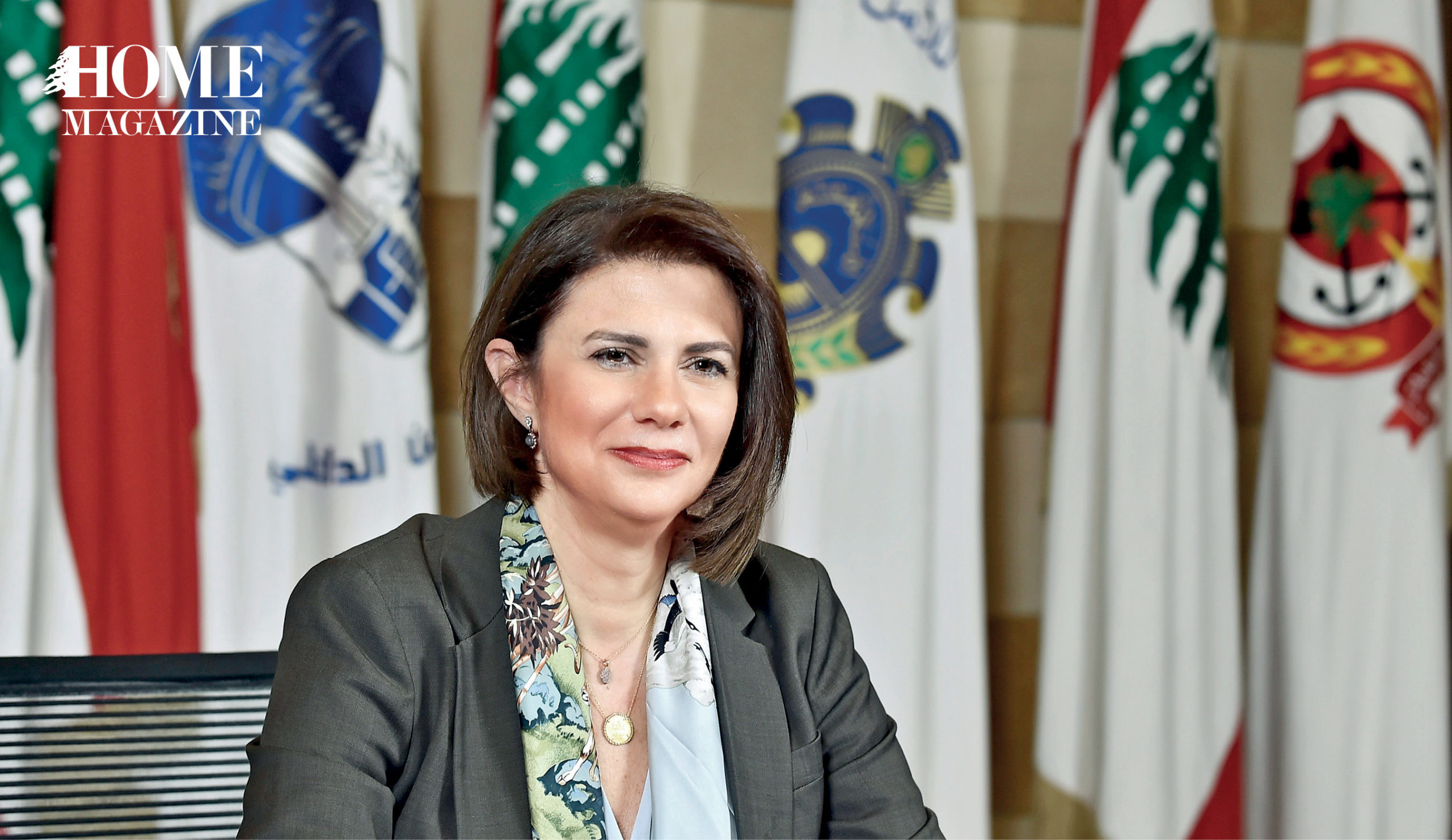
By 2009 the entire legal framework of the economic zone was in place. The management of the Zone was assigned to a special body operating under the Prime Minister and known as the “General Assembly of the Tripoli Economic Zone.” The body has a legal character and enjoys financial and administrative autonomy. It was only in 2015 that the Lebanese government appointed a board of directors, chaired by Raya Haffar El Hassan, former Minister of Finance, in addition to Ramzi El Hafez (industrial engineer and manager of an economic research and publishing company), Antoine Habib (former chairman of the Tripoli Port Authority and banker), Wassim Mansouri (attorney and university lecturer), Antoun Diab (business manager) and Asheer El Dayeh (attorney and university lecturer).
The feasibility study, funded by USAID, has assessed three different locations for the TSEZ, in addition to market assessment, demand forecasting, development of the financial and operational models, implementation plan, and identification of the sectors. The TSEZ management is in place, and, with the decision to locate the TSEZ next to the Port of Tripoli, the whole plan has been set in motion. “The reclamation was funded by the government with $20 million,” said Dr Dennaoui. “The infrastructure fund is not yet finalized but multiple options are available including partial government fund or private sector investment within a PPP agreement. The estimated cost is around $35 million. The income generation will be defined very soon as part of the market study that is funded by the World Bank,” he added.
The transformation of Tripoli, started with the Tripoli International Fair and the expansion of its port, is expected to become a long-awaited reality by the implementation of the TSEZ project, with the hope that it will contribute to the development of not only the city and the northern area, but the whole country. Furthermore, the World Bank believes that Tripoli has a role to play in the reconstruction of postwar Syria, with its ability to provide all the required logistics support through its port and the incoming Economic Zone.
A 35 km railroad from the Port of Tripoli to the Syrian border costing $60 million is already planned, secured jointly by the World Bank and the Islamic Development Bank.

HOMEland THEMES
Coming Soon
HOMEland Events & Collaborations
Coming Soon
 Signature Boutique