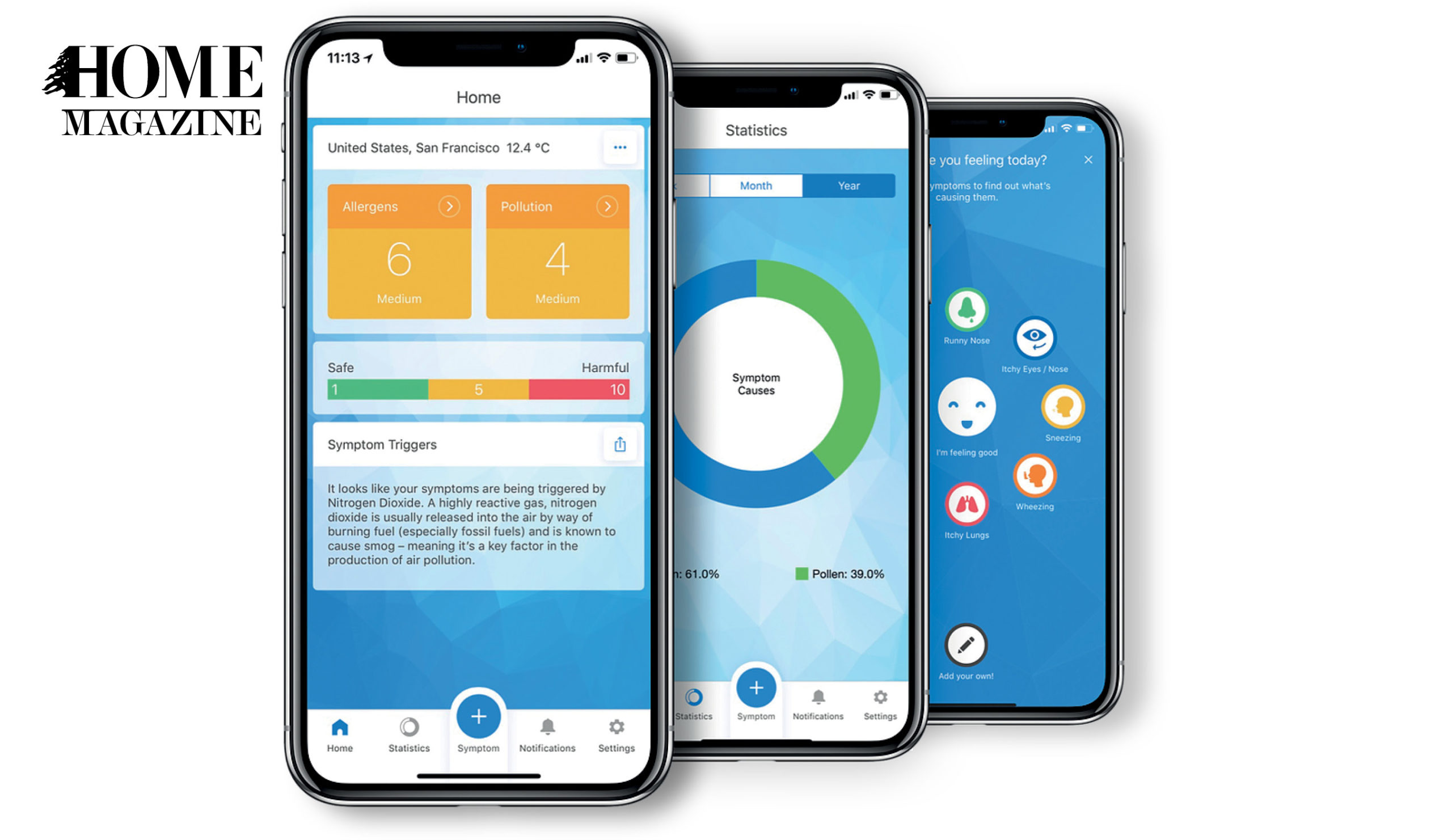
In the last decades, humans have transited to an interconnected world known for its metropolitan lifestyle that relies heavily on production, consumption, transportation, and energy demand. Ever since, anthropic activities exposed humans to all sorts of pollutants and it is just recently that the world began to realize the scale of this problem.
The twentieth century marked the development of the first guidelines on air pollution. The United States and the United Kingdom were among the first to take vital decisions to save their cities from suffocating smog and poor air quality. Since then, every country has developed its own environmental standards while the World Health Organization has been working on providing international guidelines for 30 years already. These guidelines – based on extensive scientific evidence relating air pollution concentration to health consequences – are intended to inform policy-makers and to provide appropriate targets for decision makers in low, middle and high income countries.
The continuous and long-term exposure to poor air quality affects the cardiovascular, respiratory and the nervous systems; young, old and sick people being the most susceptible. In released estimates, the World Health Organization (WHO) says that nearly 3.7 million people died of outdoor air pollution in 2012.
The guidelines are applicable for particulate matter, ozone (O3), nitrogen dioxide (NO2), and sulfur dioxide (SO2). Between 2002 and 2012, efforts in Paris were able to generally improve by 30 % the outdoor air quality. This was achieved by reducing the traffic and modernizing the fleet. According to Airparif, the organization that monitors the air quality in France, the downward pollution trend has slowed down starting 2007, blaming dieselization on this.
AIR QUALITY IN LEBANON
Lebanon’s location on the enclosed East side of the Mediterranean basin leaves it exposed to winds coming from East and Central Europe. Combined with high insulation and local emissions, these conditions can lead to poor air quality. Lebanon can do little about regional dust and air pollution masses coming from other parts of the region but the country can act on local emissions.
That is why the Lebanese Ministry of Environment (MOE) set National Ambient Air Quality Standards (NAAQS) in 1996. Similar to the WHO standards in terms of NO2, CO and O3 guidelines, the NAAQS are more indulgent towards SO2 and suspended particles (Ministry of Environment, 1996). Since 2001, Lebanon’s capabilities in air quality monitoring have improved considerably.
The ministry, along with several institutions and researchers, is working on identifying the problematic air pollutants in the country. With the support of the UNEP and UNDP, the MOE launched real time air quality monitoring in different sites to crack down on air pollutants.
In 2010, the transport sector was found to be the major contributor for CO, NOx, and Volatile Organic Compounds while the industry was identified as the main culprit for Lebanon’s particulate matter emissions. Briefly: CO, SO2 and O3 levels were not found to surpass the recommended levels in the capital while NO2 and PM concentrations exceeded WHO guidelines where high traffic prevailed.

The bad news is, following the influx of Syrian refugees to Lebanon, air pollution has most certainly increased by 20% in many densely inhabited cities. The last 2014 UNDP/EU/ MoE report titled “Lebanon Environmental Assessment of the Syrian Conflict & Priority Interventions” proposes a myriad of mitigation measures to be adopted such as the implementation of public transportation, immediate banning of waste open burning techniques, switching power plants to natural gas and relocation of the private generators installed inside neighborhoods.
Contrary to popular public opinion, there is a growing community of Lebanese scientists conducting research to improve our daily quality of life. Universities and researchers have been investing hard in this environmental subject. Experts envision a day where we will be able to monitor and forecast local air quality in order to protect the citizens and reduce our exposure to air pollution. It is true that in terms of air quality in Lebanon the road has been bumpy, but one thing is for sure: the civil society is, day by day, becoming more aware of this problem and is willing to act on this.
For me info:
Antoine Waked, Charbel Afif and Christian Seigneur, 2012 Atmospheric Environment journal.
The map was prepared by USJ professor Charbel Afif based on Waked et Al. (2012) emission inventory. MoE, EU, UNDP Lebanon Environmental Assessment of the Syrian Conflict & Priority Interventions 2014.

HOMEland Magazine
We firmly believe that the internet should be available and accessible to anyone, and are committed to providing a website that is accessible to the widest possible audience, regardless of circumstance and ability.
To fulfill this, we aim to adhere as strictly as possible to the World Wide Web Consortium’s (W3C) Web Content Accessibility Guidelines 2.1 (WCAG 2.1) at the AA level. These guidelines explain how to make web content accessible to people with a wide array of disabilities. Complying with those guidelines helps us ensure that the website is accessible to all people: blind people, people with motor impairments, visual impairment, cognitive disabilities, and more.
This website utilizes various technologies that are meant to make it as accessible as possible at all times. We utilize an accessibility interface that allows persons with specific disabilities to adjust the website’s UI (user interface) and design it to their personal needs.
Additionally, the website utilizes an AI-based application that runs in the background and optimizes its accessibility level constantly. This application remediates the website’s HTML, adapts Its functionality and behavior for screen-readers used by the blind users, and for keyboard functions used by individuals with motor impairments.
If you’ve found a malfunction or have ideas for improvement, we’ll be happy to hear from you. You can reach out to the website’s operators by using the following email
Our website implements the ARIA attributes (Accessible Rich Internet Applications) technique, alongside various different behavioral changes, to ensure blind users visiting with screen-readers are able to read, comprehend, and enjoy the website’s functions. As soon as a user with a screen-reader enters your site, they immediately receive a prompt to enter the Screen-Reader Profile so they can browse and operate your site effectively. Here’s how our website covers some of the most important screen-reader requirements, alongside console screenshots of code examples:
Screen-reader optimization: we run a background process that learns the website’s components from top to bottom, to ensure ongoing compliance even when updating the website. In this process, we provide screen-readers with meaningful data using the ARIA set of attributes. For example, we provide accurate form labels; descriptions for actionable icons (social media icons, search icons, cart icons, etc.); validation guidance for form inputs; element roles such as buttons, menus, modal dialogues (popups), and others. Additionally, the background process scans all the website’s images and provides an accurate and meaningful image-object-recognition-based description as an ALT (alternate text) tag for images that are not described. It will also extract texts that are embedded within the image, using an OCR (optical character recognition) technology. To turn on screen-reader adjustments at any time, users need only to press the Alt+1 keyboard combination. Screen-reader users also get automatic announcements to turn the Screen-reader mode on as soon as they enter the website.
These adjustments are compatible with all popular screen readers, including JAWS and NVDA.
Keyboard navigation optimization: The background process also adjusts the website’s HTML, and adds various behaviors using JavaScript code to make the website operable by the keyboard. This includes the ability to navigate the website using the Tab and Shift+Tab keys, operate dropdowns with the arrow keys, close them with Esc, trigger buttons and links using the Enter key, navigate between radio and checkbox elements using the arrow keys, and fill them in with the Spacebar or Enter key.Additionally, keyboard users will find quick-navigation and content-skip menus, available at any time by clicking Alt+1, or as the first elements of the site while navigating with the keyboard. The background process also handles triggered popups by moving the keyboard focus towards them as soon as they appear, and not allow the focus drift outside it.
Users can also use shortcuts such as “M” (menus), “H” (headings), “F” (forms), “B” (buttons), and “G” (graphics) to jump to specific elements.
We aim to support the widest array of browsers and assistive technologies as possible, so our users can choose the best fitting tools for them, with as few limitations as possible. Therefore, we have worked very hard to be able to support all major systems that comprise over 95% of the user market share including Google Chrome, Mozilla Firefox, Apple Safari, Opera and Microsoft Edge, JAWS and NVDA (screen readers).
Despite our very best efforts to allow anybody to adjust the website to their needs. There may still be pages or sections that are not fully accessible, are in the process of becoming accessible, or are lacking an adequate technological solution to make them accessible. Still, we are continually improving our accessibility, adding, updating and improving its options and features, and developing and adopting new technologies. All this is meant to reach the optimal level of accessibility, following technological advancements. For any assistance, please reach out to