Through each one of Shukran’s restaurants, a window to Lebanon is opened
“That the rest of the world knows and loves Lebanon as I do”. This is Bill Saad’s main goal, and he has decided to achieve it through one of Lebanon’s most valuable cultural legacies: its gastronomy. Despite having started several companies in different countries, the establishement of Shukran Group is probably one of the accomplishments that grants him the most satisfaction, since through each one of Shukran’s restaurants, a window to Lebanon is opened for the thousands of persons who visit them each month.
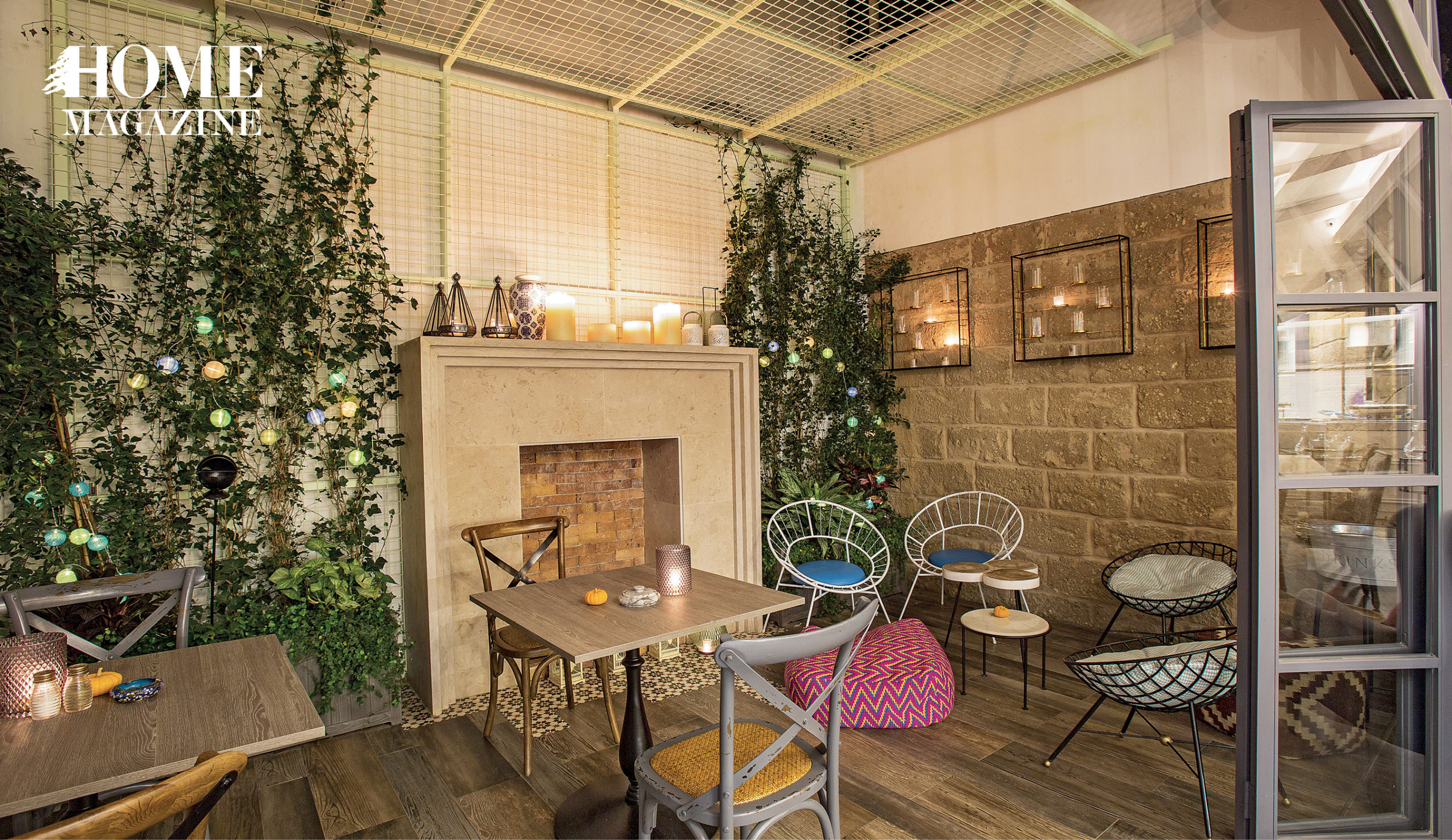
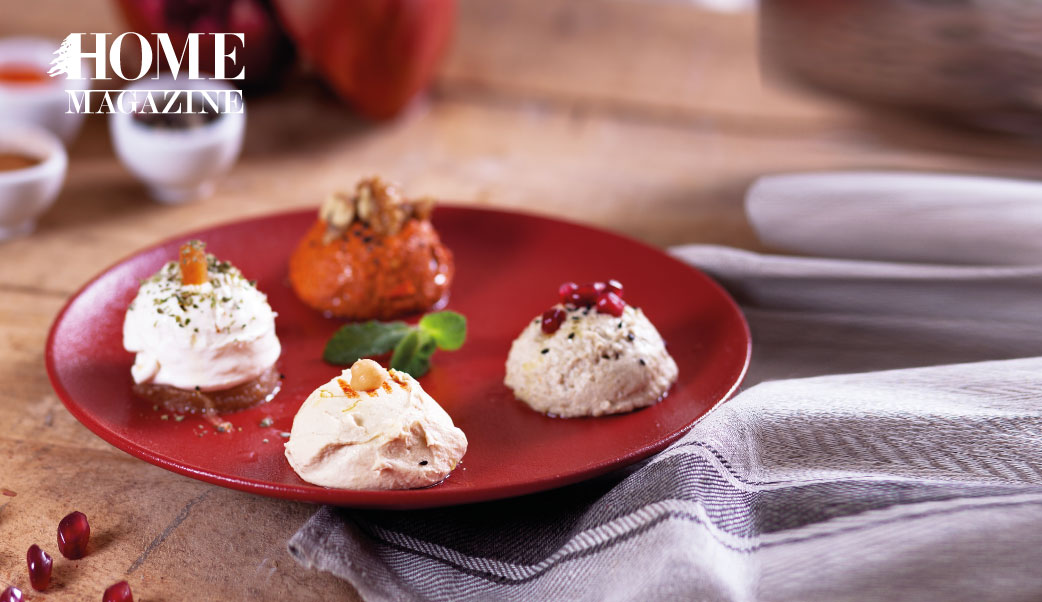
This businessman born in Lebanon, lived in Canada and Paris before he arrived to Madrid, 12 years ago, with the intention of establishing there the headquarters of his international marketing company. He remembers that once a friend told him that Spain was offering great investment opportunities at that moment, so, years later, he decided to start a more personal project and to establish a more stable residence in that country. “I immediately liked Spain because I saw many similarities between their lifestyle and Lebanon’s, they like enjoying life, family, sharing good food…”, says Saad. And what is better than to create a hospitality project where you can merge both cultures? In 2011, Shukran was born. This passionate expatriate dreamed, planned, and sought to achieve his innovative concept, a restaurant with an urban and contemporary environment where the best of the Lebanese gastronomy is offered. Aromas, flavours, and textures of Lebanon are all reflected within this successful project.

Saad tells us that many people from the sector talked to him about the difficulties of implementing such a business; especially because Lebanese food was, at that time, mostly unknown in Spain, and only few traditional Arabic restaurants were successful. He thus decided to hire a manager to whom the word “impossible” is not an option. And so, Patricia Gallego came to the picture, a brave and decided Argentinian lady who had already started many projects with many different characteristics in different parts of the world. “I wanted someone from outside the hospitality scope, who wasn’t going to talk to me about the difficulties but about the possibilities”, states the businessman. With Patricia heading the general board, in only three years, Shukran went from a restaurant to become Shukran Group, a franchising company, with great growing and development potential. With perseverance and hard work, Bill managed to put in place five establishments in Madrid, a catering division, and another one in the sale and distribution of Lebanese gastronomic products. “Now, when the clients come to our restaurants they don’t ask for pizza anymore, they ask for “Manakeesh”, our products are increasingly more recognised and that gives me full satisfaction”, says Saad.
“They don’t ask for pizza anymore, they ask for “Manakeesh” “.
Bill Saad is very ambitious; his expectations are all but small. He is planning to open 10 other establishments in Spain, and make the jump to Portugal, United Kingdom, France, and Poland. “I want to show Lebanon to all Europe, telling everyone that our country means enjoying life and that our cuisine is elegant, of quality and also accessible,” says Saad.
For Bill, Patricia, and all who made this dream come true, Shukran means more than “thank you”, it represents the love for a country and a culture that deserves a special place in the world. “I love Lebanon so much that I feel tremendously proud when I see the acceptance that its culture and gastronomy enjoys among the Spanish people. I love seeing its people growing and prospering in the four corners of the world, concludes Saad.

HOMEland Magazine
We firmly believe that the internet should be available and accessible to anyone, and are committed to providing a website that is accessible to the widest possible audience, regardless of circumstance and ability.
To fulfill this, we aim to adhere as strictly as possible to the World Wide Web Consortium’s (W3C) Web Content Accessibility Guidelines 2.1 (WCAG 2.1) at the AA level. These guidelines explain how to make web content accessible to people with a wide array of disabilities. Complying with those guidelines helps us ensure that the website is accessible to all people: blind people, people with motor impairments, visual impairment, cognitive disabilities, and more.
This website utilizes various technologies that are meant to make it as accessible as possible at all times. We utilize an accessibility interface that allows persons with specific disabilities to adjust the website’s UI (user interface) and design it to their personal needs.
Additionally, the website utilizes an AI-based application that runs in the background and optimizes its accessibility level constantly. This application remediates the website’s HTML, adapts Its functionality and behavior for screen-readers used by the blind users, and for keyboard functions used by individuals with motor impairments.
If you’ve found a malfunction or have ideas for improvement, we’ll be happy to hear from you. You can reach out to the website’s operators by using the following email
Our website implements the ARIA attributes (Accessible Rich Internet Applications) technique, alongside various different behavioral changes, to ensure blind users visiting with screen-readers are able to read, comprehend, and enjoy the website’s functions. As soon as a user with a screen-reader enters your site, they immediately receive a prompt to enter the Screen-Reader Profile so they can browse and operate your site effectively. Here’s how our website covers some of the most important screen-reader requirements, alongside console screenshots of code examples:
Screen-reader optimization: we run a background process that learns the website’s components from top to bottom, to ensure ongoing compliance even when updating the website. In this process, we provide screen-readers with meaningful data using the ARIA set of attributes. For example, we provide accurate form labels; descriptions for actionable icons (social media icons, search icons, cart icons, etc.); validation guidance for form inputs; element roles such as buttons, menus, modal dialogues (popups), and others. Additionally, the background process scans all the website’s images and provides an accurate and meaningful image-object-recognition-based description as an ALT (alternate text) tag for images that are not described. It will also extract texts that are embedded within the image, using an OCR (optical character recognition) technology. To turn on screen-reader adjustments at any time, users need only to press the Alt+1 keyboard combination. Screen-reader users also get automatic announcements to turn the Screen-reader mode on as soon as they enter the website.
These adjustments are compatible with all popular screen readers, including JAWS and NVDA.
Keyboard navigation optimization: The background process also adjusts the website’s HTML, and adds various behaviors using JavaScript code to make the website operable by the keyboard. This includes the ability to navigate the website using the Tab and Shift+Tab keys, operate dropdowns with the arrow keys, close them with Esc, trigger buttons and links using the Enter key, navigate between radio and checkbox elements using the arrow keys, and fill them in with the Spacebar or Enter key.Additionally, keyboard users will find quick-navigation and content-skip menus, available at any time by clicking Alt+1, or as the first elements of the site while navigating with the keyboard. The background process also handles triggered popups by moving the keyboard focus towards them as soon as they appear, and not allow the focus drift outside it.
Users can also use shortcuts such as “M” (menus), “H” (headings), “F” (forms), “B” (buttons), and “G” (graphics) to jump to specific elements.
We aim to support the widest array of browsers and assistive technologies as possible, so our users can choose the best fitting tools for them, with as few limitations as possible. Therefore, we have worked very hard to be able to support all major systems that comprise over 95% of the user market share including Google Chrome, Mozilla Firefox, Apple Safari, Opera and Microsoft Edge, JAWS and NVDA (screen readers).
Despite our very best efforts to allow anybody to adjust the website to their needs. There may still be pages or sections that are not fully accessible, are in the process of becoming accessible, or are lacking an adequate technological solution to make them accessible. Still, we are continually improving our accessibility, adding, updating and improving its options and features, and developing and adopting new technologies. All this is meant to reach the optimal level of accessibility, following technological advancements. For any assistance, please reach out to