An Undeniable Mediterranean Magnetism: Franciscos Verros, Former Greek Ambassador to Lebanon
A veteran diplomat unpacks what Greeks and Lebanese share, from ancient Hellenistic roots to modern tourism and untapped cultural exchange.

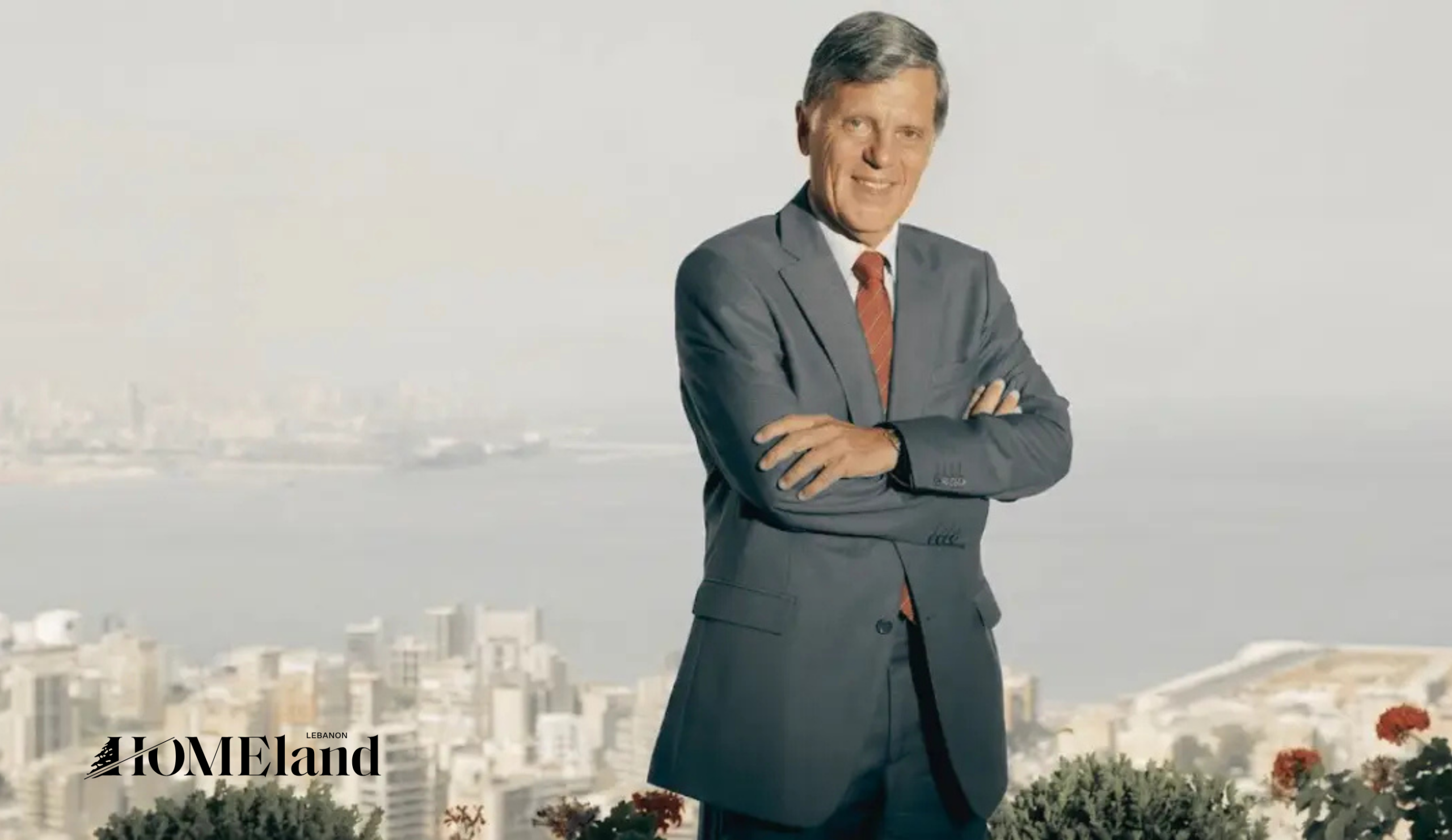
Interviewed by Editor-in-Chief Patricia Bitar Cherfan
Photos by Elie Harb
In this interview with HOMEland Lebanon, his Excellency, Former Ambassador Verros, gives an overview of Greek-Lebanese relations as well as the striking similarities binding both nations and cultures.
Greek and Lebanese culture, history, and tradition have always intertwined, as both nations share a geographic proximity, and have been part of one another’s histories over the centuries. For instance, Lebanese monuments, cemeteries, temples, and cities, like Byblos, Tyre, and Baalbeck, are historical reminders of the region’s direct influence from the ancient Hellenistic and Byzantine Greek cultures, not to mention the Phoenicians who pioneered the Greek alphabet.
My first time as a newcomer to Lebanon was as an ambassador. I was particularly astonished by how open-minded Lebanese people are, as well as the incredible hospitality found on all levels and sectors of Lebanese society, and it immediately reminded me of the traditional Greek approach of warm hospitality that we are losing in our cities but that has been well maintained in our villages. I also found the rich cultural life in Lebanon striking and the Lebanese positive predisposition admirable.
To preface with some history, after Alexander the Great’s conquest, the Middle East was actually Greek-speaking for many centuries. The influence of the Orthodox church kept the language alive for years to come.
Both people are seasoned travelers, reputed merchants and have lived under the Ottoman Empire, they both have the tradition of living daily lives under the influence of religion, not necessarily in a dogmatic way, but in a quotidian manner.
Yes, indeed. One hundred thousand Lebanese nationals visited by plane from Lebanon. This means that the actual number of Lebanese tourists are considerably higher, since many come by sea or from other countries. Lebanese visitors are mostly traveling for pleasure and are typically big spenders during their trips. They are seen by the Greeks as peaceful and polite, with corresponding police reports of zero incidents and arrests involving Lebanese people. In that sense, those that receive the Lebanese also have good time, too.
Given the small size of the Lebanese population, the current number of tourists in Greece is already very significant; however, it would be interesting to host more weddings, receptions, and group trips. We also encourage religious tourism, as we have numerous beautiful churches and monasteries.
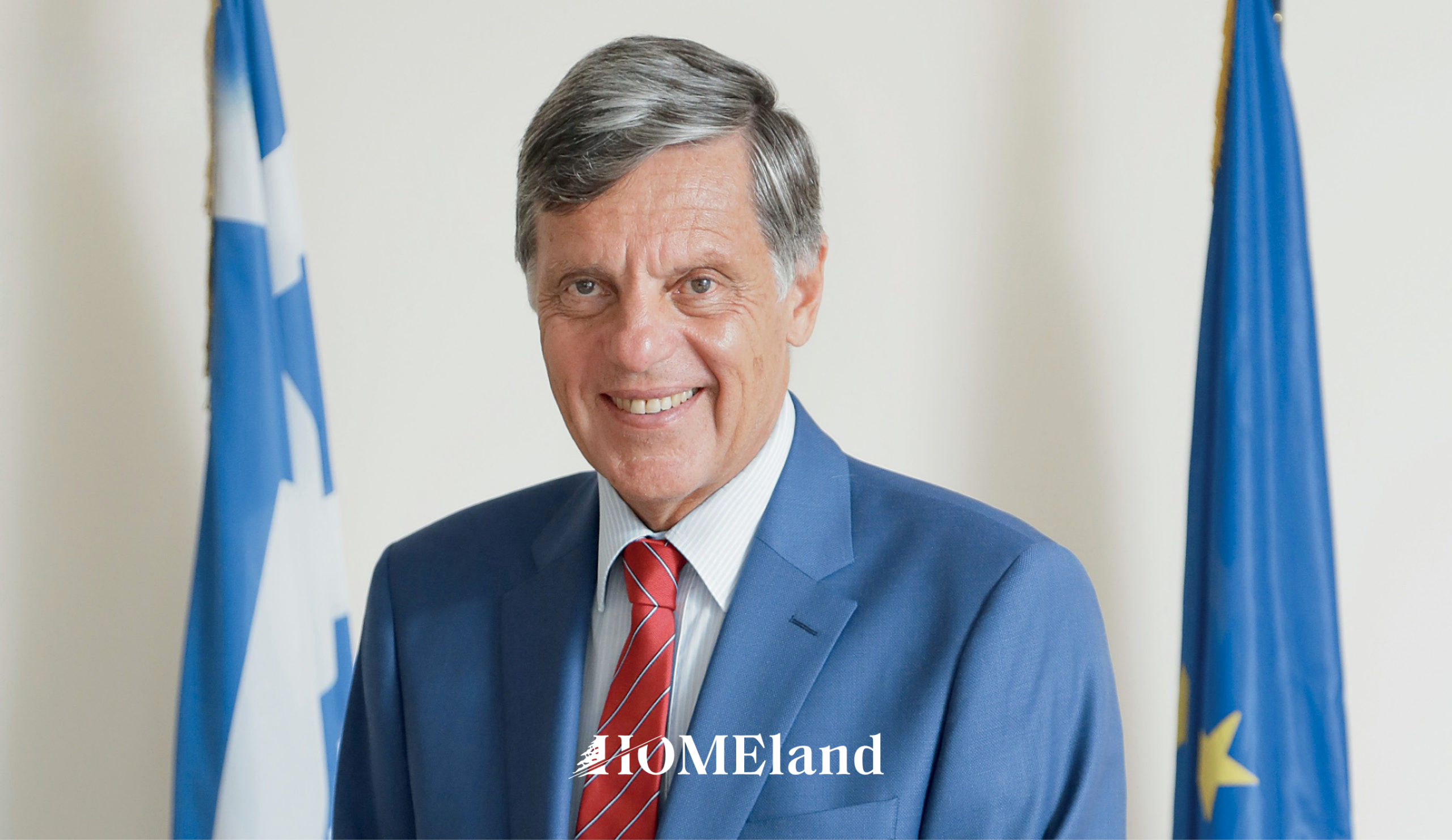
Yes, it is indeed a very beautiful, a miraculous formation, but it is sadly little known, due to factors such as its far distance from the airport. The northern part of Greece is full of beautiful beaches, churches, and great cuisine.
Only a few hours away from Athens and Thessaloniki, there are beautiful slopes for skiing like Kalavrita and Parnassos that also remain overlooked. The good, much anticipated news is that Ryanair will start flying to the north as of this year.
Absolutely, and it is quite a realistic goal for many reasons. Both countries are close to one another, and share a deep love for good food and big meals.
Lebanon has iconic monuments, abundant museums, incredible nature and mountains, not to mention a stunning skiing season, a lively exceptional nightlife and unequalled year-long festivals. Plus, the Greeks know and like the Lebanese people. However, what the Greeks do not know is that Lebanon is a safe country and that it has adequate facilities for tourism.
This has been a recurring topic with our Ministry of Tourism that had done an impressive job in that aspect, raising tourism to be around 25 percent of Greece’s GDP. As for Lebanon, once the adequate publicity takes off, one of the many ways to improve tourism in Lebanon is to try to prolong the period of tourism, while encouraging short breaks toward the city throughout the year. For example, promoting tourism during low seasons and publicizing lesser known cities are good strategies. The weather in Lebanon is generally good all year long, and that should be taken advantage of. Another idea could be promoting the cultural economic characteristic of Lebanon, the art scene, the movie industry and so on.
“The sea has not been taken care of enough here. Athens faced a similar water hygiene problem in the past that was solved by incorporating a water refining technology. Technologies exist.”
It is a known fact that the Mediterranean has significant underground reserves of hydrocarbon gas and oil. These resources exist near Israel, Cyprus, the south of Lebanon, and the Greek Islands. Over the years, the Lebanese government has expressed concerns about the African-European pipeline and how it will transport the gas from North Africa to Europe, especially since maritime frontiers are not clearly defined. On a positive note, the final pipeline will probably not trespass into Lebanese waters. Greece’s position on this could not be clearer: It will never support anything that violates Lebanon’s integrity nor infringes on international maritime laws. The availability of these resources must be considered an opportunity, not a reason to create problems. Our companies should cooperate and extract what there is to extract. No quantity of oil and gas is worth an armed conflict.
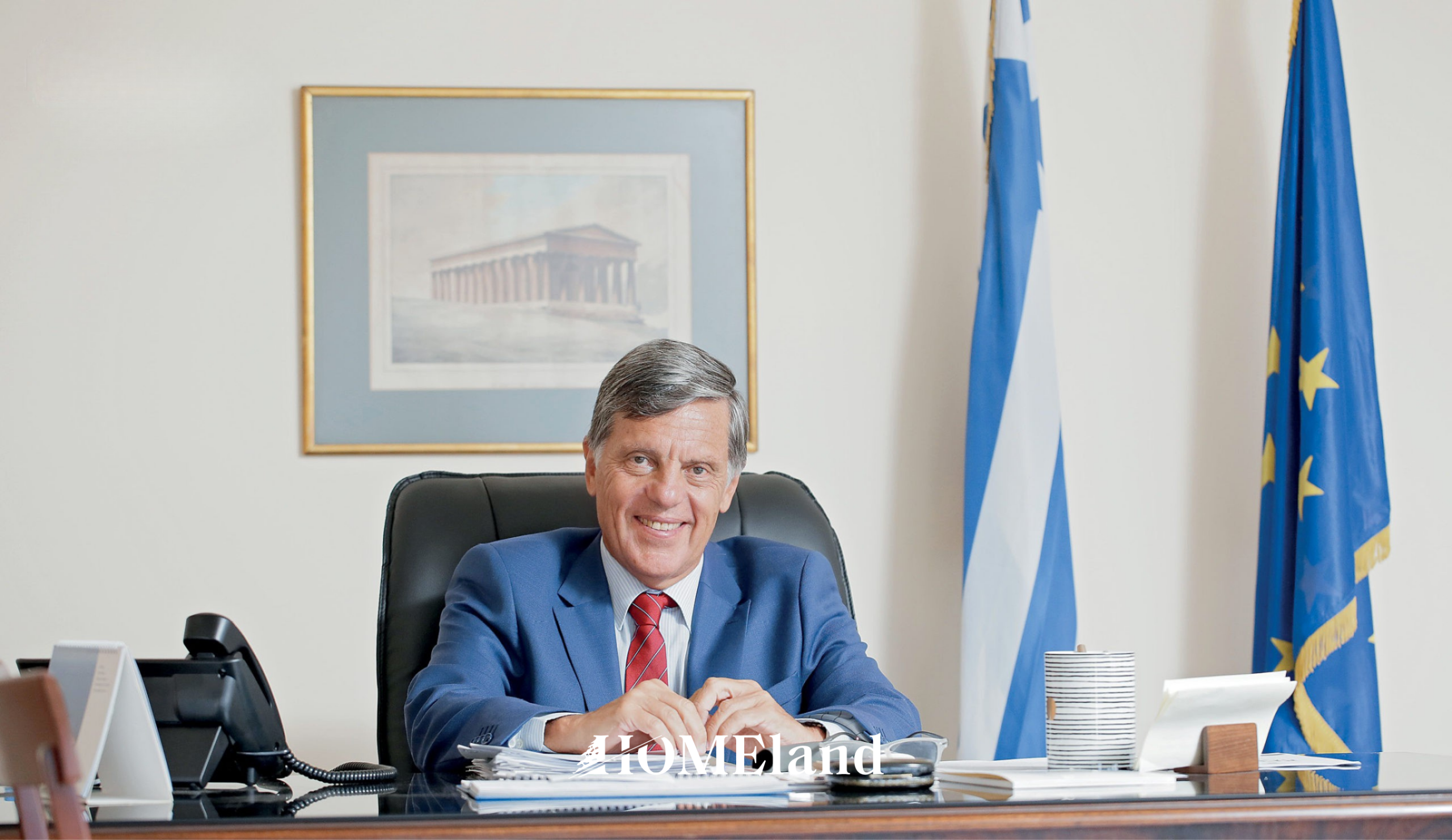
Lebanon must improve its overall infrastructure, especially in terms of energy and eco-friendly alternatives, roads, trains, the airport and more. Environmental protection, including cleaning beaches, should also be part of the agenda. The sea has not been taken care of enough here and has a reputation for being relatively dirty. Athens faced a similar water hygiene problem in the past that was solved by incorporating a water refining technology. Technologies exist.
This can be a worthwhile solution for Beirut which is only a third the size of Athens!* From experience, once all discussions and budgets are settled, miracles can happen across sectors.
Thankfully, Greece has been doing better economically than when the crisis hit eight years ago, mostly due to investments, exporting, and tourism.
Lebanese investors are among the highest investors in Greece, alongside the Chinese, Turks, and Russians who are at the very top of the list.
In Greece (and in other EU countries), when a non EU-citizen invests a minimum of 250,000 euros in real estate, they are granted a Golden Visa.
Once five years are up, and if the investor still owns property, they are granted another five years, on condition that they spend a considerable amount of time in Greece.
At this stage, the investor can then apply for a guaranteed permanent residency, qualifying them for a nationality application.
I do not foresee any changes in this system anytime soon. If any change were to occur, it would be to make the visa processes even easier. Presently, many Lebanese people own summer houses, villas, and apartments in Greece without investing a large amount of money. I am working toward both Lebanese and Greek sides investing in each others’ economic and cultural spheres.
Orthodoxy is a significant common ground between Greece and Lebanon.
The Greek diaspora found in Lebanon is about 4,500, while thousands of other Lebanese citizens are of Greek origin. They form a bridge between the two nations. Add to that hundreds of thousands of Orthodox Christians in Lebanon who share similar religious traditions with the Greeks and the Greek church, a cultural promotion of Greece and Lebanon through faith can definitely be achieved.
“Lebanese investors are among the highest investors in Greece, alongside the Chinese, Turks, and Russians.”
We would love to see more cooperation between museums, as well as the inclusion of Greek films in Lebanese film festivals and vice versa. Also, the Phoenician’s Route (a link of the major nautical routes used by the Phoenicians, since the 12th century B.C., including countries like Lebanon, Cyprus, Greece, Croatia, and Spain), has an important touristic dimension, which can also have a big cultural impact. The cultural sector lacks proper funding, as well as qualified project managers that can suitably handle events. If a project is well-organized and researched, it is very likely to find sponsors that are equally passionate about the mission.
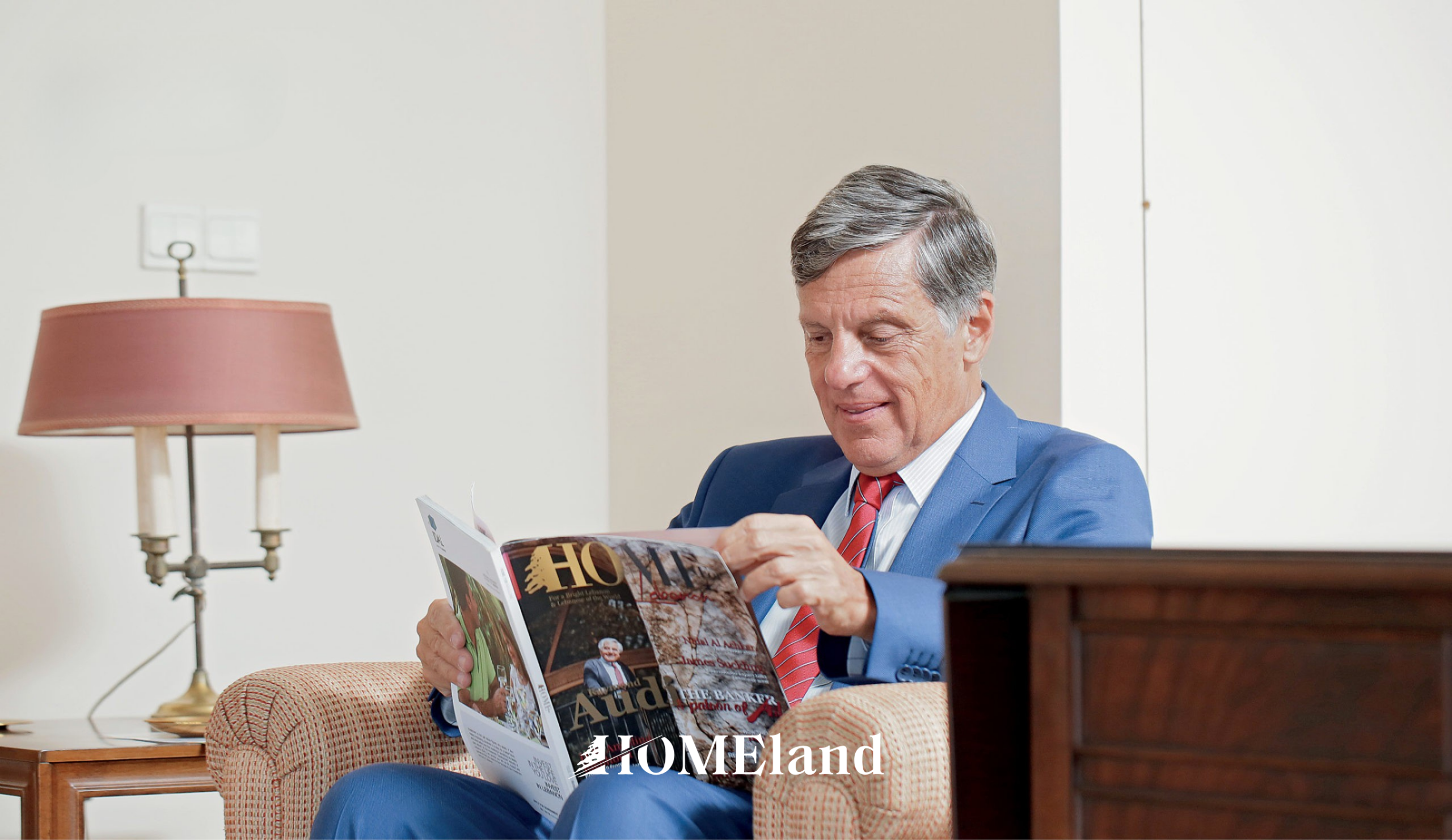
The conception of harmony is not black and white, there is no good and evil — it essentially brings out the good in everyone. Ancient Greece — particularly Athens — is often credited for inventing democracy but monarchy and aristocracy are two other types of government that were also employed by the Greeks. Aristotle preferred “the rule of the best” — a form of government in which power is held by ἄριστος (áristos, “best”) and κράτος, (kratos,“power”).
One of the main ideas behind great Greek civilization was harmony, that is, when harmony is disrupted, happiness is lost. This exact philosophy is behind the tragedy Antigone,* where the downfall of society occurs when higher law is disrupted.
 HOMEland Lebanon Magazine felt inspired by the foreign archeological institutes in Greece, also known as schools. Since 1846, this governmental initiative has tasked 19 countries, such as Denmark, Italy, Norway, the United States, and France, with recovering and protecting antiquities found on Greek soil. Each country is designated a specific region for an extended number of years during which they build a relationship with the locals while members of the school excavate and preserve artifacts while conducting on-site research.
This provides a wonderful experience to explore the relics of ancient Greece, the oldest civilization in Europe, while forging meaningful intercultural networks and strengthening diplomatic ties between nations. HOMEland suggested this model could be replicated in Lebanon in a way that ensures maintenance of various sites by embassies in a sustainable, long-term fashion.
Every year, a country is chosen to be examined and studied by a group of qualified students from the École Suisse d’Archéologie en Grèce. HOMEland has the hope that someday Lebanon will be considered as a candidate, as per the following example.
Digging deeper: When archeology bridges cultures
“Since 1964, Swiss archaeologists have been excavating and studying the remains of the ancient city of Eretria in cooperation with the Greek archaeological authorities.
In 1975, the Swiss Archaeological Mission received the official title of Swiss School of Archaeology in Greece. It is the only permanent Swiss archaeological project outside Switzerland.
The École Suisse d’Archéologie en Grèce has had a shining reputation for excavating, and preserving valuable remains and treasures from Greece, as well as from around the world, as a result of commissioned archeological projects by the EU.
Source: ESAG.swiss
*Greater Athens is a city of 4 million inhabitants. The sewage water purifying infrastructure was built in close cooperation and with the financial support of the European Union. It corresponds to the needs of roughly five million people covering the best part of Attica (the region around Athens). It took some years to finish it (during the late 1980s and early 1990s) but the results for the sea environment are manifestly beneficial.
* Sophocles’s 441 B.C. Antigone is one such example, where the protagonist and namesake of the play attempts to bury the body of Polynices against the orders of Creon. A tragic sequence of events is precipitated by this rupture from the higher one.

 Signature Boutique