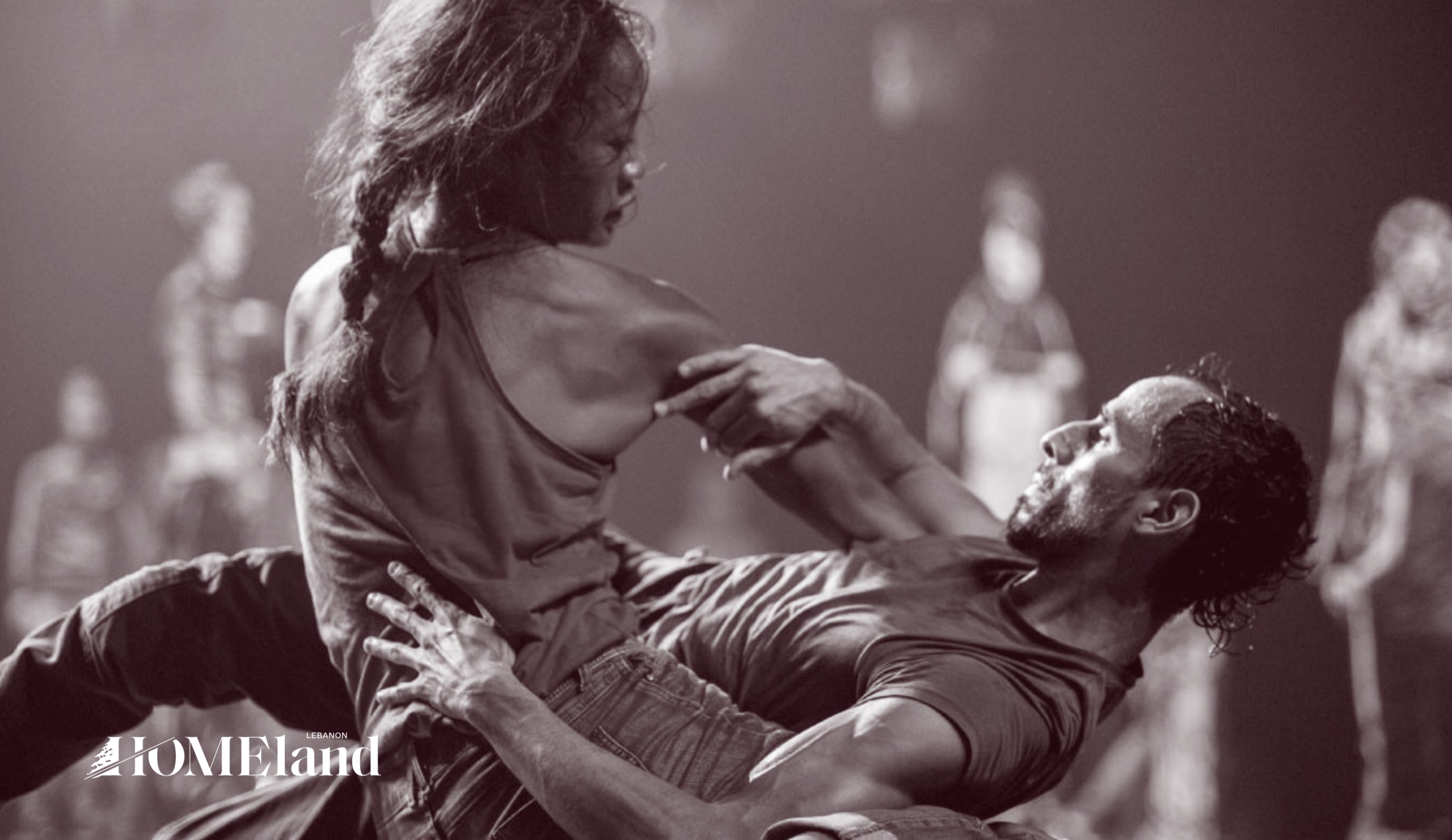
The 12th edition of BIPOD gathered artists from around the world who gave spectacular performances at the Madina Theatre.
Dance as Robert Frost would say is the vertical expression of a horizontal desire. It is a moment of creativity where music acts as the catalyst for bodily liberation in which you can express feelings and emotions. Avid contemporary dancers Omar Rajjeh and Mia Habis return this year with their 12th edition of the annual dance marathon known as BIPOD. This year the grand festival gathered over 62 artists, some of which were from Lebanon and other Arab countries such as Egypt, Palestine, Tunisia and Syria. Some were from Iran; others were international performers diversifying from France, Italy, Germany, Tunisia and more.
BIPOD is the by-product of contemporary dance company Maqamat Dance Theatre which was founded by Omar Rajeh.
The company aims to create change and innovation through the explanation of dance in Lebanon and the Arab region. Since its launch in 2002, the dance group has been successful in broadening horizons by touring locally and internationally, conducting workshops and performing under the guide of Omar Rajjeh who is on a mission himself.
“His artistic work deals with social and political issues inspired by the everyday life of the city of Beirut where he lives. It is very significant that within his work he continuously questions the individual presence and the physicality of ‘the body within a socio-political and human context.” (Maqamat Dance Theatre)
Omar Rajjeh has a history of working with artistic expression. As a youngster he completed his studies in Theatrical Arts at the Lebanese University after which he further enhanced his skills by doing a master’s degree in Dance Studies at the University of Surrey in the United Kingdom. Upon his return to Lebanon in 2002, he began collaborating with many artists in the region.
Questioning social limitations and boundaries was the first theme we encountered at the premiere performance of this year’s BIPOD festival. “Beytna” is a show which aims to promote unity through dancers emerging from various backgrounds such as Omar Rajjeh, Koen Augustijnen, Hiroaki Umeda, Anani Sanouvi and Youssef Hbeisch. The performance was accompanied by the smoothest music conducted by LeTrio Joubran who excelled in simplicity and skillfulness. As soon as you entered the Madina Theatre, the sweet aromas of Lebanese cooking from baked bread to freshly cut tomatoes seeped in and added an unusual sense to explore in the theatre.
The spectacle comprised of a projection of a 60 second countdown and a long table filled with all the ingredients to make traditional Lebanese food, mainly “Fattoush”. The dish symbolizes the unity and harmony that humanity can achieve when we work together. The dancers would take turns in performing a solo or as a duet then continue to prepare the meal.
By the end of the performance, a lovely sentiment was bestowed on the entire audience who were asked to join the group on stage and share the home-made meals thus completing their mission of establishing unity and co-existence.
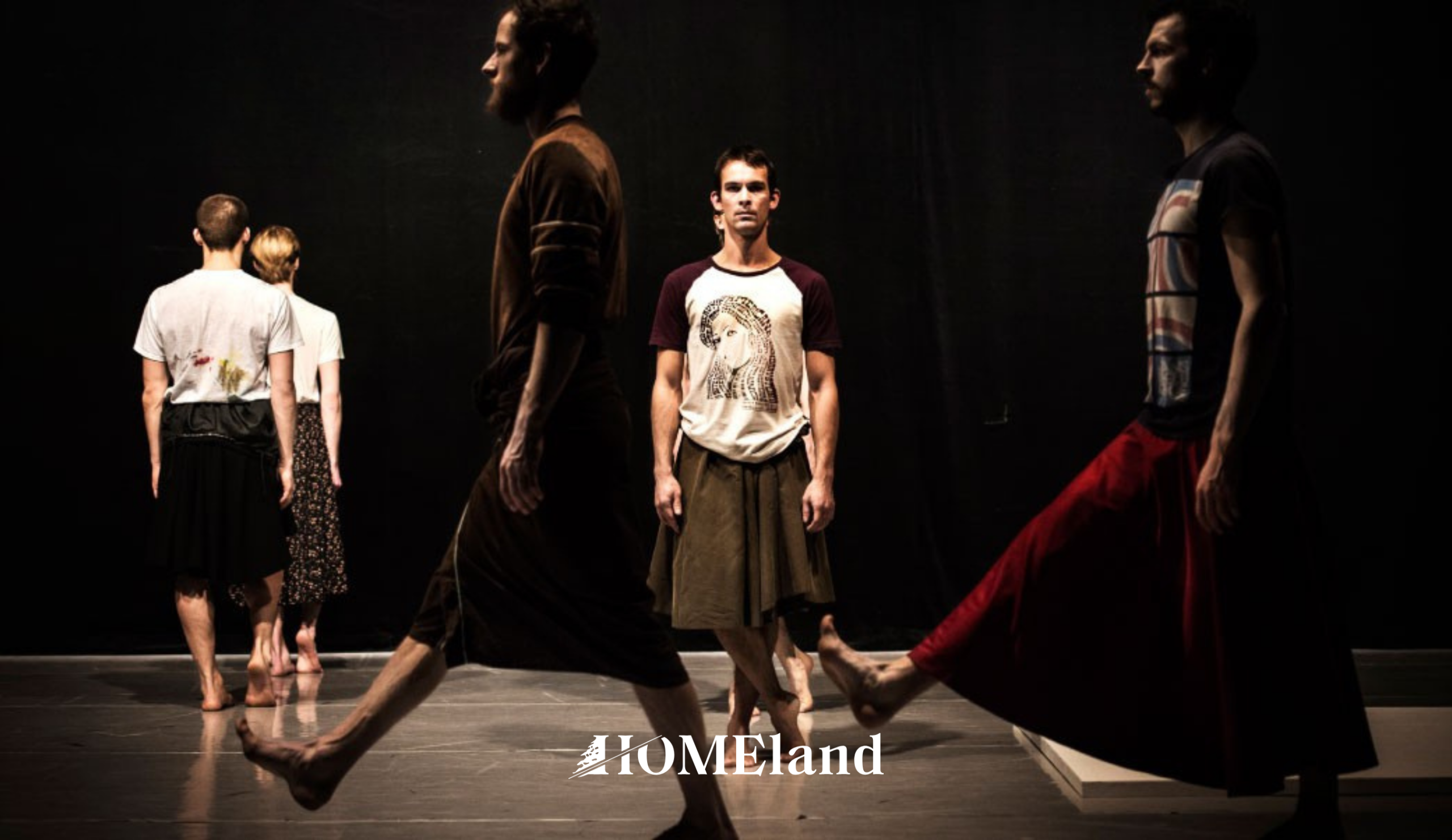
Having the fourth wall broken between audience and performers symbolized the lack of distinction between the two, as peace was invited through the breaking of bread.
Usually when the fourth wall is broken during theatrical performances, one or two members of the audience are invited on stage but to have the entire audience switching places in the theatre was quiet interesting.
The theme of unity extends to the entire festival as nationalities cross countries and boundaries to collaborate and create something new. The festival continues to intrigue large crowds and persists in achieving higher standards for dancing and a dance program every year.
HOMEland Magazine
We firmly believe that the internet should be available and accessible to anyone, and are committed to providing a website that is accessible to the widest possible audience, regardless of circumstance and ability.
To fulfill this, we aim to adhere as strictly as possible to the World Wide Web Consortium’s (W3C) Web Content Accessibility Guidelines 2.1 (WCAG 2.1) at the AA level. These guidelines explain how to make web content accessible to people with a wide array of disabilities. Complying with those guidelines helps us ensure that the website is accessible to all people: blind people, people with motor impairments, visual impairment, cognitive disabilities, and more.
This website utilizes various technologies that are meant to make it as accessible as possible at all times. We utilize an accessibility interface that allows persons with specific disabilities to adjust the website’s UI (user interface) and design it to their personal needs.
Additionally, the website utilizes an AI-based application that runs in the background and optimizes its accessibility level constantly. This application remediates the website’s HTML, adapts Its functionality and behavior for screen-readers used by the blind users, and for keyboard functions used by individuals with motor impairments.
If you’ve found a malfunction or have ideas for improvement, we’ll be happy to hear from you. You can reach out to the website’s operators by using the following email
Our website implements the ARIA attributes (Accessible Rich Internet Applications) technique, alongside various different behavioral changes, to ensure blind users visiting with screen-readers are able to read, comprehend, and enjoy the website’s functions. As soon as a user with a screen-reader enters your site, they immediately receive a prompt to enter the Screen-Reader Profile so they can browse and operate your site effectively. Here’s how our website covers some of the most important screen-reader requirements, alongside console screenshots of code examples:
Screen-reader optimization: we run a background process that learns the website’s components from top to bottom, to ensure ongoing compliance even when updating the website. In this process, we provide screen-readers with meaningful data using the ARIA set of attributes. For example, we provide accurate form labels; descriptions for actionable icons (social media icons, search icons, cart icons, etc.); validation guidance for form inputs; element roles such as buttons, menus, modal dialogues (popups), and others. Additionally, the background process scans all the website’s images and provides an accurate and meaningful image-object-recognition-based description as an ALT (alternate text) tag for images that are not described. It will also extract texts that are embedded within the image, using an OCR (optical character recognition) technology. To turn on screen-reader adjustments at any time, users need only to press the Alt+1 keyboard combination. Screen-reader users also get automatic announcements to turn the Screen-reader mode on as soon as they enter the website.
These adjustments are compatible with all popular screen readers, including JAWS and NVDA.
Keyboard navigation optimization: The background process also adjusts the website’s HTML, and adds various behaviors using JavaScript code to make the website operable by the keyboard. This includes the ability to navigate the website using the Tab and Shift+Tab keys, operate dropdowns with the arrow keys, close them with Esc, trigger buttons and links using the Enter key, navigate between radio and checkbox elements using the arrow keys, and fill them in with the Spacebar or Enter key.Additionally, keyboard users will find quick-navigation and content-skip menus, available at any time by clicking Alt+1, or as the first elements of the site while navigating with the keyboard. The background process also handles triggered popups by moving the keyboard focus towards them as soon as they appear, and not allow the focus drift outside it.
Users can also use shortcuts such as “M” (menus), “H” (headings), “F” (forms), “B” (buttons), and “G” (graphics) to jump to specific elements.
We aim to support the widest array of browsers and assistive technologies as possible, so our users can choose the best fitting tools for them, with as few limitations as possible. Therefore, we have worked very hard to be able to support all major systems that comprise over 95% of the user market share including Google Chrome, Mozilla Firefox, Apple Safari, Opera and Microsoft Edge, JAWS and NVDA (screen readers).
Despite our very best efforts to allow anybody to adjust the website to their needs. There may still be pages or sections that are not fully accessible, are in the process of becoming accessible, or are lacking an adequate technological solution to make them accessible. Still, we are continually improving our accessibility, adding, updating and improving its options and features, and developing and adopting new technologies. All this is meant to reach the optimal level of accessibility, following technological advancements. For any assistance, please reach out to