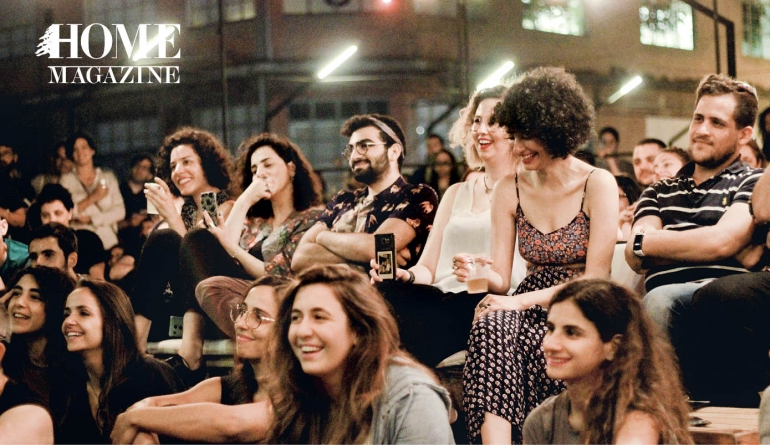
A night in a library in Maine inspires the creation of a vibrant tale-sharing forum.
“So it’s a bit of a long story, is that OK?” Dima Mikhayel Matta asks almost apologetically. But when the person offering that story is Beirut’s pre-eminent storyteller, one doesn’t hesitate to nod enthusiastically in response.
Over the past three years, Matta has initiated and grown Cliffhangers, a public storytelling community that meets almost monthly to exchange tales related to a selected theme. The group attracted its largest audience to date in May when, as part of the first Beirut Pride Week, its storytelling night in Station Art Gallery in the Jisr el-Wati neighborhood attracted more than 400 people. Its events regularly draw crowds upwards of 100, and have gone from taking place at cafés and bars around the city to being hosted by the Sursock Museum and Beit Beirut.
The Cliffhangers’ story begins a long way from Beirut. In summer 2013, Matta found herself doing an internship at a creative writing center in Portland, Maine, and one evening, at the recommendation of her host family, she found herself at a storytelling event in the local public library.
She went, but at first thought she might not fit in. “I was definitely like 30-something years younger than the average person there,” she said. But it didn’t take long for Matta to be moved.
“I’d no idea what to expect, and then one person after another started going up onstage and telling a story.
And the stories were so beautiful. A teacher told about adopting a student, one woman talked about how she met her husband and right before he went off to war, he sang this song to her, and she started singing the song called “500 Miles.” Suddenly the entire room was singing with her, and I started crying. “And I ended up talking to the man who was a teacher and he ended up walking me HOME, and we talked about stories and storytelling, and that idea stayed with me, just in the back of my mind, as something that was magical.”
In 2014, Matta and her suitcases returned to Lebanon, along with two intangible items: a desire to find Beirut’s storytelling community and a newly freed voice with which to tell her own story.
“I had to leave to discover my voice matters,” she said. In the United States Lebanon was “all I wrote about,” she explained. Previously, in Lebanon, she didn’t feel comfortable doing that. She felt she carried “second-hand memories”of the war, born of the stories she’d grown up listening to around the Sunday dinner table, as well as a good dose of “inherited trauma,” but she also experienced an “oppression … that makes you feel you have nothing worth saying, and you stay quiet.”
But back in Beirut, in 2014, Matta was determined to share, despite encountering a somewhat inactive literary scene. “It’s not like now — now you don’t have time to see everything.
“I had to leave to discover my voice matters.”
But it wasn’t the case in 2014,” Matta commented.
She eventually heard about a poetry night at Demo, a small bar just off Gouraud Street in Gemmayzeh. Matta told the tale of that night. “So I wrote something very quickly in my notebook (a prose poem) and I headed over there. I went up during the open mic, and people seemed to like it, and so the hostess was like, ‘Do you want to be one of the main people next time, like in the lineup?’ I’m like, ‘Okay, but I’m not a poet; I’m a fiction writer. Can I read a fiction piece?’”
Now, Matta’s first outing as a storyteller didn’t quite go as planned. The piece she carefully prepared was too long, and the audience got bored. “They started clapping before I was finished,” she admitted.
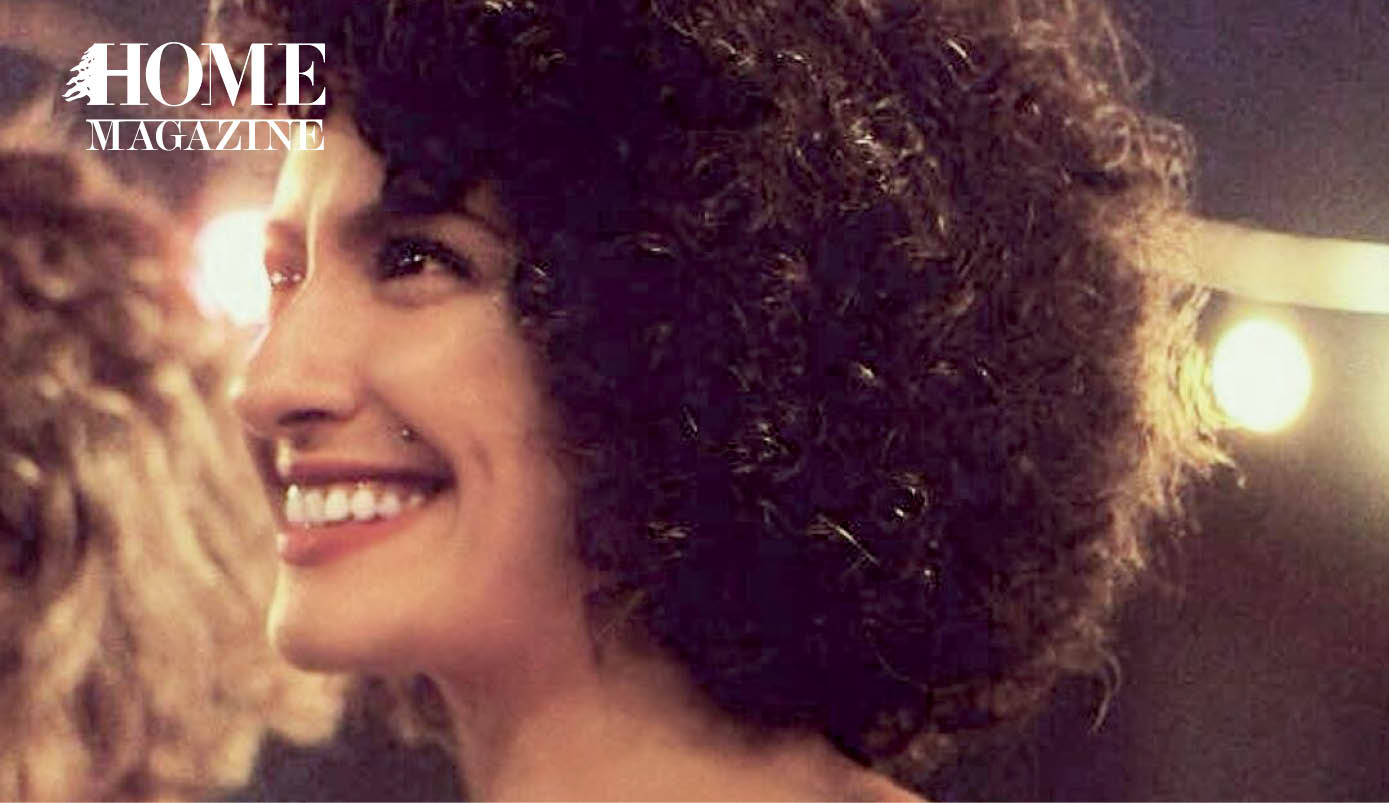
Unthwarted by one failed attempt, Matta started gathering people she knew and hosting small storytelling evenings. She adopted her own storytelling style, and the crowd grew. About a year later, she decided she needed a public forum through which to organize these evenings. She named her storytelling community “Cliffhangers.” Traditional Arabic storytellers often ended their tale with a cliffhanger, when the fate of the protagonist was in the balance, so as to bait the audience to return for the rest of the story the following night.
For Matta, storytelling isn’t about keeping her listeners coming back; it’s about giving them a “safe space” in which to share their stories and to know they are “not alone.”
An evening with Cliffhangers is a journey from moment to moment — guffaws of laughter give way to indignant gasps and weighty, sympathetic silence. Stories shared at each event usually speak to an overarching theme such as transport or Beirut, but they quickly become personal. Some storytellers stand up confidently, with a full performance prepared; others start timidly and grow in confidence as they find their pace. Not all stories are easy to tell, and it is a testament to the safe community Matta leads that people have felt comfortable standing up in a public forum and sharing their experiences of anxiety, sexual assault and gender issues, among other topics that remain taboo in some segments of Lebanese society.
While the Cliffhangers began predominantly with English-language events, increasingly participants are telling their stories in Arabic, with the balance perhaps even tipping in the latter language’s favor now, Matta said. Matta wants to take Cliffhangers beyond Beirut — she has Tripoli in her sights — and into more public spaces, she said.
Now that she’s HOME in Lebanon, Matta, who also teaches English and creative writing at Balamand University, said she is here to stay.
“Who would I be making art for, if not for my community?” she asked. “This is my activism.”
For more info: https:// www.facebook.com/cliffhangersstorytelling/
HOMEland THEMES
Coming Soon
HOMEland Events & Collaborations
Coming Soon
 Signature Boutique