Photos by Maroun Chedid Media Department
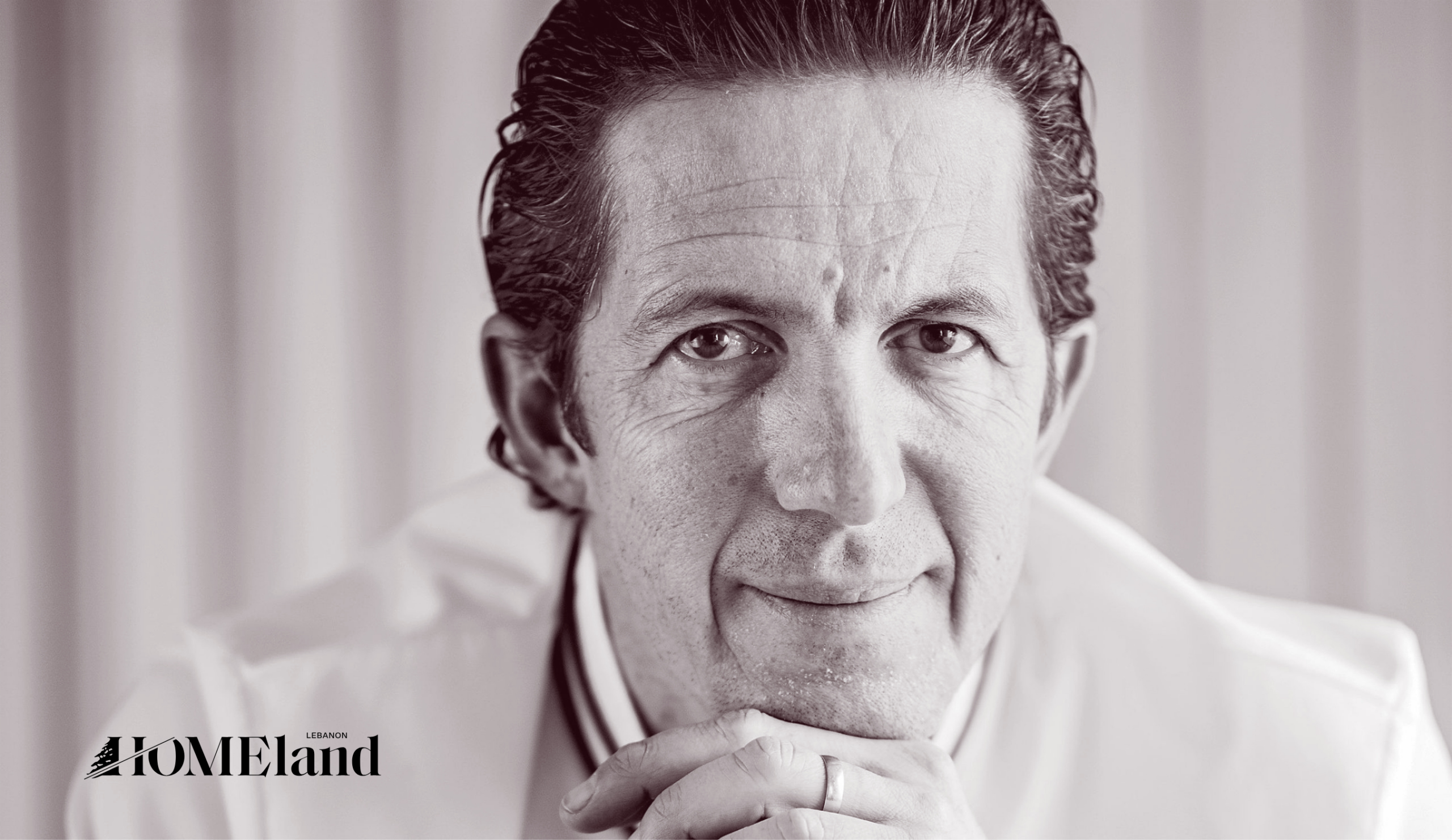
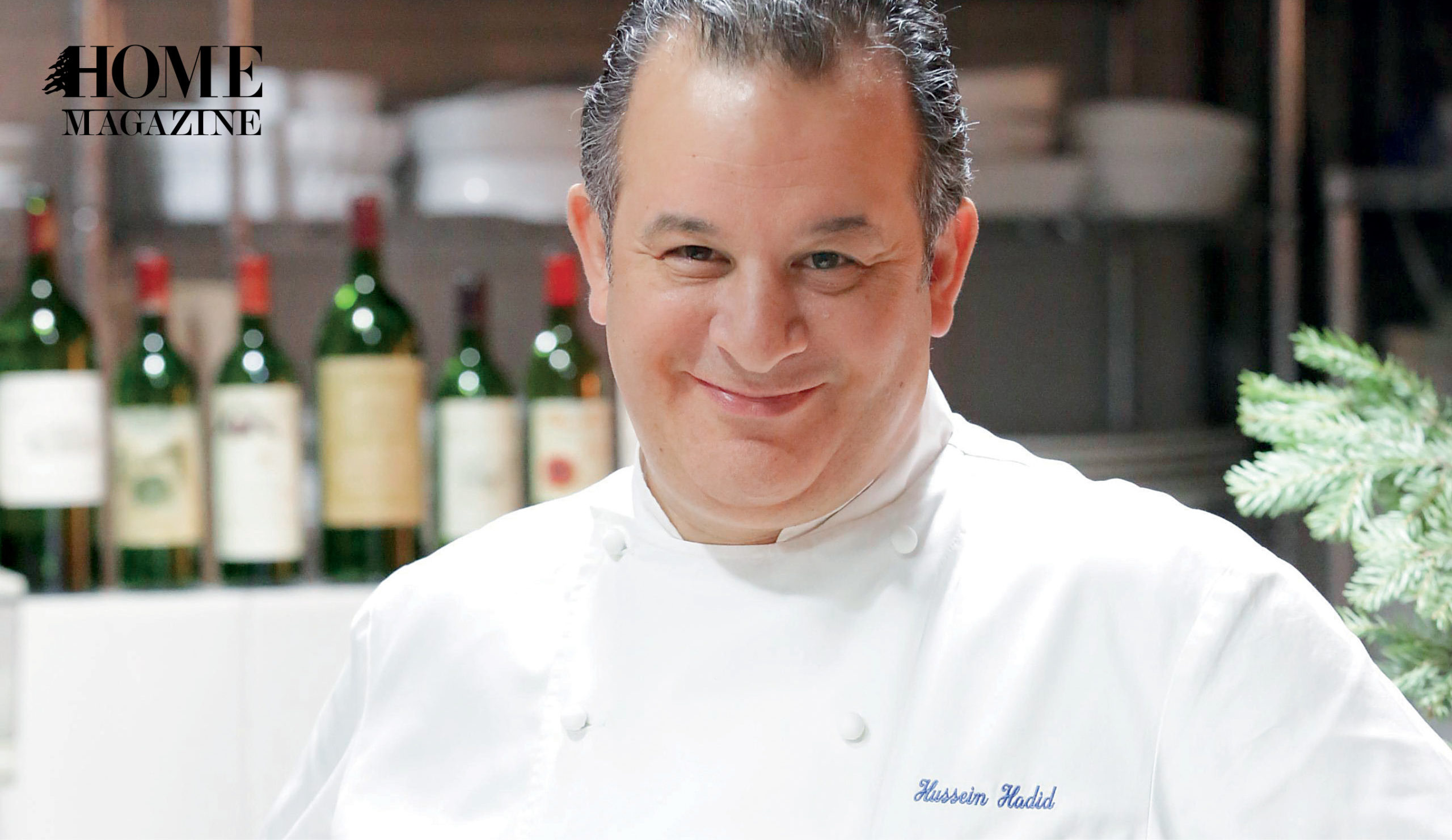
Celebrity chef Maroun Chedid shares his culinary skills with enthusiastic diners and students in his restaurant and academy.
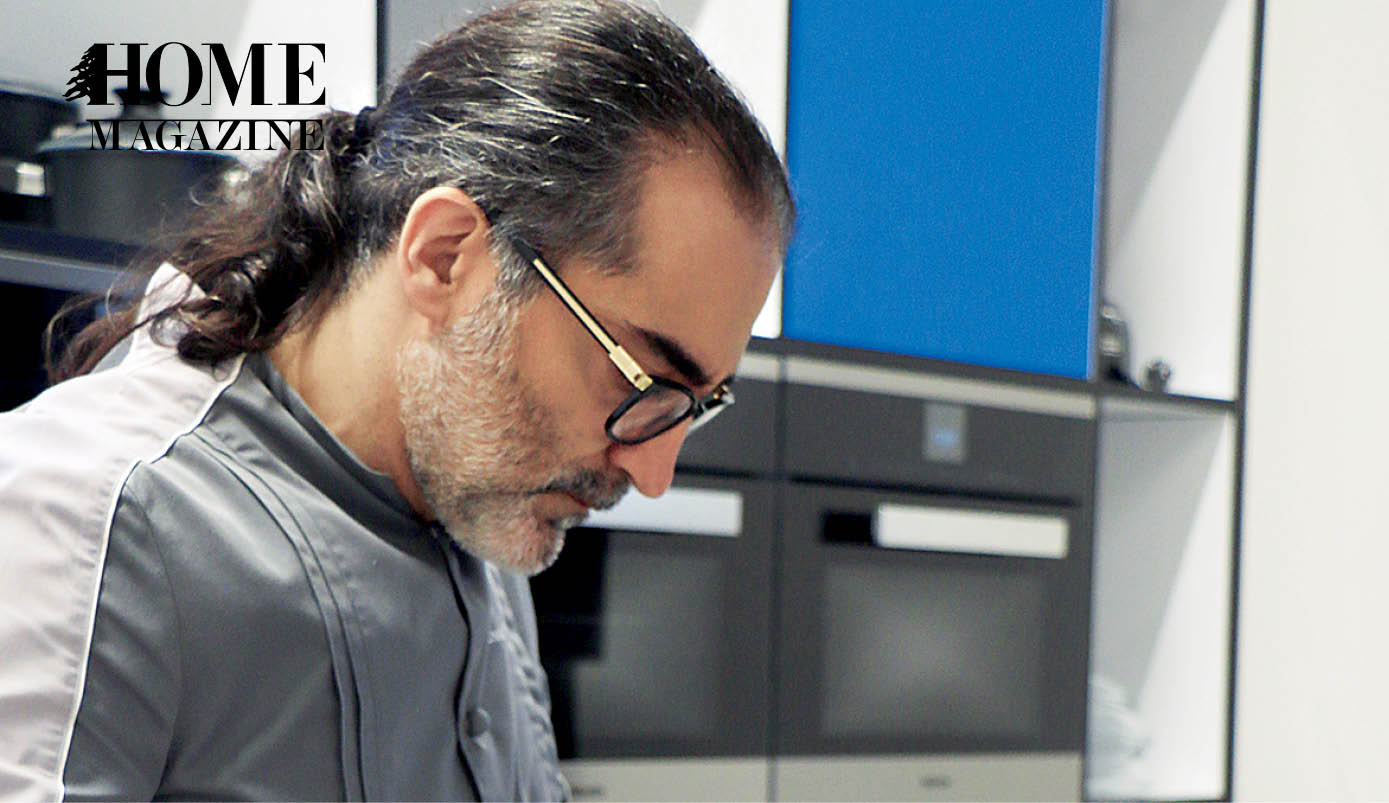
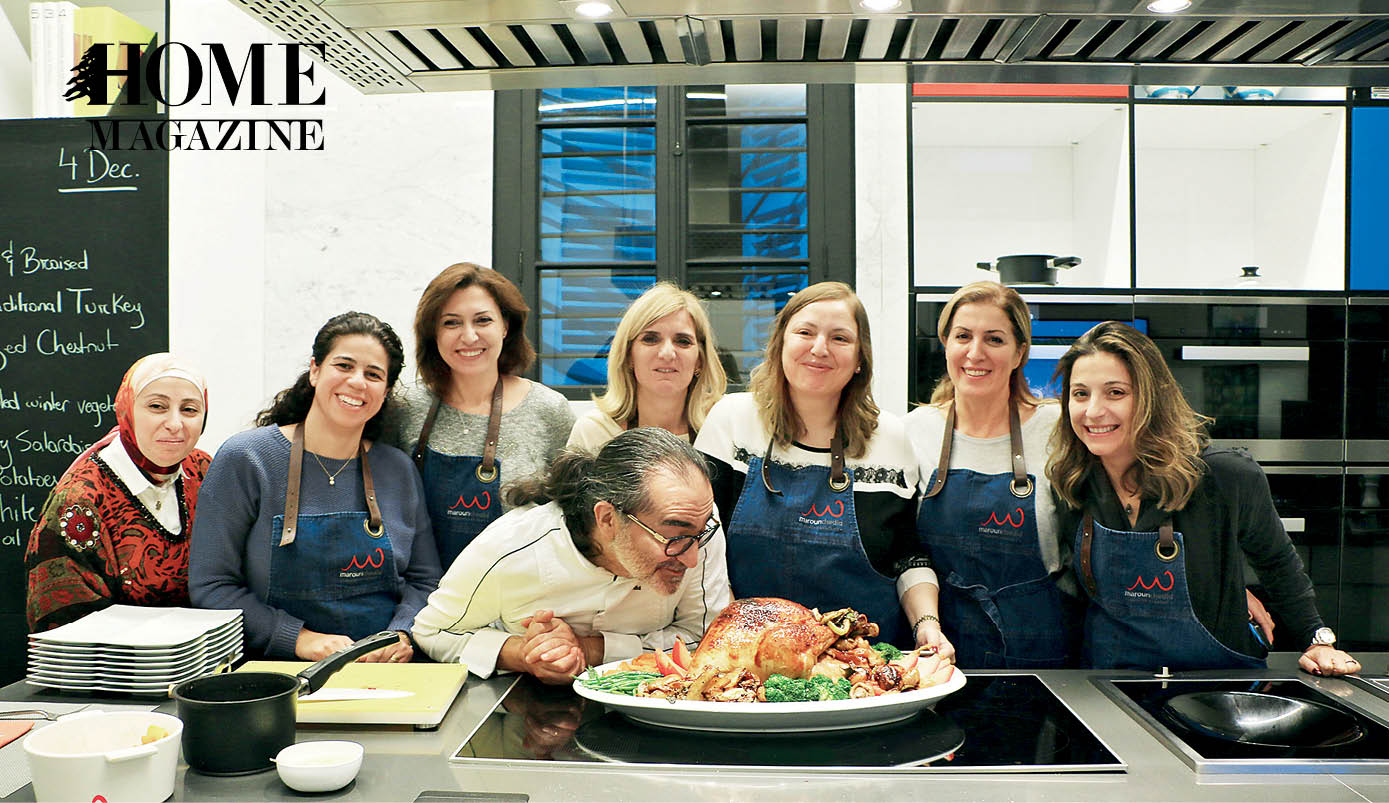
When we opened the door to his kitchen, chef Maroun Chedid was about to drop a few ice cubes into the brewing turkey gravy. The amateur chefs — all women — leaned over the counter to peer into the large shiny cooking pot. They gasped as the fat bubbles started to rise. Chedid scooped them out with a ladle, explaining that the fat did nothing for the dish. He stirred the stock, and festive aromas were immediately released.
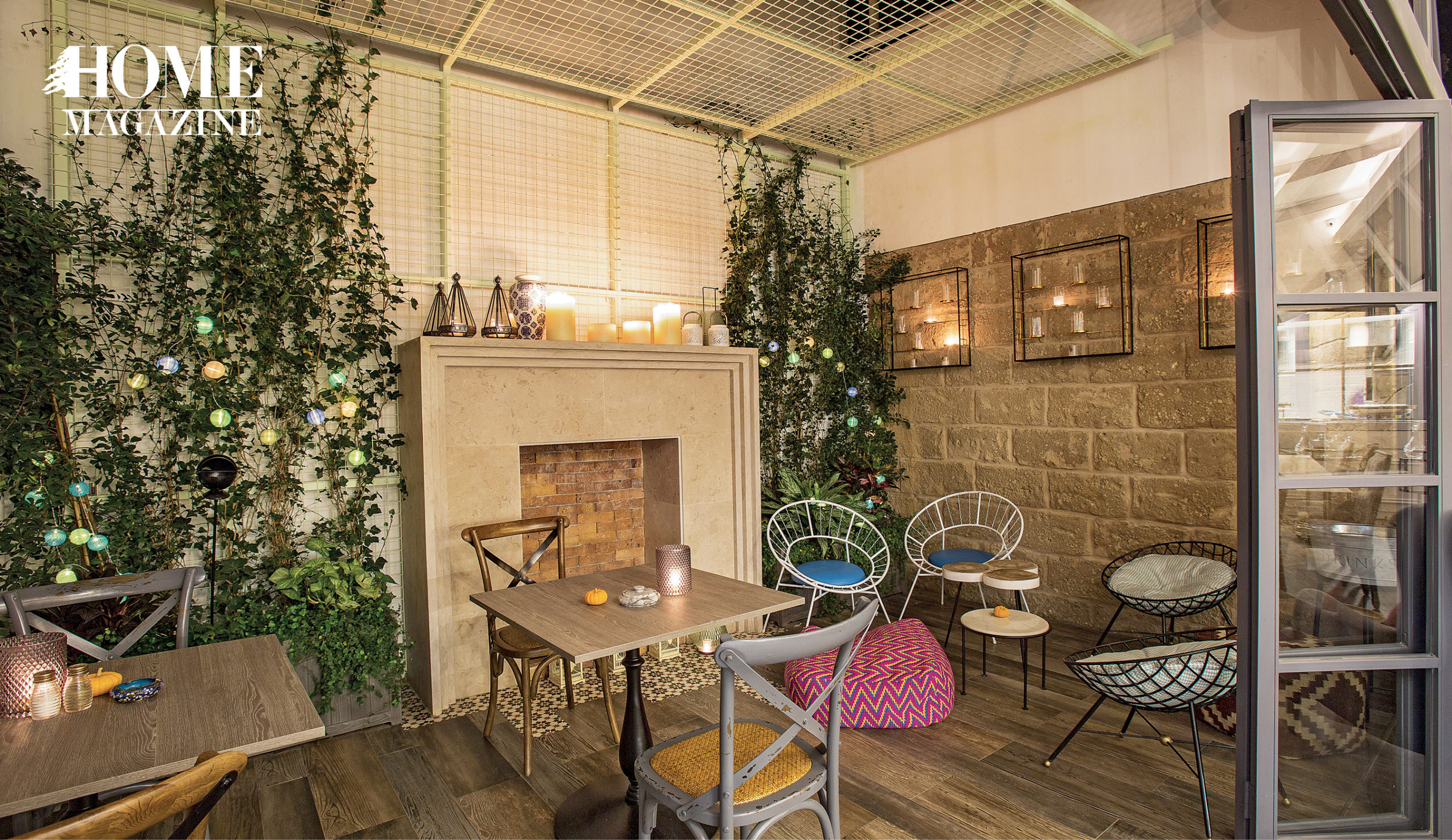
Located in a whitewashed house with blue shutters at the beginning of Beirut’s trendy Monot district, the Maroun Chedid Cooking Academy belongs to his broader culinary project. Alongside the academy, enthusiastic students can also engage in wine and food pairing. He also offers catering, consulting services, a line of jams and condiments, and Ritage, Chedid’s flagship restaurant. It offers dedicated foodies the chance to watch live as chef Chedid and his souschef prepare their meals.
A holiday feast
The evening cooking class focused on a well-known Christmas meal in Lebanon. Chedid’s variation on the dish did not alter a long-held tradition. Rather, his combination of citrus and star anise undertones enchanted the flavors of the turkey, rice and chestnuts.
All the senses were enticed. Our olfactory sensibilities entangled with the bright colors of the dried effendi (an orange variety) and roasted pistachios. Our taste buds were stimulated by the release of onomatopoetic sounds.
“As we breathed in orange zest and cinnamon, the kitchen fell silent to savor the moment.”
As we breathed in orange zest and cinnamon, the kitchen fell silent to savor the moment. Just then, Chedid opened the oven to remove a turkey stuffed with rice, meat and nuts. The feasting was about to begin.
A labor of love
Ritage is not just a business for Chedid. Each room and kitchen is named in honor of his matriarch predecessors. There is Georgette, his mother; Lamiss, his maternal grandmother; and Barbara, his paternal grandmother. All three women, he told us, inspired his love of cooking.
For Chedid, food preparation extends beyond the kitchen to the land, the soil and the climate. He recalled his days as a young boy working long hours, from dusk to dawn, in the rural Bekaa village of Saghbine. These bygone days of his youth might have been arduous, but they instilled in him values of both earth and hearth. Gastronomy is an intimate connection between people and their environment, he said.
This art of living off the land is at the heart of Ritage. As much as possible, the restaurant, as well as the cooking academy, utilizes local produce. Wines, olives, grapes, vine leaves, oranges and more are sourced from Saghbine and other rural areas in Lebanon.
In forging these ties with rural areas, Chedid actively brings urban dwellers closer to their heritage and to the rhythms of authentic life. Food, in its preparation and its consumption, should be cherished as an invaluable memory, he said.
Chedid’s wife, Nina, who works as his academy manager, is originally from Jezzine, some miles south of Saghbine. She is clearly no stranger to the inextricable relationship between land, people and food.
Cooking time
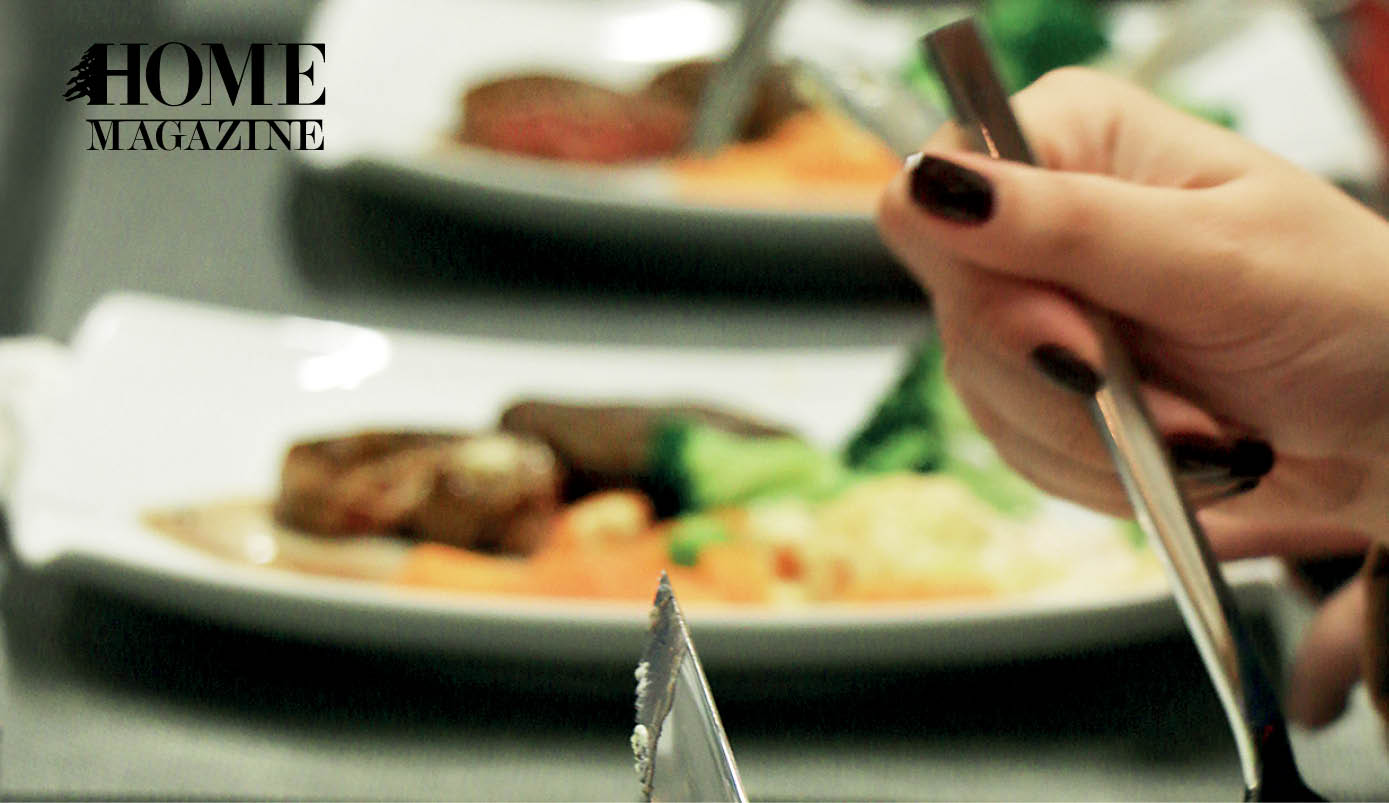
The Maroun Chedid Cooking Academy offers lessons to amateurs and professionals at all levels. Aspiring chefs can choose one-on-one or group lessons. Classes can even be transformed into dinner parties. Even those less inclined to the culinary arts will find great joy attending one of his classes. Listening and watching Chedid at work is a feat to behold.
During our visit, he told us of the bookings he receives from food enthusiasts from around the Arab region and beyond. It’s not just that they want to be taught the art of Lebanese cooking. These devotees are looking for the full gastronomic experience from soil, to kitchen, to belly and heart, he said. These intimate links are embodied in all cooking in Lebanon. Indeed, these connections are forged even in the case when dishes that are not necessarily traditionally Lebanese are made. Attending Chedid’s one-day course called “Black Truffles Extravaganza” will attest to this.
In the cooking class we from HOME Magazine attended, the students consisted of an eclectic group who reflected Lebanon’s diversity as well as the country’s shared love for food. The amateur chefs we met were convinced they could replicate this mesmerizing meal at HOME.
As a mother and daughter sipped on their wine and served themselves second helpings, they made plans to prepare the very same dish on Christmas Eve. A lady with an erudite demeanor, who had opted for a soda drink over alcohol due to her religious affiliation, also intended to cook the meal as a gesture to the season’s spirit.
As everyone chatted, ate, drank and made merry, Chedid looked quietly around his kitchen, his face content and calm. His work here was done, once again with perfection!
For more info: http://www.marounchedid.com/english/home
Recipes by Chef Maroun Chedid
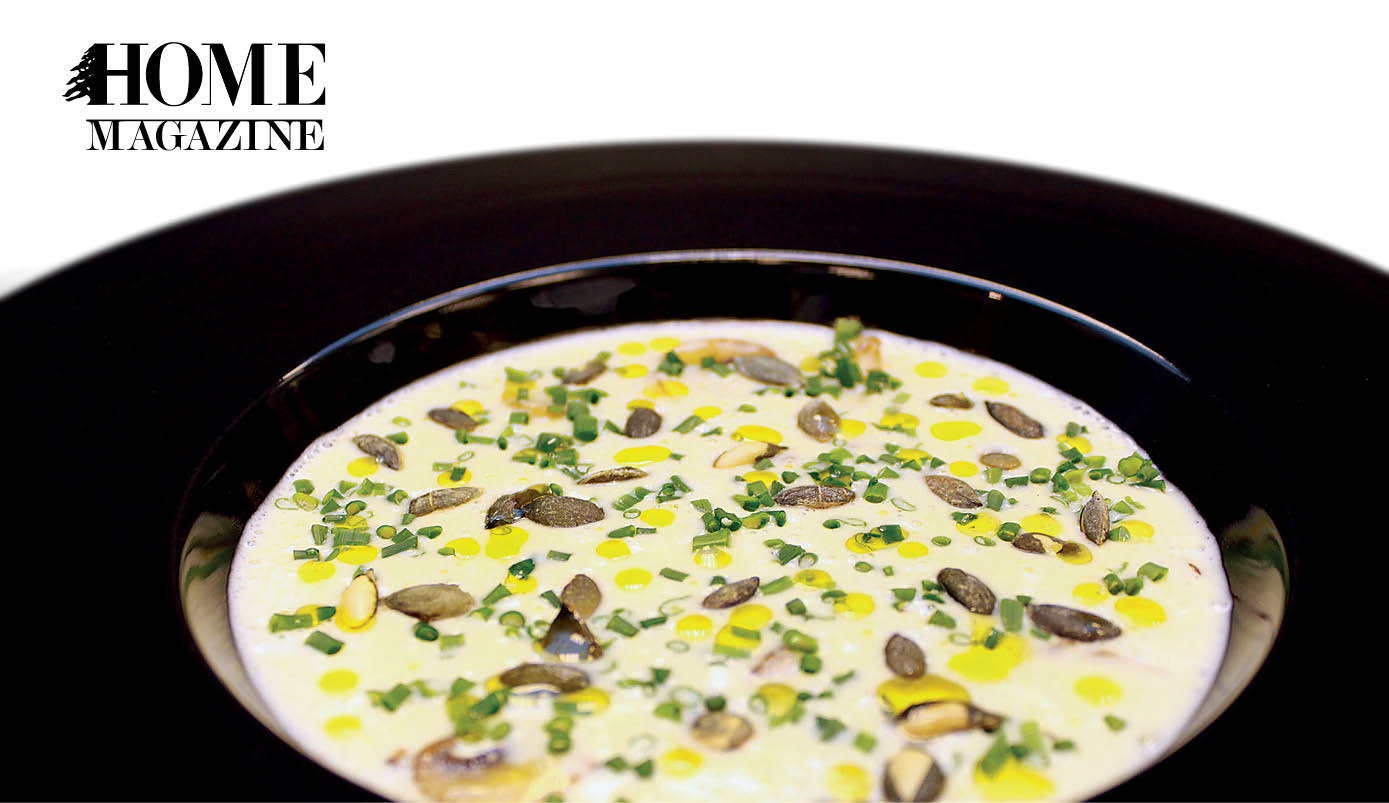
Fennel Soup with Sauteed Porcini & Lemon Confit
Ingredients
Fennel 650 g
Fresh cream 550 g
Vegetable stock 375 g
Butter knobs 40 g
Roasted pumpkin seeds 10 pc.
Sautéed porcini 4 g.
Extra virgin olive oil 0.03 ml.
Minced chives 0.02 g.
Lemon confit 5.00 g.
Lemon confit
Lemon zest 150 g.
Sugar 400 g.
Lemon juice 400 g.
Preparation
1. Cook the fennel in fresh cream and vegetable stock at low temperature.
2. Mix all the ingredients with a handheld blender till it reaches the right consistency and
texture.
3. Add the butter knobs and stir for 1 minute.
4. Remove from heat and garnish with roasted pumpkin seeds, sautéed porcini, extra virgin
olive oil, minced chives and lemon confit.
For the lemon confit:
1. Blanch the lemon zest three times consecutively, each time for 1 minute.
2. Boil with the sugar and lemon juice until it has a syrupy texture.
Raspberry Mascarpone Pistachio Tart
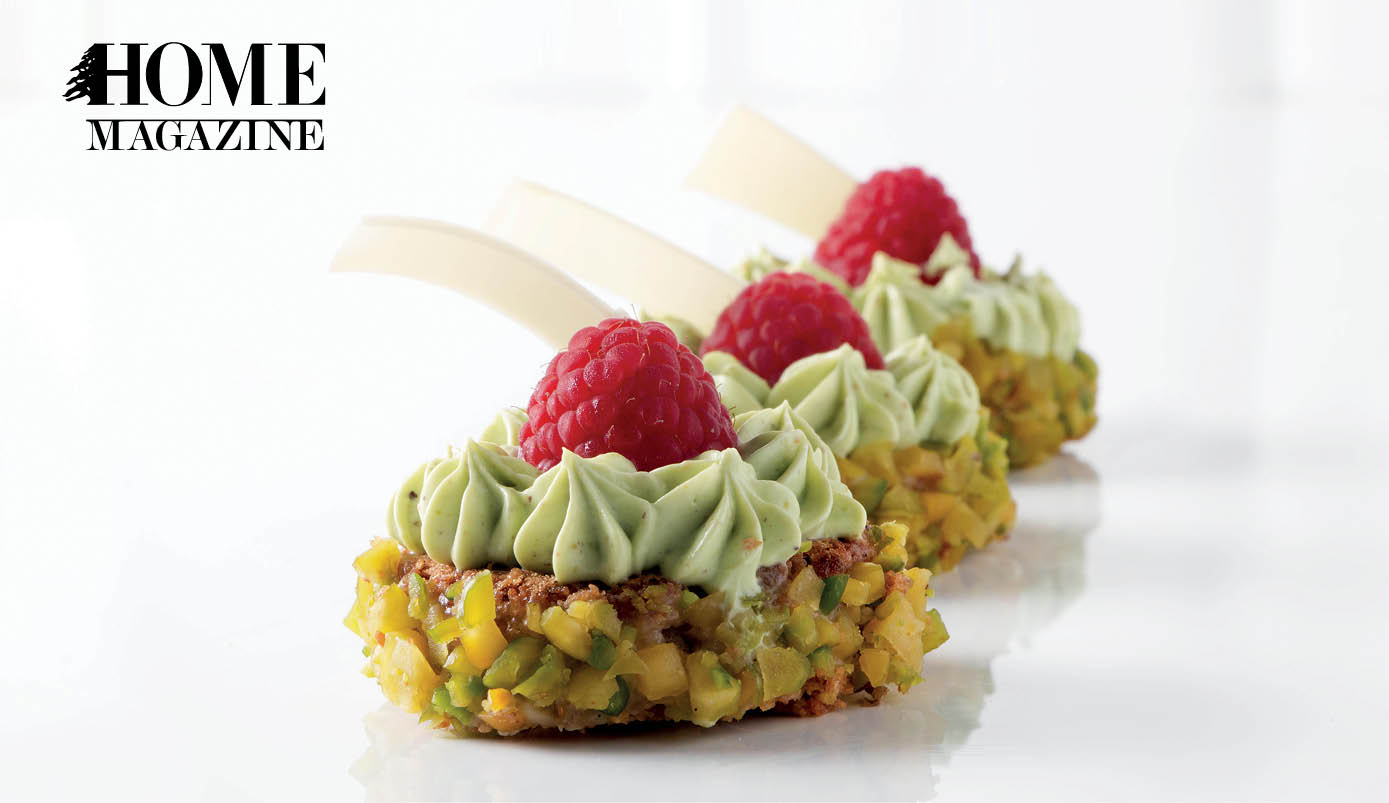
Ingredients
Dacquoise pistachio 1000 g.
White chocolate 50 g.
Cracked pistachio 100 g.
Pastry cream 75 g.
Raspberry 260 g.
Mascarpone crème 180 g.
Chocolate sticks 66% 15 g.
Dacquoise pistachio
Roasted crushed pistachio 90 g.
Almond powder 240 g.
Pistachio powder 75 g.
Icing sugar 375 g.
Roasted and ground pistachio 52 g.
Pâte pistachio 10 g.
Egg white 400 g.
Sugar 130 g.
Pastry cream
Liquid milk 250 g.
Sugar 50 g.
Frozen egg yolk 50 g.
Cream powder 12 g.
Flour 8 g.
Butter 5 g.
Vanilla pods 1 pc.
Mascarpone crème
Mascarpone cheese 150 g.
Pâte pistachio 25 g.
Fresh cream 15 g.
Preparation
For the raspberry mascarpone pistachio tart:
1. Cover the borders of the dacquoise with white chocolate.
2. Spread the cracked pistachio to cover the white chocolate.
3. Spread the pastry cream on top.
4. Place the rasberries next to each other.
5. Mix the mascarpone with dacquoise pistachio and fresh cream, and decorate between the
raspberries.
For the dacquoise pistachio:
1. Preheat the oven to 175 C.
2. Mix crushed roasted pistachio, almond powder, pistachio powder, icing sugar, roasted and
ground pistachio, and pâte pistachio in a bowl.
3. Whisk the eggs and sugar until it becomes a stiff, glossy meringue.
4. Incorporate the powder in the meringue while mixing it by hand.
5. Place in a pan and bake for 20 minutes at 175 C.
For the pastry cream:
1. Boil the milk and half the quantity of sugar in a pan (Mixture 1).
2. Mix in a bowl the egg yolks and the remaining quantity of sugar till homogeneous (Mixture 2).
3. Add the cream powder, flour and vanilla pods to the egg and sugar mixture (Mixture 2), and
mix using a whisk.
4. Add 15% of the boiling milk and sugar mixture (Mixture 1) to the egg and sugar mixture
(Mixture 2), while constantly stirring.
5. Remove vanilla pods from the egg and sugar mixture (Mixture 2).
6. Add the egg and sugar mixture (Mixture 2) to the boiling milk and sugar (Mixture 1) while
mixing with a whisk.
7. Continue mixing on low heat until the texture is creamy texture.
8. Remove from heat and let cool.
HOMEland
Coming Soon
HOMEland Events & Collaborations
Coming Soon
 Signature Boutique