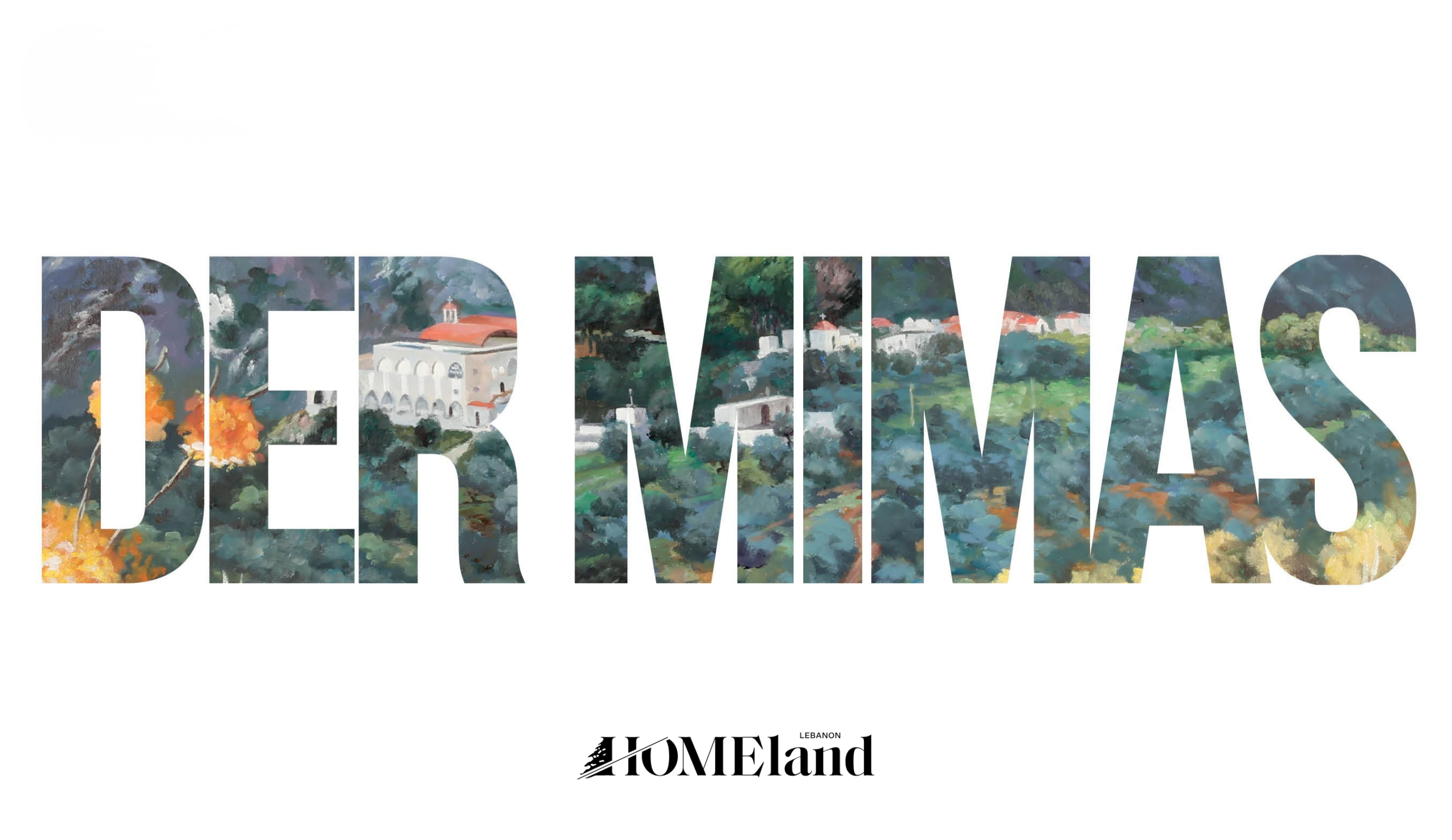
Der Mimas: The Lighthouse of the South
Home to 2,000-year-old olive trees and a rebuilt monastery, Der Mimas earned its name: the lighthouse of Lebanon's south.

How the reconstruction of a monastery rebirthed a village.
Perched on a hill and surrounded by an endless forest of majestic olive trees, some dating back 2000 years, Der Mimas is a captivating village steeped in history. Some of its oldest trees were alive when the first Roman legions crossed the Litani River to conquer the region and when the crusaders built the nearby Beaufort Castle.
Today, approximately 150,000 olive trees grace Der Mimas, a charming sleepy village in the district of Marjeyoun, south of Lebanon, which overlooks the snow-capped peaks of Mount Hermon to its east. To get here from Beirut, you pass through Saida, turn left at Sarafand-Zahrani and then go through Nabatieh Kfar Rumman in the direction of Marjayoun, onto its winding narrow road.
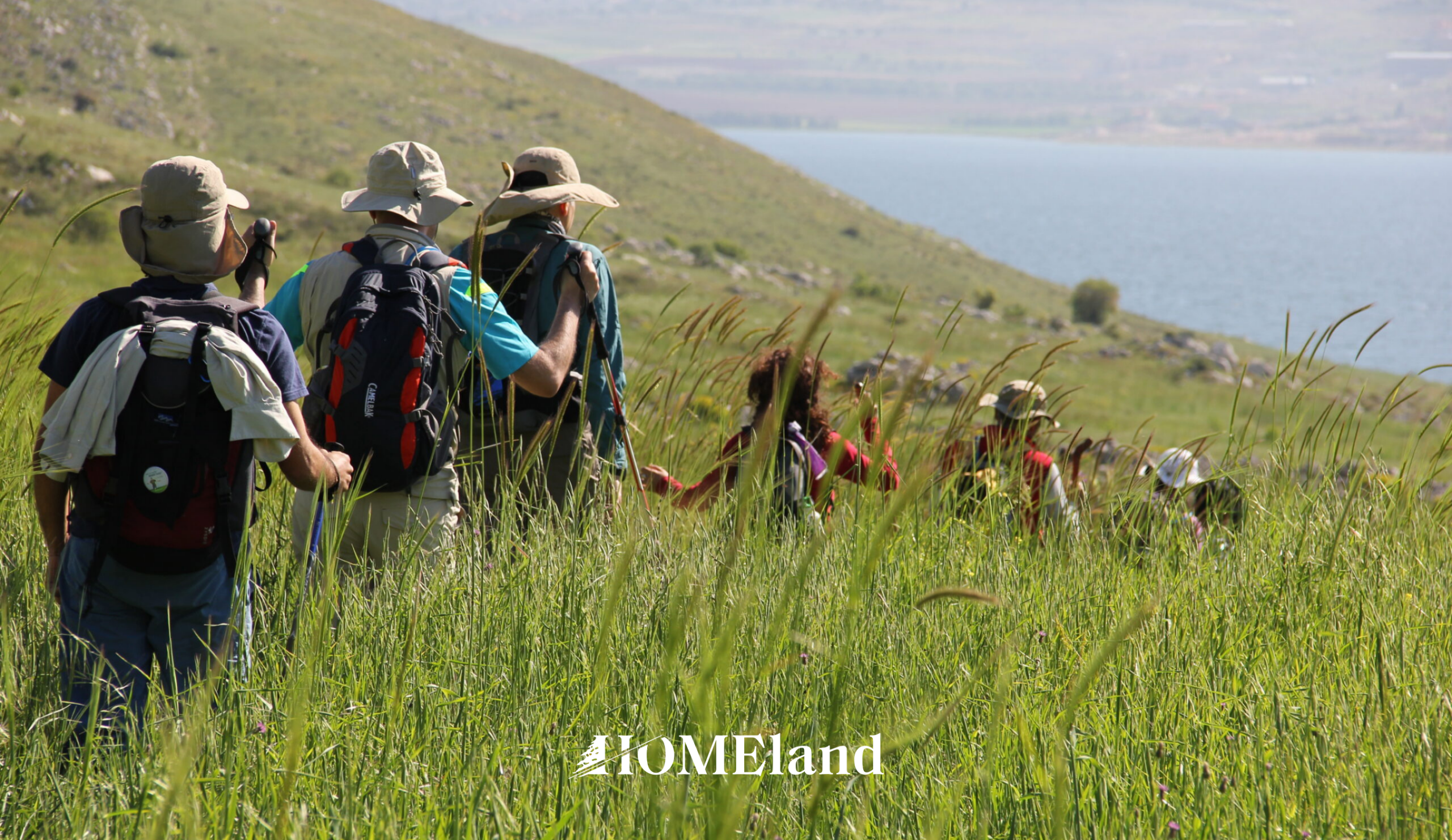
Der Mimas never fails to enchant visitors with its delightful stone houses separated by narrow cobbled streets, old water mills, ancient stone bridges and pleasant trails crossing through its surrounding olive groves. It has become a favorite trek destination among local hiking groups. The olive variety present is one of the oldest in the world, which includes the “Soury” olive tree named after the Phoenician city of Sour (Tyre). The olive oil produced in Der Mimas is known to be one of the best in the country. One of its producers Mariams Gold won fourth place at the Biofach Fair 2012, the world’s biggest fair for organic products in Nuremberg, Germany.
Like many smaller villages in Lebanon, most of Der Mimas’ landowners either live in Beirut, its outskirts or have emigrated abroad. Many of these early emigrants from the late 1800s arrived in Lansing, Michigan, to work in the burgeoning auto industry, for example at the now defunct Oldsmobile plant. In fact, today you can find a large community of fourth generation Lebanese-Americans in the Lansing area, mostly originating from Der Mimas and its neighboring villages. In addition to the United States, immigration to Canada and Brazil was also prevalent over the years. Despite moving away, Der Mimases (as the people of this village are known) still maintain their ancestral HOMEs and return to enjoy the summer months.
While farming and olive oil production is the common livelihood of the Der Mimases, it would be wrong to assume that the natives are mostly farmers who live isolated in their fields. Many Der Mimases became doctors, lawyers and engineers, far before it became the norm in the region. This is perhaps why the village was known as “the lighthouse of the south.” In fact, it is in science that the people of Der Mimas have succeeded the most, and there are many renowned professionals from the village: Dr. Hady Skoury, the heart; surgeon responsible for the first surgery with an artificial heart, Dr. Emile Basila, acclaimed for his contributions in the field of nuclear chemistry; the engineer Jean Ibrahim who worked for NASA; and Dr. George Fawaz, a renowned pharmacologist at the American University of Beirut.
The people of the village may claim that the true legacy of Der Mimas lies in its very name. Der is a word of Semitic origin, meaning house or convent, while Mimas refers to Saint Mimas or Mema, the patron saint of the village.
It is said that Saint Memas was the son of a married couple who died of martyrdom, killed for being Christian during the time of roman persecutions around the 3rd century. Saint Memas was born in jail and his mother died during childbirth. Amita, a family friend, who educated him in the Christian faith, later adopted him. According to legend, one day he was in the field taking care of his sheep when a lion appeared to attack his flock. He ordered the lion to not attack and offered to share his food with the lion. From then on, each day the lion came and shared Memas’ food. With time, the Saint managed to tame the beast and they became friends.
At the end of the 14th century a young pagan woman who worked for a family from Constantinople was baptized on the day of Saint Memas, so she adopted the name Memas for herself. One day, Saint Memas ‘appeared’ to Memas asking her to enter into a monastic order. At first, she refused the request, but several years later in 1404, as she was on her way to Jerusalem to visit the church of the Resurrection, the apparition returned. This time Saint Memas told her where he wanted a chapel to be built in his honor. She then began a pilgrimage on foot to the location of the present monastery in Der Mimas, where she started to build it on her own. Soon, the people of the area came to help her. In 1412, she took another pilgrimage to Jerusalem and took her solemn vows to be a nun. Afterward, she went back to serve in the monastery of Der Mimas, along with eight nuns who joined her.
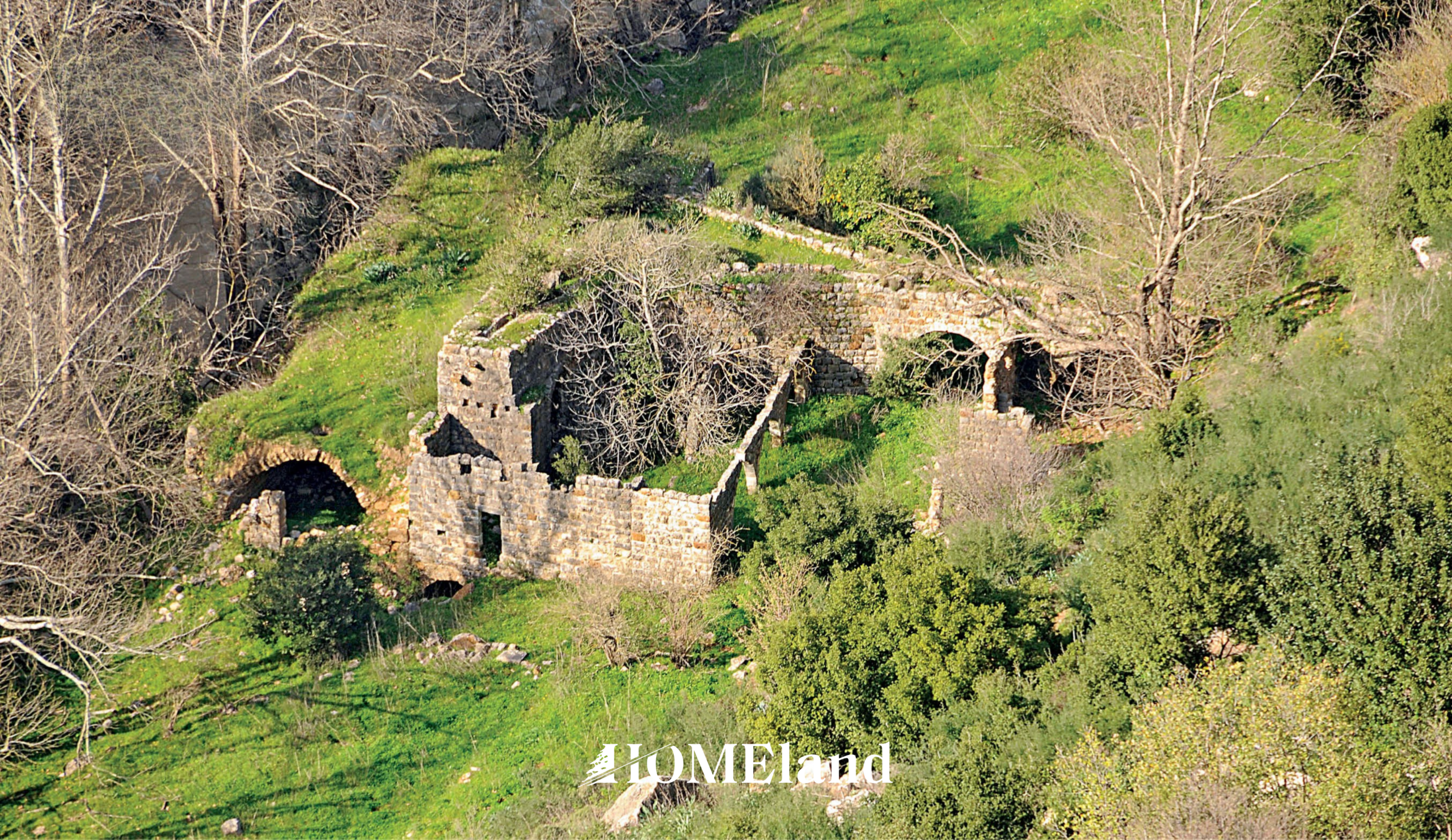 Photo by Mona and Kamel Morkos
Over the centuries that followed, the initial order that founded the monastery vanished. However, in 1866 several monks and priests came to rebuild it into a chapel with an adjacent room. The edifice later fell into decay and was restored a number of times, most recently in 2004, before it was completely demolished during the 2006 Israeli War on Lebanon.
The site was rebuilt again in 2010, this time financed by the Government of Qatar, and it was replaced with a relatively larger structure. In fact, at the opening ceremony of the monastery, the former late Emir of Qatar Sheikh Hamad bin Khalifa Al Thani, along with his delegation, were in attendance, recounts Father Salim Assaad, the Orthodox Priest who is in charge of St. Memas Monastery today.
The new monastery was built on the exact premises of the old one. “We modeled it on the spirit of the previous site dating back to how it was in 1950,” explains Father Assaad. The structure, which was originally 8×8 meters, increased to 8×23 meters (the width remained the same and the length was extended). The new building houses a hall adjacent to the church. It was reconstructed as two independent buildings joined by a vaulted roof. Underneath the church there is also a theatre, a library, one large and one small dining room, both with kitchens attached. There is also an exceptionally large outdoor terrace that offers sensational views of the lush surrounding landscape.
The façade of the monastery is decorated with stone resembling the traditional Lebanese HOME. The exterior is also distinguished, with a range of striking handcrafted mosaics,representing biblical scenes. Each one of them has a prayer written on it. “These mosaics are unique; they represent the monks of the monastery who teach the gospel to those who come and want to listen, but in a silent way,” explains Father Assaad.
Inside the church a magnificent iconostasis stands made of fine American walnut wood. It features Byzantine icons and Saint Memas the Martyr sitting on a lion in the center. The 13th century Byzantine style ceiling is also noteworthy with a huge dodecagon-shaped lamp with 12 small icons hanging from the dome. Father Assad explains that it was handmade in Cyprus by bronze goods manufacturers A. Evangelides & Son Ltd. (Saint Memas is greatly revered in Cyprus with many churches and chapels named after him. The most famous one is in Morphou, a town in the northwestern part of Cyprus, where some of the saint’s relics are kept.)
Today the monastery is mostly used as a place of worship and pilgrimage, where people from all over Lebanon and beyond come to visit. “The reconstruction of this symbolic church has served as a rebirth for the village. It is Saint Memas who has put this village on the map,” said Father Assaad proudly.
 Signature Boutique