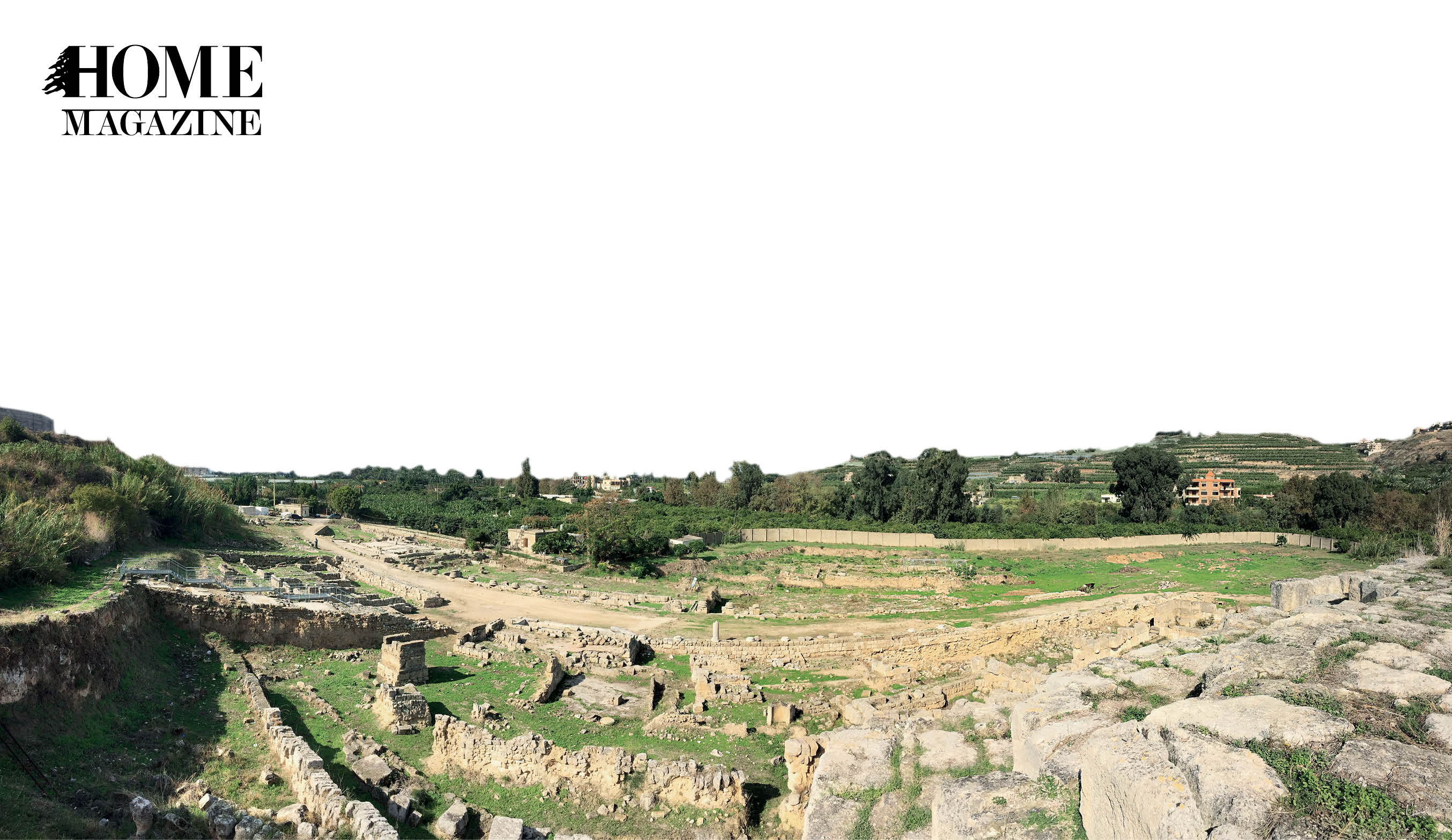
When heading from Beirut to Sidon, one can’t help but notice the luxurious vegetation that surrounds the Awali River. The site of Eshmun lies within this lush valley of citrus groves, thus spreading its aromatic fragrances to roll back time and accompany the visitor in their discovery of this unique place.
A site rich with mythology and history, it is dedicated to the healing god Eshmun for whom the main sacred complex was initially erected. The location of the sanctuary is meaningful in itself, along the ancient Bostrenus (Nahr el-Awali river), near the Yidal source that served as part of the rituals.
The god Eshmun
Eshmun, according to legend, was a young hunter from Beirut with whom the goddess Astarte fell in love. The young man, in an attempt to escape from her advances, mutilated himself and dies. But the goddess, using her vital heat, brought him back to life with the attributes of a god. His death and resurrection gave this healing god the role of a fertility and vegetation god that dies and is reborn annually.
The cult of Eshmun is documented on many sites, such as Syria, Palestine, Egypt, Tunisia, Sardinia and other ancient cities around the Mediterranean Sea. The first written reference to Eshmun is the treaty signed in 754 B.C. between Mati’el, the king of Arpad in North Syria, and Assurnirani V, king of Assyria, where Eshmun is mentioned among the gods who warrant the treaty. Again, in 675-670 B.C., he is one of the god patrons of the treaty between the Assyrian king Esarhaddon and Ba’al I, king of Tyre. Would any of the kings break their promises:
“[…] May Melqart and Eshmun deliver your land to destruction, your people to be deported; from your land […] May they make food to disappear from your mouth and clothes from your body, oil for your ointment […]”
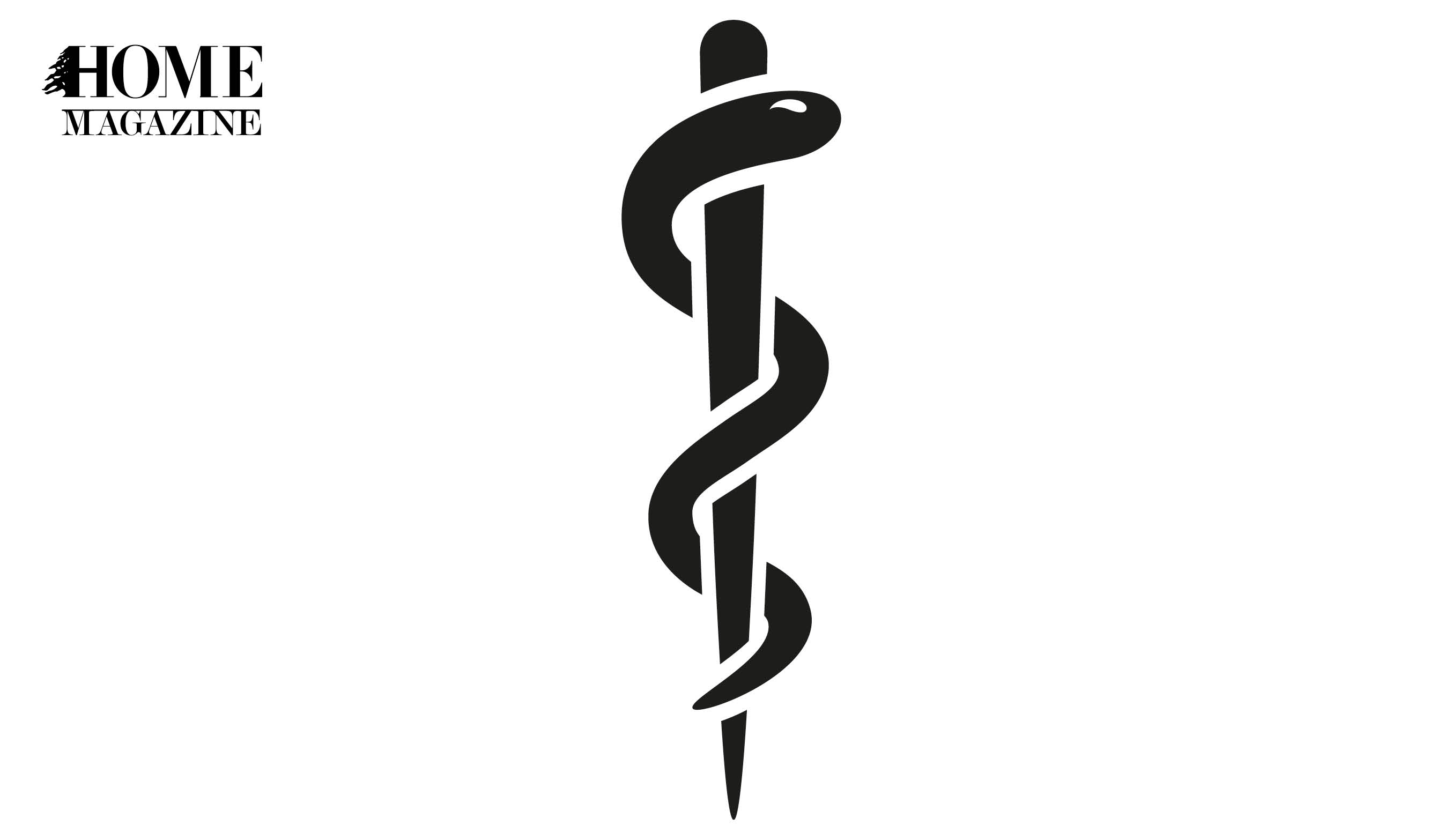
Eshmun was later associated with the Greek healing god Asclepius. He was depicted on coins minted by the city of Berytos (Beirut) holding the rod of Asclepius (a serpent-entangled rod, today’s medical symbol).
The main center of Eshmun’s cult seems to be the city of Sidon. Throughout the Persian Period, Sidon was a prosperous city; its monarchs were distinguished by their wealth and its elite by their culture and flourishing industries. It is then that Eshmunazar II, King of Sidon, and his mother Amoshtart started the temple construction.
The temple complex: rise and decline
The construction of the temple is attested by the 22-line Phoenician inscription, engraved on the lid of Eshmunazar’s sarcophagus (exhibited at the Louvre Museum, Department of Near Eastern Antiquities).
The inscription reads:
“[…] and it was we who built the temple for Eshmun, holy prince of the sacred spring YDLL, and enthroned him.”
The temple complex, dedicated to healing, was erected near the sacred spring. The main monument had a pyramidal shape, resembling a ziggurat (a terraced compound of receding levels built with massive stone), while an ingenious hydraulic tube system conveyed the curative water to the sacral basins, where citizens performed their ritual purifications or immersed for therapeutic sacraments.
During the reign of King Bodashtart (fifth century B.C.) renovation and development works were executed on the site. Inscriptions found on the foundations of the monumental podium indicate that the descendants of Eshmunazar carried out works all through their reign at the site:
“Bodashtart, king of the Sidonians, built this temple, aided by his son, the crown prince, Yatonmilk.”
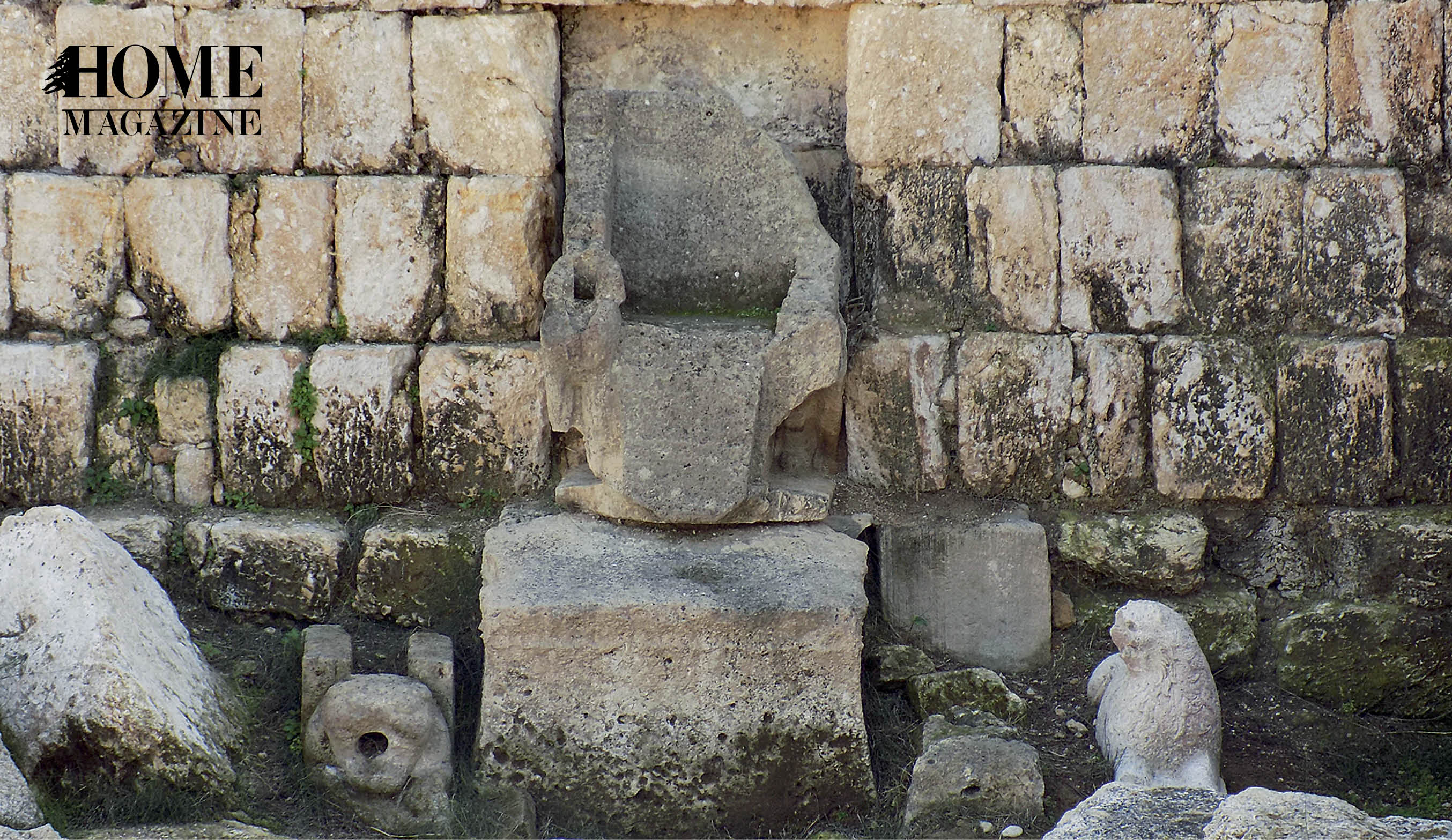 Throne of Astarte, granite. In situ
The sanctuary evolved in dimension and in style, becoming a large sacral complex. The monumental podium was decorated with hunting scenes. The terrace atop of the podium was covered by a Greco-Persian style marble temple probably built by Ionic artisans.
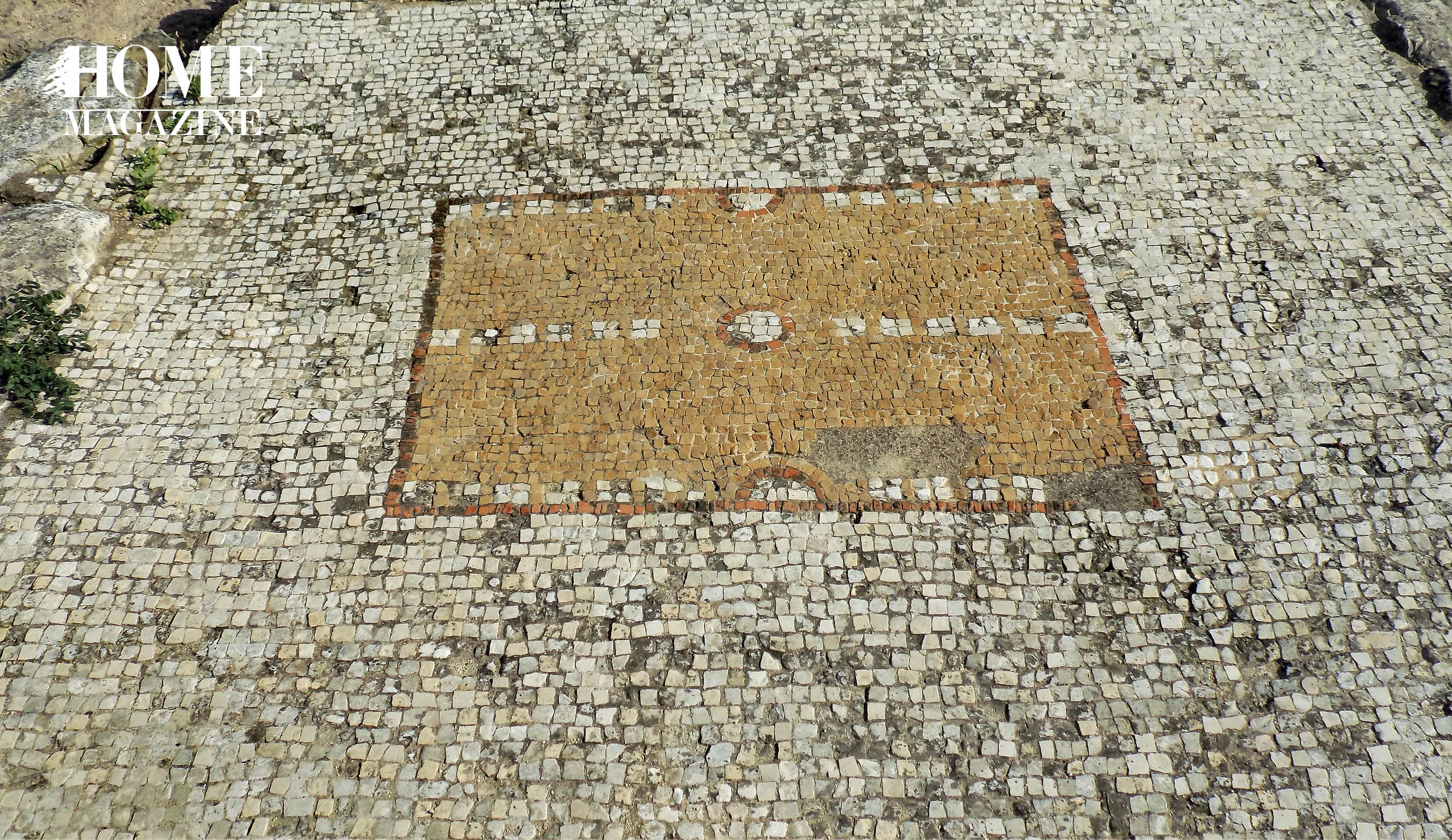
Changes continued to be implemented on the site during the Hellenistic Period (third century B.C. – first century B.C.). It is then that Greeks associated Eshmun with the god Asclepius, thus trying to Hellenize the god. Large chapels were added near the podium. One of the chapels holds a throne carved in a single block of granite, attributed to the goddess Astarte. The throne, flanked with two lion sculptures, rests against one of the chapel’s walls embellished with relied sculptures of hunting scenes. During the Roman Period (first century B.C. – fourth century A.D.) a monumental staircase ornamented with mosaics was built near the sanctuary, and led to the top of the podium. A nymphaeum (monument dedicated to water nymphs) was added near the staircase, with a mosaic depicting the Maenads covering its floor.
The last period represented on the site is the Byzantine Period. A residential area and a basilica were built, whilst the temple declined and was abandoned as Christianity replaced paganism.
At the beginning of the 19th century, only two massive parallel walls made of massive stone masonry were visible, and the site was used as a stone-pit for reuse in nearby constructions.
The babies of Eshmun, also known as the temple boys
Many artifacts were discovered during the excavations held on the site, among which were the Babies of Eshmun– marble sculptures of little children lying on their side and holding an animal. Those votive life-size statuaries seem to have been purposely broken when they were tossed into the sacred canal. Various interpretations are given by scholars for the purpose of the statuaries. Their vocation to secure divine protection for the boy is clarified through the Phoenician inscription inscribed on one of them, which reads:
“This statuette was given by Baalshillem, son of king Banaa, king of the Sidonians, to his lord Eshmun of the spring Ydlal. May he bless him.”
The royal child’s head is shaved, his torso is bare and his lower body is wrapped in a large cloth. And he holds with his right hand a dove, the symbol of love and peace.
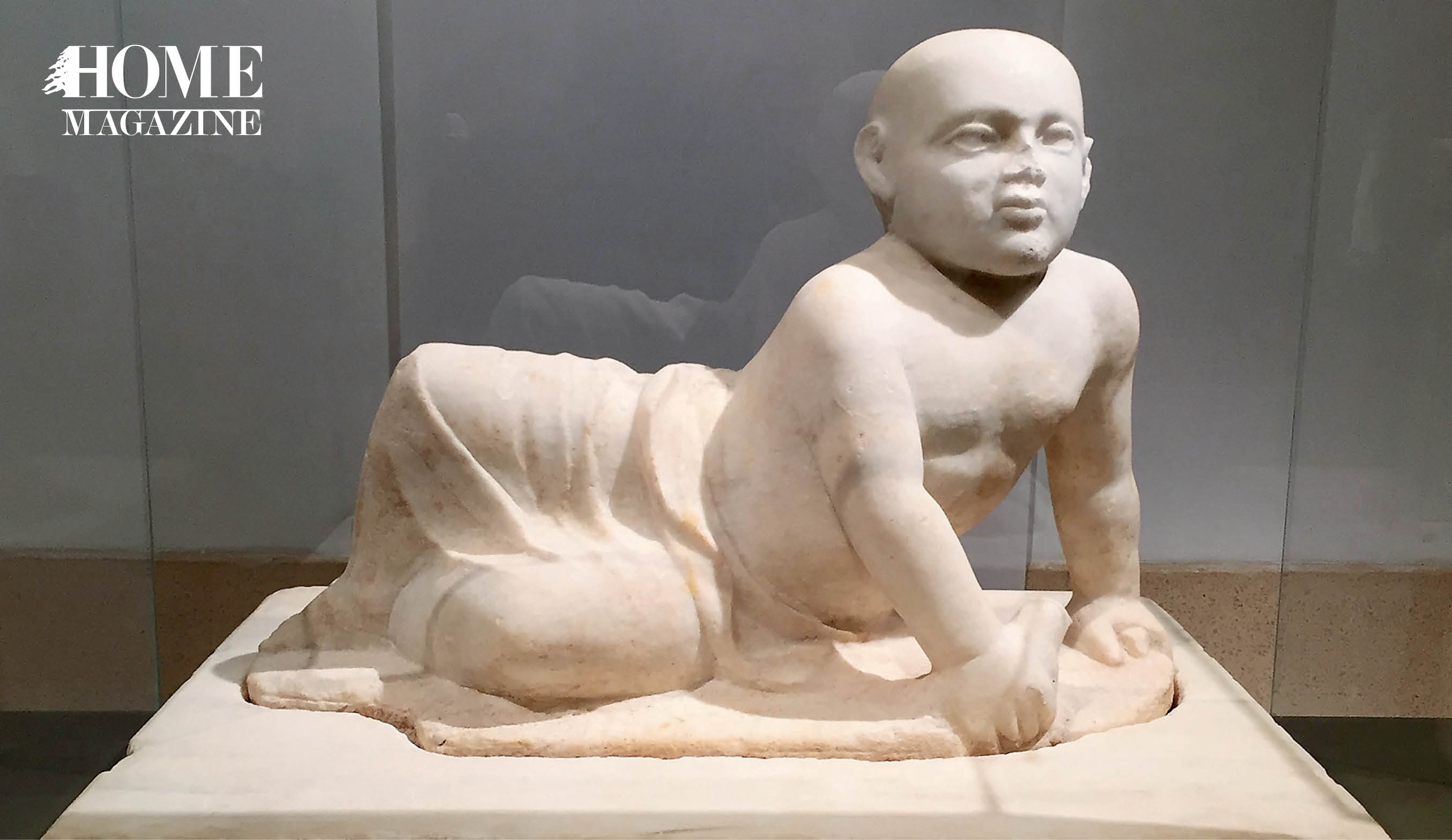 Temple boy, marble. Beirut National Museum.

HOMEland
Coming Soon
HOMEland Events & Collaborations
Coming Soon
 Signature Boutique