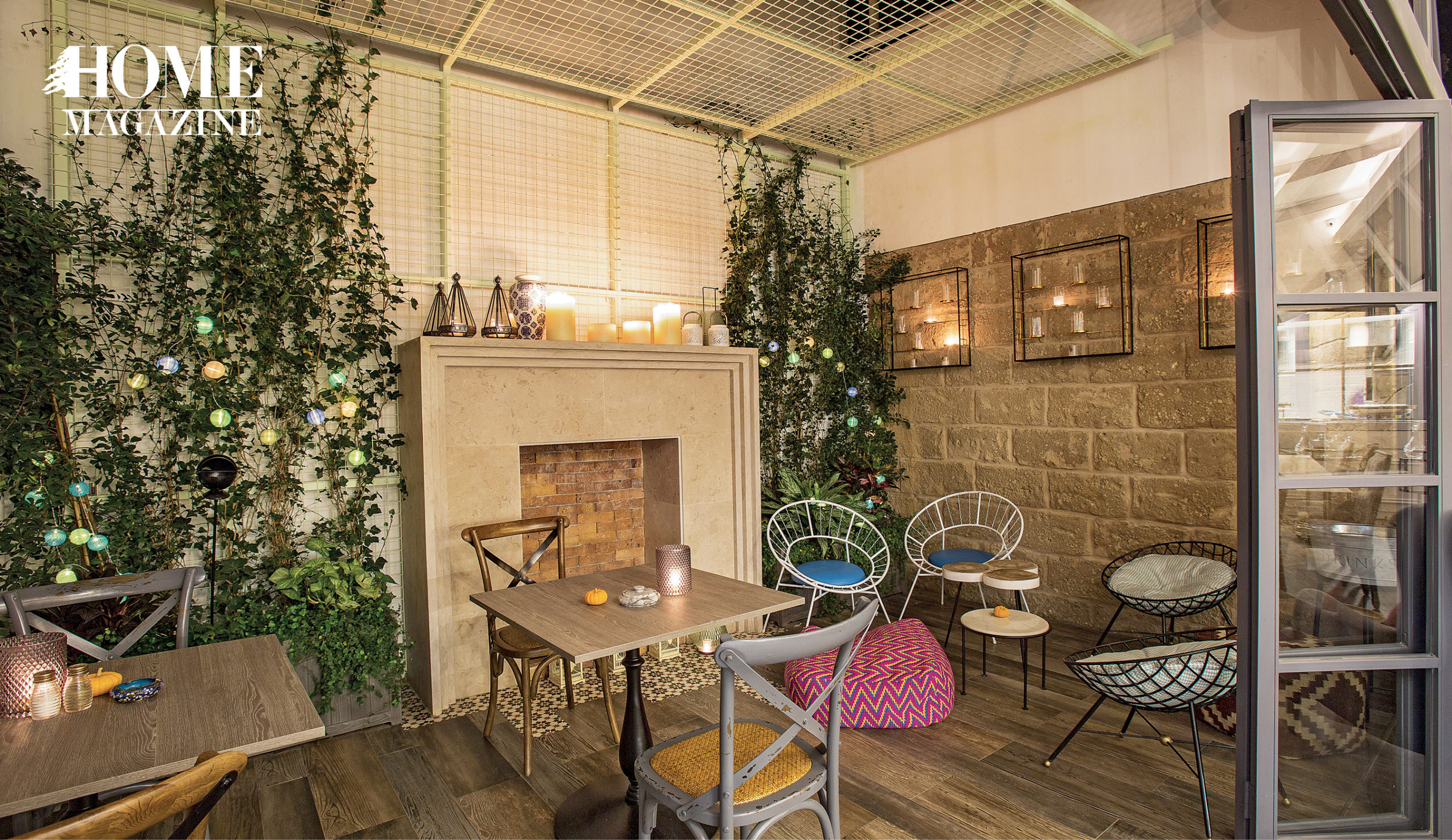
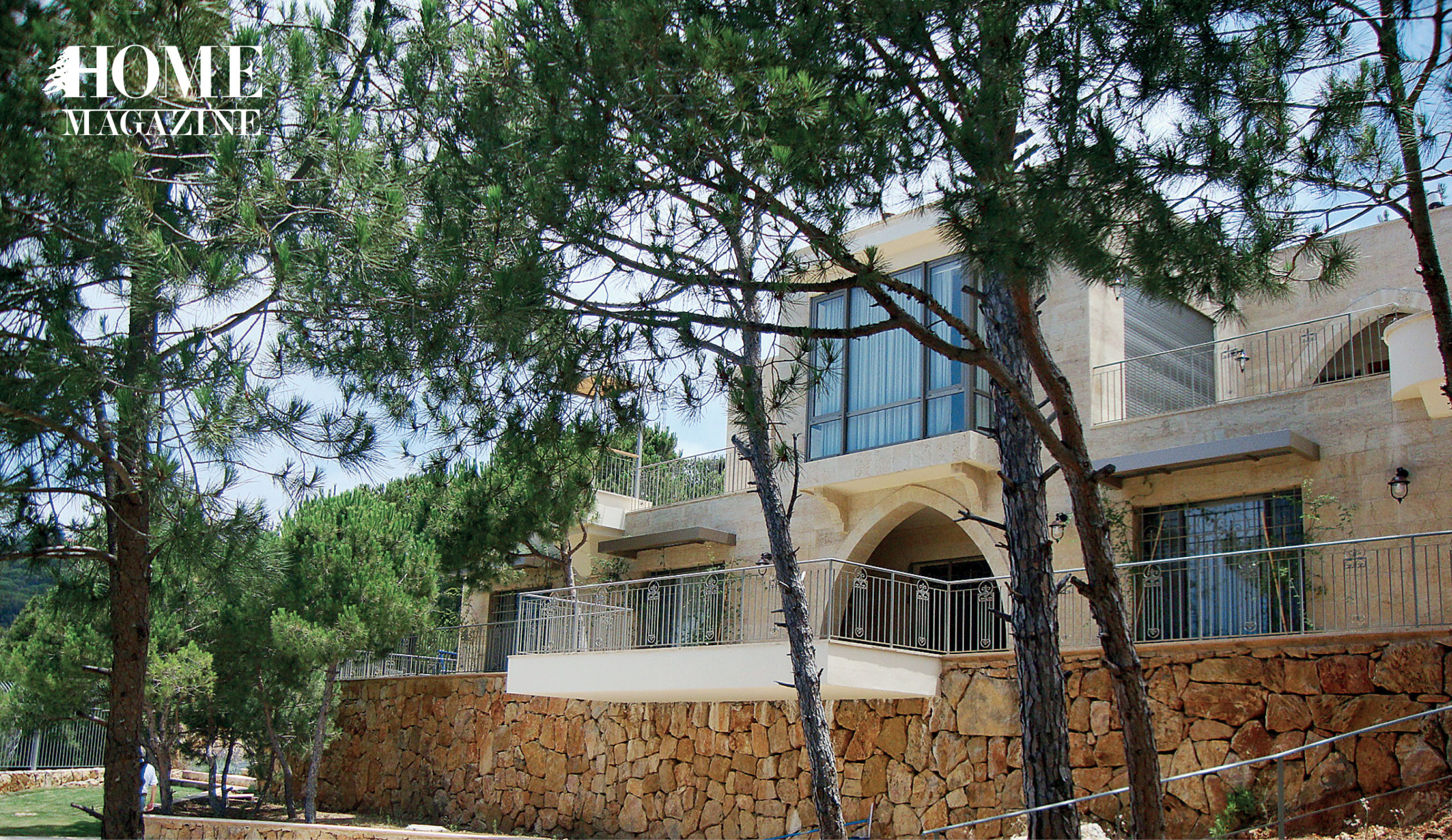
Henry Lucien began by coveting his ‘dream HOME’ but in the process he salvaged so much architectural heritage that he decided to open his house as a museum.
Article by: Niamh Farrell
Henry Lucien leads the way through the narrow streets of Beirut’s Geitawi neighborhood, speaking as he does about his passion for “traditional” Lebanese three-arched houses and his love of living in such HOMEs. Then suddenly he turns around and says: “Here is my HOME.” The building in front of us is a late twentieth-century apartment block – not the anticipated sandstone, wrought-iron balconied wonder. “Look,” he says, “look.” I scrutinize the building, confused, and then I see it: right at the very top, the façade changes; there are the ornate railings and behind them three tall, narrow windows, each topped with an arch-shaped window. Lucien hasn’t sought out and saved an old HOME in Beirut; he’s transformed his newer dwelling into something from the turn of the previous century.
Although Lucien has lived all his life in Lebanon, he first entered an old Lebanese house just five years ago. It was at this moment that the 38-year-old artist discovered his passion for such HOMEs. “I saw another life,” Lucien says. “I fell in love – with the wind, the sky, the paintings.” He dreamily talks about the light and the air such houses were designed to embrace.
Lucien desperately wanted one of these HOMEs, but realized quickly that buying one was well beyond his means. Lucien’s main occupation and main source of income is his jewelry shop, Henry’s Handmade, in Hamra, where he sells unique pieces that he makes himself. However, all around him, old HOMEs were being knocked down to make way for modern developments. One day, he approached one such demolition site to ask what would happen to the house’s various components. Upon learning that they’d be sold, he bought the lot, and embarked on a project to build his “dream HOME, a castle!” – a much more affordable undertaking than purchasing an old HOME.

Lucien’s castle is not atop the Geitawi apartment block; it’s in Batroun, where it now stands nestled into the landscape as if it really has been there for more than 100 years. Rather than sandstone, the shell is contemporary rebar and concrete – “I love concrete,” Lucien laughs – but the marble balconies and columns, the railings, the windows, the doors, some ceilings and assorted other features have been salvaged from scores of demolished Beirut houses. Between the apartment in Geitawi and the house in Batroun, Lucien has used materials from some “65 houses.”
In a photo album, which we look through while sitting in the light-filled living room of the Geitawi apartment beneath the elegantly detailed ceiling, Lucien himself is in the process of painting; the jewelry maker has displayed images of many of the parts he used both at their original location and as they stand now restored and inserted into his new HOME. The album represents a wonderful record of a Lebanese heritage that is being eroded daily.
However, his passion for traditional living doesn’t make him a staunch anti-modernist.
Pointing to an image of an old, villa-lined Zeitounay Bay, he notes that, at the time of those villas’ construction, there were probably people who opposed them too, who said they were ruining the landscape, just as they do today when they see tower blocks rising. And yet, Lucien says, those villas represented progress.
Lucien intends opening the Batroun house as a museum. Those who visit will feel the unique atmosphere of a Lebanese traditional HOME. They will also, Lucien says, “see my experience, they will see my love… they will see my faith.”
Facebook: Henry’s Handmade
HOMEland Magazine
We firmly believe that the internet should be available and accessible to anyone, and are committed to providing a website that is accessible to the widest possible audience, regardless of circumstance and ability.
To fulfill this, we aim to adhere as strictly as possible to the World Wide Web Consortium’s (W3C) Web Content Accessibility Guidelines 2.1 (WCAG 2.1) at the AA level. These guidelines explain how to make web content accessible to people with a wide array of disabilities. Complying with those guidelines helps us ensure that the website is accessible to all people: blind people, people with motor impairments, visual impairment, cognitive disabilities, and more.
This website utilizes various technologies that are meant to make it as accessible as possible at all times. We utilize an accessibility interface that allows persons with specific disabilities to adjust the website’s UI (user interface) and design it to their personal needs.
Additionally, the website utilizes an AI-based application that runs in the background and optimizes its accessibility level constantly. This application remediates the website’s HTML, adapts Its functionality and behavior for screen-readers used by the blind users, and for keyboard functions used by individuals with motor impairments.
If you’ve found a malfunction or have ideas for improvement, we’ll be happy to hear from you. You can reach out to the website’s operators by using the following email
Our website implements the ARIA attributes (Accessible Rich Internet Applications) technique, alongside various different behavioral changes, to ensure blind users visiting with screen-readers are able to read, comprehend, and enjoy the website’s functions. As soon as a user with a screen-reader enters your site, they immediately receive a prompt to enter the Screen-Reader Profile so they can browse and operate your site effectively. Here’s how our website covers some of the most important screen-reader requirements, alongside console screenshots of code examples:
Screen-reader optimization: we run a background process that learns the website’s components from top to bottom, to ensure ongoing compliance even when updating the website. In this process, we provide screen-readers with meaningful data using the ARIA set of attributes. For example, we provide accurate form labels; descriptions for actionable icons (social media icons, search icons, cart icons, etc.); validation guidance for form inputs; element roles such as buttons, menus, modal dialogues (popups), and others. Additionally, the background process scans all the website’s images and provides an accurate and meaningful image-object-recognition-based description as an ALT (alternate text) tag for images that are not described. It will also extract texts that are embedded within the image, using an OCR (optical character recognition) technology. To turn on screen-reader adjustments at any time, users need only to press the Alt+1 keyboard combination. Screen-reader users also get automatic announcements to turn the Screen-reader mode on as soon as they enter the website.
These adjustments are compatible with all popular screen readers, including JAWS and NVDA.
Keyboard navigation optimization: The background process also adjusts the website’s HTML, and adds various behaviors using JavaScript code to make the website operable by the keyboard. This includes the ability to navigate the website using the Tab and Shift+Tab keys, operate dropdowns with the arrow keys, close them with Esc, trigger buttons and links using the Enter key, navigate between radio and checkbox elements using the arrow keys, and fill them in with the Spacebar or Enter key.Additionally, keyboard users will find quick-navigation and content-skip menus, available at any time by clicking Alt+1, or as the first elements of the site while navigating with the keyboard. The background process also handles triggered popups by moving the keyboard focus towards them as soon as they appear, and not allow the focus drift outside it.
Users can also use shortcuts such as “M” (menus), “H” (headings), “F” (forms), “B” (buttons), and “G” (graphics) to jump to specific elements.
We aim to support the widest array of browsers and assistive technologies as possible, so our users can choose the best fitting tools for them, with as few limitations as possible. Therefore, we have worked very hard to be able to support all major systems that comprise over 95% of the user market share including Google Chrome, Mozilla Firefox, Apple Safari, Opera and Microsoft Edge, JAWS and NVDA (screen readers).
Despite our very best efforts to allow anybody to adjust the website to their needs. There may still be pages or sections that are not fully accessible, are in the process of becoming accessible, or are lacking an adequate technological solution to make them accessible. Still, we are continually improving our accessibility, adding, updating and improving its options and features, and developing and adopting new technologies. All this is meant to reach the optimal level of accessibility, following technological advancements. For any assistance, please reach out to