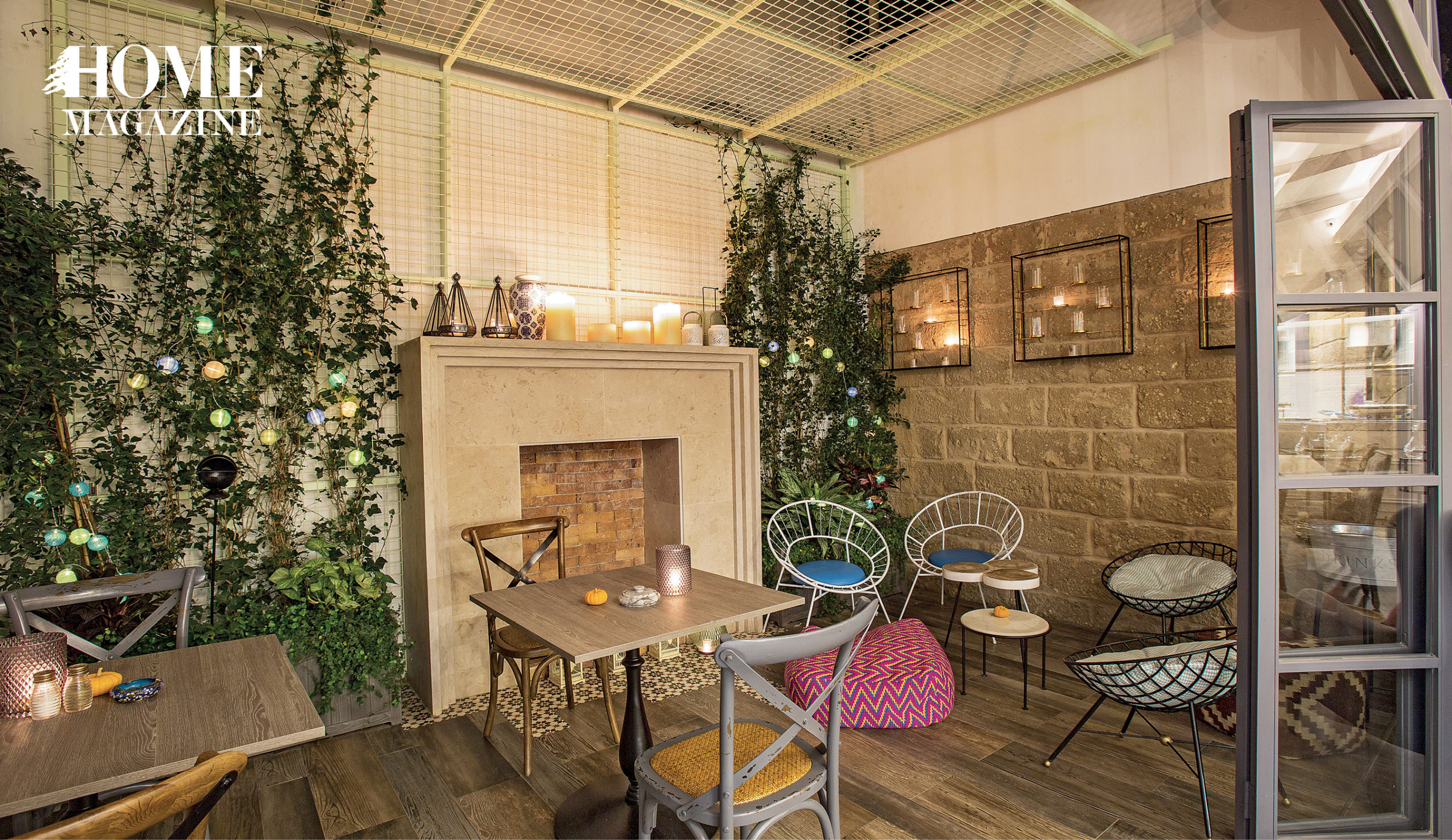
LYR is a Lebanese restaurant located in Milan’s design district, offering a modern interpretation of traditional dishes to the fashionable Milanese crowd. Designed by Jo Ghareeb and managed by Rabih El Monla, LYR’s refined interior and varied menu are a true pleasure to the senses.
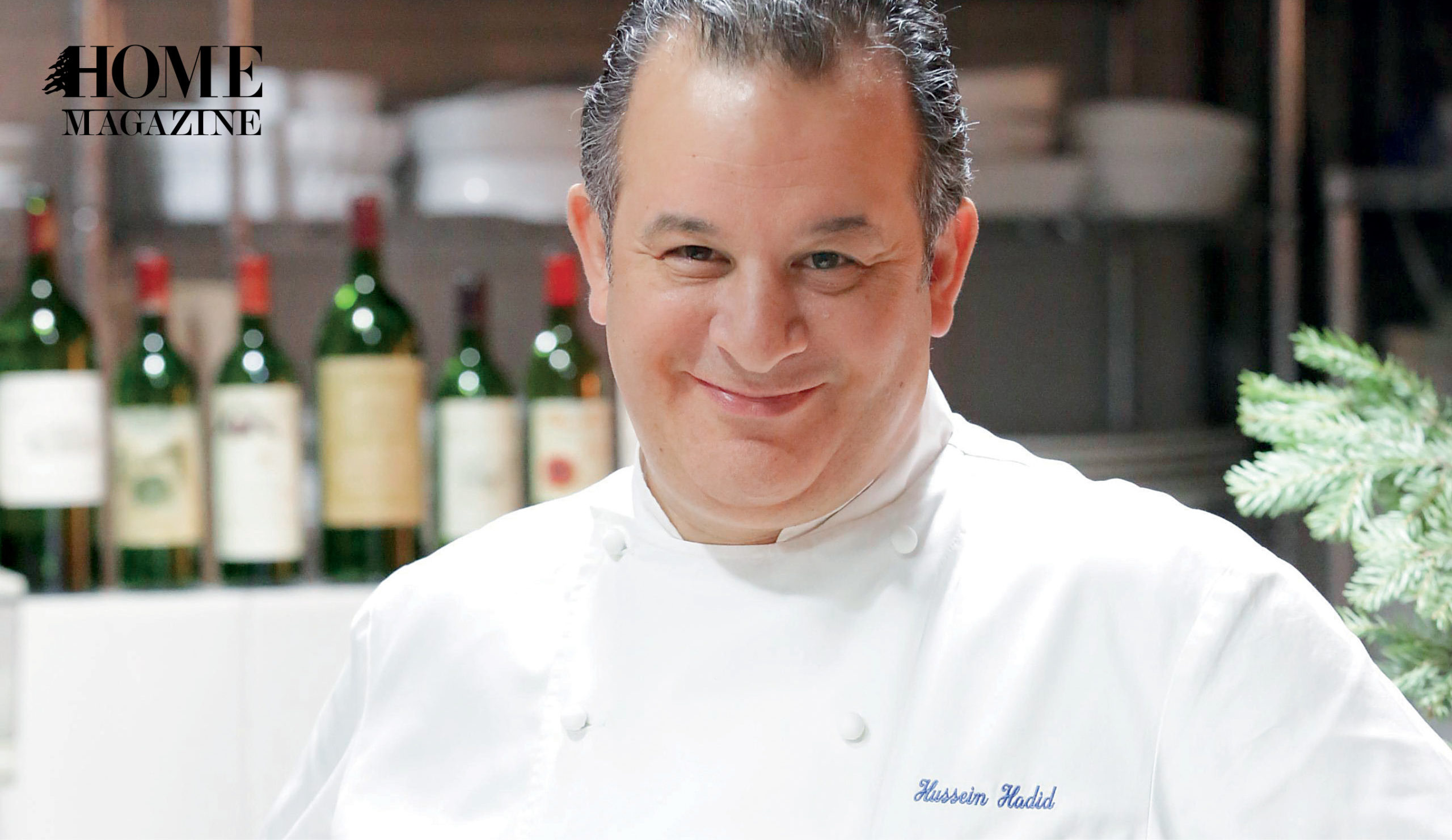
HOME spoke to Ghareeb, to delve into the cultural subtleties and numerous successes of this Lebanese gem in the heart of Milan.
Introducing Lebanese Cuisine to the Italian Public
LYR is recognized as one of the best ethnic restaurants in Milan, revisiting Lebanon’s culinary heritage in a distinctive fashion. “The restaurant is located behind Scala di Milano, near Brera University and close to all designer boutiques in the area including Armani, Gucci and Ferragamo. Our clientele is mostly made up of artsy, fashionable people who are looking for something more than pizza and pasta,” Ghareeb explained.
The owners there are physically present at the restaurant and have special affinity with diners and walk them through the basics of Lebanese cuisine introducing them to the traditional way of eating certain foods like the use of bread to eat hummus for instance,. “As the owner and manager, Rabih is always present at the restaurant to oversee business and operations while I take care of the overall design elements and kitchen team in terms of training and practical guidelines,” he noted.
“What distinguishes us from other restaurants in the area is the direct contact with our customers as we constantly try to engage with them and provide them with all the needed info about the Lebanese dishes at hand” Ghareeb added.
The restaurant has been repeatedly praised for its generosity and high quality by the Italian media. “We have many popular dishes like shanklish, kafta, lentil soup and kebbe and the Italian public particularly appreciates the use of pomegranate syrup in our recipes,” he told HOME. “We were invited lately to cook in front of a studio audience of culinary consultants on live TV: I chose to make Fattoush and Kebbe.”
An Inside Look
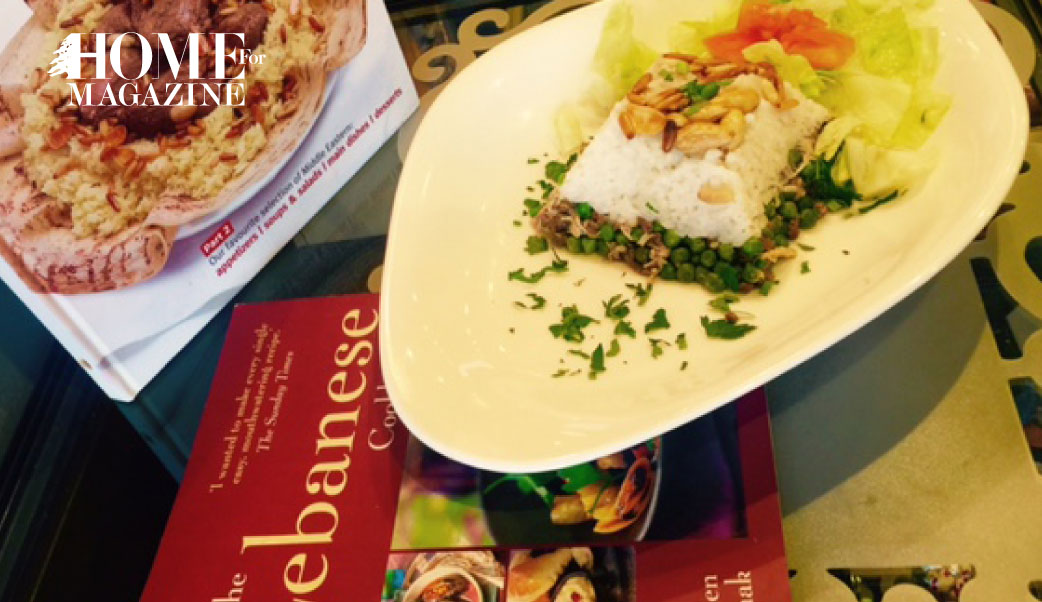
Food is always presented in ingenious ways at LYR. “From sushi-like Wara’a Enab to round-shaped gourmet hummus, our dishes carry a striking modern twist that is highly appealing to the surrounding artsy Milanese crowd. We also constantly train our multicultural staff,” Ghareeb explained.
Rabih has a vast experience in the field since he previously had a restaurant in a residential area and has spent over 20 years in Milan. On the other hand Ghareeb is an elegant architect, with a passion for cooking and culinary innovation. “We both work together alongside the LYR team to maintain the exceptional quality of the food and keep our customers satiated; it’s a collective effort above all.”
“Our Italian partner happens to be a passionate art collector and we’ve been constantly exhibiting refined artworks from famous American, European and Lebanese artists on the restaurant’s walls” Ghareeb noted.
But it doesn’t stop here. Apart from the lounge bar and the newly inaugurated rooftop, the owners have plans to introduce fully-fledged catering services and take-away, we hope to kick off a series of Lebanese nights where we will add some oriental magic to Milanese nights.” he concluded.

Jo Ghareeb’s Recipe
KAFTA MELOGRANO
Lebanese Kafta mix + spices (fried in oil )
Add dried mint to cover the Kafta balls
Debs l Remmen ( Melograno )
Sparkling water

Lebanon, in your inbox
HOMEland Magazine
We firmly believe that the internet should be available and accessible to anyone, and are committed to providing a website that is accessible to the widest possible audience, regardless of circumstance and ability.
To fulfill this, we aim to adhere as strictly as possible to the World Wide Web Consortium’s (W3C) Web Content Accessibility Guidelines 2.1 (WCAG 2.1) at the AA level. These guidelines explain how to make web content accessible to people with a wide array of disabilities. Complying with those guidelines helps us ensure that the website is accessible to all people: blind people, people with motor impairments, visual impairment, cognitive disabilities, and more.
This website utilizes various technologies that are meant to make it as accessible as possible at all times. We utilize an accessibility interface that allows persons with specific disabilities to adjust the website’s UI (user interface) and design it to their personal needs.
Additionally, the website utilizes an AI-based application that runs in the background and optimizes its accessibility level constantly. This application remediates the website’s HTML, adapts Its functionality and behavior for screen-readers used by the blind users, and for keyboard functions used by individuals with motor impairments.
If you’ve found a malfunction or have ideas for improvement, we’ll be happy to hear from you. You can reach out to the website’s operators by using the following email
Our website implements the ARIA attributes (Accessible Rich Internet Applications) technique, alongside various different behavioral changes, to ensure blind users visiting with screen-readers are able to read, comprehend, and enjoy the website’s functions. As soon as a user with a screen-reader enters your site, they immediately receive a prompt to enter the Screen-Reader Profile so they can browse and operate your site effectively. Here’s how our website covers some of the most important screen-reader requirements, alongside console screenshots of code examples:
Screen-reader optimization: we run a background process that learns the website’s components from top to bottom, to ensure ongoing compliance even when updating the website. In this process, we provide screen-readers with meaningful data using the ARIA set of attributes. For example, we provide accurate form labels; descriptions for actionable icons (social media icons, search icons, cart icons, etc.); validation guidance for form inputs; element roles such as buttons, menus, modal dialogues (popups), and others. Additionally, the background process scans all the website’s images and provides an accurate and meaningful image-object-recognition-based description as an ALT (alternate text) tag for images that are not described. It will also extract texts that are embedded within the image, using an OCR (optical character recognition) technology. To turn on screen-reader adjustments at any time, users need only to press the Alt+1 keyboard combination. Screen-reader users also get automatic announcements to turn the Screen-reader mode on as soon as they enter the website.
These adjustments are compatible with all popular screen readers, including JAWS and NVDA.
Keyboard navigation optimization: The background process also adjusts the website’s HTML, and adds various behaviors using JavaScript code to make the website operable by the keyboard. This includes the ability to navigate the website using the Tab and Shift+Tab keys, operate dropdowns with the arrow keys, close them with Esc, trigger buttons and links using the Enter key, navigate between radio and checkbox elements using the arrow keys, and fill them in with the Spacebar or Enter key.Additionally, keyboard users will find quick-navigation and content-skip menus, available at any time by clicking Alt+1, or as the first elements of the site while navigating with the keyboard. The background process also handles triggered popups by moving the keyboard focus towards them as soon as they appear, and not allow the focus drift outside it.
Users can also use shortcuts such as “M” (menus), “H” (headings), “F” (forms), “B” (buttons), and “G” (graphics) to jump to specific elements.
We aim to support the widest array of browsers and assistive technologies as possible, so our users can choose the best fitting tools for them, with as few limitations as possible. Therefore, we have worked very hard to be able to support all major systems that comprise over 95% of the user market share including Google Chrome, Mozilla Firefox, Apple Safari, Opera and Microsoft Edge, JAWS and NVDA (screen readers).
Despite our very best efforts to allow anybody to adjust the website to their needs. There may still be pages or sections that are not fully accessible, are in the process of becoming accessible, or are lacking an adequate technological solution to make them accessible. Still, we are continually improving our accessibility, adding, updating and improving its options and features, and developing and adopting new technologies. All this is meant to reach the optimal level of accessibility, following technological advancements. For any assistance, please reach out to