

HOMEland
Coming Soon
HOMEland Events & Collaborations
Coming Soon
 Signature Boutique


Montreal is a rich and vibrant city. It is known for being the most European hub in North America. It also welcomes the largest Lebanese community in Canada, according to the latest census in the metropolitan area. It is then not surprising to learn that more than 44,000 people, of Lebanese origin, made Montreal their new HOME. That is why it is often called the second capital of Lebanon.
Although occupations filled by Canadian Lebanese are skewed significantly towards the business, management and commerce fields and many are employed in the health sector; the cultural impact of people of Lebanese origin in Quebec is very significant. Indeed, a large number are very active in various domains, including fiction, poetry, theater, technical and scientific production.
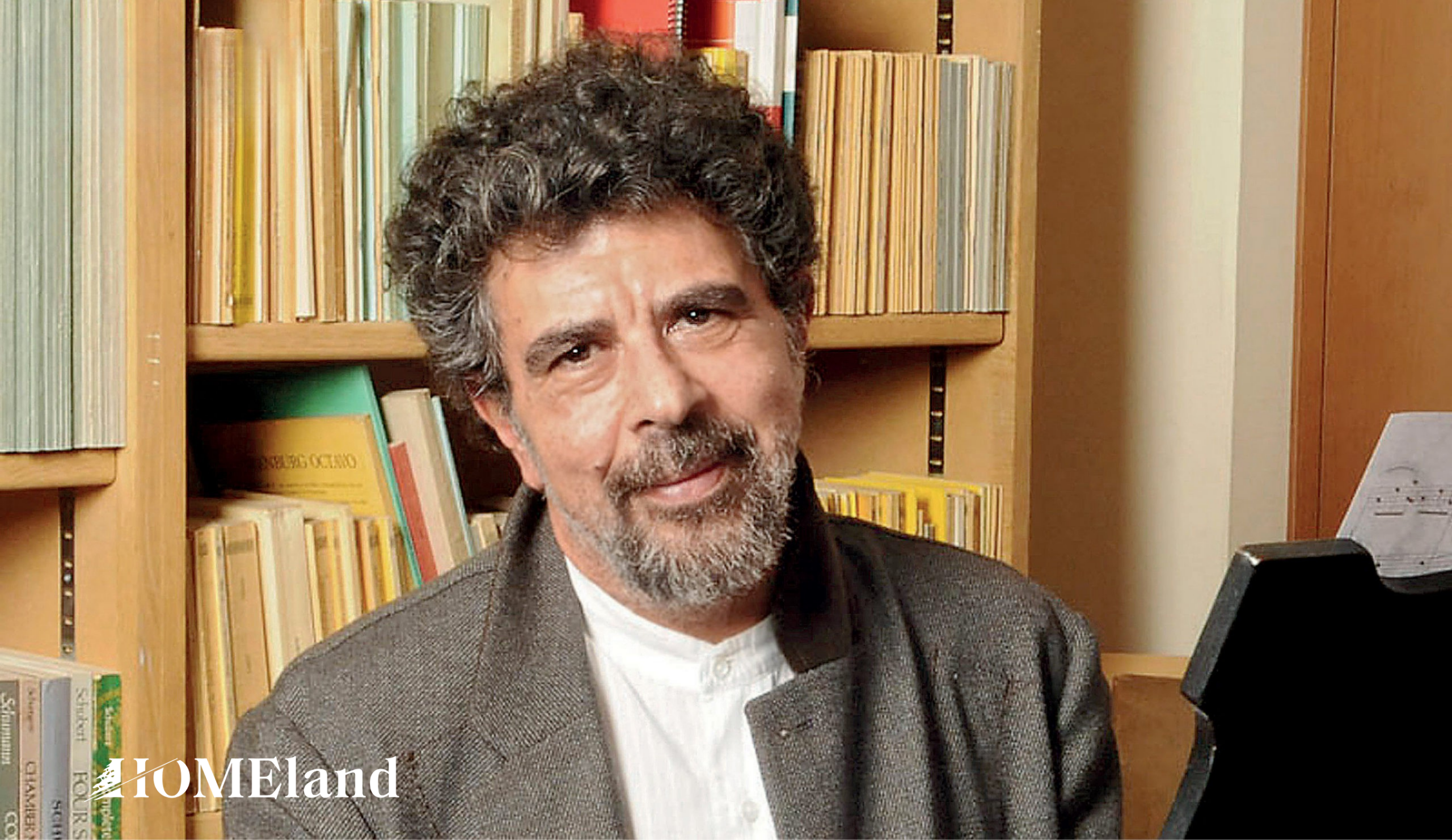
This is how the Lebanese Consul General in Montreal, His Excellency Fadi Ziadeh, came to realize that it is time to reunite all these influential actors into an association. The idea sprung from discussions about Montreal being a French hub for fiction and non-fiction production in North America, and Lebanon an active disseminator of French literature and cultural material in the Middle East. Thus, he asked a few thinkers to meet in order to discuss the possibility of creating a space for Lebanese writers in Quebec to connect, exchange ideas, and learn about publishing, promoting and profiting from the book industry. Hence, the first meeting took place at the Consulate General, in January 2016, to establish the name, the objectives and the by laws for the association to be created. Founding members included Dr. Sami Aoun, professor of political science at Université de Sherbrooke and an expert on Middle East issues, Pierre Ahmaranian, Head of the Arabic section at Radio-Canada and professor of Arabic at Université de Montreal, Salah Al-Achqar, poet, Joe Jbeily, businessman, writer and sculptor, and Frida Anbar, author and International Relations officer at Université de Montréal.
After several meetings and many debates, the name of the association was finally chosen: Circle of Lebanese Writers in Québec, Cercle des écrivains Libanais du Québec – CELQ. Since the young organization was to include anyone who published a book in Arabic, English or in French, and not only literary material, the metaphor of the circle was unanimously chosen to represent unity and eternal life of the works. The official launch was held on April 15, 2016, at the Consulate General of Lebanon in Montreal in the presence of the Quebec Minister of Higher Education, Hélène David.
CELQ aims to promote and disseminate the writings of Lebanese authors in Quebec, Canada and abroad. It also provides its members with a series of activities and services. They benefit from networking events, tips for editing, printing and selling novels, advice and expertise for self-publishing, access to the list of prizes, scholarships and grants from the regional, provincial and national government. It also includes incentives to participate in book fairs, seminars and conferences.
As stated by Fadi Ziadeh: “With the CELQ, we want to establish a full collaboration between Lebanese writers in Quebec and those who are in Lebanon. We also wish to project in Quebec the rich cultural activities of Lebanese authors and vice versa.”
“To connect writers and thinkers in Quebec with their counterparts in Lebanon.”
Speaking about the new group, he adds: “This association is headed by one of its founders, Dr. Sami Aoun. It includes over seventy authors and some of them in various fields. I take the opportunity to make a plea to all the Lebanese who have published books in Quebec, to contact the CELQ via the website (www. celq.ca) so they can join this wonderful family. Our major concern is also to connect writers and thinkers in Quebec with their counterparts in Lebanon by strengthening the participation of Lebanon and Quebec in the francophone arena and in the book fairs both in Montreal and in Beirut.”
After all, the first Arabic printing press was founded in Lebanon in 1734 and it represented the first one in the Middle East. Way back then, the letters were de-bossed inside the paper so one could detect the imprint of the ink. Today, the imprint is carried by the words. They are proud and strong ones because they honor the legacy of the country of the cedars. As Lebanon shines, the writings of its descendants soar. Hasn’t it been stated that the word is mightier than the sword and that in the beginning was the word?
Signature Boutique
Lebanon, in your inbox

HOMEland Magazine
We firmly believe that the internet should be available and accessible to anyone, and are committed to providing a website that is accessible to the widest possible audience, regardless of circumstance and ability.
To fulfill this, we aim to adhere as strictly as possible to the World Wide Web Consortium’s (W3C) Web Content Accessibility Guidelines 2.1 (WCAG 2.1) at the AA level. These guidelines explain how to make web content accessible to people with a wide array of disabilities. Complying with those guidelines helps us ensure that the website is accessible to all people: blind people, people with motor impairments, visual impairment, cognitive disabilities, and more.
This website utilizes various technologies that are meant to make it as accessible as possible at all times. We utilize an accessibility interface that allows persons with specific disabilities to adjust the website’s UI (user interface) and design it to their personal needs.
Additionally, the website utilizes an AI-based application that runs in the background and optimizes its accessibility level constantly. This application remediates the website’s HTML, adapts Its functionality and behavior for screen-readers used by the blind users, and for keyboard functions used by individuals with motor impairments.
If you’ve found a malfunction or have ideas for improvement, we’ll be happy to hear from you. You can reach out to the website’s operators by using the following email
Our website implements the ARIA attributes (Accessible Rich Internet Applications) technique, alongside various different behavioral changes, to ensure blind users visiting with screen-readers are able to read, comprehend, and enjoy the website’s functions. As soon as a user with a screen-reader enters your site, they immediately receive a prompt to enter the Screen-Reader Profile so they can browse and operate your site effectively. Here’s how our website covers some of the most important screen-reader requirements, alongside console screenshots of code examples:
Screen-reader optimization: we run a background process that learns the website’s components from top to bottom, to ensure ongoing compliance even when updating the website. In this process, we provide screen-readers with meaningful data using the ARIA set of attributes. For example, we provide accurate form labels; descriptions for actionable icons (social media icons, search icons, cart icons, etc.); validation guidance for form inputs; element roles such as buttons, menus, modal dialogues (popups), and others. Additionally, the background process scans all the website’s images and provides an accurate and meaningful image-object-recognition-based description as an ALT (alternate text) tag for images that are not described. It will also extract texts that are embedded within the image, using an OCR (optical character recognition) technology. To turn on screen-reader adjustments at any time, users need only to press the Alt+1 keyboard combination. Screen-reader users also get automatic announcements to turn the Screen-reader mode on as soon as they enter the website.
These adjustments are compatible with all popular screen readers, including JAWS and NVDA.
Keyboard navigation optimization: The background process also adjusts the website’s HTML, and adds various behaviors using JavaScript code to make the website operable by the keyboard. This includes the ability to navigate the website using the Tab and Shift+Tab keys, operate dropdowns with the arrow keys, close them with Esc, trigger buttons and links using the Enter key, navigate between radio and checkbox elements using the arrow keys, and fill them in with the Spacebar or Enter key.Additionally, keyboard users will find quick-navigation and content-skip menus, available at any time by clicking Alt+1, or as the first elements of the site while navigating with the keyboard. The background process also handles triggered popups by moving the keyboard focus towards them as soon as they appear, and not allow the focus drift outside it.
Users can also use shortcuts such as “M” (menus), “H” (headings), “F” (forms), “B” (buttons), and “G” (graphics) to jump to specific elements.
We aim to support the widest array of browsers and assistive technologies as possible, so our users can choose the best fitting tools for them, with as few limitations as possible. Therefore, we have worked very hard to be able to support all major systems that comprise over 95% of the user market share including Google Chrome, Mozilla Firefox, Apple Safari, Opera and Microsoft Edge, JAWS and NVDA (screen readers).
Despite our very best efforts to allow anybody to adjust the website to their needs. There may still be pages or sections that are not fully accessible, are in the process of becoming accessible, or are lacking an adequate technological solution to make them accessible. Still, we are continually improving our accessibility, adding, updating and improving its options and features, and developing and adopting new technologies. All this is meant to reach the optimal level of accessibility, following technological advancements. For any assistance, please reach out to

Speaking Truth to Power: Pierre Sadek Foundation