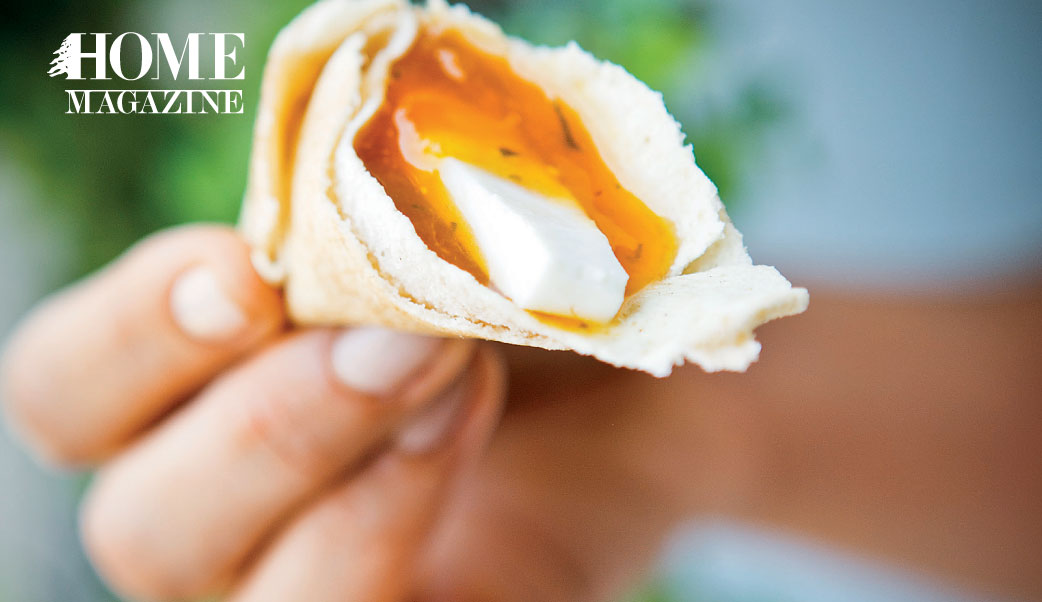
Author, food entrepreneur and chef Lara Ariss was destined to follow the culinary path.
Photos by: Natalie Naccache
From a young age chef Lara Ariss began helping her parents grow vegetables at the family’s farm in Sarafand, near the city of Saida, and was exposed to the process of preparing food; from learning how to preserve and store the crops they picked (such as spinach and okra) to be able to enjoy them off-season, to cooking classical Lebanese dishes. Today, fresh seasonal produce and healthy ingredients are at the heart of her Middle Eastern dishes and are featured in her new English language cookbook Levantine Harvest.
Ariss, a Cordon Bleu chef certified from London, worked in various upscale European restaurants before returning to Lebanon. Back HOME, she delved into the culinary arts, experimenting with and perfecting well-known Lebanese and other regional dishes. She set out to take many of the classical much-loved Levantine dishes and give them a unique gastronomic twist by blending flavors.
One of her signature dishes is the “Musakhan” with purple onions. “I liked the idea of these onions because of the color and sweetness it adds, plus it accentuates the sumac flavor,” explains Ariss. Another twist is “Hummus” garnished with a zesty topping of finely chopped sun-dried tomatoes, basil and walnuts.

Her “Lamb with Burghul and Chickpeas” is given a dash of caraway spice for that extra special flavor, and her “Apricot and Thyme Jam” cleverly blends tangy and sweetness. All her recipes have been meticulously tried and tested to get the desired results. One of her many mouthwatering desserts, “Caramel and Pistachio Cheesecake,” took two years to perfect! “This was one of my harder dishes in order to get the consistency right,” explains Ariss. Clearly not one to cut corners, Ariss has a very methodical approach to cooking and is always open to new ideas. She is a big fan of Greg Malouf, the Michelin star chef famous for contemporary Mediterranean cuisine who is a third-generation Australian Lebanese (Malouf wrote the foreword in Levantine Harvest with a heartfelt message praising Ariss and her book).
Ariss also runs a catering service, specializing in bite-size savories and desserts. For large events she partners with the chef and food consultant Dima Al Chaar, working together from her sprawling kitchen on the top floor of a residential high rise overlooking the bustling commercial district of Verdun.
Levantine Harvest is a cookbook everyone will enjoy, says Ariss, whether you are a seasoned cook, a young person living away from HOME, or newly married and need a user-friendly guide for making familiar and new dishes.

LAMB SHANKS WITH BURGHUL AND CHICKPEAS
Preparation time: 30 minutes, plus overnight
Cooking time: 2 hours 10 minutes Serves 4 to 6
Ingredients:
- 110g dried chickpeas
- 1 beetroot, stalk removed (optional)
- 4 tbsp vegetable oil
- 800g lamb shanks, bone in
1 onion, finely chopped
- 1 tsp allspice
- 330g coarse burghul, rinsed and drained
- 1 tsp caraway
- 1 tsp cinnamon
- 50g pine nuts
- Salt and freshly ground black pepper, to taste
To serve
- Yogurt
Preparation:
- Soak the chickpeas.
- If you wish to serve the dish with roasted beetroot, preheat the oven to 200°C. Wrap the beetroot in aluminum foil and place on a baking tray. Roast it in the oven for 45 minutes, or until tender when pierced with a fork. Remove from the oven and set aside until cool enough to handle. Slice thinly and set aside.
- Heat the vegetable oil in a large pot over medium-high heat. Add the lamb shanks and brown them on all sides.
- Reduce the heat to low, add the onion
and allspice, and sweat until the onion is translucent, about 5 minutes. Add the chickpeas and 1½ liters water. Cover the pan and simmer gently for 1 hour, or until the meat is tender.
- Remove the shanks and set aside. Cover the meat with aluminum foil to keep it warm.
- Add the burghul, caraway and cinnamon to the pan, and season with salt and pepper. Cover and simmer for about 25 minutes, or until the burghul is soft and all the liquid is absorbed. Remove the pot from the heat.
- Toss in the beetroot slices if desired. Cover the pot and let it sit for 5 to 10 minutes.
- Heat a small frying pan over medium heat
for 1 or 2 minutes. Once the pan is hot, add the pine nuts and reduce the heat to low. Shake the pan continuously until the nuts begin to brown, about 1 or 2 minutes. Remove the nuts from the pan immediately – they will burn very quickly – and set them aside.
Transfer the burghul and chickpeas to a serving plate and top with the lamb shanks. Sprinkle with pine nuts. Serve warm, with yogurt.

HUMMUS WITH SUN-DRIED TOMATO CONFIT
Preparation time: 20 minutes, plus overnight
Cooking time: 1 hour 30 minutes to 2 hours Serves 4 to 6
Ingredients:
For the hummus
- 125g dried chickpeas
- 2 tbsp tahini
- Juice of 1 lemon
- 1 garlic clove, crushed
- Salt, to taste
For the confit
- 15g sun-dried tomatoes, drained and finely chopped
- 10g walnuts, finely chopped
- 5 tbsp olive oil
- 4 basil leaves
- Salt, to taste
To serve
- Arabic bread
Preparation:
- Prepare the chickpeas.
- In the meantime, combine the ingredients for the confit in a small jar. Seal tightly and shake for 1 minute. Set aside. If the mixture is not completely submerged in olive oil, add enough to cover it to ensure it marinates properly.
- Process the chickpeas, tahini, lemon juice and garlic for 1 to 2 minutes in a food processor. If the mixture is crumbly, add 2 to 4 tbsp cold water and process again until smooth. Season with salt.
Transfer the hummus to a serving bowl and top with the confit. Serve at room temperature with Arabic bread.

BAKED CHICKEN WITH ONIONS AND SUMAC
Preparation time: 30 minutes, plus
refrigeration
Cooking time: 2 hours
Serves 4 to 6
Ingredients:
- Juice of 2 lemons
- 130ml of olive oil
- ½ tsp allspice
- 1 tsp cinnamon
- 1 tsp cardamom
- 2 garlic cloves, crushed
- 60g sumac
- 1 whole chicken (about 1½ kg), cut into 8 (breasts, thighs, drumsticks and wings)
- 60ml vegetable oil
- 4 to 5 yellow onions (about 750g), thinly sliced
- 4 to 5 purple onions (about 750g), thinly sliced
- 45g pine nuts
- 45g flaked almonds
- 3 wraps of taboon, laffa or tannour bread
- Salt and freshly ground black pepper, to taste
To serve
- Yogurt
Preparation
- Combine the lemon juice, 90ml of the oil, the allspice, cinnamon, cardamom, crushed garlic and 2 tsp of the sumac in a large bowl. Place the chicken in the marinade and massage to coat. Cover with cling film and place in the fridge for at least 1 hour.
- Heat the vegetable oil in a large frying pan over medium-low heat. Add the onions and season with salt and pepper, and then reduce the heat to low and sauté until translucent, stirring occasionally, about 30 to 45 minutes. Remove from the heat, stir in the remaining sumac, and set aside.
- Preheat the oven to 180°C.
- Place the chicken, the marinade and a third of the sautéed onions in an oven dish. Cover with aluminum foil and bake for approximately
- hour, turning once. The chicken is done when the juices run clear when the flesh is pricked with a knife. Remove from the oven and set aside to cool.
- Line two baking trays with parchment paper.
- Once the chicken is cool enough to handle, skin and debone it. Reserve the onions.
- Lay the bread on the baking trays, and top with the onions and chicken. Drizzle with the remaining olive oil.
- Place in the oven for 10 to 15 minutes, or until heated through.
- Heat a small frying pan over medium heat for 1 or 2 minutes. Once the pan is hot, add the almonds and pine nuts and reduce the heat to low. Shake the pan continuously until the nuts begin to brown, about 1 or 2 minutes.
- Remove the nuts from the pan immediately
– they will burn very quickly – and set them aside.
Sprinkle the nuts over the chicken and onions, and serve with yogurt.

CARAMEL & PISTACHIO CHEESECAKE
Preparation time: 30 minutes, plus refrigeration
Cooking time: 1 hour 35 minutes
Serves 10 to 12
For the base:
- 160g butter, melted
- 300g phyllo pastry
For the filling
- 750g cream cheese, at room temperature
- 230g caster sugar
- 1 tsp rose water
- 4 eggs
- 450ml sour cream
Preparation:
Preheat the oven to 180°C.
Line a baking tray with parchment paper.
For the topping
- 150g caster sugar
- 1 cinnamon stick
- ½ tsp cardamom seeds
- ½ tsp rose water
- 30g butter, melted
- 50g phyllo strands
- 90g pistachios, blanched and coarsely chopped
- Caramel sauce
For the base:
- Cut the phyllo strands into 2–3cm lengths with scissors and place on the baking tray. Pour the melted butter over the phyllo and toss together by hand, making sure to coat all the strands with butter. Bake for 20 to 30 minutes, or until the phyllo becomes golden brown. Stir every 5 to 10 minutes so the strands brown evenly. Remove from the oven, transfer to a dean tray and cool to room temperature.
- Increase the oven heat to 200°C.
- Grease and line a 25cm springform cake tin.
- Transfer the baked phyllo to the tin and flatten using a small spatula or the back of a spoon. Set aside.
For the filling:
- Beat together the cream cheese, sugar and rose water in a large bowl. Beat in the eggs one at a time, scraping down the sides of the bowl as you go, then stir in the sour cream. The batter should appear silky and smooth with no lumps.
- Pour the batter into the tin, evenly covering the phyllo base.
- Bake for 10 minutes, then reduce the heat to 150°C and bake for 55 minutes. The center of the cake will still jiggle. Turn the oven off, open the door slightly, and leave the cake to cool for 30 minutes. Remove the cake from the oven and leave it to cool at room temperature for another 30 minutes, then refrigerate for at least 3 hours, preferably overnight.
For the topping:
- Stir 100g of the sugar, the cinnamon, cardamom and rose water into 100ml water in a small saucepan over medium heat. Bring to the boil, and then lower the heat to low and simmer, stirring occasionally, until the syrup thickens slightly, 15 to 20 minutes. Discard the cinnamon stick, and strain the syrup into a small bowl.
- Prepare the phyllo strands using the same method as for the base. Pour the syrup on top, then strain to remove any excess liquid. Discard the excess liquid and set the phyllo strands aside.
- Place the remaining sugar in a small saucepan over medium heat. Stir constantly until it is dark brown, but not burnt. Stir in the pistachios, and then pour the mixture out onto a chopping board. Once the pistachios are cool enough to handle, chop them into bite-sized pieces.
To assemble the cheesecake, pour the caramel sauce over the cake, spread the baked phyllo strands on top, and sprinkle the caramelized pistachios. Serve immediately.

HOMEland THEMES
Coming Soon
HOMEland Events & Collaborations
Coming Soon
 Signature Boutique