Interviewed by: Patricia Bitar Cherfan, Editor-in-Chief
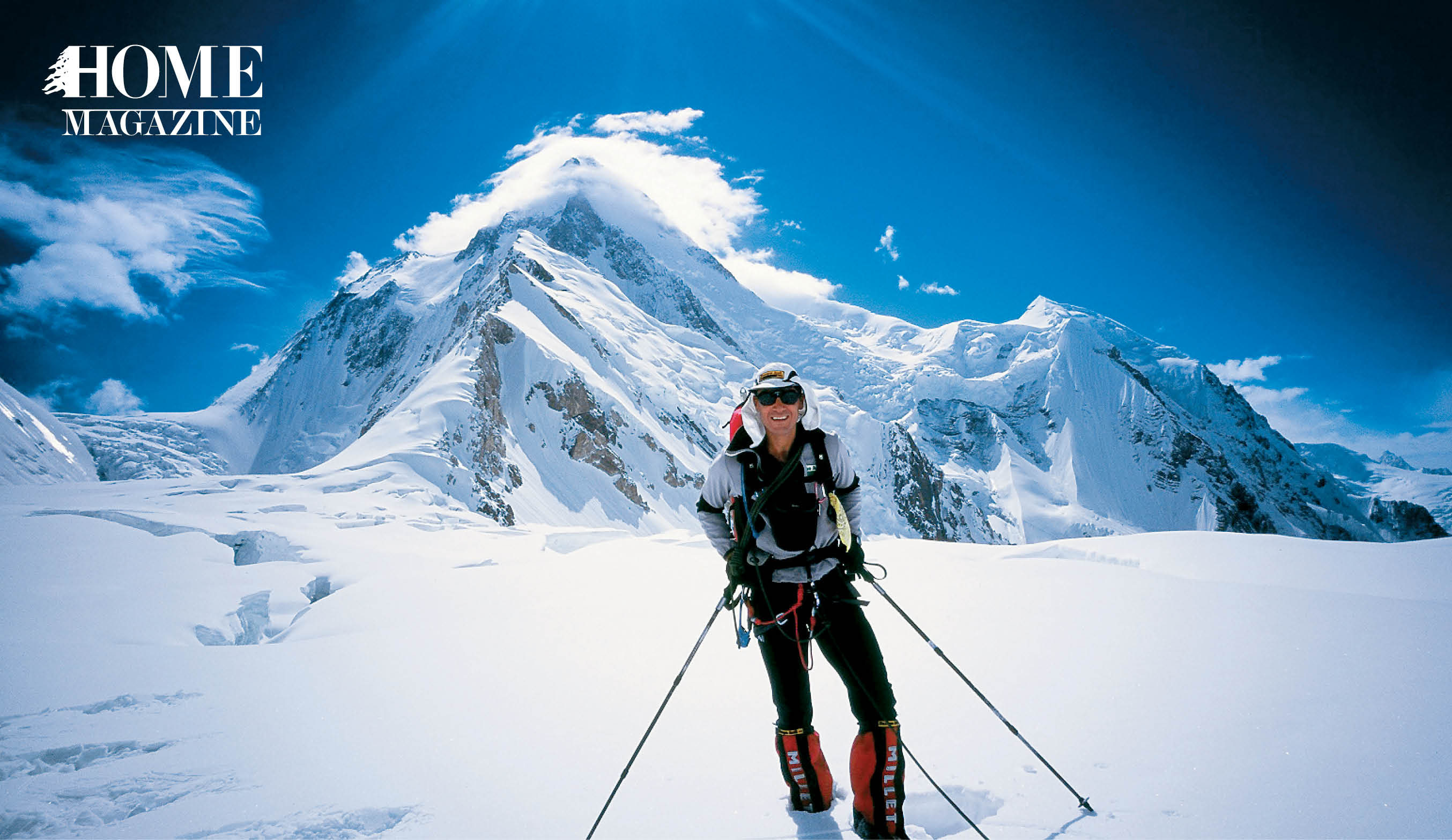
Extreme mountaineer. Sports fanatic. World record breaker. Author. Motivational speaker. Activist. Educator. Be it by mountain, desert or ocean, Maxime Chaya epitomizes the modern-day adventurer.
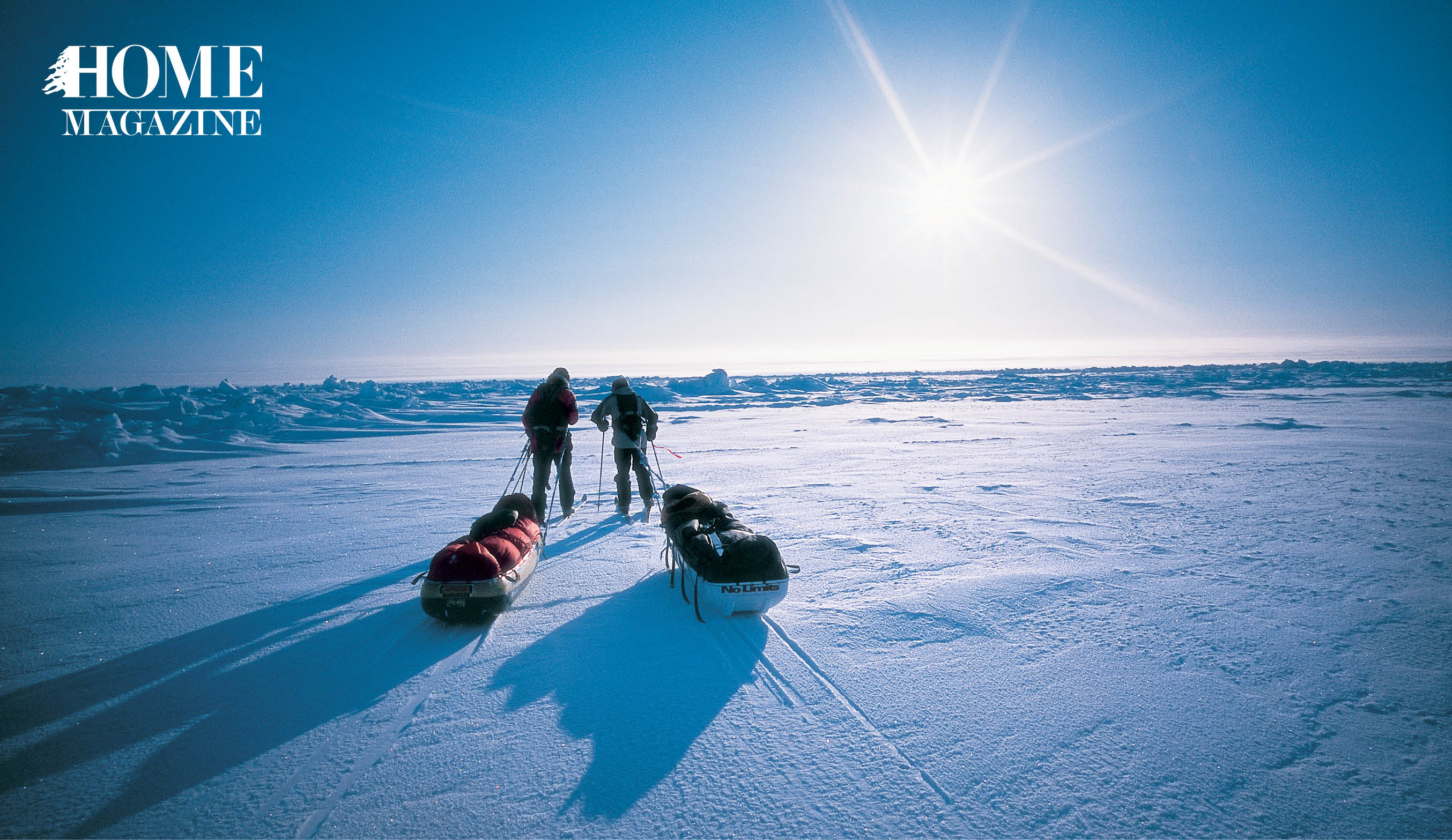
Record-breaking daredevil Maxime Chaya became the first Lebanese to reach the highest peaks of each continent, known as the Seven Summits. In the Three Poles Challenge, Chaya journeyed across the North and South Poles and climbed Mount Everest. In a death-defying feat that few dare to dream of, Chaya and crew traversed the Indian Ocean, the world’s most dangerous ocean, by rowboat. The poly-athlete became the first person to ever cycle the largest sand desert in the world, the Empty Quarter (or Rub’ al Khali) which spans across Saudi Arabia, Oman, the United Arab Emirates and Yemen.

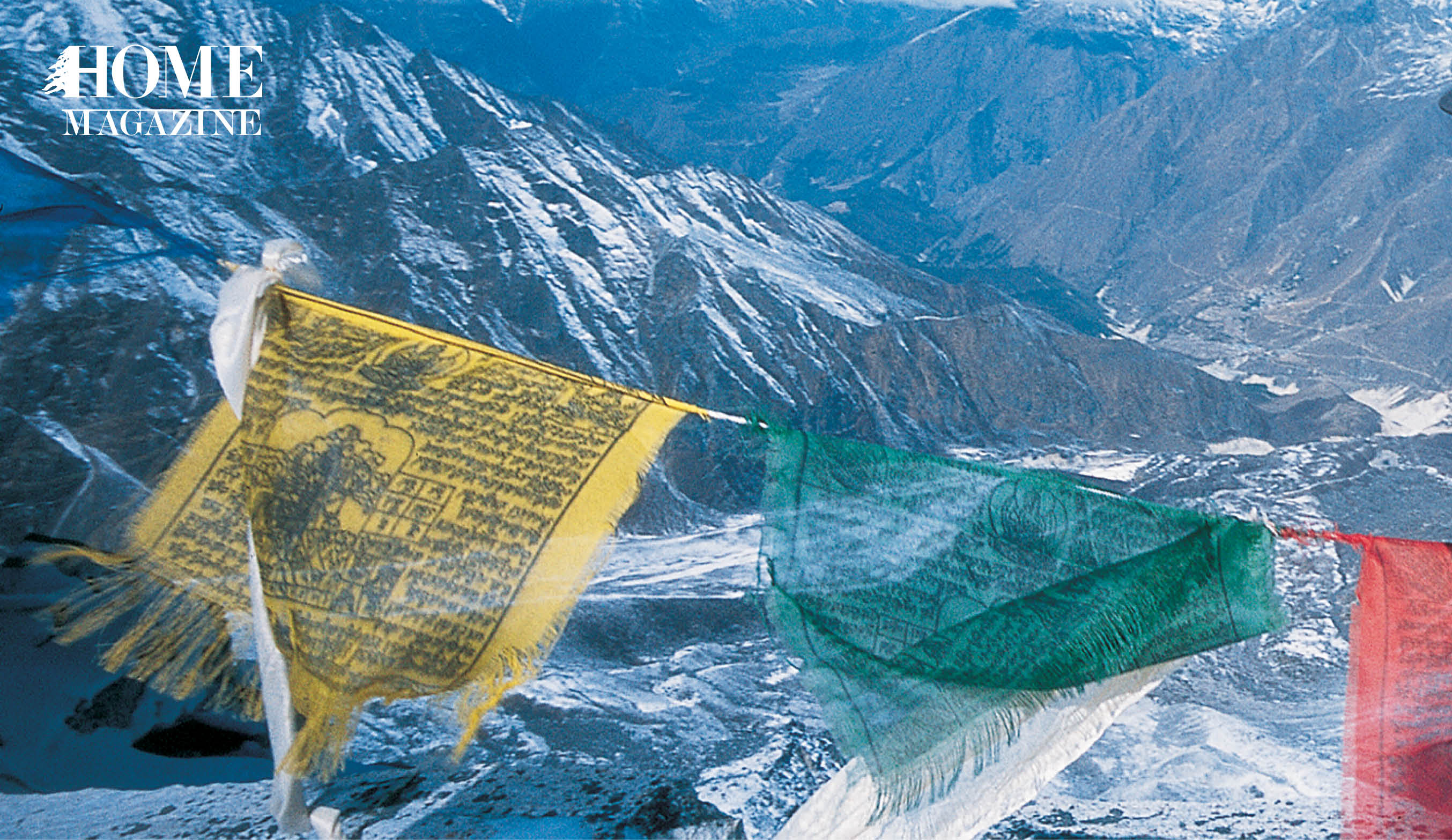
A forest of pine trees encircles Baabdat, his residence in Mount Lebanon. Our host warmly welcomes us into his HOME around noon, having just spent the morning skiing the surrounding mountains— mind you, no ski lifts in sight. Behind him is a string of colorful prayer flags, the type typically tied at Everest Base Camp for good luck. A flood of natural light seeps into his living room, complementing Chaya’s infectiously bright outlook on life. The space also showcases his love of mountaineering. Oil paintings of summits adorn his walls, and a copy of his autobiographical book, Steep Dreams: My Journey to the Top of the World, sits on his coffee table.
“More men have walked on the moon than boats have been rowed across the Indian Ocean.”
His younger years
To understand how he reached these dizzying heights, we traced the trail back to the bottom of the mountain. “I grew up during the Lebanese Civil War and wasn’t able to pursue competitive sports early on,” he reflects. It wasn’t until he moved to Canada at the age of 10 that he began tapping into his potential as a young athlete, dividing his time between football, basketball, hockey, squash and tennis. He would visit Lebanon several times each year throughout his youth, maintaining a connection with his HOME.
Steep dreams
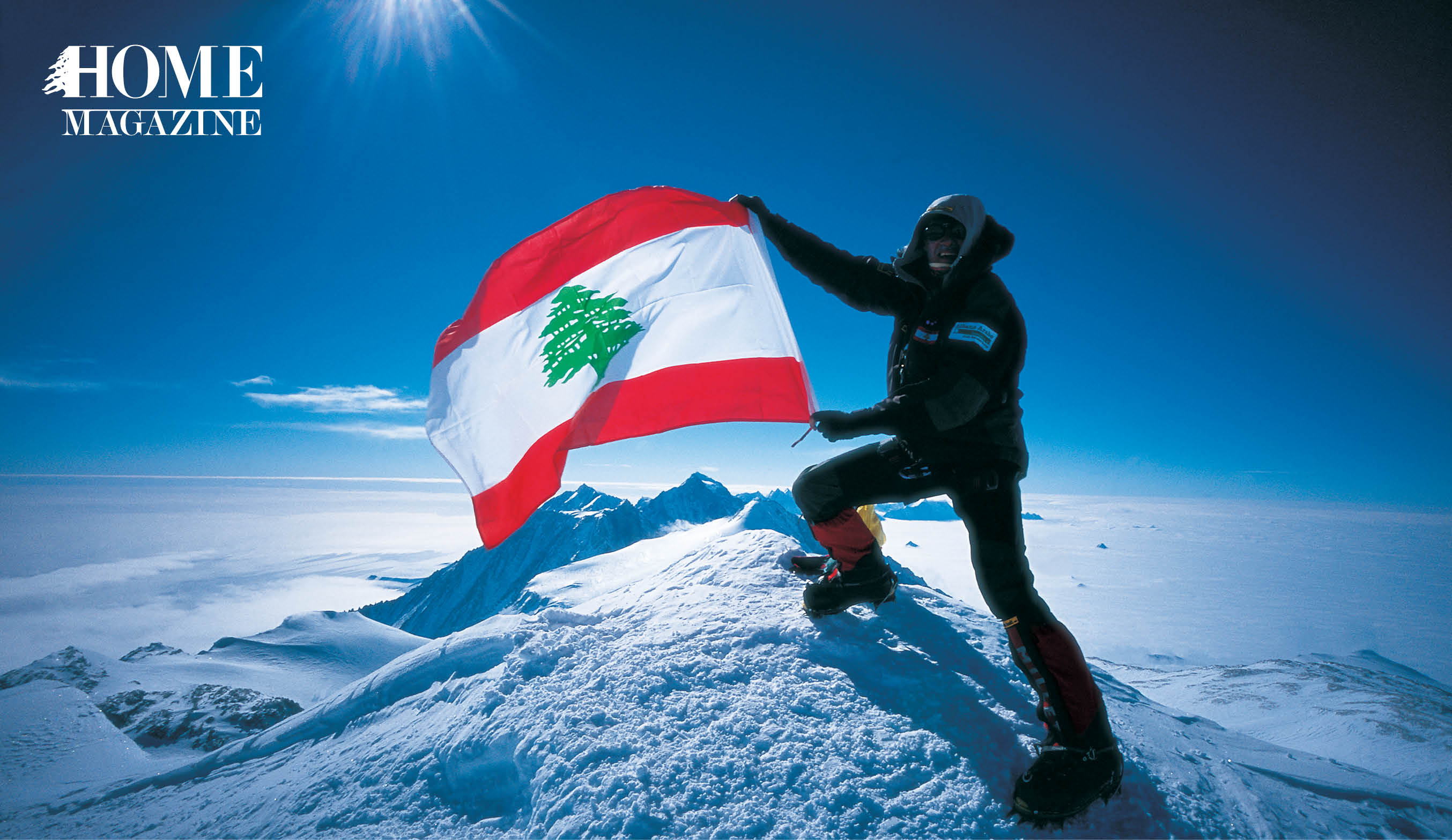
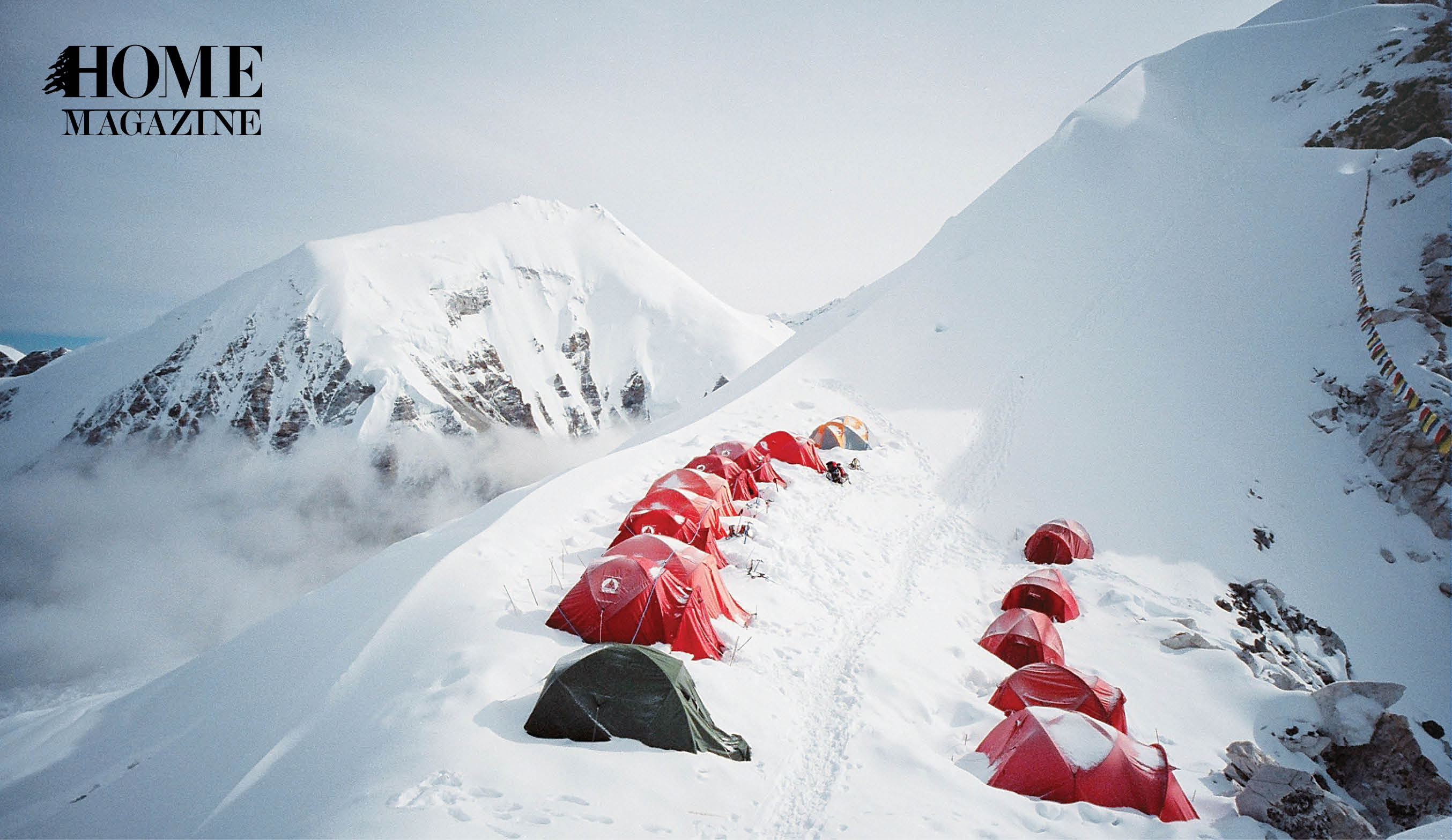
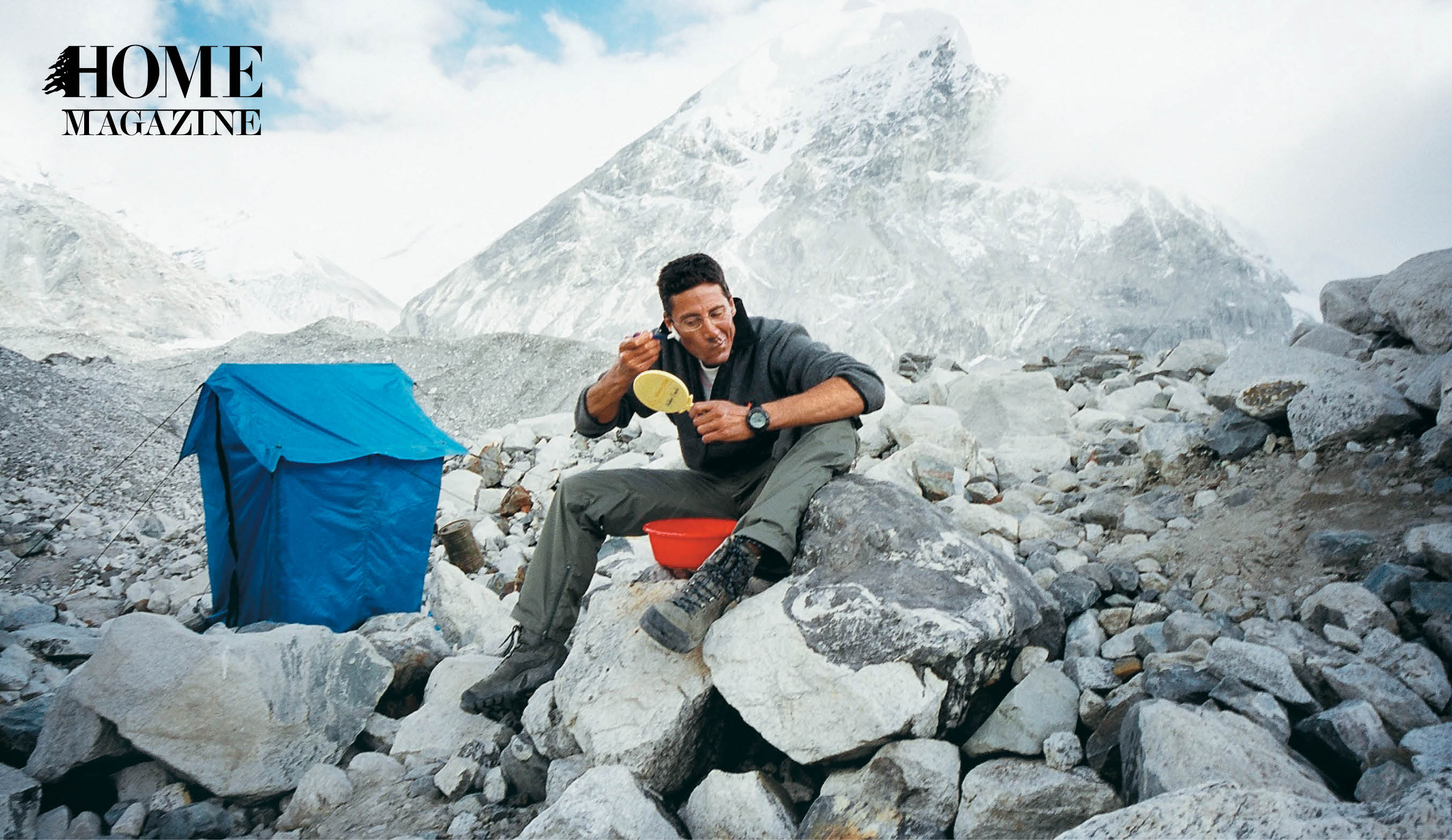
Fast forward many years and Chaya is competing in an international bike race in Kenya. After winning, the organizer invited him to take on Tanazania’s Mount Kilimanjaro, the highest summit in Africa. “This experience introduced me to the high mountains and to myself,” he says, savoring his first taste of mountaineering. Upon reaching the world’s highest and most famous summit, Mount Everest, Chaya planted the Lebanese flag. These expeditions replenished him with gratitude for everyday pleasures. “On the mountain it takes the good part of an hour to chip ice and melt it to drink tea,” he says, as he pours chamomile tea from a white teapot. “I no longer take anything for granted, not even a ray of sunshine.” While climbing, he meets the required daily 5,000-calorie intake by consuming dehydrated food (the type astronauts eat in space), dried fruit, nuts and chocolate. “I ate more chocolate during my Indian Ocean crossing than I’ve eaten in my whole life!” he says. “On expeditions, you quickly learn that the best chef is hunger.”
Shape-shifting desert dunes
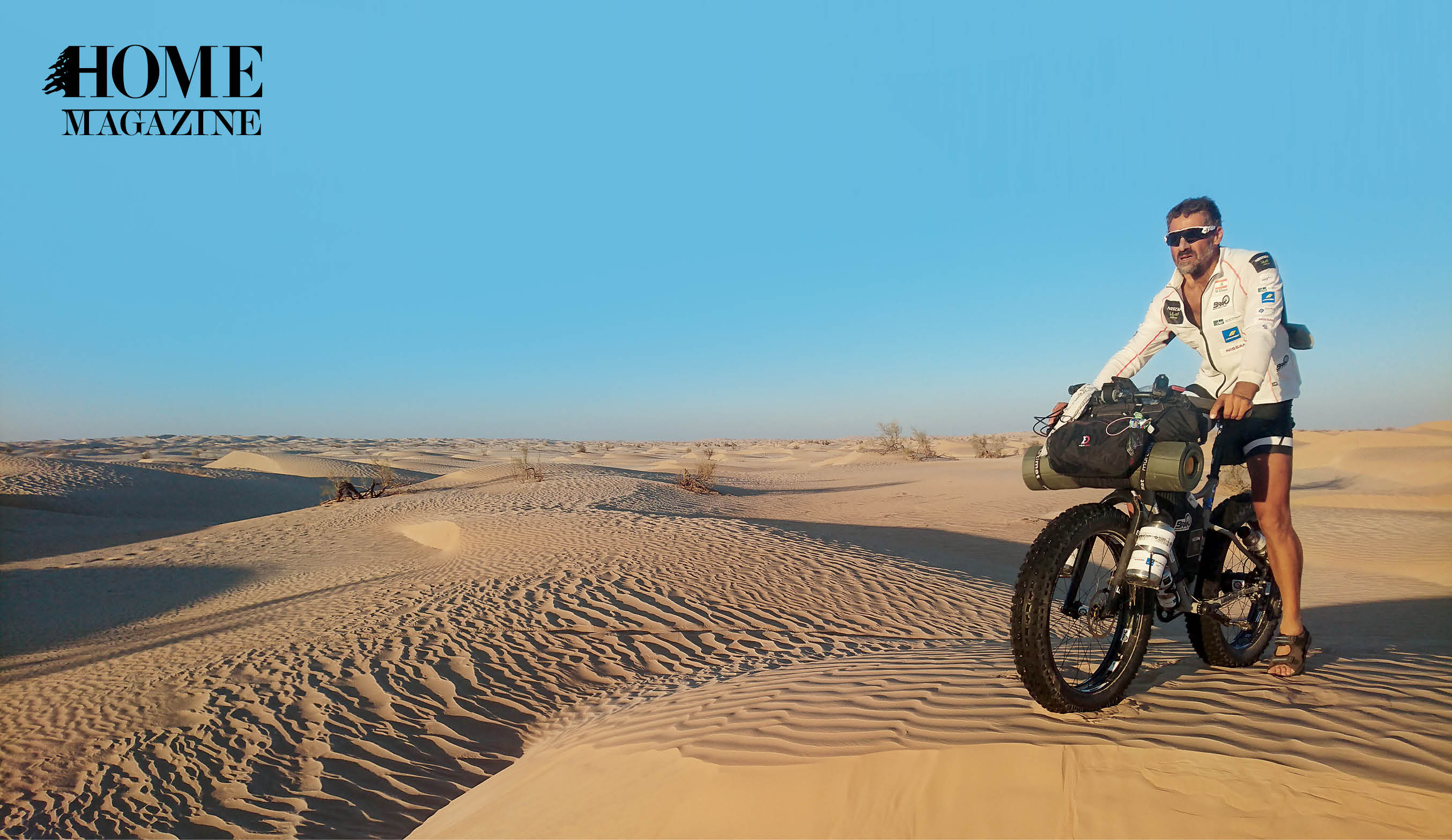
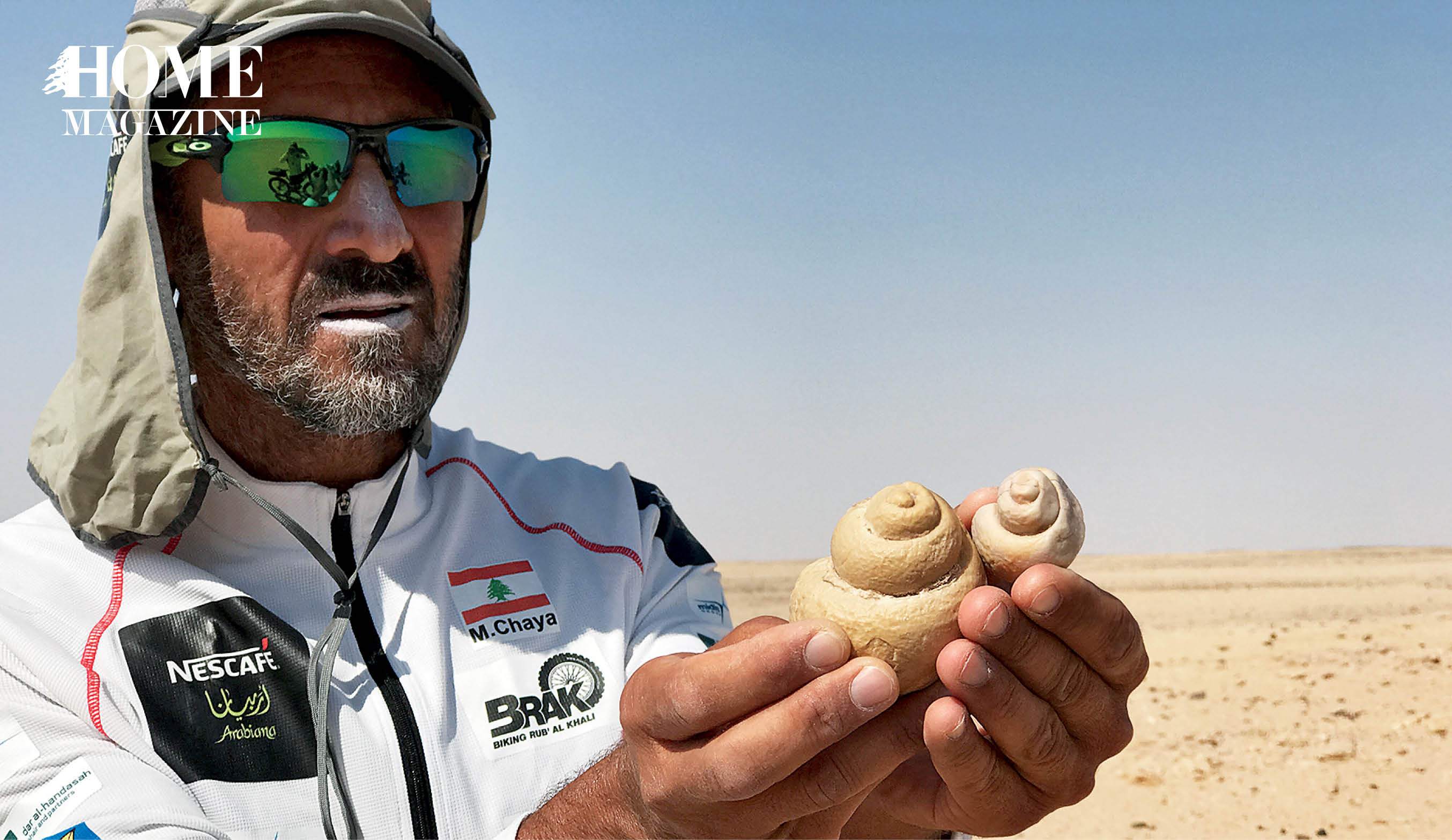
Parked in his basement workshop is the same fat bike (push bike, that is) that accompanied him on his journey across the Rub’ al Khali. “I am deeply in love with the desert,” he says. “People think the desert is monotonous but it’s not. The dunes are sculpted and re-sculpted daily, even hourly. The shades of beige, brown and grey are amazing.” On long, drawnout expeditions, Chaya rediscovered something that has been driven away from the world: silence. A passage by St. Exupery’s The Little Prince expresses his appreciation for tranquility among the dunes: “I have always loved the desert. One sits down on a desert sand dune, sees nothing, hears nothing. Yet through the silence something throbs and gleams.”
Surviving the ocean’s rage
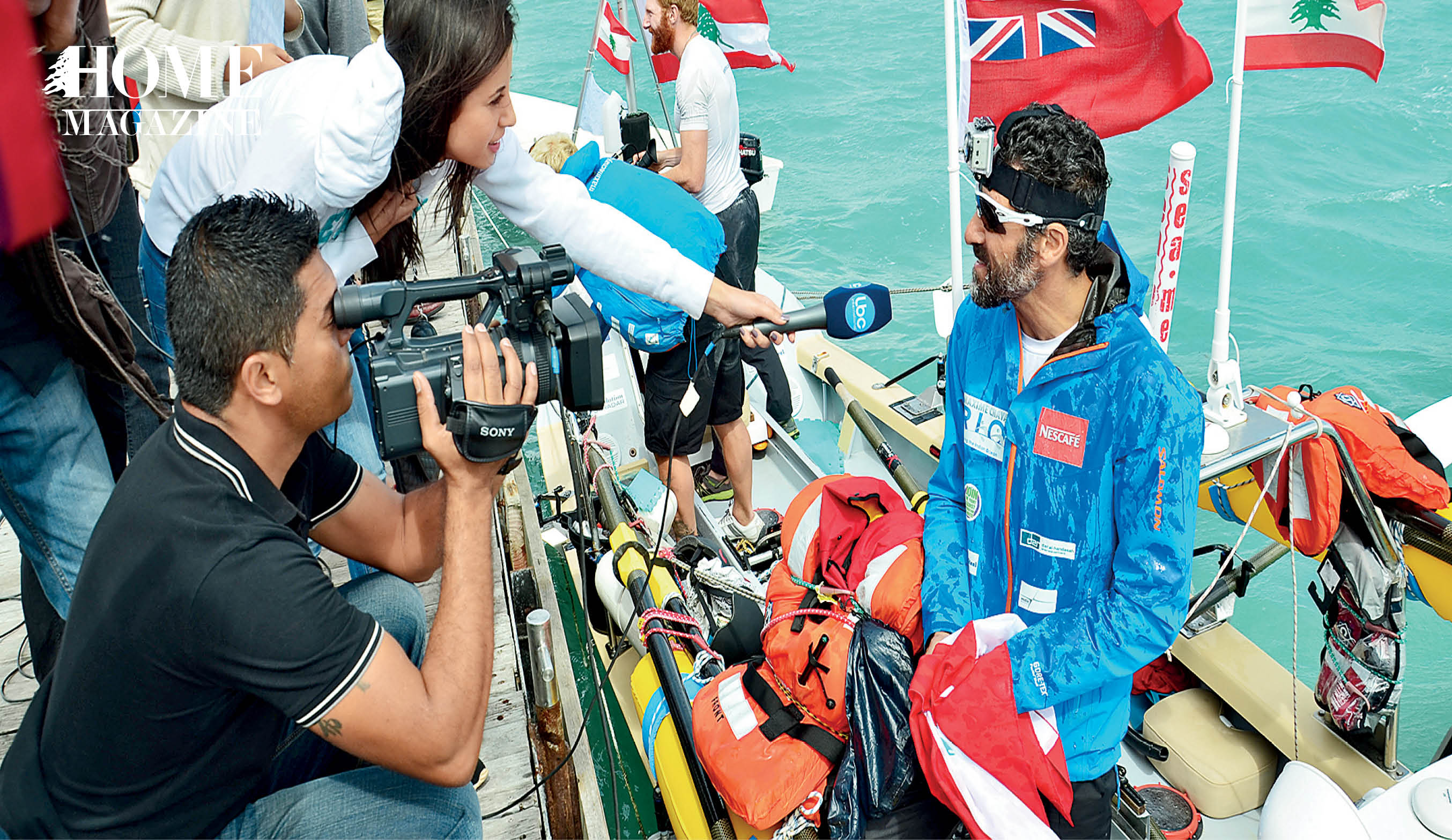
“Someone challenged me to row an ocean so I took them on their bet,” says the adrenaline junkie about his most dangerous adversary, the Indian Ocean. “More men have walked on the moon than boats have been rowed across the Indian Ocean.” This hostile body of water harbors 20-meter high waves that threaten to capsize even large ships. “If you fail, you fail in a big way and never come back. It was, until then, my greatest challenge.”
En route, him and his crewmates practiced polyphasic sleep, or breaking up a full-night’s sleep into two-hour naps. A raging storm broke the daggerboard, a critical part of the boat responsible for maintaining balance. To illustrate his experience, Chaya points to that very same broken daggerboard, mounted on his wall, reappropriating it as a symbol of strength. Despite three close brushes with death, Chaya, along with team members from the Faroe Islands and the United Kingdom, set a new speed record for the fastest time to row across the Indian Ocean at 57 days, 15 hours and 49 minutes. They are also the first team of three to row across any of the world’s oceans.
“On long, drawn-out expeditions, Chaya rediscovered something that has been driven away from the world: silence.”
Things take time
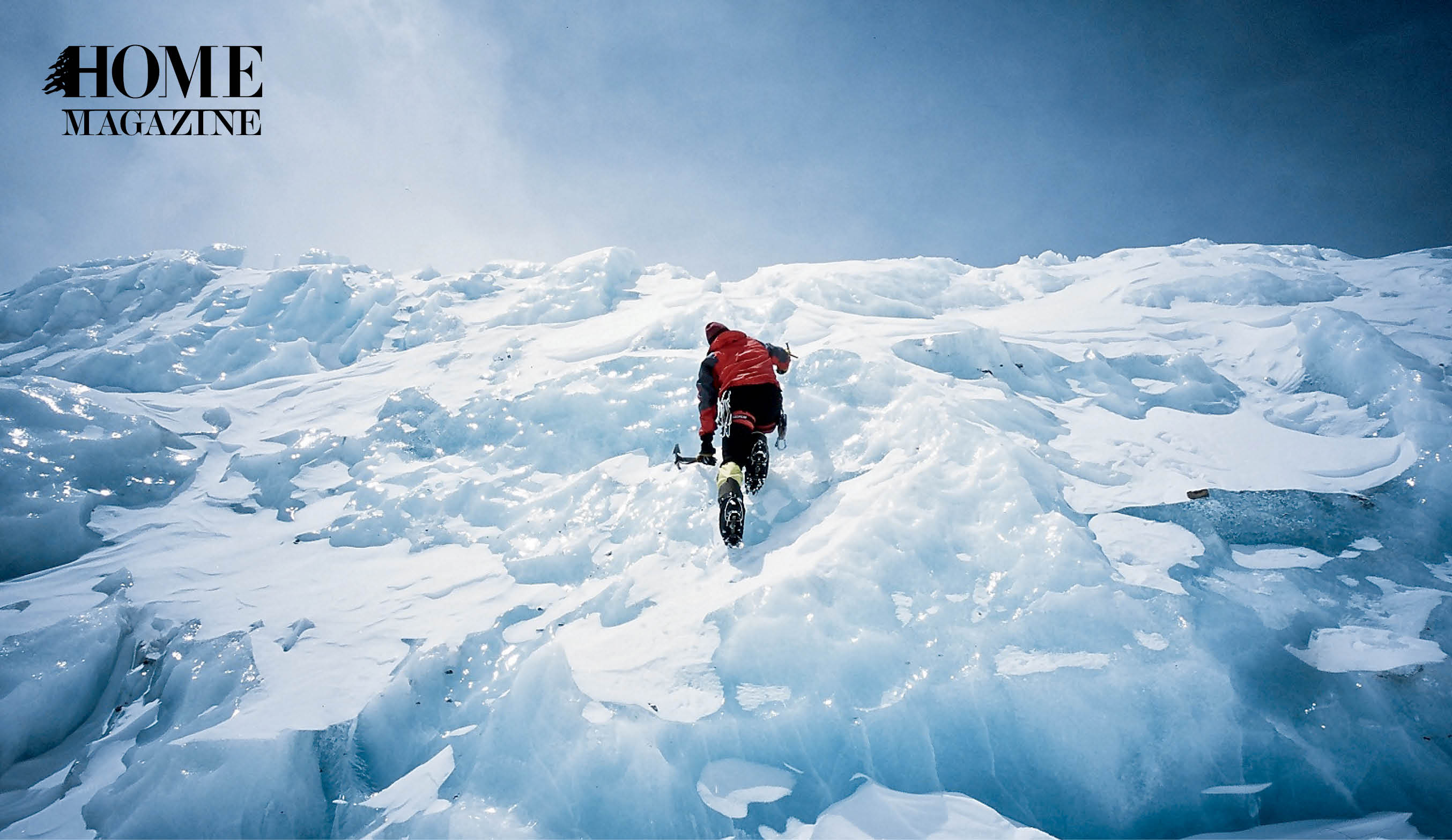
The film industry vividly illustrates the real-life misadventures of mountaineers in films such as Everest (2015) and Touching the Void (2003). Bone-chilling temperatures coupled with high altitudes have caused countless climbers to succumb to frostbite, snow blindness, hypothermia and worse. Being crushed by a car-sized ice block or buried beneath a high-speed avalanche are fates that climbers should be prepared to face. There are no shortcuts to the top. “I always like to say ‘TTT,’ or Things Take Time,” he offers. “Driving a Formula 1 car or performing heart surgery are both dangerous for an inexperienced person, but the more you practice, the less the risk. I climbed 15 expeditions before taking on Mount Everest.”
Does the fear of mortality decrease with time? “No. Everyone is afraid of death. I have friends who have died, especially while climbing K2, arguably the world’s most dangerous mountain,” he says. “I witnessed someone dying on my descent from Everest and cried like a baby. There was nothing that I could do to save them.”
Despite the perils, Chaya always gloriously survived to tell the tale. In characteristic humility, he points out, “Some people thought I was invincible, but I invariably reminded them that this is simply not true.”
Despite the high risks entailed, his ex-wife and two children always supported his mind-bending quests. To reconcile their fears, he asked them not to worry if they didn’t hear from him for extended periods: “Since bad news travels fast, no news is actually good news,” he explains.
On sparking inspiration
Chaya regularly gives motivational talks. He recently released a comic book titled Maximum Max, which raises awareness about environmental concerns in Lebanon. “Every single one of us should find what it is that we are best at and pursue it all the way. There’s an Everest for everyone,” he says with urgency in his voice and a twinkle in his eye.
Climbers will be happy to know that Everest hosts nearly 500 alpinists at its peak (yet discouraged to find out that the minimum cost is $45,000 USD per climb). Chaya encourages aspiring climbers to look for sponsorship. “The Maroun Chammas Fund will be giving away 1 million USD for sports and technology over the next decade,” suggests Chaya, a current board member of the fund.
And being inspired
The resulting fame propelled Chaya to meet some of the world’s leading inspirers, beginning with the Dalai Lama whom he shared a private meeting with in India. “Although he appears to live a simple lifestyle, you can truly feel the magnetism of his presence,” he remembers. He speaks of his friend Jamil Mouawad, Nobel Peace Prize nominee and former president of Ecuador, and fellow athletes Borge Ousland and Rich Roll, with the highest regard. Reminiscing on a life well-lived, he pitches his philosophy in a conclusive statement: “I’ve achieved so many of my ambitions that if I were to die tomorrow, I’d still be happy.”
“I no longer take anything for granted, not even a ray of sunshine.”
A few thoughts on Lebanon
Chaya speaks of his country with a mixture of disappointment and frustration. “Lebanon would be nothing without its people. Yet we cannot seem to operate well as a team, which is a big shame,” he says with furrowed brows, “I really hope we can find a way to leave a good legacy for future generations, especially with regard to the environment.”
“When foreigners come to visit, I show them Beirut, the sites and the clubs. But then I show them my Lebanon,” he adds. “I was skiing with ambassadors at La Grande Coulée in Sannine and they couldn’t believe how lucky we are to have the sea within such close proximity to the slopes.” In a recent press conference, Chaya affectionately referred to Lebanon as “my small country with the giant heart.”

Alfa Patrouille des Cedres
To the delight of Lebanese ski enthusiasts, Chaya will reintroduce backcountry skiing to Lebanon on March 3, 2019. Backcountry skiing, as opposed to alpine skiing, is skiing in the unmarked or unpatrolled areas of a mountain range, typically outside the boundaries of a ski resort. The challenge comes from skiing uphill and then down, where ski lifts don’t exist.
With the support of the Lebanese Army’s Ranger Regiment, Alfa Patrouille des Cedres invites participants to march uphill and ski downhill in these unmarked—or offpiste— areas. There will be two course distances: one for civil teams and the other for military teams. The competition begins in Kfardebian Faraya and finishes at Zaarour Club, passing through beautiful Sannine along the way. This competition is inspired by the historic Swiss race, Patrouille des Glaciers,that kickstarts in Zermatt every two years and has been an ongoing tradition since 1943. For non-skiers wishing to participate, a snowshoe race comparable to a half-marathon will be organized by the Beirut Marathon Association inside Zaarour Club. All proceeds from the registration fees will be donated in full to the families of the Lebanese Army Martyrs Fund.
“Standing on a summit as being physically and mentally closer to God, whoever He or She is.”
Here and now
At 57-years-old, and in better shape than most can wish for at half his age, he muses about athleticism, age and ambition. “I still train every day, and if I happen to skip a day, I feel terrible,” he says. “I am aware that my body will fail at some point, it cannot last forever. It is a bit silly and bizarre that I still feel like waking up early and giving myself a hard time almost every day.”
Chaya describes standing on a summit as “being physically and mentally closer to God, whoever He or She is.” His pronoun choice speaks to his progressive gender politics. “Men are bigger and stronger but women are often more capable and resilient. Think of the lion family. The lion king eats his cubs while the lioness hunts for them and cares for them,” he states. “I’d like to see women participate more actively in the decision-making processes of my country. The new government includes four women, an unprecedented number. So maybe we are on our way to achieving that after all.”


HOMEland THEMES
Coming Soon
HOMEland Events & Collaborations
Coming Soon
 Signature Boutique