
HOMEland
Coming Soon
HOMEland Events & Collaborations
Coming Soon
 Signature Boutique


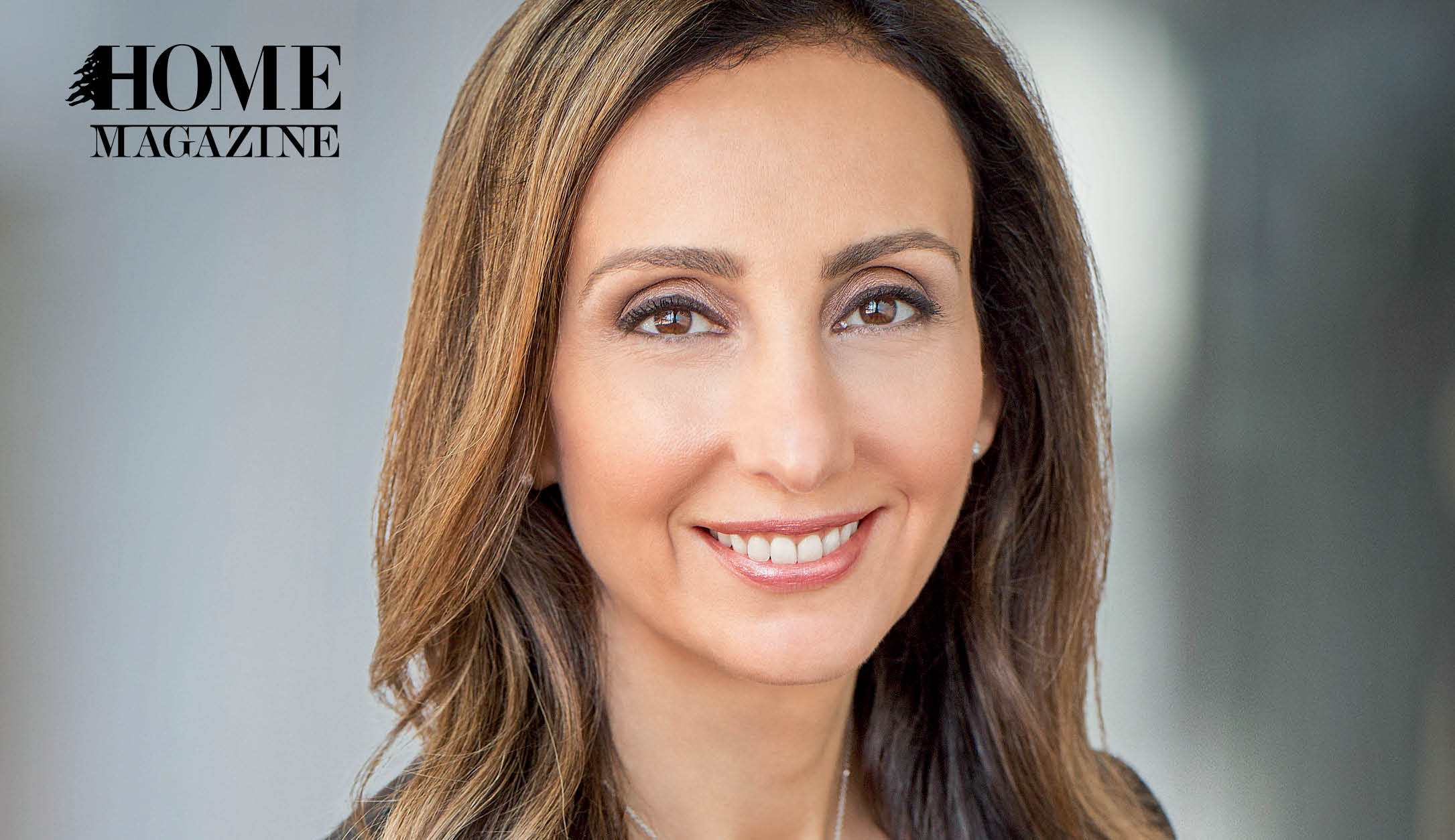
Maysa Jalbout, CEO of the Abdulla Al Ghurair Foundation for Education
Rana Nawas has made it her job to know amazing women. As the host of When Women Win, a weekly podcast that inspires and educates women around the world by introducing them to powerful role models, and president of Ellevate Dubai, a professional women’s network, she meets the best of the best.
So, if asked to choose one outstanding woman’s story to share with HOME, whom would she pick? Her answer – Maysa Jalbout. Why? Read on to find out.
As president of Ellevate Dubai, a leading network of female powerhouses, I have had the opportunity to meet and connect with incredible women on a regular basis. When I realized that most women around the world do not have the same opportunity, I decided to create a platform to make available to them these enriching conversations with game-changing women. And so, When Women Win was born. Through this weekly podcast, inspirational women share their eye-opening stories, deep insights and practical tools.
I often get asked how I choose who to bring on the podcast. There is a secret sauce to this. One of the many factors the content strategy team considers is that those selected must be women of tremendous expertise and impact. One such woman is Maysa Jalbout.
Maysa is the founding CEO of the Abdulla Al Ghurair Foundation for Education – the largest private foundation in the Arab world with a mandate to educate more than 15,000 youth from across the Arab world in 10 years. To date, the foundation has sponsored more than 750 students at some of the best universities in the region and abroad.
In fact, Maysa has dedicated her entire career to helping disadvantaged children and youth around the world through education and employment programs. She was a Palestinian refugee who lived in Lebanon until she was 16, when she moved to Canada just before her senior year of high school. Maysa explained in the podcast that being a refugee had a profound impact on her thinking about education, leading her to see it as a right rather than a privilege. She is aware that her private school studies in Lebanon and the opportunity to pursue higher education in Canada, where the quality of education is excellent, was something many other refugees were not able to do.
In the last decade, she founded the Queen Rania Foundation for Education, where she served as director of research and strategy and was later CEO. She worked with international organizations to find education solutions for refugees in Lebanon, Jordan and Turkey; and carried out regional level education research with the world’s leading think tank – The Brookings Institution, a non-profit public policy organization that conducts research to contribute to solving problems facing society at the local, national and global level. She is also on the board of governors of the International Baccalaureate (IB), an international foundation based in Geneva, Switzerland, that offers IB programs for primary through secondary students.
“She founded the Queen Rania Foundation for Education, where she served as director of research and strategy and was later CEO.”
Previously, Maysa worked for the government of Canada for 10 years as assistant director for the Social Policy Directorate and as senior advisor for the Education Group at the Canadian International Development Agency. She has a master’s degree in distance education from Athabasca University and a bachelor’s degree in sociology from McMaster University in Ontario.
Two years ago, she took on her current role as the founding CEO of the Abdulla Al Ghurair Foundation for Education and started building relationships across the region. The American University of Beirut (AUB) was one of its first partners. The foundation has funded more than 100 science, technology, engineering and mathematics (STEM) students from Lebanon and the region. Al Ghurair STEM Scholars at AUB are among the strongest group of students in the program. They are not only high achieving. They are also among the most resilient, coming from diverse backgrounds and overcoming some of the greatest challenges a young person can face. The program gives equal opportunity to young women and men.
Every scholar has an inspiring story but here are two examples of young women who are excelling:
Safaa, a Palestinian scholar from Nahr el-Bared refugee camp in northern Lebanon, is determined to be a leading mathematician and educator. She is now excelling in her major of applied mathematics at AUB, with an impressive GPA of 97 over 100 in her first year. Safaa is not spending all her university time studying, though, and is already volunteering with three different NGOs, tutoring disadvantaged children and assisting patients with access to vital medical treatment. She is also a member of the Lebanese Red Cross and one of the most active scholars, independently reaching out to mentors and other scholars in the program to make the most of her university experience. Her sister is also a scholarship recipient at AUB and her brother is an aspiring engineer at a local university in Beirut. In the future, Safaa wants to use her skills and passion to contribute to poverty alleviation projects in Lebanon and teach young mathematicians within her community.
Samira is a Lebanese scholar studying biology as a pre-medical student at AUB. Among the top of her class with a rare GPA of 92 in her major, Samira has also been a leader among her peers, actively participating in numerous health and literacy clubs on campus from day one, and is a valuable volunteer at the Children’s Cancer Center in Lebanon. Samira also lends support to the foundation, helping with outreach activities to young, ambitious youth like herself who need scholarship opportunities. Earlier this year, she took part in the foundation’s initial on-boarding for the new group of AUB scholars in 2018, helping orient students within the scholarship program and university, and sharing her positive experience and learnings.
Rana Nawas can be found at:
http://www.rananawas.com or on LinkedIn and Instagram @RanaNawas.
http://www.alghurairfoundation.org
Signature Boutique
Lebanon, in your inbox


HOMEland Magazine
We firmly believe that the internet should be available and accessible to anyone, and are committed to providing a website that is accessible to the widest possible audience, regardless of circumstance and ability.
To fulfill this, we aim to adhere as strictly as possible to the World Wide Web Consortium’s (W3C) Web Content Accessibility Guidelines 2.1 (WCAG 2.1) at the AA level. These guidelines explain how to make web content accessible to people with a wide array of disabilities. Complying with those guidelines helps us ensure that the website is accessible to all people: blind people, people with motor impairments, visual impairment, cognitive disabilities, and more.
This website utilizes various technologies that are meant to make it as accessible as possible at all times. We utilize an accessibility interface that allows persons with specific disabilities to adjust the website’s UI (user interface) and design it to their personal needs.
Additionally, the website utilizes an AI-based application that runs in the background and optimizes its accessibility level constantly. This application remediates the website’s HTML, adapts Its functionality and behavior for screen-readers used by the blind users, and for keyboard functions used by individuals with motor impairments.
If you’ve found a malfunction or have ideas for improvement, we’ll be happy to hear from you. You can reach out to the website’s operators by using the following email
Our website implements the ARIA attributes (Accessible Rich Internet Applications) technique, alongside various different behavioral changes, to ensure blind users visiting with screen-readers are able to read, comprehend, and enjoy the website’s functions. As soon as a user with a screen-reader enters your site, they immediately receive a prompt to enter the Screen-Reader Profile so they can browse and operate your site effectively. Here’s how our website covers some of the most important screen-reader requirements, alongside console screenshots of code examples:
Screen-reader optimization: we run a background process that learns the website’s components from top to bottom, to ensure ongoing compliance even when updating the website. In this process, we provide screen-readers with meaningful data using the ARIA set of attributes. For example, we provide accurate form labels; descriptions for actionable icons (social media icons, search icons, cart icons, etc.); validation guidance for form inputs; element roles such as buttons, menus, modal dialogues (popups), and others. Additionally, the background process scans all the website’s images and provides an accurate and meaningful image-object-recognition-based description as an ALT (alternate text) tag for images that are not described. It will also extract texts that are embedded within the image, using an OCR (optical character recognition) technology. To turn on screen-reader adjustments at any time, users need only to press the Alt+1 keyboard combination. Screen-reader users also get automatic announcements to turn the Screen-reader mode on as soon as they enter the website.
These adjustments are compatible with all popular screen readers, including JAWS and NVDA.
Keyboard navigation optimization: The background process also adjusts the website’s HTML, and adds various behaviors using JavaScript code to make the website operable by the keyboard. This includes the ability to navigate the website using the Tab and Shift+Tab keys, operate dropdowns with the arrow keys, close them with Esc, trigger buttons and links using the Enter key, navigate between radio and checkbox elements using the arrow keys, and fill them in with the Spacebar or Enter key.Additionally, keyboard users will find quick-navigation and content-skip menus, available at any time by clicking Alt+1, or as the first elements of the site while navigating with the keyboard. The background process also handles triggered popups by moving the keyboard focus towards them as soon as they appear, and not allow the focus drift outside it.
Users can also use shortcuts such as “M” (menus), “H” (headings), “F” (forms), “B” (buttons), and “G” (graphics) to jump to specific elements.
We aim to support the widest array of browsers and assistive technologies as possible, so our users can choose the best fitting tools for them, with as few limitations as possible. Therefore, we have worked very hard to be able to support all major systems that comprise over 95% of the user market share including Google Chrome, Mozilla Firefox, Apple Safari, Opera and Microsoft Edge, JAWS and NVDA (screen readers).
Despite our very best efforts to allow anybody to adjust the website to their needs. There may still be pages or sections that are not fully accessible, are in the process of becoming accessible, or are lacking an adequate technological solution to make them accessible. Still, we are continually improving our accessibility, adding, updating and improving its options and features, and developing and adopting new technologies. All this is meant to reach the optimal level of accessibility, following technological advancements. For any assistance, please reach out to