For three decades, Lebanese Mexican Habib Chamoun-Nicolas, Ph.D., has engaged in negotiation and business development activities in diversified sectors — oil and gas, petroleum, petrochemical, chemical, industrial, and commercial. He has trained thousands of business professionals on sales, negotiation and conflict resolution, as well as authored four books and numerous articles.
Article by: Anna Cecilia Juri Feghali
In an interview with HOME, he shared insights from his rich experience.
Tell us about your Lebanese heritage.
I lived in Mexico in my childhood. My grandparents from my mother’s side, as well as my father, came from Lebanon to Mexico looking for opportunities in America. I don’t believe everyone knew exactly where they were landing. Some were arriving in the United States and others in Mexico, the Caribbean and Latin America.
I remember when being Lebanese was not so nicely accepted. But after many successful Lebanese made their way into different areas of society, everyone wanted to have a Lebanese friend, including the Mexican President Adolfo Lopez Mateos, who said, “If you don’t have a Lebanese friend, you should find one.”
“If you don’t have a Lebanese friend, you should find one.”
How have the Lebanese diaspora contributed to Latin America?
I believe the Lebanese diaspora has contributed considerably in every aspect and Industry in the Americas — the USA, Mexico and Latin America — in all fields, business, government, science, arts, etc. It is amazing how successful the Lebanese are in whatever they set their minds to do. I am proud of the Lebanese, as long as the ego doesn’t get in our way.
What is the best decision you ever made?
To marry my wife Marcela Farah. She is Lebanese who was born in Mexico, and her family are Lebanese immigrants to Mexico. She is a great wife, mother, friend and the best thing that happened to me. She is my inspiration and the foundation of our HOME. As a result, we have great kids. I am proud of all of them.
What was your worst decision?
The worst in the eyes of others (not in mine) was, after completing post-doctoral studies in chemical and petroleum engineering, deciding to work in another field, teaching MBA courses in business and negotiation. What seems like a mistake to some has been a great blessing.
“It’s amazing how successful Lebanese are in whatever they set their minds to do. I am proud of the Lebanese, as long as the ego doesn’t get in our way.”
Let’s get into your professional strategies and philosophies. What is the crisis of being and having you talk so much about?
The crisis of “self” is when someone focuses on material things and forgets the essence of life. Happiness is reached with internal peace. When you are happy, you are peaceful, and you transmit that to others. You can be the richest person on earth, but deep inside you may be alone, unhappy and miserable. This doesn’t mean you don’t need the money or resources to make things happen and live a comfortable life. It means we cannot focus on money and material values.
How should an economic crisis be faced?
With hard work and technology. Also, having an austerity mindset is essential. We don’t need many things. We cannot get so attached to things. An economic crisis is the best time to prepare by studying, and looking for strategies and creative ways for the better times. It is better to prepare while others panic.
Is crisis a time of opportunity?
Definitely. Crisis presents an opportunity to do better and to change what we were doing that didn’t work.
How can one do business with ethics?
I don’t know any other way to do business. My parents taught me there is nothing more important than your last name. You cannot lose your reputation for a business; then you lose your reputation and the business.
You say we should look at profits differently. How?
We should redefine them. We should have an equation at the end of the year that measures not only how much profit is made, but also how many people benefited from the company’s goodwill and how much impact the company had on the community. If we redefine profit to include socially responsible actions, we will encourage companies to work for the benefit of all in the long run.
In your book, “Negotiate like a Phoenician” you say a negotiator should give more than others to win clients. But is it smart to give more than they expect?
By giving more, you create a reputation. For example, say you are my client, and I am teaching courses to your employees. We are negotiating about a teaching program, but I learn you have a company that leases heavy construction equipment. If I know someone who needs that type of equipment, contact them, and recommend your company, and I don’t expect any compensation, I may also get your business as a result.

Why do you use the Phoenicians as a model of good negotiators?
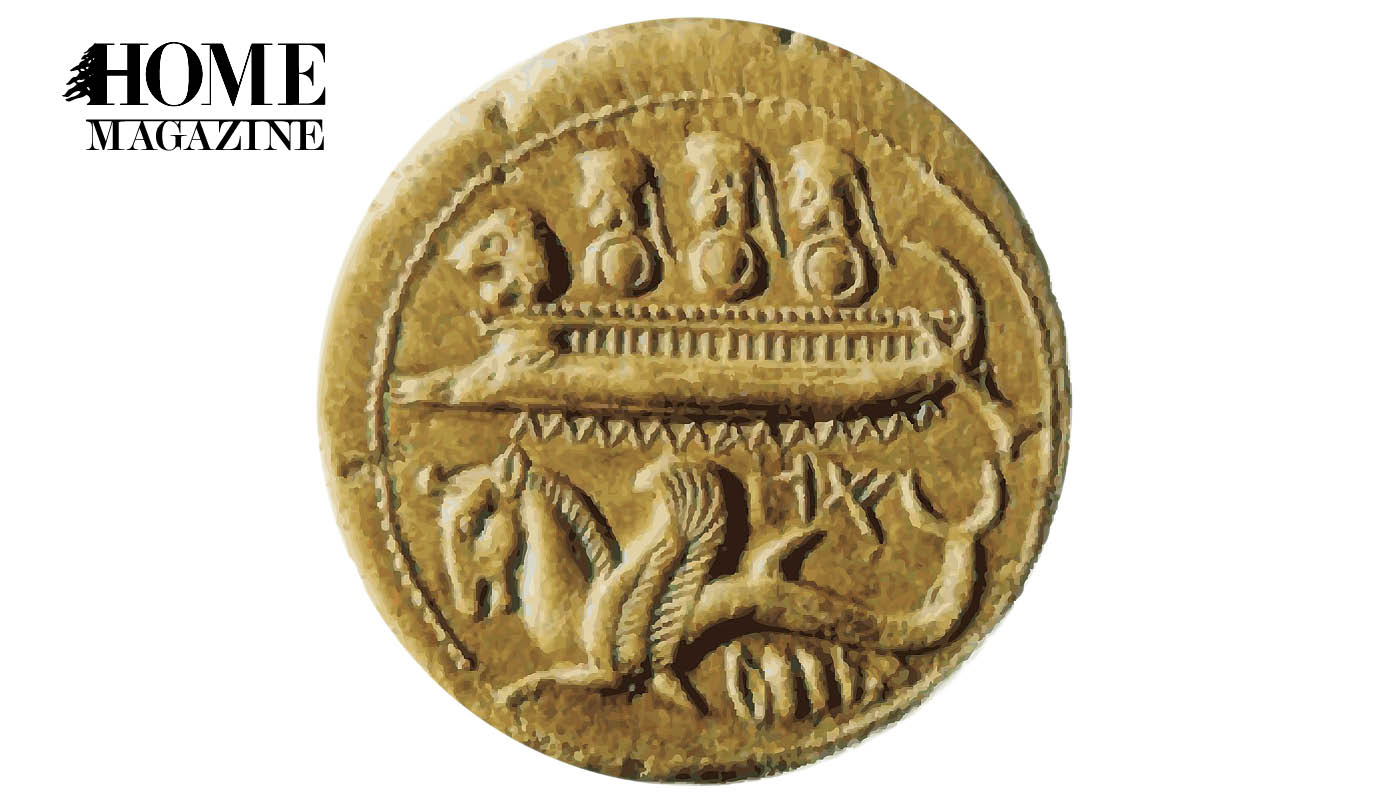
Ancient historians described the Phoenicians as great negotiators. They conquered the Mediterranean without war. If they wanted to reach a shore and there was no port, they built it. If there were no materials to build it, they became explorers and miners. Phoenicians went all the way through the chain of business to get to the final customer. They not only delivered the goods; they built the infrastructure.
Why negotiate like a Phoenician? How does this apply today?
Negotiating like a Phoenician is to be abundant with everyone, to be respectful and keeping your word on the deal. Don’t back down from your agreement. The ones that negotiate like a Phoenician are credible and reputable. Their word is worth gold and unbreakable.
What inspired this art of negotiation you teach?
I am inspired by the way our grandparents and parents used to do business. They were so honorable that just their last names were enough guarantee. We need to teach new generations to remember their origins.
Let’s talk a little about your other book, “Deal,” for which you were honored as Writer of the Year in 2005 in Houston. What does it explore?
I did research on how Mexicans negotiate as compared with Americans from the USA and Argentinians. It is important that culture doesn’t become a deal breaker, and rather a deal maker, in cross-cultural negotiations. It provides guidelines on how to prepare effectively for a negotiation.
You have said: “The mission of an entrepreneur is not to make money, it is to transform lives.” Explain.
To transcend in life is to make a mark, not in only one generation but trans-generationally. To do this we need to do what I have called “tradeables”— things that create leverage in the long term. Tradeables involve doing things for others without expecting anything in return. If you are good and generous to others, they will mark you as an example to follow.
What attracts you to work in the field of negotiation?
Negotiation is a problem-solving, multidisciplinary, challenging field. It applies everywhere, to everything. This is why I enjoy it so much.
Negotiate like a Phoenician
Phoenicians did business with a long-term approach. They were not interested in quid pro quo deals. They wanted to build goodwill that would last for generations.
The Phoenicians had a proverb, “Do well and throw it to the sea.” Chamoun’s interpretation of this has four points:
1 – The sea is so extensive, you won’t see who is benefiting from your goodwill.
2 – Nobody will see you, either.
3 – Because the sea is endless, you can never finish doing good.
4 – The sea is dynamic, so even if you don’t expect it, there will be a moment when the sea will return a great tsunami of love, happiness, wealth and health. Maybe you won’t see this, but your children or your children’s children will.

HOMEland THEMES
Coming Soon
HOMEland Events & Collaborations
Coming Soon
 Signature Boutique