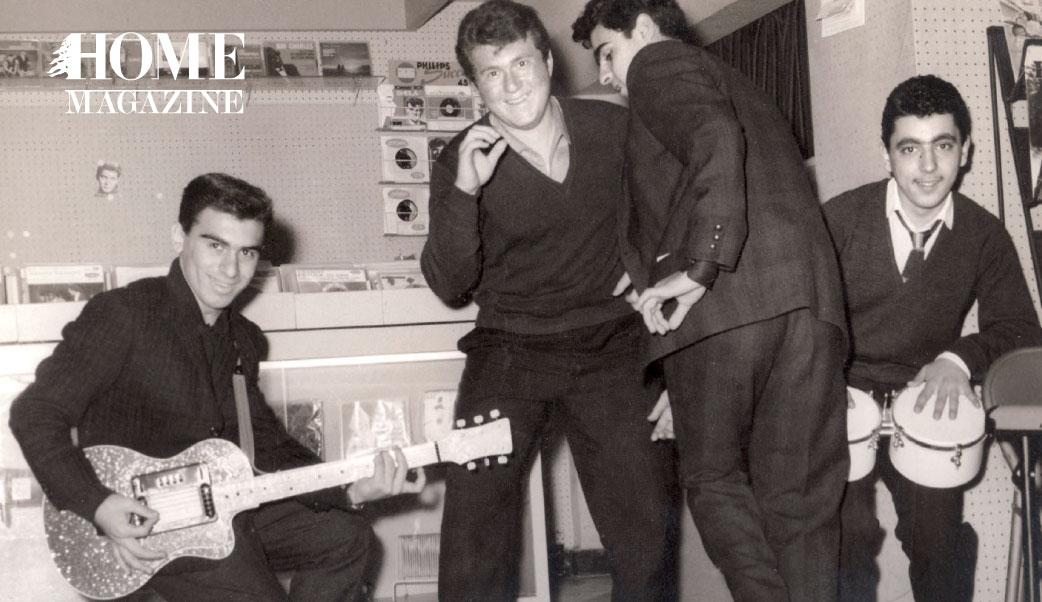
The cataloguing and sale of Arabic vinyl recordings by Diran Mardirian is bringing the region’s music to the world.
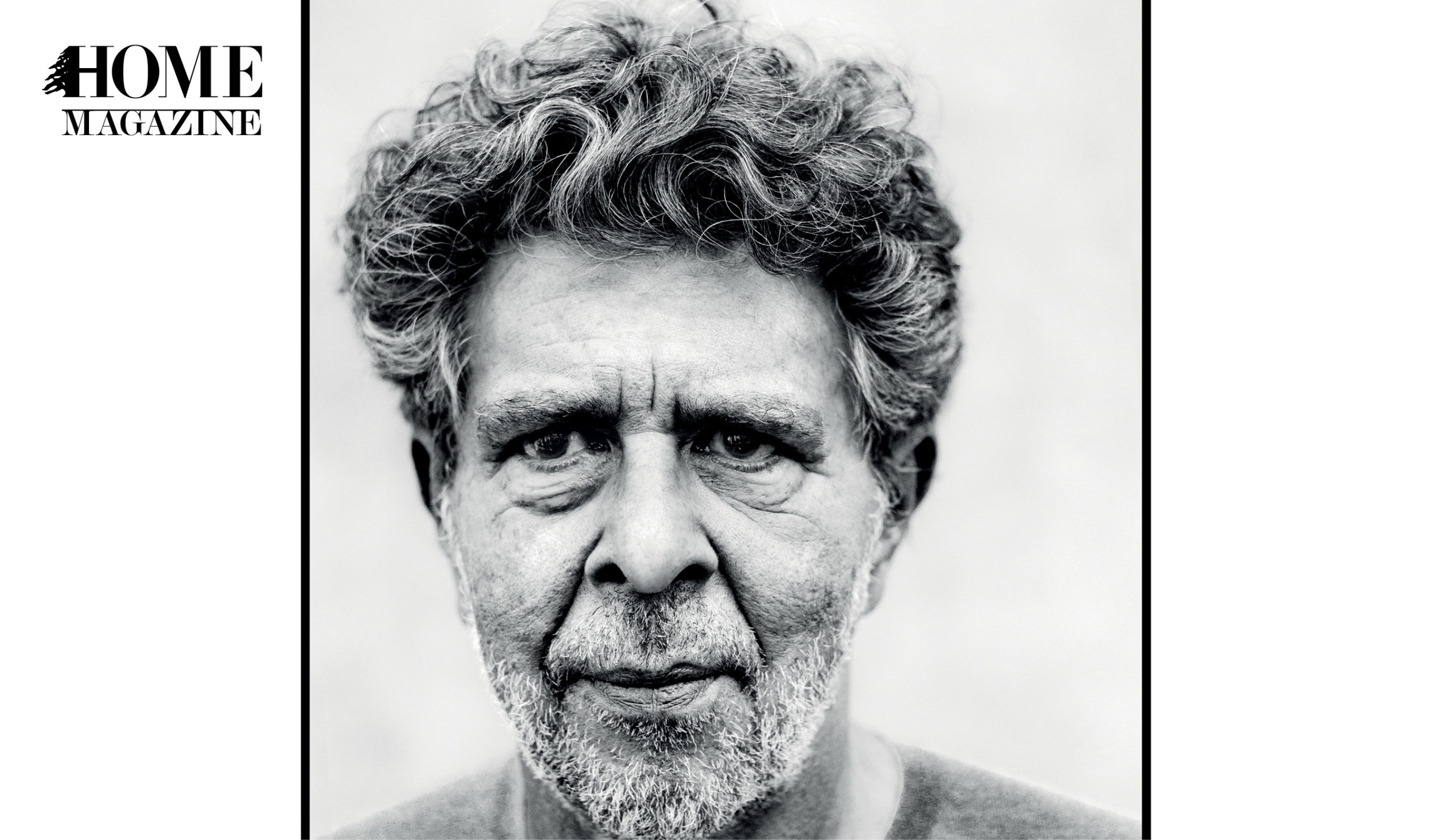
Among lovers of vinyl, Diran Mardirian is something of a hero. His record shop in Ras Beirut has variously been described as one of the best in the world and a Mecca for music enthusiasts. However, the refreshingly frank store owner says the accolades are a lot of “hype.”
Sipping coffee in front of Chico Music & Film, the store his father, Khatchik, established in 1964, Mardirian explains that his actual achievement is narrower, more Middle East focused. Specifically, he has “documented 1,500 Arabic titles on Discogs.” These titles include ones from “lesser known labels that release Syrian, folkloric and Bedouin music,” a genre that has yet to gain widespread appeal.
“The appeal has not been picked up yet because … percussion, beat-oriented music … is much more accessible to the Western ear,” Mardirian explains, and the Lebanese ear is “absolutely” Westernized. “That is part and parcel of cultural colonization,” he says. Mardirian’s efforts are encouraging people both at HOME and abroad to explore this music. In his shop, he’ll willingly pull out a disc and put it on the turntable for the curious customer to hear. On eBay and Discogs, platforms he uses to sell the more mainstream gems he acquires, Mardirian also offers the much cheaper Arabic recordings, encouraging curious collectors who are buying an expensive record from him anyway to add a $3 Arabic music disc to their purchase.
“The Lebanese ear is absolutely Westernized.”
“Otherwise, in Sweden or Japan (for example) no way would they be able to find a record like this,” Mardirian says.
An uninterrupted presence
As we sit outside Chico, it is clear Mardirian is an integral part of the community. Every few minutes someone stops with a greeting or question; nods and smiles are exchanged constantly. The Mardirians have been committed inhabitants of the area for over half a century. The original Chico store was just 100 meters up the road and, at 18 square meters, Mardirian points out, they were practically working in the street. During the Civil War, even during the siege of Beirut in 1982, the family remained in their HOME in the neighborhood.
But Mardirian didn’t always know he would take over the running of his father’s shop. He’d spent time there from the age of 12, helping out, learning by observing; however, there was a two-year period (1989–91) during which he considered an entirely different path. With his university in Beirut closed, Mardirian decided to go to his mother’s HOME country, Germany. While there he seriously considered pursuing a career in hotel management, but something drew him back to Lebanon, and the minute he arrived HOME he “gave the shop a complete overhaul, (I) reindexed everything.” Following that “the takeover happened organically … my father stepped back and let me run it.” “That’s how everything happens in my shop … no rush, just let it happen,” Mardirian adds.

Changing with the times
That is just how the store moved from its original focus on records – Mardirian’s father even produced some with Ziad Rahbani – to video, to DVDs and finally back to records again. Mardirian’s return to records began with the twilight of DVD purchasing, although the shop retains its 15,000-title “crème de la crème” collection of DVDs for rental.
As people shifted to accessing film and television online, Mardirian was drawn to the idea of “working with something tactile that cannot be copied,” and so he brought the store back to its original purpose, buying his first 1,500 records. He added those to the records that “kept me company during the war years.” Now the shop offers two floors of carefully catalogued records, and Mardirian knows where each and every one is. I ask if, as a collector, he finds it hard to part with some of his records. “I don’t think you can be a collector and a dedicated record merchant at the same time,” Mardirian says, categorizing himself with the latter. “I know sometimes people … buy records … to hang them on the wall … but I can’t be picky in that sense.”
He does have some records he will never part with though: “The records my father produced – I am keeping one of each.” And while his pragmatism (a product of his German genes, he claims) made it possible to move to the shop’s new premises “with no heavy heart,” he is attached to his turntable: a Garrard 401. “My dad bought it the year I was born, so it has sentimental value,” he says.
Just sit down and listen
Mardirian’s pragmatism also does not eclipse his passion for what he sells.
“The music that you love is not zeros and ones on a cloud. You need to have a tactile relation to your music … it is something that demands your respect and attention.
“We genuinely need to take that 20 minutes (which is the average length of a side of a record) and just sit down and listen to music. Our sanity and well-being depends on it in this day and age,” he contends.
“We genuinely need to take that 20 minutes (which is the average length of a side of a record) and just sit down and listen to music. Our sanity and well-being depends on it in this day and age.”
He is instilling this practice in his children. His two-year-old son “has one record that he experiments with (and) that he is allowed to handle, and he takes it off the turntable when it’s done and he puts it in its sleeve and he puts back the record. Mardirian peddles items from the past – but how does he imagine the future? Does he envisage his children following in his footsteps at the shop? “They have their own dreams. To paraphrase (Khalil) Gibran … ‘my children live in the house of tomorrow, not in my house’… It is for me to grow their wings, not to shape where they fly.”
And does he worry that someday records will become obsolete? “I don’t know and I don’t care. … I’m riding the wave now and I’m very happy in what I’m doing.”
Instagram: Chicorecords
Facecook: Chico – Music & Film


HOMEland THEMES
Coming Soon
HOMEland Events & Collaborations
Coming Soon
 Signature Boutique