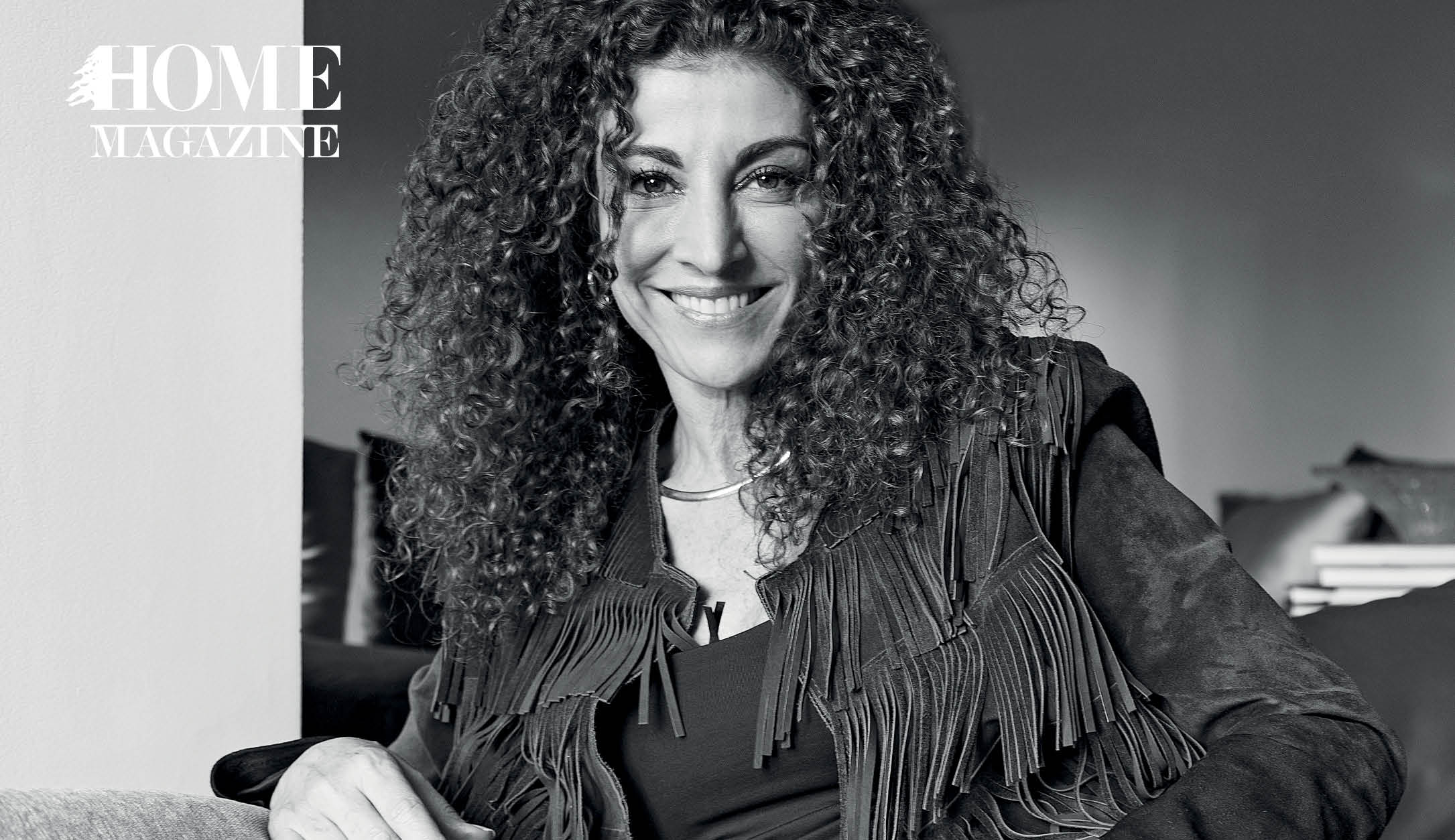
Rose Marie Saab, president of Independence Drilling, a successful oil services company based in Bogota, with annual revenues more than $100 million, is one of the most recognized businesswomen in Colombia. Her presence in the male-dominated oil industry has always been striking. The second of six siblings who share the direction and management of Independence Drilling, Saab assumed the lead role at the request of her brothers upon her father’s death.
Independence Drilling is a service provider company, providing drilling, maintenance and reconditioning of oil and gas wells. It also specializes in the extraction and maintenance of underground water wells, water treatments and consulting in the integral management of water resources.
In an interview with HOME, Saab talked about the 38-year-old family business. She said having clear values for the company is critical in the volatile oil industry, and in personal life. She attributes her values to her Lebanese mother who taught them by example.
Building on values
“An important part of any company is to make sure it has clear values,” said Saab. “Transparency and trust should vibrate throughout the management. That’s what we’ve done and that is what has allowed us to overcome crises challenges. We are a conscious company.”
For Saab, living by values and principles is also a personal commitment. “I have had experiences that have made me aware of how ephemeral life is. One day we are here and the next we are gone. A few years ago, I had surgery, where the chances of survival were 1 percent. When I recovered, I realized I was given a second chance to live. That is why every day I try to give the best of myself.”
Ethics is all over Independence Drilling’s company website. “It’s not only what we do, but how we do it,” it states.
Four values make up its corporate pillars: sustainability, innovation, excellence and ethics. It even has a Corporate Integrity Manual.
What’s more is that Independence Drilling has a track-record for walking the walk. For example, Independence Drilling became the first carbon neutral company in the Colombian oil and gas sector. “We grow but not at any price,” it states on its website. “It is a commitment to ourselves, our employees, customers, shareholders, suppliers, the environment and the country.”
The company’s sustainability strategy, launched in 2012, included measuring its carbon emissions. Then it began reducing its emissions by shifting to electric drilling machines. To take it further, Saab signed an agreement to offset carbon emissions, funding projects that reduce greenhouse gas emissions to counter the effects of the company’s greenhouse gas output.
Sustainability
“In our case, sustainability is a fundamental principle in the business strategy,” Saab said. “Being sustainable is being healthy, and that’s a cornerstone value that I have implemented from the start.
“Our goal is to have our operations working in more efficient ways so that spills are minimized and emissions are better controlled during the drilling process. Environmental regulations for our sector are rigorous; we are required to be compliant. But being environmentally responsible is also a corporate goal that has always been present within Independence.
“We are constantly asking ourselves what corporate legacy do we want to leave? What will happen when we leave an area in which we are operating? These evaluations allow us to improve and minimize our footprint.”
“You must jump on the bandwagon or you will get rolled over.”
Innovation
Innovation, the company’s second pillar, “is front and center of all that we do,” said Saab. “What has enabled us to survive, and even to increase our capacity, has been our ability to develop new and better ways to operate. We must always be proactive.”
Saab applies this lesson to herself as well, noting that “leaders need to continually evolve. I have led the transformation of our company by first striving to be more innovative and courageous myself.”
In the fast-changing oil and gas industry, “you must jump on the bandwagon or you will get rolled over,” she added.
Without innovation, a company’s survival is at stake, Saab explained. “When oil prices have fluctuated, we have, at times, lost our vision. We need to learn to be aware, to act quicker and to take better care of costs and expenses throughout the organization in the good times, as well as the bad. By making use of new technologies, we can be more productive.
“Today, we can lick our wounds, but we need to remember that it is critical to take precautions, to be ready. Remaining stagnant is not an option. Once difficult times have been dealt with, we immediately start thinking about how to respond to the new market opportunities, future growth and ways to finance them.”

Excellence
Saab believes in the importance of reflection. “Through continuous reflection within the management team, we strive for perfection. There are always ways to improve,” she said.
When the management works on being better itself, employees know it. “That’s why we are recognized as a trustworthy, honest, hardworking company with dedicated employees. This decisive quality has given us the muscle we have needed during times of difficulty.
Ethics
Managing family companies is sometimes fraught with ethical issues. “We have been able to separate business from family throughout our history,” Saab said. “We built a strong corporate governance, backed by family protocol, with a robust and independent board of directors. Beyond the family, our company is made up of courageous people who have put their heart and soul into the company. Their innovative contributions have allowed us to become what we are today.
“Our corporate structure guarantees that we use the best processes, independent of family decisions. Our internal corporate governing policy ensures the highest standards of transparency coupled with due diligence.
“These results did not come by chance. We have relied on advice from professionals about how to manage a family business and avoid some of the conflicts that naturally arise. We agreed to abide by the principles we have learned and they have served us well.”
The volatile nature of the industry also creates ethical challenges. For example,being transparent with employees in difficult financial times is not easy, but it pays off in the end.
Two years ago, Independence Drilling went through a crisis in which oil prices dropped suddenly from $140 to $20 a barrel. “We were employing 2,500 direct and 10,000 indirect employees at the time. This drastic drop in prices forced us to lay off 1,000 employees in a single week,” she recalled.
“We successfully overcame that challenge and succeeded, thanks to the work and dedication of a cohesive team. We managed to divert the crisis and recover many contracts. That situation made us very proud.
“Layoff decisions are painful to make, but in the end, the survival of the business is at stake. By making layoff decisions compassionately and with total transparency, we have been able to rehire many of those employees who were affected. They are grateful that they are treated with respect and many were eager to return.
“My mother, Laila Faour de Saab, has been the axis of everything that we have, all that we have achieved as a family and as a company. She is a tireless woman, as well as an inexhaustible source of faith.”
The source
“My mother, Laila Faour de Saab, has been the axis of everything that we have, all that we have achieved as a family and as a company,” said Saab.
“She lives and works with an ability to face adversity with strength and patience. Her philosophy of ‘living each day to the fullest’ has always given her a great sense of purpose and drive. Her conciliatory spirit always seeks unity, teaching us to respect each other, encouraging us to be a united family.
“She is a tireless woman, as well as an inexhaustible source of faith, unlimited generosity, wisdom, humility and unwavering greatness. She has a deep love of God, family and Lebanon, which all became embedded values in my life.
“The Lebanese ways have always been gracefully embedded in our daily lifestyle through simple ways – customs, food and the love of family and faith.”


HOMEland THEMES
Coming Soon
HOMEland Events & Collaborations
Coming Soon
 Signature Boutique