Said Khalaf, A Success Story from Nigeria
From a Khiam farm to Nigeria's roads and bridges, Said Khalaf built an empire on trust, humility, and respect for local culture.

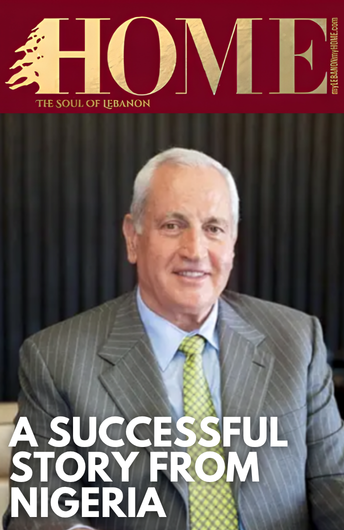
Interviewed by: Patricia Bitar Cherfan, Editor-in-Chief
Nigeria’s mogul Said Khalaf led the Setraco Group from a three-employee operation to a conglomerate of 16 companies with more than 22,000 employees. At a meeting with HOME in its headquarters in the Lebanese mountainside, he shares the wisdom only a lifetime of experience can garner.
Khalaf grew up in Khiam, a large, green town situated at the furthermost part of South Lebanon, only 5 kilometers from the Palestinian border. “I grew up helping my father working our land, irrigating and cultivating its produce,” says Khalaf, “I learned to love nature, waiting for land to give us its richness.”
Khalaf went on to study civil engineering at the American University of Beirut (AUB), but felt guilty that his steep university tuition was being sponsored by his older brother, so Khalaf turned to the C.A.T. Group, who granted him a loan on condition that he would work for the firm to repay the amount borrowed. As an employee for the firm, destiny nodded at Khalaf when he was sent to Nigeria for a major road construction contract. This marked the beginning of his journey to Africa.
Khalaf visited Nigeria for the first time in the early 1970s. Ninety times the size of Lebanon, Nigeria hosts a population of over 140 million people.
Recognizing the tremendous potential for development, the idea of launching his first company dawned on him. “The country was coming out of a civil war with no consulting firms and very few contracting companies. A virgin territory for engineers where the opportunities were unlimited and unique,” he remembers. “We had to design at night and execute in the morning.”
In 1977, opportunity propelled Khalaf when he kick started his first business venture in civil construction. According to Nigerian law whereby foreign firms wishing to establish businesses in the country must have a local partner, Khalaf partnered with modest Nigerian contractor and good friend Alhaji Inu Umoru. “Trust and honesty were the keystone and the strong foundation on which we built our company,” says Khalaf of Umoru, who passed away few years ago.

Setraco was established in his partner’s village, Auchi, in West Nigeria. During a time when aggressive European companies controlled the market, the newly established company was operating on the bare minimum of resources. It took them six months to buy their first company car as they struggled to start their business.
For the past 42 years, Setraco has impressively built itself a reputation as a giant in its field, ranking as the top road and bridge construction company in Nigeria with a workforce of 39 different nationalities including more than 300 Lebanese. However, the ascent to affluence was not as linear as it may seem to an outsider.
As the situation shifted in Nigeria and globally, the company suffered from setbacks and disappointments. In light of his misfortune, Khalaf recalls that “it was then that I learnt the lesson that a business and its approaches have to be flexible and dynamic to be able to react positively to change and absorb its impact.”
Many competing firms adopted a top-down attitude toward the locals. An eagerness to adapt and understand the tribespeople gave Khalaf an edge.
“Many competing firms adopted a top-down attitude toward the locals. An eagerness to adapt and understand the tribespeople gave Khalaf an edge.”
A sociology course that he once took at the American University of Beirut left an imprint in him and he was genuinely inspired to better understand the country that is HOME to more than 340 unique tribes and 520 different languages. Khalaf mentions the book, A Black Byzantium: The Kingdom of Nupe in Nigeria, by the Austro-British anthropologist Siegfried Frederick Nadel, as instrumental in deepening the businessman’s understanding of Nigerian culture and way of life, and providing a blueprint to navigate through unfamiliar territory. Living alongside the Auchi people for years taught Khalaf fluency in Etsako, a language spoken by the local people.
“What helped me the most was my deep understanding of the Nigerian mentality, traditions and customs, which allowed me to ride all the waves and surmount all the problems. For example, music is a basic ingredient of their culture. My appreciation of their music allowed me to share in their festivities, weddings and funerals. I learned about Nigerian fabrics and the complexity of their mosaic cultures and beliefs,” he says, “This knowledge opened so many doors.”
Khalaf has since developed a strong affinity for Nigeria, its people and its customs. “Nigerians have no pretensions and are very nice people who are very appreciative of friendship,” says Khalaf.
While Nigeria’s reputation has suffered due to conflict-fueled instability and the emergence of terrorist groups, Khalaf describes the people themselves as festive pacifists who will seize any opportunity to sing, dance and enjoy life. In fact, much of what he knows about conflict resolution and compromise to maintain peace and harmony was learned during his time there.
His respect for Nigerians is carried into Setraco’s business culture. The company addresses local needs by building schools, township roads, and water reservoirs for low-income communities for free: “When communities are in need, we commit our company’s resources.” In 2013, when a heavy rainy season damaged the roofs of over 35 HOMEs in Warrake town, Setraco did not hesitate to fully finance the repairs of all affected HOMEs as part of recognizing the valuable role played by the community in the growth of the business.
“Nigeria’s collectivist approach toward decision-making is one that Lebanon can learn from.”
Khalaf also believes that Nigeria’s collectivist approach toward decision-making is one that Lebanon can learn from. “The chief of an area cannot grant permissions, for instance, for land or resources, until he consults with the rest of the tribe. The chief will gather everybody from his tribe and everyone can speak and give their opinion. The final decision is based on these meetings. That is their brand of democracy.”
Over the last 40 years, Khalaf went on to establish over 15 companies in the construction and development services industry and grants his success to his passion for quality and his sensitivity and respect to the local context, both social and environmental: “My wife and I have a deep respect for nature, so saving as many trees as we can in our design process is paramount to us.”
During his university years, Khalaf saw a role model in Emile Boustani, a man of humble origins who managed to outwit his fortune through determination and intelligence, Boustani transformed himself from a poor, village-dwelling orphan with few life prospects into a successful contractor with degrees from AUB and the Massachusetts Institute of Technology (MIT) under his belt. Wanting to give back to the land of the Cedars, Boustani returned to his HOMEland to establish the C.A.T. Group, a pioneering construction company in the region.

With a melange of nostalgia and respect, Khalaf credits his mentor for inspiring him to pursue civil engineering.
Today, Khalaf calls the picturesque village of Roumieh his HOME. It is where his wife is from and where him and his family would spend their summer holidays while they were based in Nigeria. To give back to the community, he invested in an 800-seat amphitheater in the Antonine School of Roumieh, and a community sports and recreation center in the heart of the village. “We just wanted to provide a space for residents to enjoy themselves,” he says.
In contrast with the veritable concrete jungle of Beirut, he particularly enjoys the parts of Lebanon that have resisted deforestation. “I like the deep south of Lebanon for its greenery and think it’s the most beautiful part of Lebanon,” he says of his HOMEtown.
He highlights Marjayoun, Junayne and Mazari’ Shebaa as places to visit for their natural beauty. “It’s the most beautiful during spring, when everything has come to life. I will be visiting with friends in March to see the flowers that have blossomed after the winter snow has melted,” he says, with a glimmer of excitement in his eyes.
In fact, Khalaf first took notice of HOME Magazine when stumbling upon the article Roman Temples of Mount Hermon, which he found unique in highlighting neglected archaeological sites. “We have archeology in Marjayoun and Hasbaya. We have Phoenician and Greek vestiges on the way to Hasbaya, and Roman cemeteries that have not been touched. They have never been cleaned by anyone and yet these are archeological treasures!” he says. In order to attract the public, these areas of resplendent beauty must be restored to their former glory and should be advertised to the public.”
Khalaf describes himself as a fortunate man for sharing his life with Mimi Abi Habib, a “very adventurous, courageous and supportive woman. My wife has made sacrifices along the way to ensure the stability and happiness of her loved ones,” says Khalaf. “In Setraco’s earlier days, Mimi threw parties to boost the morale of the employees during challenging times, channeled her creativity into producing advertising campaigns, and tolerated her house being utilized as an outpost for Setraco’s operations in the day and as shared living quarters at night.”
Add motherhood to her roster of responsibilities and you have a modern-day wonder woman. The success of any person depends on the support of others whose labor of love often remains unseen.
The younger generation of Khalafs were exposed to a myriad of cultures during their formative years, opening up their hearts and minds to different ways of living. As true citizens of the world, they grew up in the heart of Nigeria, and have lived in Lebanon, New York and London in pursuit of their studies.
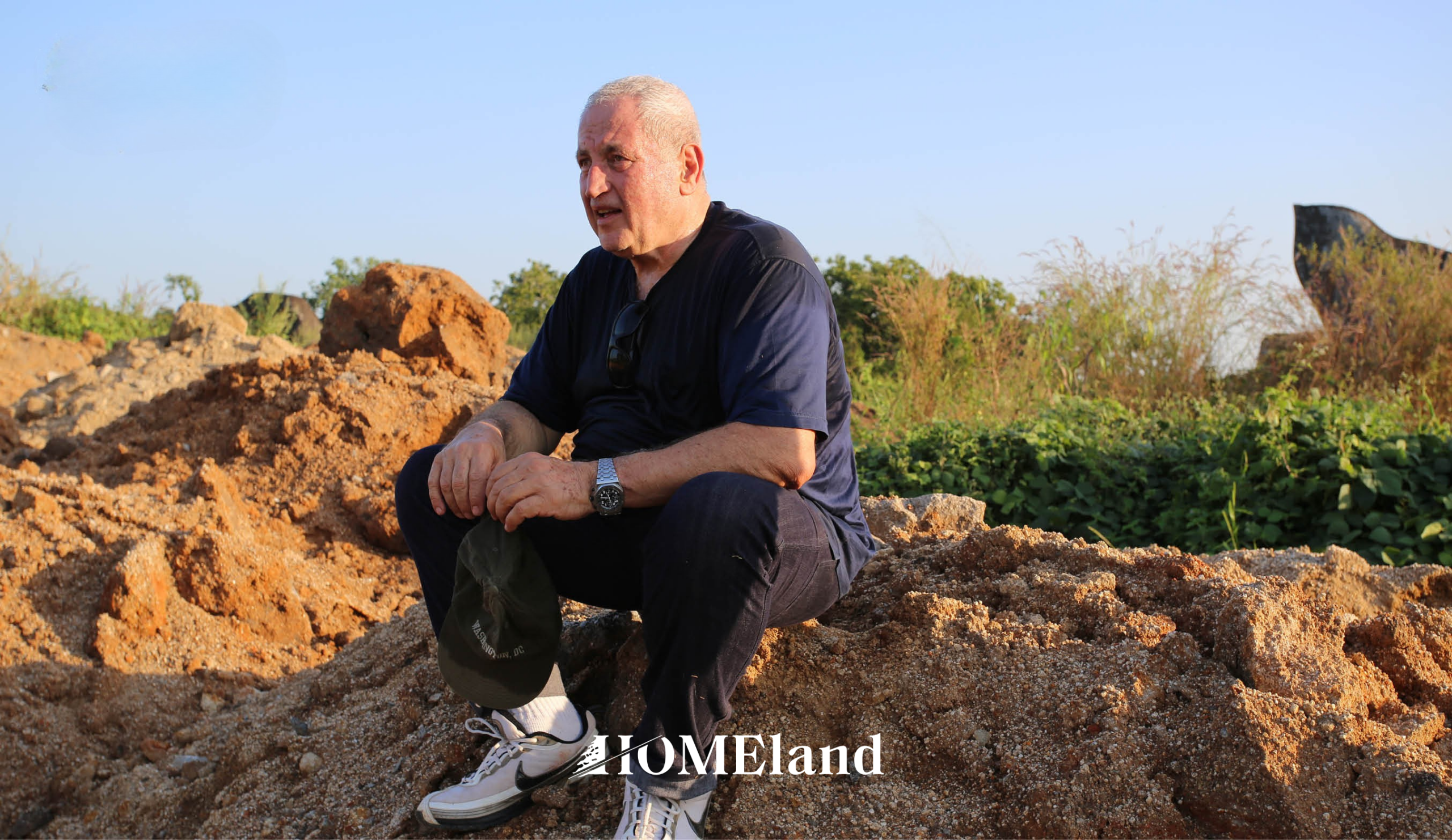
After decades spent shuttling between both countries, Khalaf has settled down in his native Lebanon. “I feel at HOME in Nigeria and I feel at HOME here,” he admits. Age hasn’t slowed Khalaf down. Even in his golden years, he clocks into work for a few hours every day to overlook the daily operations.
“Knowing how to retire is an art.”
“Knowing how to retire is an art,” he says. “A proper retirement is something that we should pay more attention to, especially in Lebanon. Leaving a productive life suddenly can cause depression.” To unwind, he listens to classical music, or hops on an airplane for a break, fueling his love of travel.
When asked about the Lebanese Diaspora, Khalaf comments, “The diaspora would be more open to give back or stay if they trusted the government and the future of this country.” Khalaf appreciatively remarks, “I adhered to the way of thinking AUB instilled in us, and that is to believe in one goal and one message regardless of your sect and political affiliation.”


 Signature Boutique