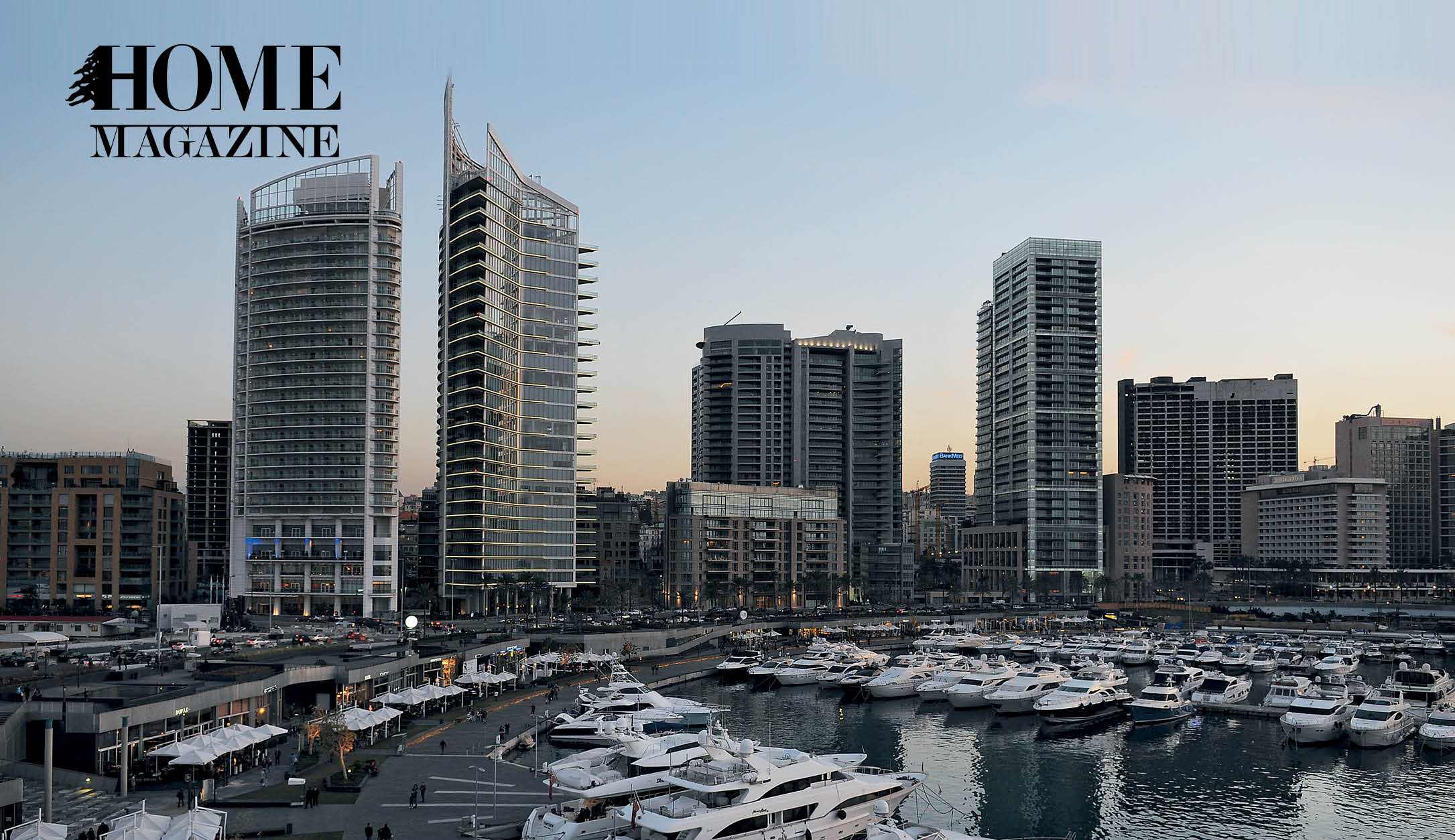
For those who prefer to travel by sea, Lebanon offers beautiful ports with full-service options for yachters.
During the summer season, when many boat owners take their pleasure crafts out in the Mediterranean waters, Lebanon’s harbors become a hive of activity. One such busy marina on Beirut’s iconic coast is Zaitunay Bay. Known officially as the West Beirut Marina, about 180 boats are kept here at any one time, with a capacity to hold up to 225.
Many are used for day excursions, where owners may opt to sail to other popular ports like Dbayeh, Jounieh, Byblos and further north to Chekka to have lunch or practice some water skiing, explained the resident captain of one boat, Elias Naemeh. It is not unusual to spot some Lebanese celebrities who arrive by boat just to grab lunch at Zaitunay Bay. Prominent business owners and politicians also have their boats permanently moored there.
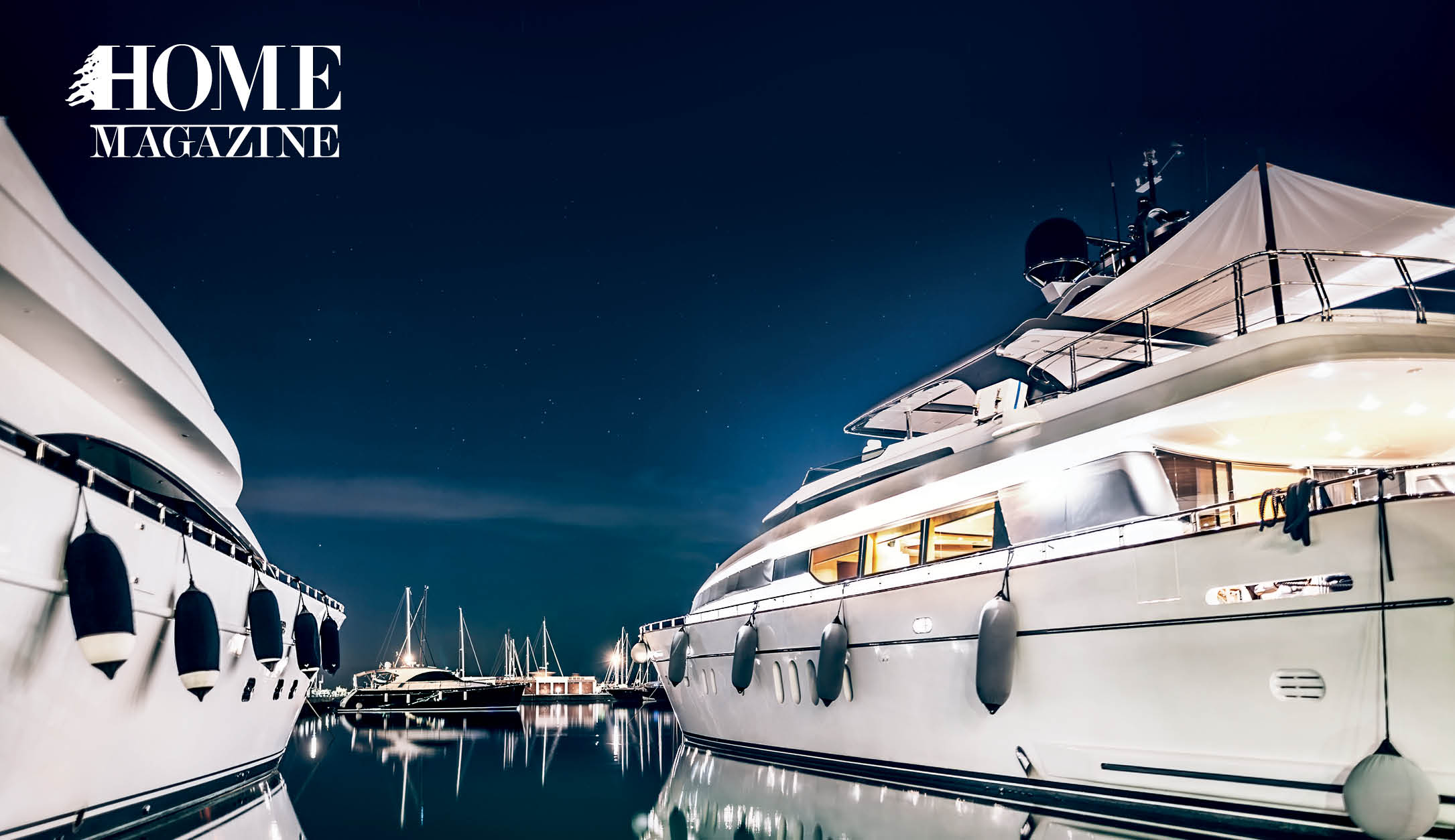
Most of the boats docked at Zaitunay Bay average 24 – 32 meters, but they range anywhere from six to 65 meters long. Boats used for cruising around Lebanon may measure less than 10 meters long, Naemeh explained. Larger boats travel mostly to Turkey and Greece, two of the most sought after places for longer trips, followed closely by Cyprus. When heading to Greece, Lebanese boats usually go to Mykonos, followed by Athens and Rhodes (the closest Greek port to Lebanon). These longer excursions typically take place between April and September. Some boats venture out even further, heading south to Egypt and the Gulf.
When HOME met Naemeh, he was busy preparing his employer’s boat, a 40-meter-long, triple-deck luxury yacht, for a cruise to Italy, France, Spain and Morocco. After leaving Beirut, his first port of entry will be Viareggio, Italy, where the yacht named Sima will be serviced for a full check-up. Along the way, he will be stopping in Albania for refueling since he will have been traveling for 90 hours from Beirut non-stop.
“When we travel to and from Europe, we stop in Albania or Turkey to refuel, as it is considerably cheaper. These countries are outside of the Euro zone, so they don’t have high tariffs like the rest of Europe,” he said.
A seasoned sailor, Naemeh worked on commercial ships for 25 years before switching to leisure yachts nearly two decades ago. “I have been in the sea for 42 years, since I was a kid,” he told HOME proudly, as his permanently tanned face lit up, revealing deep crinkles around his eyes. His favorite places to navigate are by far Turkey and Croatia. “These are exceptionally beautiful coastal countries to explore, so I recommend them for yacht trips,” he said. While it depends on the speed of the boat, a trip from Beirut to Cyprus can take anywhere from five to 12 hours and a few hours longer to reach Turkey.
West Beirut Marina also receives plenty of boats from abroad, said Georges Gebrayel, the harbor’s main safety supervisor and head of the water rescue team. “In this harbor, we have full mooring services. Visitors from abroad can stay for a day, a season or up to several years (under long-term contracts).” While most boat owners here are Lebanese, there are also owners from Syria, Jordan, Saudi Arabia, Kuwait, Bahrain and a few from the United Kingdom and France.
This marina serves as an official port of entry, which means all customs services can be handled here. It also offers everything from fueling and boat maintenance to electricity, water and 24-hour security. It even provides shower facilities and free car parking. West Beirut Marina has hosted the world-famous yacht Samar, owned by Kuwaiti businessman Kutayba Alghanim. The 77-meter-long luxury liner, which retails at $100 million, had nearly 100 people working on it. “I recall it even had six jet skis, two smaller boats and a helicopter parked on it,” Gebrayel said.
Zaitunay: a storied seaside promenade
Beirut’s iconic coastline has always been popular among holidaymakers and the jet-set crowd. A magnet for tourists, the vibrant Zaitunay area is known for its wide, picturesque seaside promenade, along the Avenue des Français, dotted with palm trees and chic hotels. The glamorous avenue was the origin of Beirut’s Corniche, where the legendary Hotel Normandy once stood, along with Hotel Bassoul and the famous eateries of the pre-Lebanese Civil War years – Ahwet El Hajj Daoud and Lucullus (known for the finest bouillabaisse in town). The area was damaged during the war but has made a beautiful comeback.
Rebirth of Zaitunay and a new marina
The famous avenue was revived during the post-war reconstruction of the Beirut Central District.
Today it is marked by a contemporary promenade that hosts the Zaitunay Bay Development, a sleek quayside walkway with 18 restaurants.
West Beirut Marina, originally built in 2003, keeps the boats safe from high tides (including protection from the 100-year wave, a statistically predicted tsunami wave that may reach up to 10 meters in this area) with a sophisticated 400-meter-long rock and concrete waterfront barrier.
A first of its kind in Lebanon, the commercial stretch of eateries and shops was launched in 2012. As you stroll along the promenade’s teak boardwalk, you can admire the resplendent boats and plan your own Mediterranean getaway.
Soon this harbor will be rivaled by the Eastern Marina, which is scheduled to open in 2020; a sure testament that the art of boat cruising is on the rise in Lebanon.
For more info:
http://zaitunaybay.com/
https://www.facebook.com/ZaitunayBay/
https://twitter.com/ZaitunayBay

HOMEland THEMES
Coming Soon
HOMEland Events & Collaborations
Coming Soon
 Signature Boutique