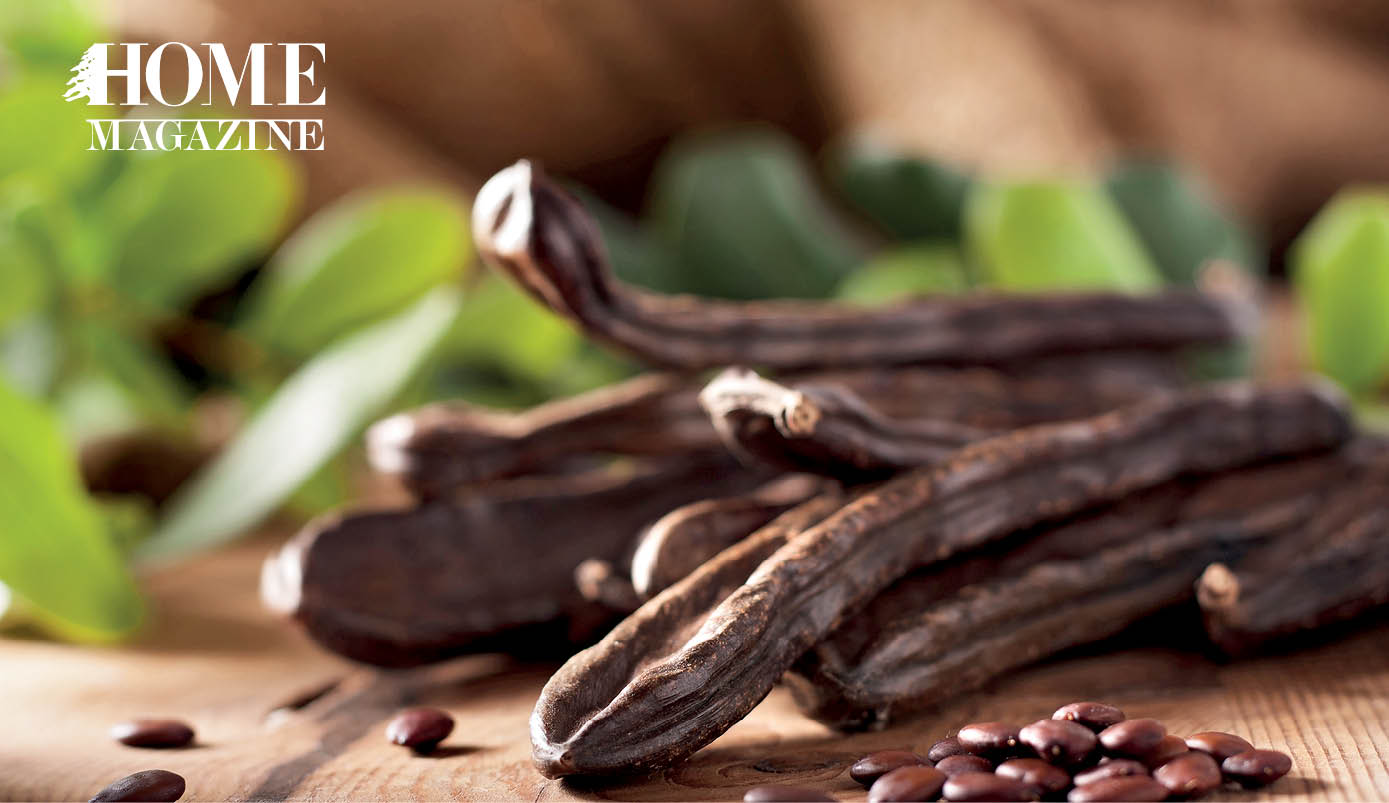
Long before carob became a popular health food in many countries of the world, the Lebanese have enjoyed dipping bread into “dibis bi tahini,” a mixture of “dibis kharrub” (carob molasses) and “tahini” (sesame seed paste), as a snack or dessert.
The Carat
The carat, which is both a unit of weight for precious stones and of purity for gold, is derived from the Arabic word for the carob seed. This is because the seeds were perceived to be consistent in size and weight (which is not actually true). One carat was the weight of one seed.
In the United States and Europe, carob was “discovered” during the health foods movement of the 1970s, along with yogurt, granola and organic foods.
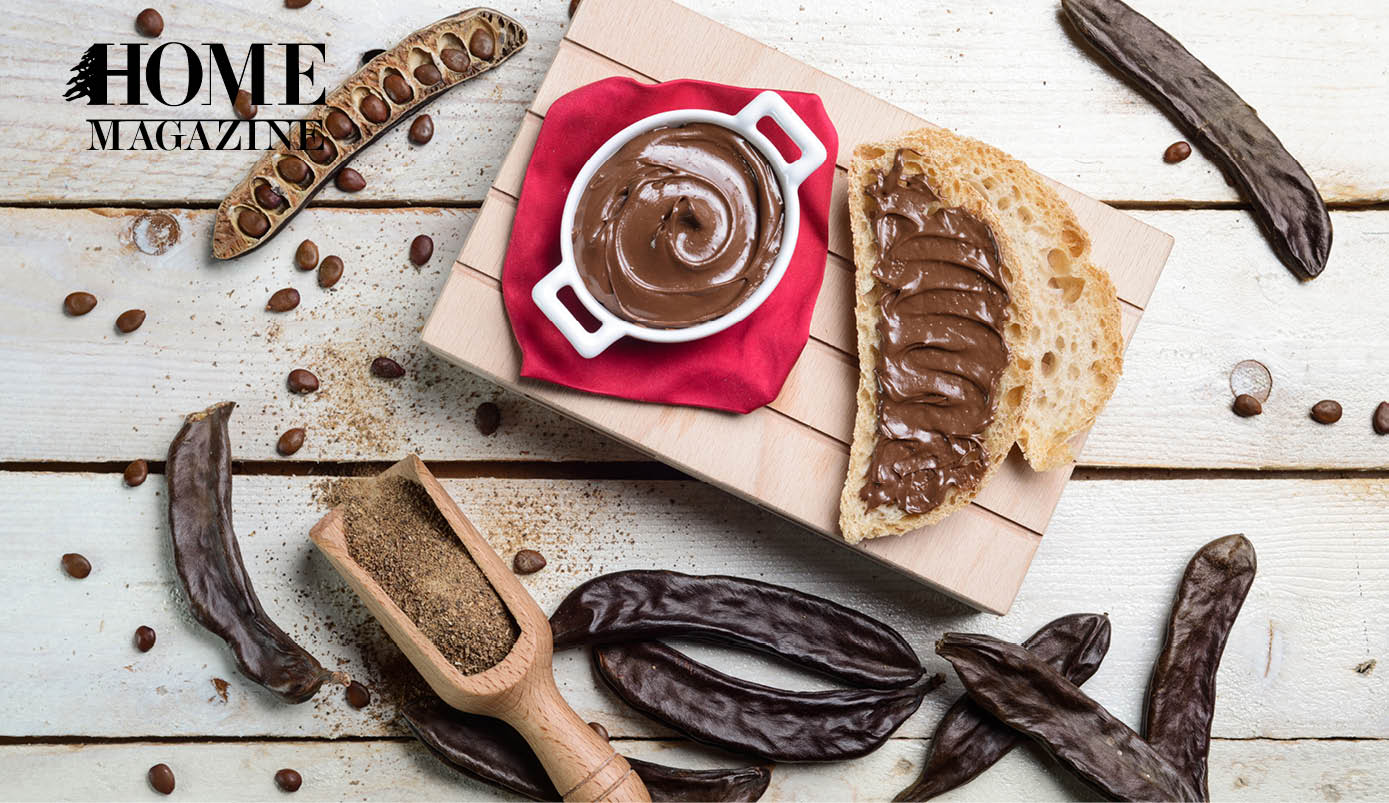
Westerners buy it as a brown, floury powder extracted from the carob bean and use it as a substitute for chocolate.
It is promoted as a superfood in health food stores—where it can be found in many different forms: powder, chips, gum, extract, candy bars, syrup, dietary pills and even a caroband- passionflower blend of stress-reducing tea. Or, for dibis kharrub (carob molasses), you could visit a Lebanese specialty store. In fact, the word carob comes from the Arabic “kharrub.”
In the Mediterranean region, the sweet substance is as common in supermarkets and corner stores as peanut butter and maple syrup in the U.S. Carob trees have yielded their purplish, brown, leathery pods in Lebanon since well before Biblical times. Yet, taking it from pod to dibis takes skill.
In Lebanon, the carob legume is grown and processed in different areas throughout the country. Near Batroun, in Salaata, the Salloum family has had a dibis kharrub business since the 1950s.
George Salloum provided a tour of its operations and taught us a thing or two about processing this tasty treat.
“Taking it from pod to dibis takes skill.”
The craft of making dibis kharrub
Making dibis is a skill that takes years of apprenticeship to develop, said Salloum, while giving a tour of his family’s dibis kahrrub plant. First you must select the tastiest pods. Pods range from 15 – 30 centimeters long and look much like a pea pod. In selecting the pods, the Salloums tried pods from many different countries in the region, but found the Lebanese pods had the best flavor. Even within Lebanon, there is variation. Pods are harvested when they are hard and brown, and ground into three gradations — fine, medium and course.
The seeds, which are hard (unlike peas and the seeds of other legumes), are filtered out. The different gradations of the pods are skillfully layered in a huge vat where they are soaked in water. The resulting liquid is boiled down to a thick molasses, much like rendering maple sap into syrup, and the solids are sold to farmers to add to cattle feed.
For the carob powder that is made outside Lebanon, the seeds are removed and the empty pods are washed and dry-roasted. They are then milled like wheat to a very fine brown powder. Other carob products are made from the powder.
 Health benefits
Although considering carob products as health foods is foreign to Lebanese culture, like so many other ingredients in the Lebanese traditional diet — such as olive oil, yoghurt, purslane (“baqli”),anise (“yansoon”), garlic, dandelion (“handbi”) and parsley — carob has been recognized by nutritionists for its health benefits. Carob is rich in B vitamins, vitamin A, potassium, magnesium and trace minerals, like iron and manganese, that are needed for good health, as well as pectin, protein and fiber. It also has the type of tannins that inhibit toxins and harmful bacterial growth in the intestines. The natural sugars in carob are viewed as a safe and effective way to treat diarrhea.
If one compares carob and chocolate, both are antioxidants, which can help reduce the risk of heart disease. But chocolate contains the stimulants caffeine and theobromine, of benefit to some people but a problem for others. Chocolate also has oxalic acid, which can cause migraine headaches, increase your risk of getting kidney stones, and inhibit calcium absorption, as well as histamines that can cause digestive problems.
Carob, in contrast, is not a stimulant, does not have oxalic acid or histamines, and has twice the amount of calcium. Carob is also lower in sodium and fat than chocolate, though it is higher in natural sugar and carbohydrates.
Carob is not only good for humans. The leaves, pods and seeds are used as livestock feed. And many chocolate-like pet treats are actually made with carob because it does not have theobromine, a compound that is toxic to dogs and cats.
“It is promoted as a superfood in health food stores.”
Recipes
Carob is used as a chocolate substitute in fudge, brownies, pancakes and milkshakes. In fact, you can substitute carob for chocolate in a 1-to-1 ratio, but only if you substitute them in the same form — powder for powder, chips for chips, etc. Or you can substitute carob for cocoa, but only if you reduce the sugar in a recipe, because carob is naturally sweet.
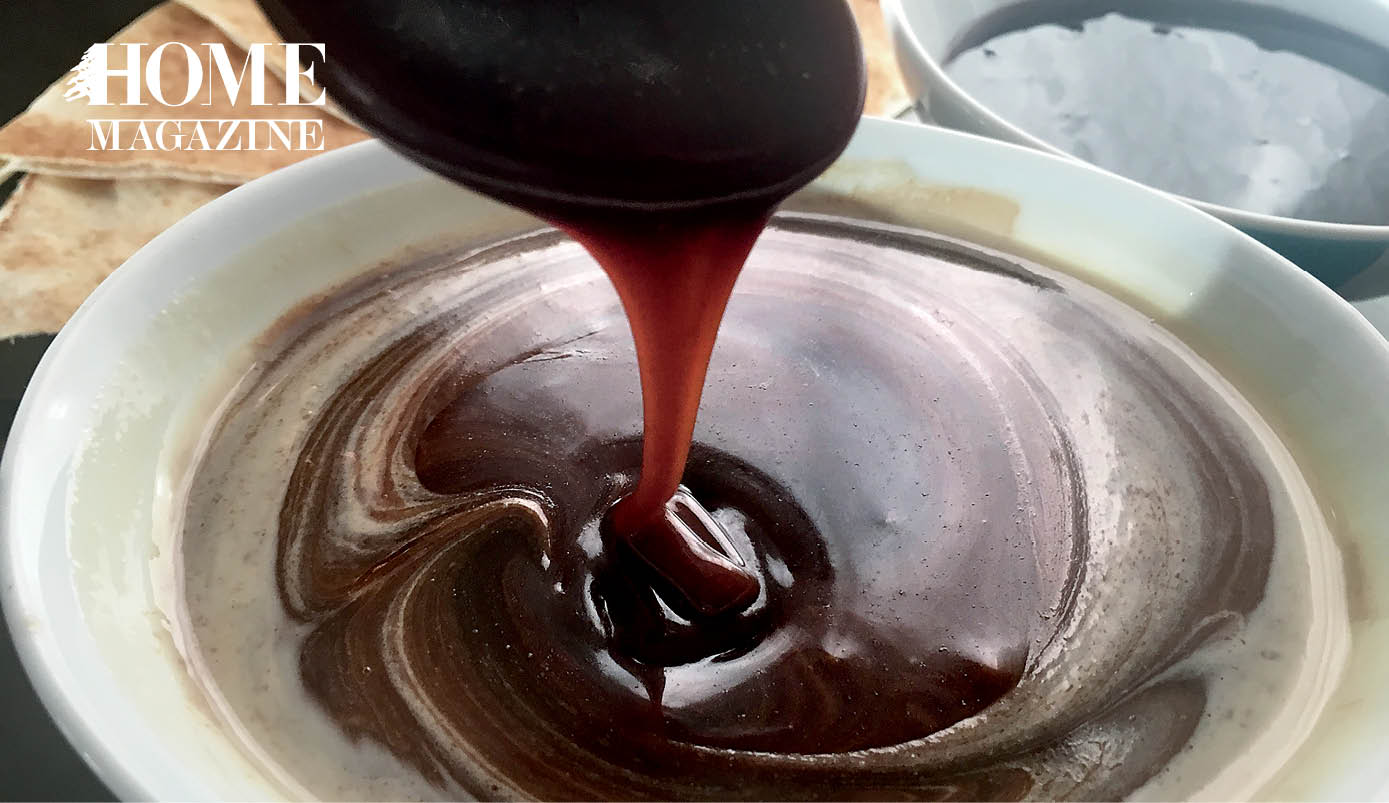
Photo by Marc J. Karam
Lebanese food traditions have a number of well-known carob recipes, all using dibis kharrub. Dibis bi tahini was already mentioned. There is also “Sharab al-kharrub,” a favorite drink during Ramadan. A third is the traditional, eggless Lebanese cake called Sfouf, which is flavored with carob and ground anise seed. and a wonderful recipe for banana and date bread with tahini and carob molasses is found on Hadia’s Lebanese Cuisine blog.
Also, Lebanese traditionally used carob molasses in place of sugar since, throughout difficult times in Lebanese history, most people couldn’t afford sugar except on very rare and special occasions. You can substitute dibis kharrub for sugar in any recipe on a 1-to-1 ratio, or use part carob and part other sweetener.
For both your health and gastronomic pleasure, try some of these recipes or experiment on your own. Bon appétit!
For more info:
https://www.youtube.com/watch?v=lj5F5n6E3dc
http://www.hadiaslebanesecuisine.com/

HOMEland THEMES
Coming Soon
HOMEland Events & Collaborations
Coming Soon
 Signature Boutique