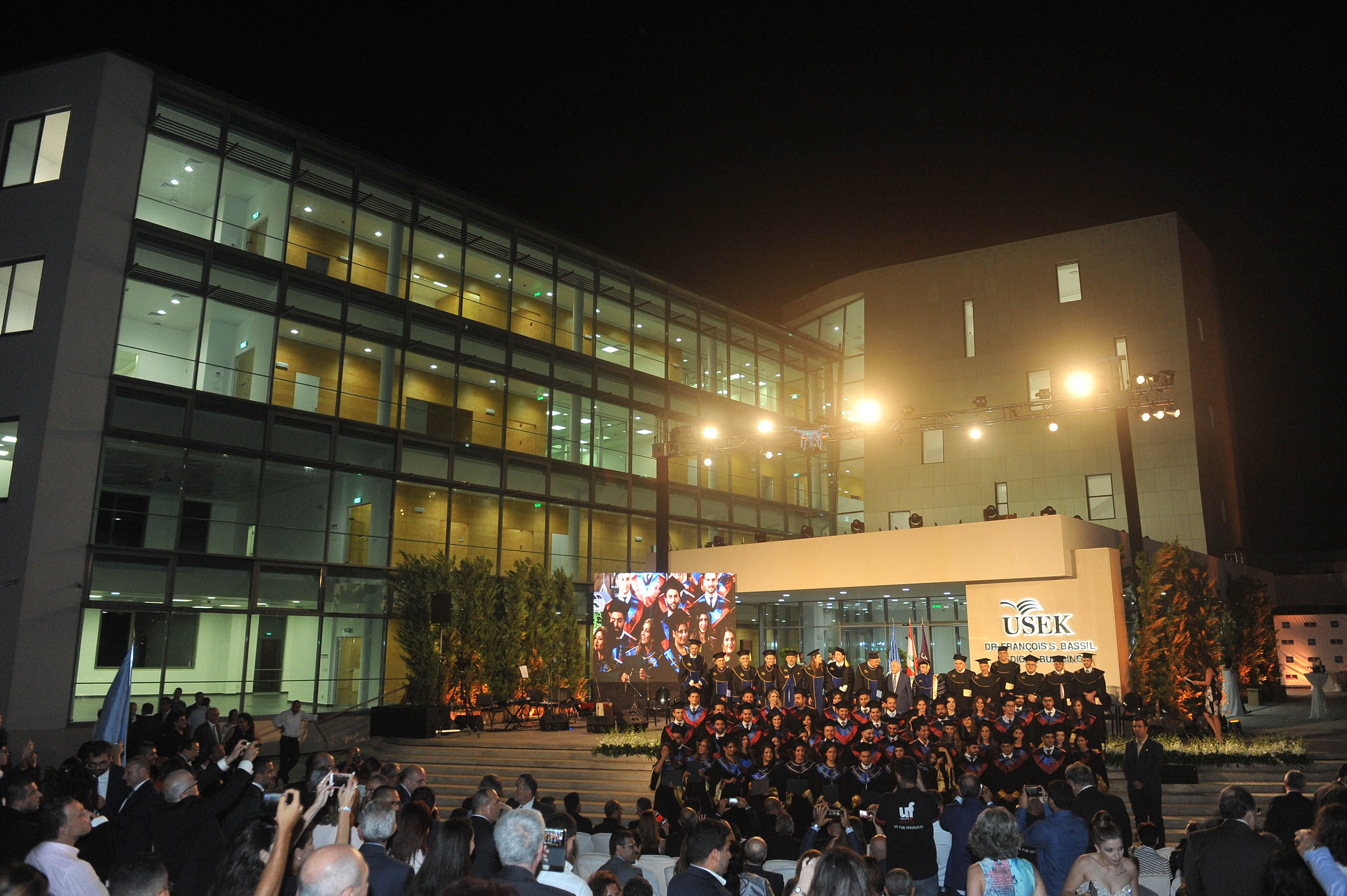
The Holy Spirit University of Kaslik (USEK) inaugurated the USEK Dr. François S. Bassil Medical Building and held the commencement ceremony for the ‘Class of Joy 2018’ of the School of Medicine and Medical Sciences. The ceremony, organized at the invitation of USEK President Reverend Father Professor Georges Hobeika with Byblos Bank Group Chairman Dr. François Bassil as keynote speaker, was held at the premises of the said building next to the Centre Hospitalier Universitaire – Notre Dame des Secours (CHU-NDS) in Jbeil. In attendance were Archbishop Joseph Spiteri, Apostolic Nuncio to Lebanon; Most Reverend Father Abbot Neemtallah Hachem, Superior General of the Lebanese Maronite Order (OLM) and Chancellor of USEK; and many key political, military, spiritual, municipal, medical, educational, economic, media and civil figures, in addition to the families of graduates.
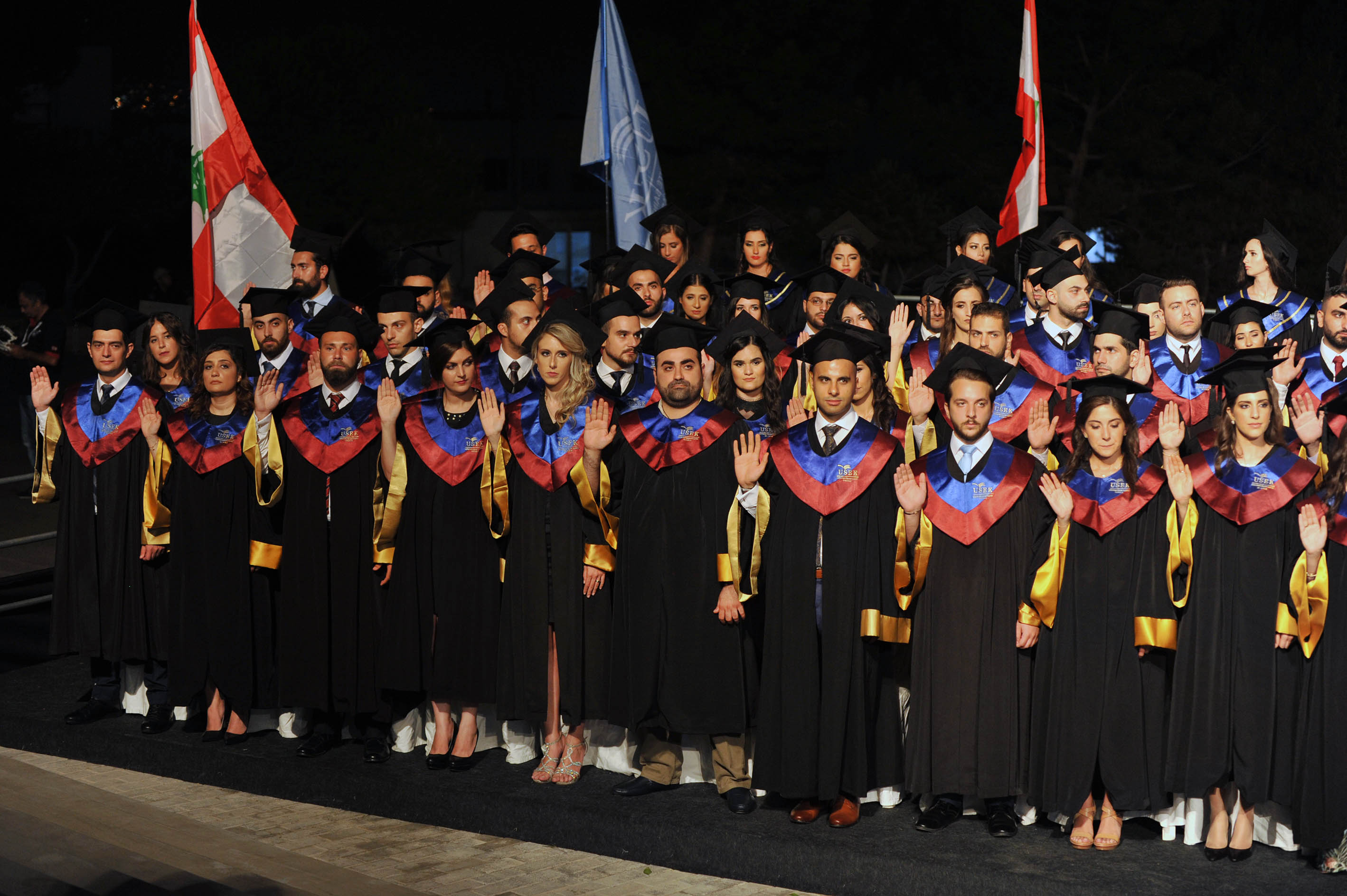
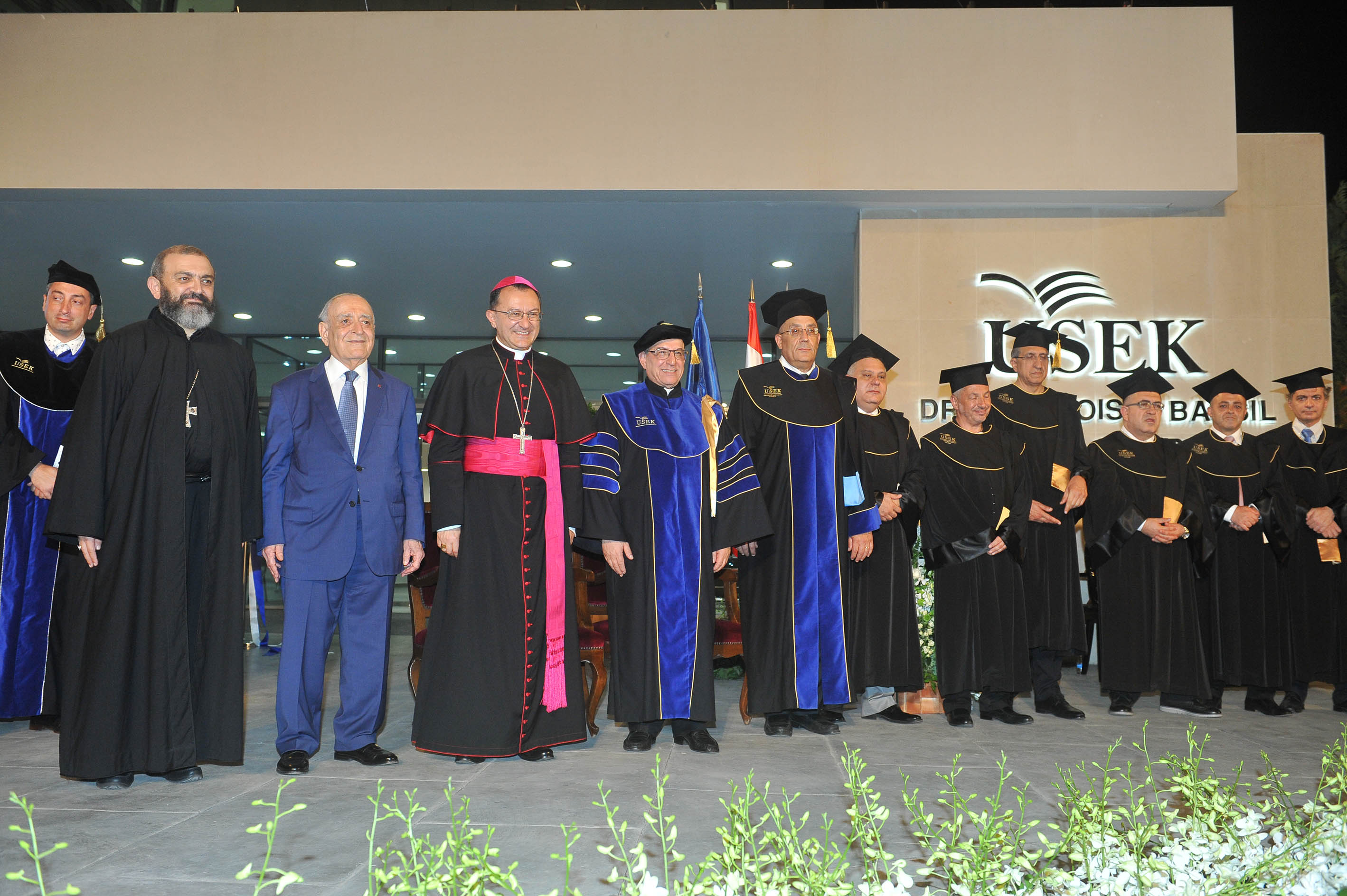 The ceremony started with the procession of the graduates and the national anthem, followed by addresses delivered by the evening’s host Ms. Eliane Breidy and valedictorian Elsa Noujaim. Archbishop Spiteri and Abbot Hachem then said a prayer of blessing.
Lahoud
Professor Jean-Claude Lahoud, Dean of the School of Medicine and Medical Sciences, took the floor to commend Dr. François Bassil for his humanitarian, social and national achievements, especially on the banking and economic levels, and thanked him for what he offered “to USEK in general and our School in particular.”
“The World Federation for Medical Education (WFME) accepted our School’s international accreditation and quality assessment file,” Prof. Lahoud revealed. “This means that the USEK School of Medicine and Medical Sciences is one of only two Lebanese medical schools who have reached the final stage of international accreditation for medical education.”
 Father Hobeika
Following a musical interlude presented by several graduates, USEK President Rev. Fr. Prof. Georges Hobeika delivered his address in which he said: “USEK is celebrating at this moment the transfer of the School of Medicine and Medical Sciences from its main campus in Kaslik to Byblos, the bosom of the book. As you know, this upgrade to the heartland of books was actively facilitated by an amazing Jbeil figure, Fidar-native Dr. François Bassil, an eminent banker and Doctor of Law who graduated from Belgium’s Université Catholique de Louvain in Louvain-la-Neuve, was at the helm of Byblos Bank and now chairs the Byblos Bank Group.”
 “We have chosen to name this year’s class the ‘Class of Joy’,” Rev. Fr. Prof. Hobeika announced, telling the graduates: “Do not let the prophets of doom sneak into your dreams and expectations. Do not allow history with its tragedies and disappointments to trample on your present and impede your momentum towards building a prosperous future.”
Bassil
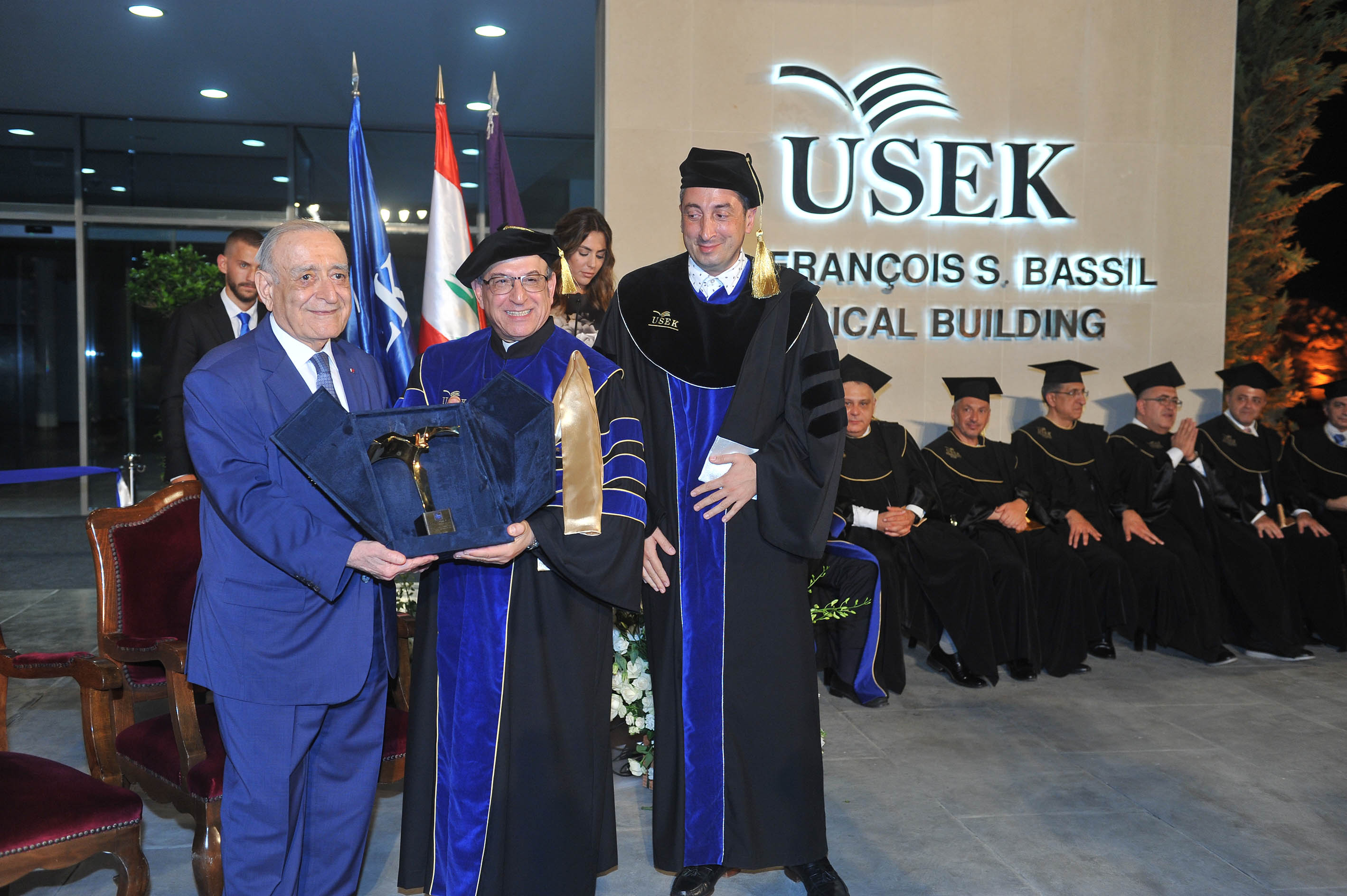
Rev. Fr. Prof. Hobeika then presented the Byblos Bank Group Chairman with an honorary shield, following which Dr. Francois Bassil delivered an address, saying: “We are keen on supporting academic institutions in general, hence our contribution to the construction of this USEK building. This initiative aims to emphasize our identity, culture and national and spiritual commitment. We are a group who favors actions rather than words, and furthering Lebanon’s advancement will always remain at the heart of our personal and corporate responsibility at Byblos Bank.”
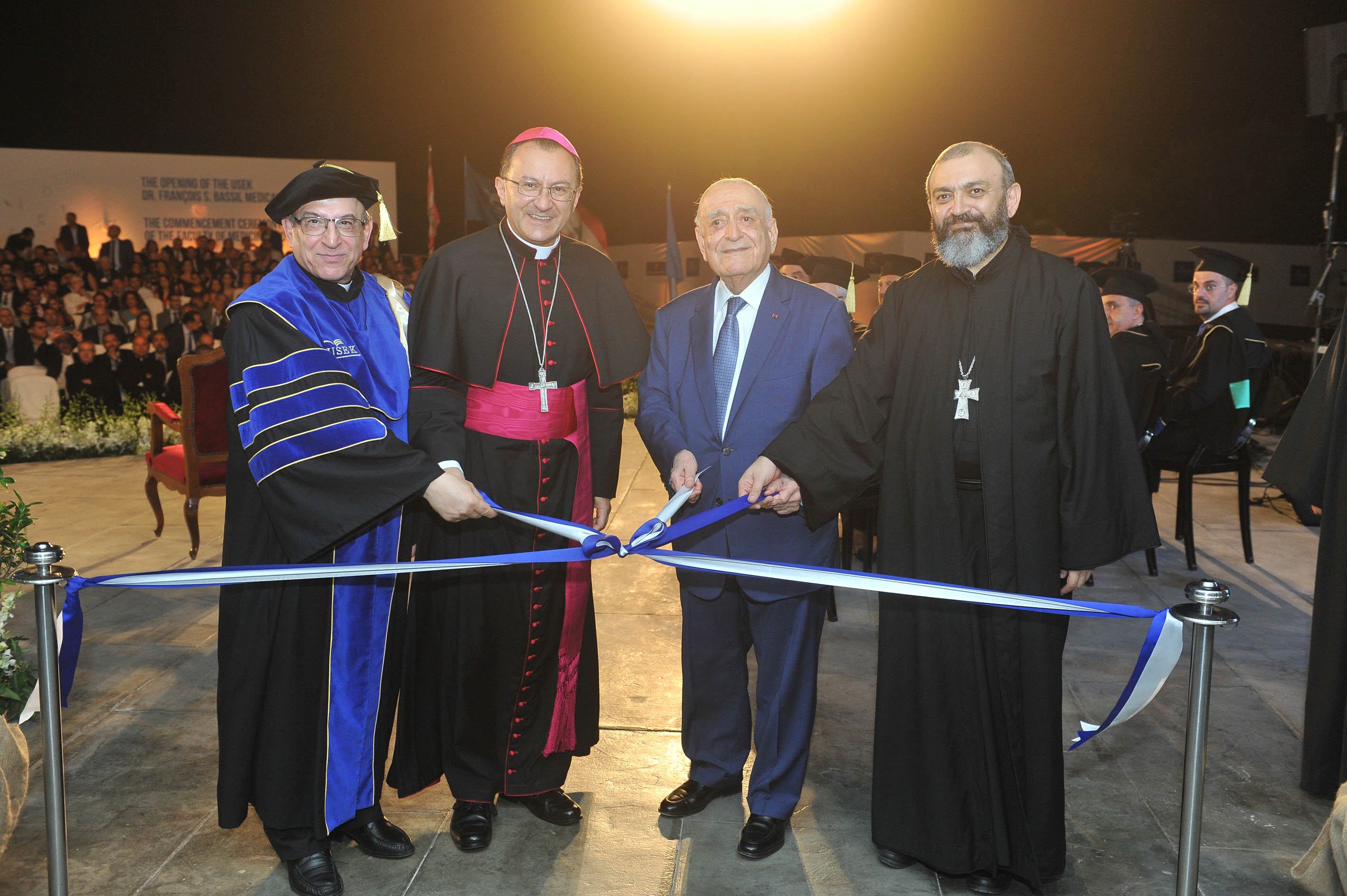 Bassil reminded the graduates of the need “to shoulder your share of what we perceive as a tridimensional responsibility towards yourself and others: professional responsibility, civil responsibility, and national responsibility.”
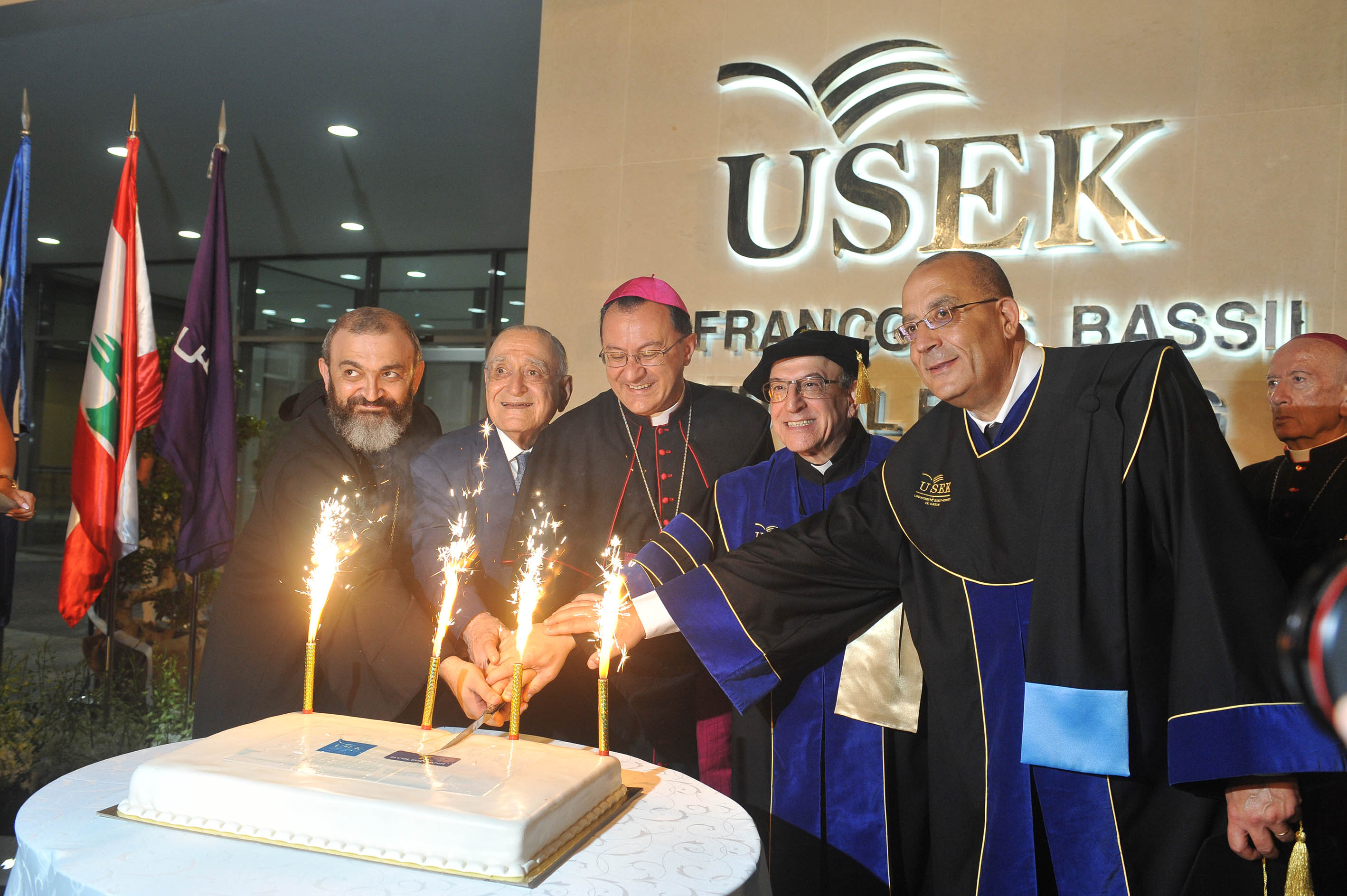 At the end of the ceremony, the new building was inaugurated and the Dr. Elie Chelala Prize was awarded to Mabelle Sfeir, MD, who graduated as an honor student. Dr. Hanna Matar read the Hippocratic Oath in conclusion before the conferral of degrees.
HOMEland
Coming Soon
HOMEland Events & Collaborations
Coming Soon
 Signature Boutique