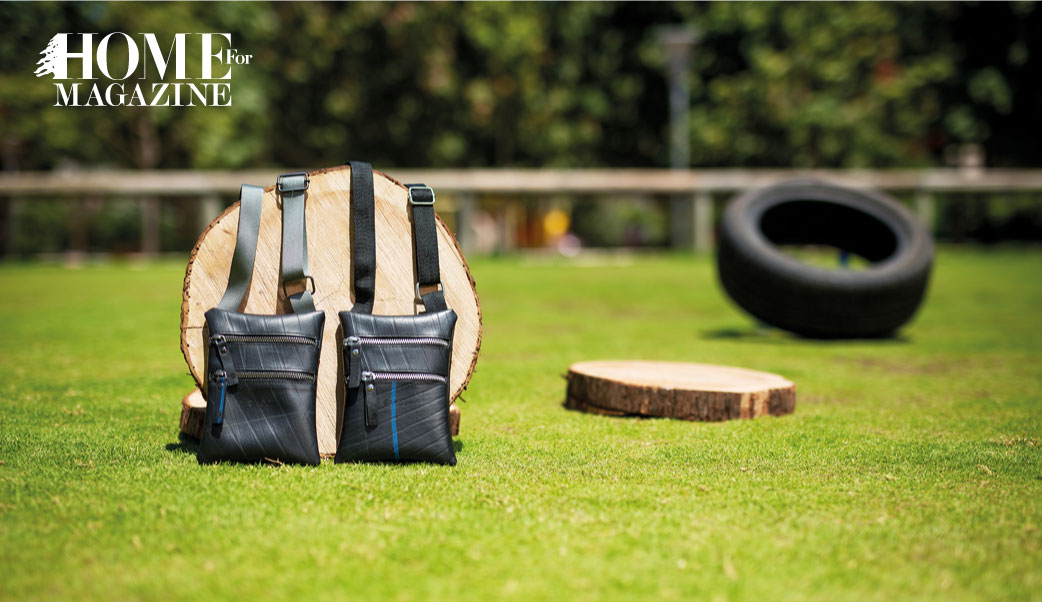
Thousands of tons of rubber from the inner tubes of tires are burned each year, causing toxic gases that pollute fresh air. Lebanese company Vea reuses this material smartly and with a purposeful conscience, upcycling old tires into fashionable, handmade purses, wallets and a myriad of unique accessories.
There’s nothing quite like the scent of a brand new handbag – especially when it comes with that special “new-car” smell associated with fresh leather. But what if you could feel eco-friendly and environmentally conscious with your purchase? Using Vea as the logo and “fashionably responsible” as their slogan, this brand of luxury accessories and handbags creates its products with one trend in mind: upcycling.
All of Vea’s products, both causal and chic, are made from upcycled rubber from tire inner tubes from cars, bicycles, trucks or motorcycles. Rubber is not typically a recyclable material and not biodegradable, so they focus on preventing such materials from being dumped into landfills. Products by Vea range from handbags/clutches and jewelry to home decoration/pillowcases and furniture to plant pots and ping-pong rack holders.
All items displayed in the small boutique in Beirut Souks, including the displays themselves, are made from unwanted or discarded things. The wood used for the furniture, as well as the shelves in the shop, are transformed from shipping pellets, in collaboration with the company Tablieh. The legs of the stands holding jewelry, trinkets and charms are comprised entirely of tall stacks of old magazines, now being put to much better use than gathering dust on their glossy finishes. Even a swing that hangs in the midst of the white, polished room was crafted out of a Bridgestone tire.
“As much as possible, we try to minimize waste,” says co-founder and general manager of Vea, Patrick El-Zoghbi, “including in our displays, our products and even our marketing strategies. We never put printed flyers on billboards, but choose rather to utilize digital and social media under the green enterprise, and are committed all around the business to being eco-conscious in every aspect.”
“As much as possible, we try to minimize waste”
Even during the production and manufacturing processes, eco-consciousness is woven in to their concept of being fashionably responsible. Professional designers first sketch out the new collections for the boutique, and from there, a team of tailors reproduce the sketch in a separate workshop. Machines are never used to clean the products, which are instead waxed and sorted by hand and with loving care. The designers supervise the work so as to truly commit to the original outline, all the while working in tandem with facilitators who craft the handbags in a way that creates a unique product every time. This way, no two bags are ever identical.
“We have a network of collaborators from whom we collect the raw material,” adds El-Zoghbi. “It comes to our workshop and they sort them into various sizes and thicknesses, and cut and clean the garments, thereby subsequently minimizing water and electricity consumption.”
One tire can make two or three bags, while scraps are used for smaller items such as rings, necklaces, earrings and bracelets. Selecting the raw material from tires requires craftsmanship and skill. From there, Vea treats the rubber like any piece of leather and introduces various fabrics and accessories.
The vibrancy of the colors incorporated – pink, yellow, orange, blue – accentuate the blackness of the original bags. Painting the bags is not an option as it would be very expensive and tedious and would contradict their eco-friendly value. Breaking up the blackness with some colors and defusing accessories makes the bags more attractive to the customer and more appealing to the eye. The fabrics are all natural using minimal synthetic material.
El-Zoghbi stresses that, although these techniques are time consuming, the rewards and personal benefits are unparalleled. They don’t mind taking some long overtime hours if it translates into saving some small part of the earth.
While its focus is primarily on women’s accoutrements, Vea has also launched a collection of men’s attire. The idea behind targeting men stems from Vea’s primary source: old tires and wheels. A line of sturdy and simple gym bags, satchels, men’s wallets, laptop cases, car flooring and belts have been added to the broad and inspired array of garments.
It’s also expanded Vea to Dubai and is currently working on a franchise of the project to start sending their items to Europe. Its online store, which also calculates the exact amount of rubber saved since production began a year ago (it currently stands at about 320 kilograms), delivers products in Lebanon and abroad. This is done in an effort to reach the Lebanese diaspora and promote the country and its identity on a global scale.
Being fashionably responsible is more than just using tires to make bags. It is about taking old material and making something artistic and new, turning waste into something useful, reducing energy by being directly involved in waste management, and spreading awareness about how to be eco- conscious.
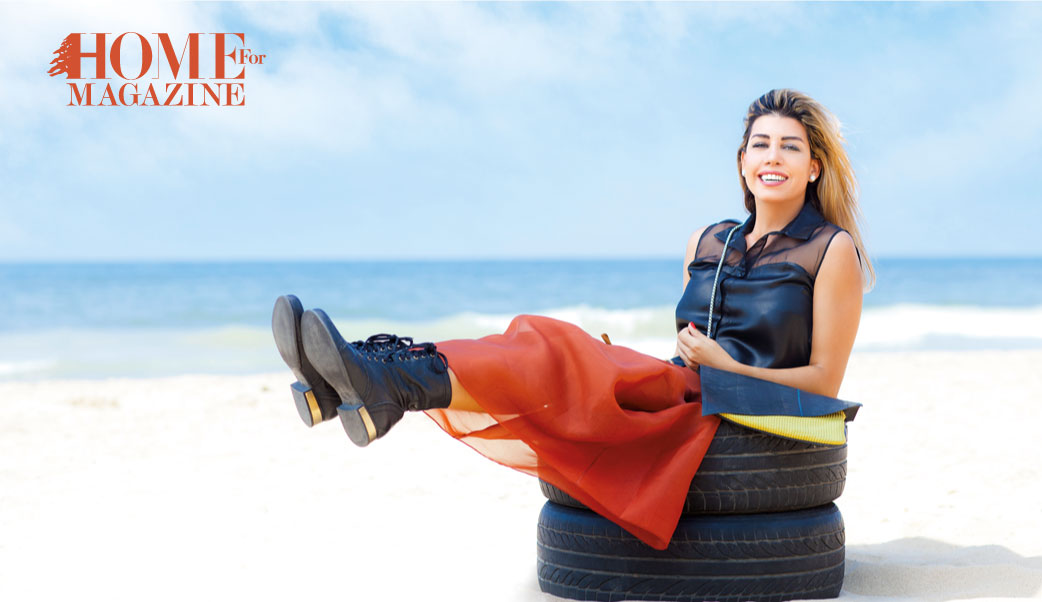
In the hopes that people will begin to reduce, reuse and recycle in their own creative ways, Vea posts extensive tips weekly on its social media pages. Yacoubian, El-Zoghbi and Sara, the very helpful and eager sales clerk, emphasize the notion of reducing before it’s even possible to reuse or recycle. Every tip is a message, a means to spread the concept, not only of the Vea family, but of acknowledging the whole upcycling world at our fingertips. Encouraging people to reuse old unwanted items comes in myriad of forms, that might include bending old silverware utensils into wall hooks, recycling old newspapers into baskets, making soap dispensers out of old jars, or old CDs into decorative coasters. The concept is simple: small things make a big difference.

Working with others:
In addition to the core principle of using old tires and wheels, Vea takes it one step further by conversing and cooperating with the various upcycling initiatives around Lebanon. Products from the Pipe Brothers, a company that transforms old metal water pipes into distinctive lamps and candlestick holders, are frequently found in the Vea boutique. The Green Glass Recycling Initiative is also in dialogue with Vea, and contributes elegant drinking glasses, jars and ashtrays, developed from upcycled glass bottles.
HOMEland THEMES
Coming Soon
HOMEland Events & Collaborations
Coming Soon
 Signature Boutique