Today fine wine is enjoyed by a wide variety of people of all age ranges and social groups. It is clear that consumers now are more intellectually and passionately engaged with wine.
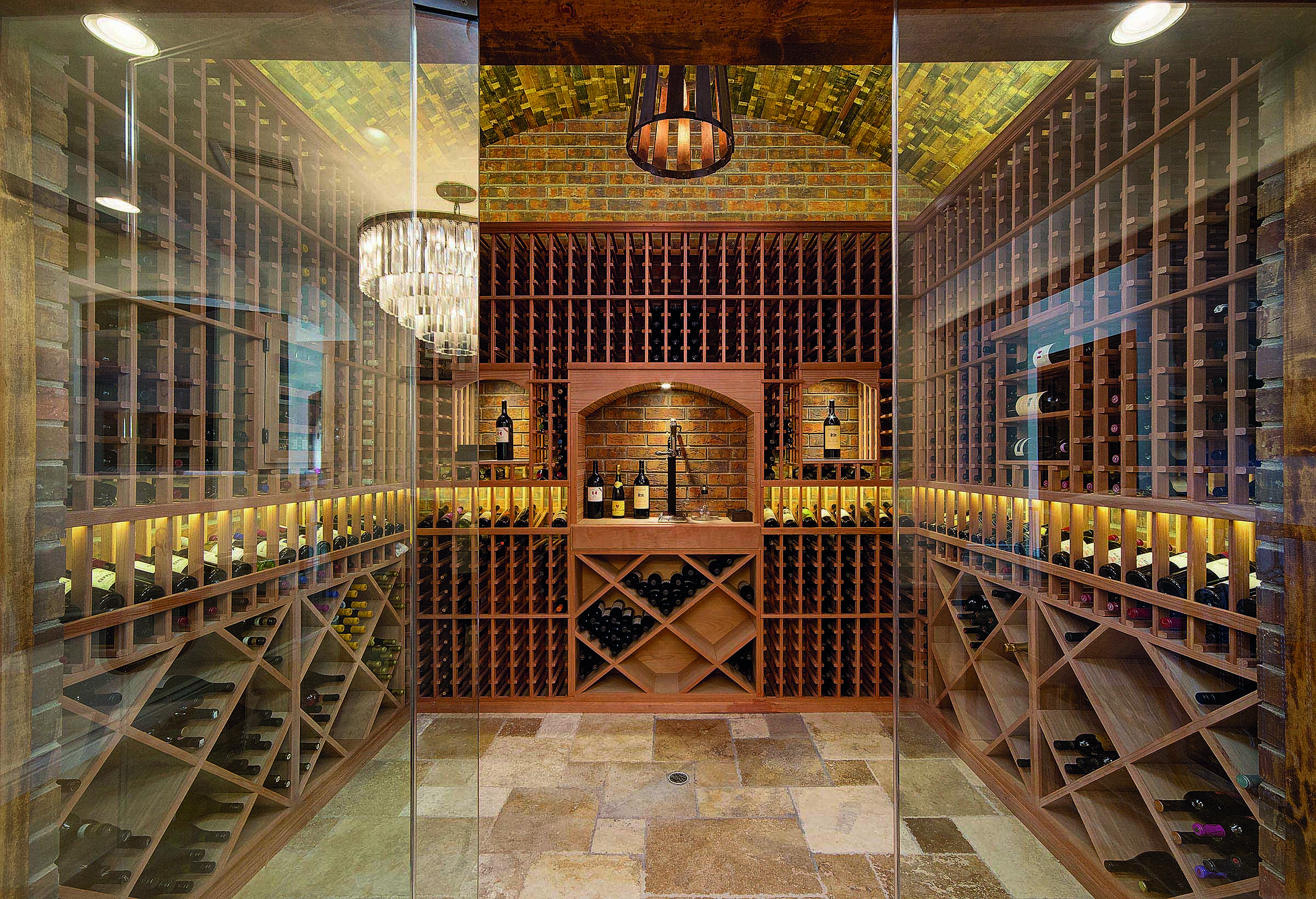
Household wine cellars are becoming increasingly popular, in Lebanon and beyond, providing perfect storage conditions and also an elegant, functional entertainment area. With your own wine cellar you can closely follow your wines’ maturation process, while fully appreciating the enjoyment of comparing different wines and vintages over many years.
The wine cellar has become an important asset to the modern home and has been transformed from a damp and moldy underground cave, to a unique and sophisticated room dedicated to your hobby, which doubles up as living and breathing room for family gatherings or dinner parties.
The appeal of keeping wine at home
Most wine enthusiasts take pleasure in enjoying wines at different stages of their evolution. However, only with direct access to a place where you can store and age wines yourself will you be able to follow this development process closely. A home cellar affords the opportunity to enjoy bottles if and when you please, and to easily compare your own vintages.
When embarking on a cellar project there are a number of things that need to be considered.
Space and location
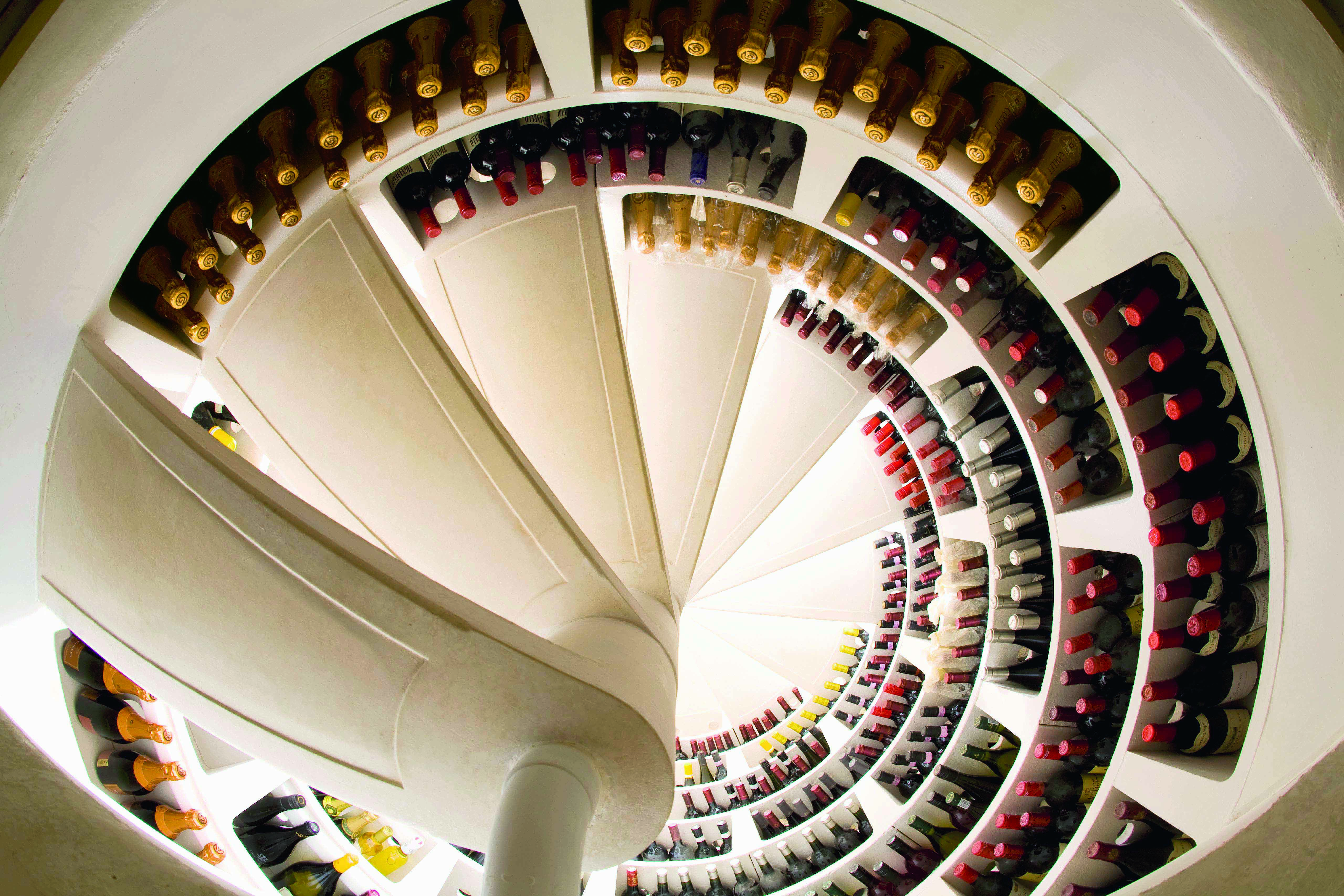
Carefully considering the amount of space available is key, especially if you live in a city. By reorganizing the current layout of your home or expanding underground and creating a basement, as many Lebanese are now doing, space should not present an issue. Building a cellar can also add value to your property, a comforting thought when investing in large structural changes.
Size and capacity
To work out how many bottles you need, you should consider how much could potentially be consumed at household dinners or parties in an average year. Larger bottles (e.g. a magnum or jeroboam) are not only good for their extended lifespans and improved maturation of the wine, but also for their spectacular size and suitability for grand occasions. You should also consider keeping the wine unopened, in its original wooden case, if you are choosing it as an investment.

Lifespan and storage
It is astonishing how much wine is left to mature past its point of ideal drinkability and enters into a steady decline, losing not only its flavor but also its value.
A well-organized cellar should contain wines which are maturing and wines in their optimal drinking window, but none that are in decline.
To ensure this balance, it is advised that your cellar undergoes a periodic appraisal, either by yourself or an expert. Surplus stock can then be sold off, making room for new purchases.
To offer a continued spread of vintages to drink during their most favorable maturation periods, the ideal cellar might have 10 vintages maturing and another 10 vintages which have already entered their optimal drinking window.
Initially, it is recommended to only fill the cellar to about 60 percent capacity, leaving space for future purchases and enabling you to enjoy the ongoing pleasure of tasting, buying, maturing and enjoying a variety of great wines and vintages.
You should not move your wine bottles after cellaring them, and you should not remove bottles to reach other bottles. Bottles of wine should always be horizontally stored as the wine should be in direct contact with the cork. To protect the bottle label from humidity, it should be covered with cling film.
Temperature conditions
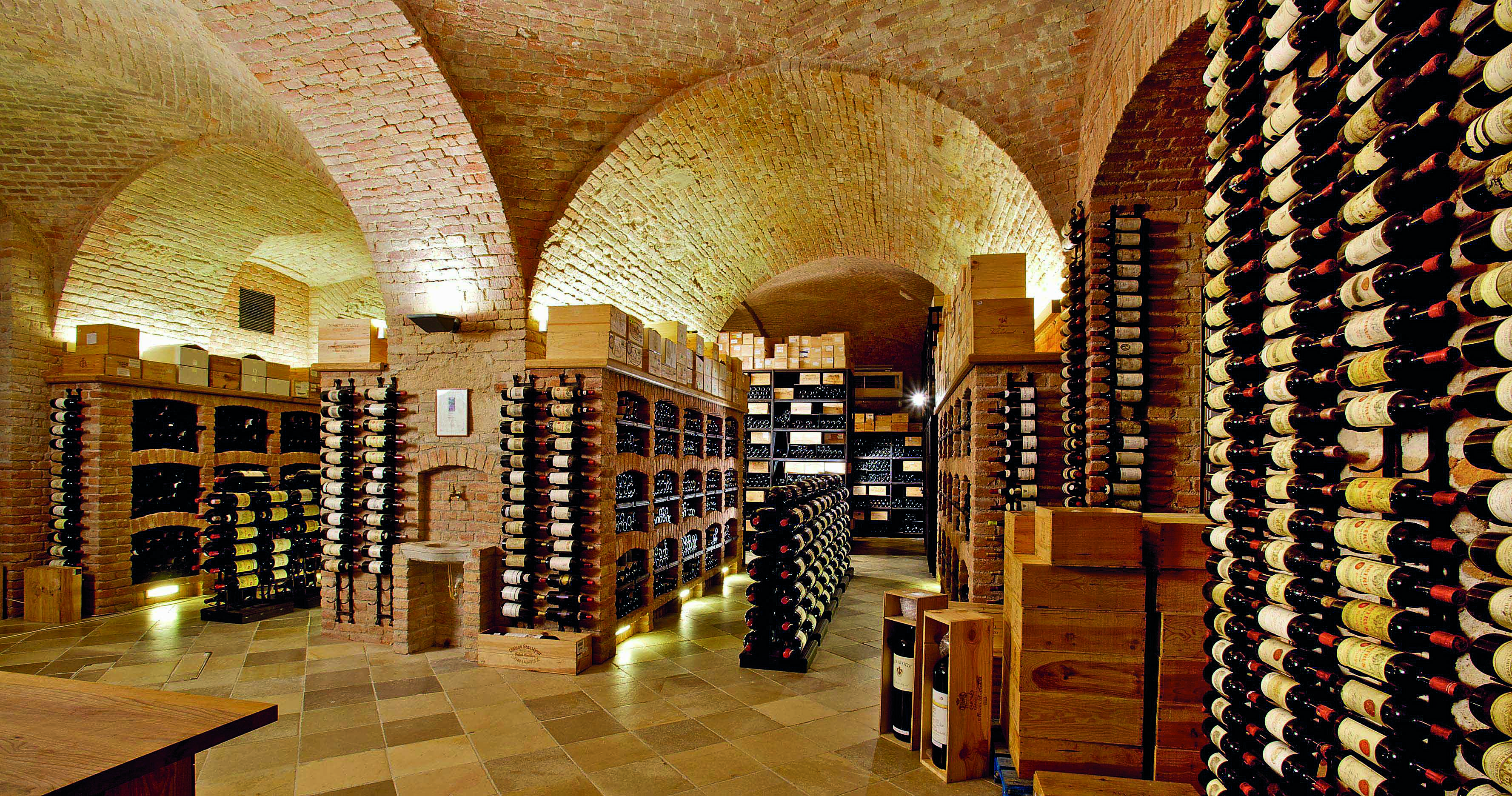
Wine is sensitive to its storage environment and preferably needs to be kept at around 12°C with humidity of 75 percent to 85 percent. It is important to ensure the corks remain moist. If they dry out, the wines will oxidize, ruining their flavor and longevity. A technical knowledge and proper humidity controlling equipment is recommended.
Your collection and wine dealer
At the outset, your collection will no doubt reflect your firm favorites and the style of wines you enjoy the most. However, through an ongoing relationship with your wine dealer, you should be take on new suggestions to broaden your horizons and make interesting investments. In this way your wine cellar will soon be made up of a varied assortment of wines. Your wine merchant should not only offer choice and access to the world’s finest wines, but through understanding your personal requirements, offer services that are tailored to your needs.
Specifications of a good wine cellar
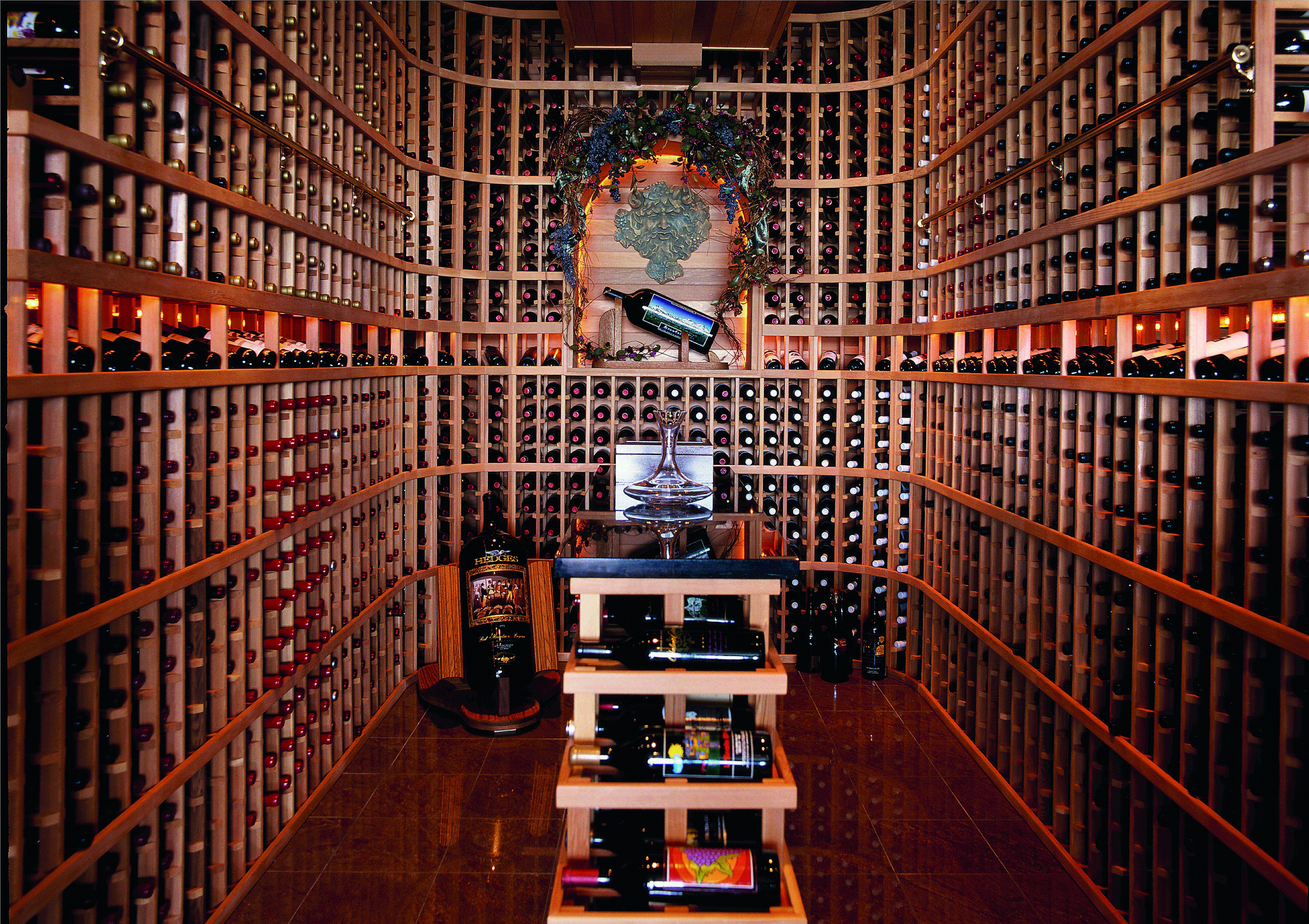
The old dreamy and charming cave isn’t necessarily the perfect place for cellaring your wine. It doesn’t have to be vaulted or carved out of the rock. In order to have the best cellaring you merely need to adhere to the following rules:
- Temperature should be constantly between 8°C and 18°C. The ideal temperature is 10°C-12°C
- Oriented north
- Ventilated by a low opening in the north end of the cellar and a high opening in the southern end
- Humidity should be between 75 percent and 85 percent
- It should be dark, without direct outdoor light
- It should be clean with no bad smells
- It should be in a calm area away from vibrations caused by roads or generators
- Have a sandy or gravel floor
- Use walls made of stone, limestone or bricks
- Keep thermal isolation to maintain a constant temperature
- Lights inside the cellar should be between 25W and 40W. Never use halogen or fluorescent lamps. LED lights are very good but the intensity should remain low.
Recommendations:
Dom Pérignon’s 2002 vintage for drinking now, while also cellaring the 2005 vintage for the future. If struggling to source the incredibly rare 1995 Le Chambertin from Armand Rousseau, then cellaring a few cases of his magnificent 2010/12 will pay dividends in years to come as the wine develops, but also increases in value.
List of existing wine and champagne bottles:
Half bottle (0.375 liters) 0.5×0.75
Standard (0.75 liters) 1×0.75
Magnum (1.5 liters) 2×0.75
Double magnum (mathusalem) (3 liters) 4×0.75
Jeroboam (4.5 liters) 6×0.75
Imperiale (6 liters) 8×0.75
Salmanazar (9 liters) 12×0.75
Balthazar (12 liters) 16×0.75
Nebuchadnezzar (15 liters) 20×0.75
Melchior (18 liters) 24×0.75
Melchizedek (30 liters) 40×0.75

Fun facts about wine and cellars
The biggest wine cellar in the world is in Moldova, called Milestii Mici, containing over 2 million bottles of wine. Bern’s Steakhouse in Tampa, Florida, USA is where you’ll find the second biggest wine collection in the world. It was founded in 1956 and is operated by David Laxer, who is the son of the original owner. The staff even recently discovered a gem among the stacks of wine: a $30,000 bottle of 1947 Chateau Latour, one of the most expensive wines in the world.
Tawfiq Khoury’s (a Palestinian living in San Diego, USA) collection was auctioned off through Christie’s auction house as he was doing some spring cleaning, but before the sales he was holding 65,000 bottles of wine. Christie’s estimated that the wines were worth $2.5 million, although an exact figure wasn’t revealed. For a time, he had one of the largest private collections in the United States, which were useful in his younger years when he and his wife used to throw a lot of dinner parties. Since he traveled more with his wife, he decided to sell the other wines.
The world champion of recognizing wine by smell was crowned in 2003. Richard Juhlin, from Sweden, was able to recognize 43 wines out of 50. For comparison – second place was only able to recognize four of them.
10,000 varieties of wine grapes exist worldwide. The world’s largest cork tree is the Whistler Tree, located in the Alentejo region of Portugal. The tree is over 212 years old and has been producing the world’s finest corks since 1820. The Whistler Tree is harvested every nine years and is currently producing enough cork for 100,000 wine bottles. The tree received its name from the many songbirds that live in its massive canopy. Wine contains no fat and zero cholesterol. Almost guilt free!
You would have to drink 20 glasses of apple juice to receive the same anti-oxidant benefits of one glass of red wine. If you prefer orange juice, you’ll need to down seven glasses.
The Titanic wreckage contains what is considered one of oldest known wine cellars. Even though the Titanic sits at around 12,000 to 13,000 feet below the ocean’s surface, most of the wine bottles in the cellar were found to be intact.
The 5 most expensive bottles ever sold are:
1. Screaming Eagle Cabernet 1992 – $500,000 (for charity)
2. Jeroboam of Château Mouton-Rothschild, 1945 – $310,700
3. Château Margaux, 1787 – $225,000
4. Château Lafite, 1787 – $156,450
5. Château d’Yquem 1787 – $56,588
HOMEland THEMES
Coming Soon
HOMEland Events & Collaborations
Coming Soon
 Signature Boutique