Photos by: Maryam Ghaddar
Walking through the red painted doorway of Halabi Bookshop, located near Horsh Beirut, we’re projected back in time. The owner, Abdallah Halabi, offers complementary tea and candy from an intricately carved wooden box. His friendly demeanor and welcoming grin suggest it’s a one-of-a-kind bookshop with a touch of nostalgia and a lot of character.
From the exterior, newspapers, magazines, comic books, archives and postcards cascade in color over the otherwise dull street corner. Images of 1950s Lebanese icons, French and Arabic Harlequin romance novels, encyclopedias, out-of-print editions of books and more modern international bestsellers are displayed in the windows.
“You can’t buy happiness, but you can buy books, and that’s kind of the same thing.” This anonymous quote is the cornerstone of Halabi’s ambition.
Three generations of Halabis
The shop itself has undergone many transformations in its 60 years. Abdallah’s father, Hussein Halabi, opened it as a grocery store back in 1958. In those days, newspapers, periodicals, magazines and some short stories were sold. Abdallah, who worked in the shop after school, took over from his father in the 1990s. Abdallah collected books, stamps, and antiques; this grew from a fondness to an obsession fueled by his travels. His daughter, Lana, said he was so inspired by the book sector that a dream was born.
“Our collection steadily grew, as did his passion. Even at our house, my father was collecting books. The grocery store dwindled to just a small convenience store with some used books for sale. It stayed this way for about 15 years. Baba just sold newspapers and magazines from outside. By 2010, it was fully loaded, stacks and stacks of books; we couldn’t even find our way inside anymore, except for a narrow pathway.”
In 2014, Lana set out to connect with people interested in books and reading in Lebanon. She began participating in markets, street festivals and bazaars, anything that dealt with selling secondhand books, including the International Book Fair in Beirut.
“I left my job in fashion retail to pursue this very personal endeavor, something I felt was worth the major life change,” Lana continued. “It took us eight months to renovate the shop. We cleared away 15,000 books and made it more spacious. My brother Karim also quit his job as a visual merchandising manager. It was a way for us to help my father fulfill his dream of having a bookshop, to show him that the books he’d collected all his life would really have some value to others. It was our gift to him.”
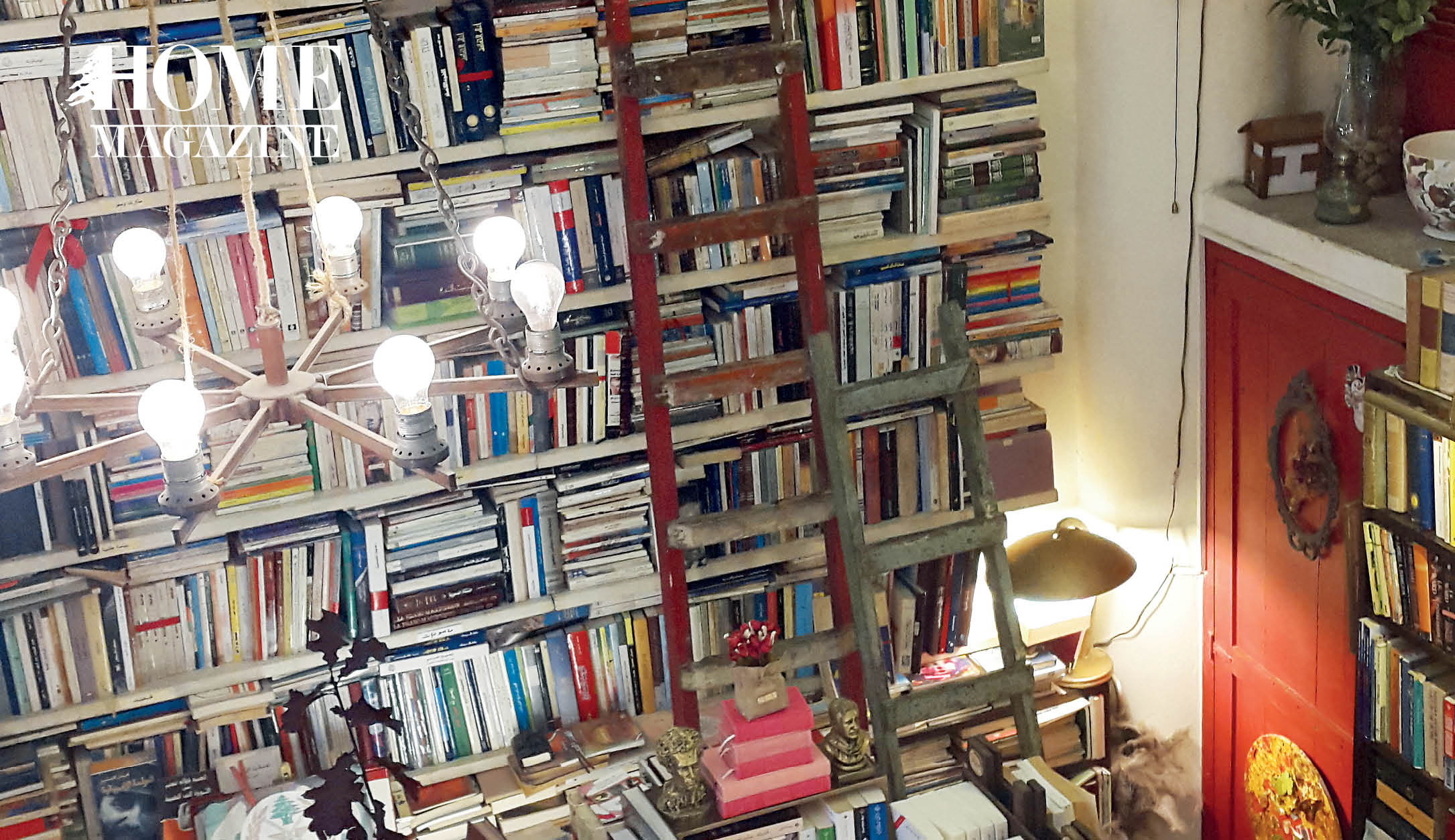
The renovation was a major project for the Halabi family. The bookshop stood out like a light at the end of a very cluttered tunnel. They repainted the shop and revamped the loft upstairs so customers could snuggle up with a good book and fluffy pillows. Red and mint green ladders, a chandelier, shutters and picture frames transmit memories of Halabi’s former profile. Glass jars of candy and spices were preserved to maintain the old-time feel of the shop. Such items seem to have leapt straight from the pages of a fairy tale.
“Although it’s not a revolutionary idea, neighborhood bookstores like this are a foreign concept in Lebanon,” Lana noted. “We kept the vintage feel, the spirit of the old grocery store alive. In December 2016, we announced that we were open. The before and after pictures are astounding.”
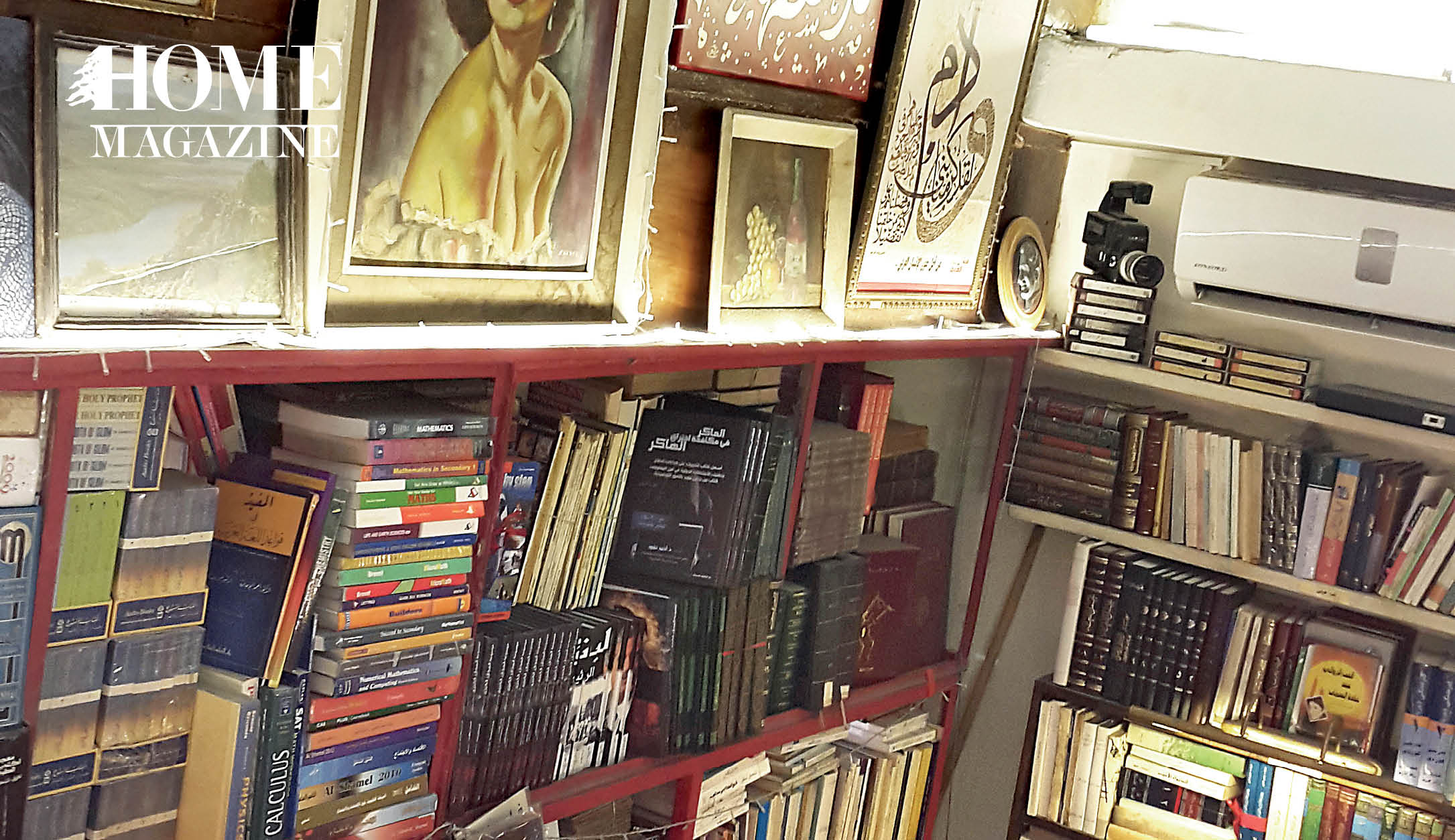
There’s a personal aura about Halabi. Colorful spines of thousands of books line the walls in sophisticated chaos. The used books are mainly French and Arabic literature and poetry, but there is also a tangible balance with English books. The diversity in subjects is intoxicating, whether it’s classics, science fiction, graphic novels, young adult fantasy, history, children’s literature or political nonfiction. On the surface, this bookshop may seem effortlessly elegant and unique, but it did encounter its fair share of challenges and setbacks.
 Saturday afternoons are children’s read-aloud sessions, with many overarching and often sensitive themes, such as divorce, the garbage crisis and social activism. They’ve also read books that raise awareness about physical and mental disabilities.
“Several naysayers called me crazy for leaving my job to do this,” Lana said. “I proved everyone wrong.
I had a vision for Lebanon. For me, it’s half commercial, half cultural. Most would consider a certain margin of profit if you sell books. Halabi Bookshop is different. A lot of our activities aren’t necessarily profitable, but we do them because I believe they’re part of what a bookshop should really be offering to the neighborhood and the country.”
“Later in their lives, I hope children will pass by and always remember that they used to come and listen to stories here.”
A reading culture
The Halabis have always been a reading family. Their connection with and love of books has always driven them. They want to enrich the love of reading in everyone and sustain cultural spaces for the youth. This essence has catapulted Halabi into the spotlight.
“We have the feel of a personal HOME library, with lots o twinkly lights and distinct Lebanese taste,” Lana said enthusiastically.
“People see faces of old Beirut, old Lebanon and feel its history.”
Their activities began in early 2017.
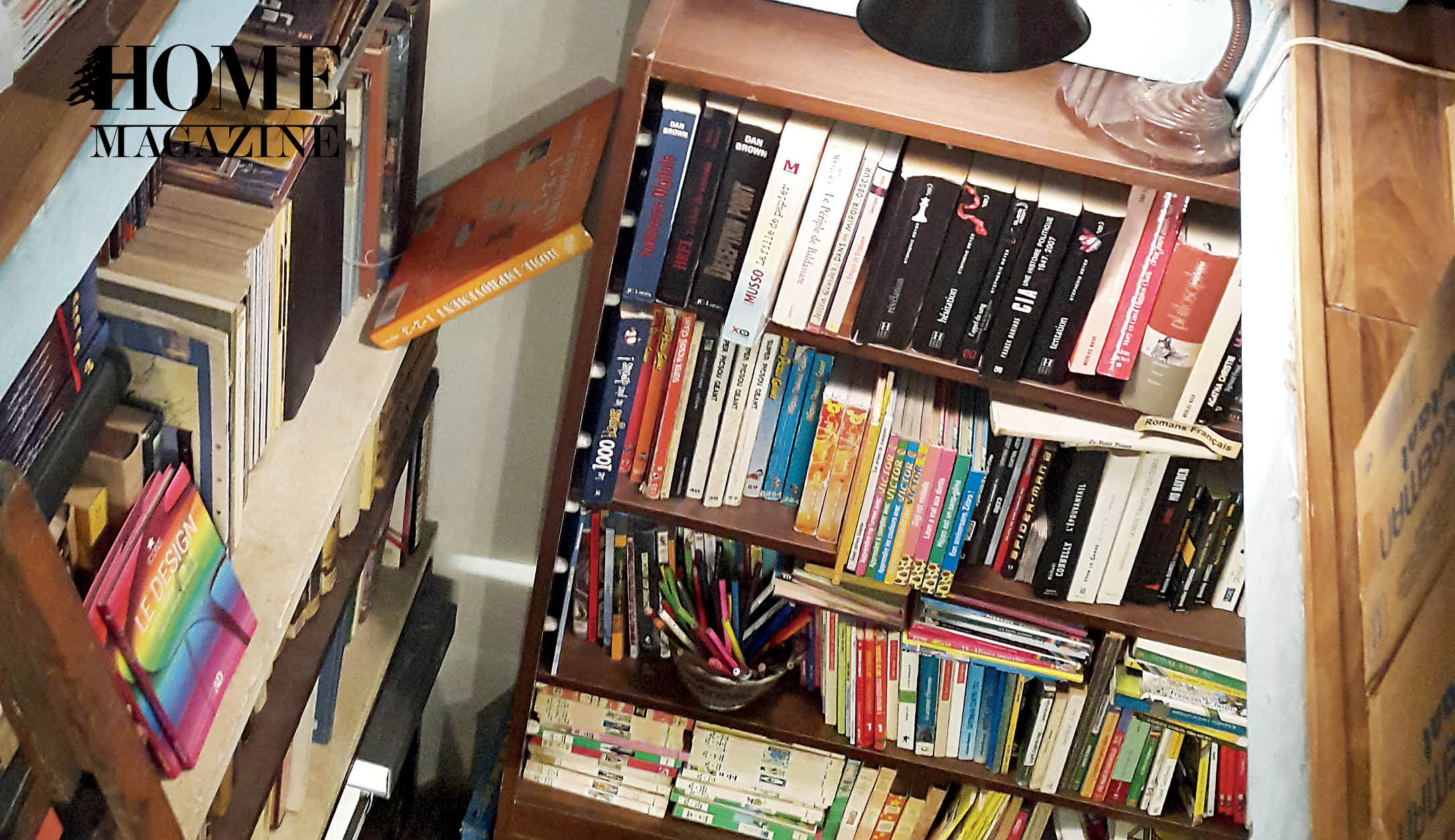
“We aim to instill a love of reading in children’s hearts,” Lana explained. “They’re always excited for the next book and parents love bringing them. Later in their lives, I hope children will pass by and always remember that they used to come and listen to stories here. That’s a very powerful notion.”
Halabi also has its own book club. Readers are invited through social media to read the book of the month and gather to discuss it on a specified date, depending on where they live.
“We’ve read The Forty Rules of Love by Elif Shafak, as well as To Kill a Mockingbird by Harper Lee, which highlights discrimination. The group is always diverse, well-rounded and open-minded. It’s nice because, through our children’s readings and our book club, many people from different backgrounds across Lebanon come together to gain different ideas and perspectives about important issues.”
“We’d love to have screenings of movies based on books.”
For Valentine’s Day, Halabi encouraged “all the single ladies and lads” to go on a blind date with a book. It’s a guessing game! A surprise element engages readers. The idea is to dissuade people from judging a book by its cover, a trap that many fall into. The books were wrapped in simple brown paper with a few clues about the genre, plot and themes of the mystery book. People who aren’t familiar with certain authors can explore, take a risk and read something they never considered before.
Halabi Bookshop celebrated their first two anniversaries with an outdoor tea party, something Lana hinted is bound to become an annual tradition. Free books were displayed on shelves for visitors to peruse and take, something very few places in Lebanon do. They created a neighborly atmosphere and made people feel at HOME in their bookshop. Arabic sweets were laid out and people reveled in the festivities,tasting local tea brands. Traditional Lebanese music played merrily in the background.
“The tea party was like a holiday,” Lana recalled. “No one knew each other, but they came nonetheless and interacted all day. Halabi’s future is bright.
“My main goal is to bring people together through books.”
“We’d love to one day have a coffee corner and some baked goods to continue to inspire that cozy feeling or have screenings of movies based on books. One thing at a time.
“My main goal is to bring people together through books and that’s just what we’ve done.”
Halabi’s exceptional take on the reading culture, paired with its vision for the future, makes for a bookshop experience that’s unlike any other in Lebanon. As Ernest Hemingway once said, “there is no friend as loyal as a book.”
“There is no friend as loyal as a book.”
For more info: https://www.facebook.com/HalabiBookshop/

HOMEland
Coming Soon
HOMEland Events & Collaborations
Coming Soon
 Signature Boutique