Appreciating the Art of Caricature Drawing with Hamed Kabbara
A trained architect who found his true calling mid-war, sketching a colleague's face in a basement, Hamed Kabbara now draws the world.

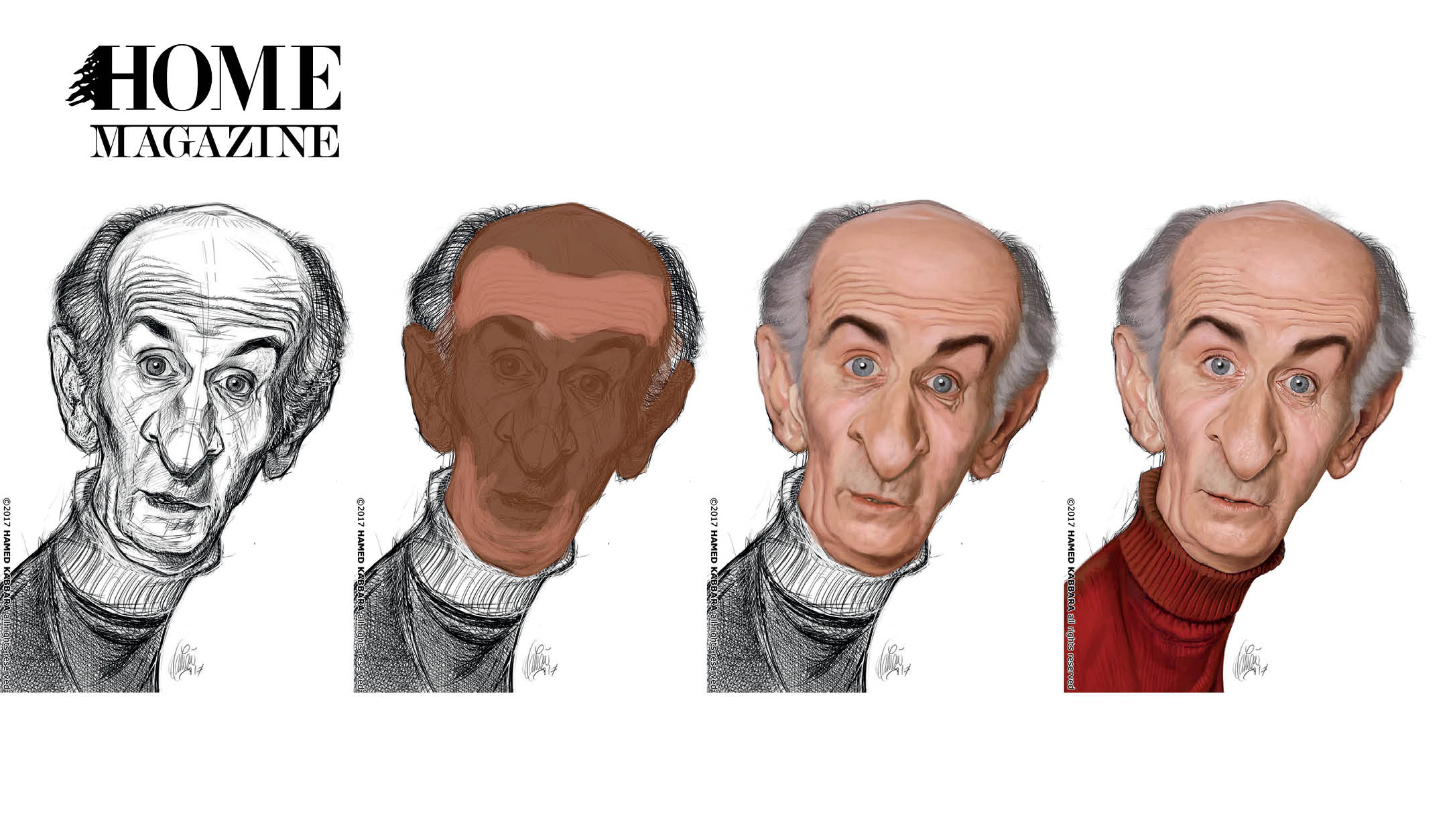
Illustrations by: Hamed Kabbara
An architect by training, Hamed Kabbara discovers another joy as a caricaturist.
His maternal uncle Ahmad El Dahab was a calligraphist and his paternal uncle Burhan Kabbara is also a calligraphist, known for his passion for Kufic calligraphy. Whether art is inborn or acquired, Hamed Kabbara found himself drawing sketches at the age of 4.
Born in 1981 in Abu Samra, Tripoli, Kabbara was a quiet child. He spent hours behind his tiny desk in his room drawing sketches of horses and cartoon characters, while children his age played soccer in the streets. He was particularly attracted and inspired by Grendizer, the UFO Robot, and Jongar, another super robot. Disney characters were also an inspiration, and Kabbara dreamed of joining Walt Disney’s creative team.
As a child, Kabbara participated in various school drawing competitions, and at the age of 14, he won his first award. Kabbara took part in a competition organized by the North Cultural Center. The theme was Palestine and, of course, all his emotions toward the Holy Land were poured into his drawing, securing his first prize.
The school years came to an end, and the young artist decided to enroll in the Lebanese University, where he joined the School of Fine Arts. He chose to major in architecture, since he strongly believed that it was the sole major that could combine both his professional and artistic careers. But during these six years of study, 1998 – 2004, Kabbara completely neglected his passion for drawing and focused only on architecture. He felt the architectural designs and projects were more than enough to fulfill his craving to sketch.
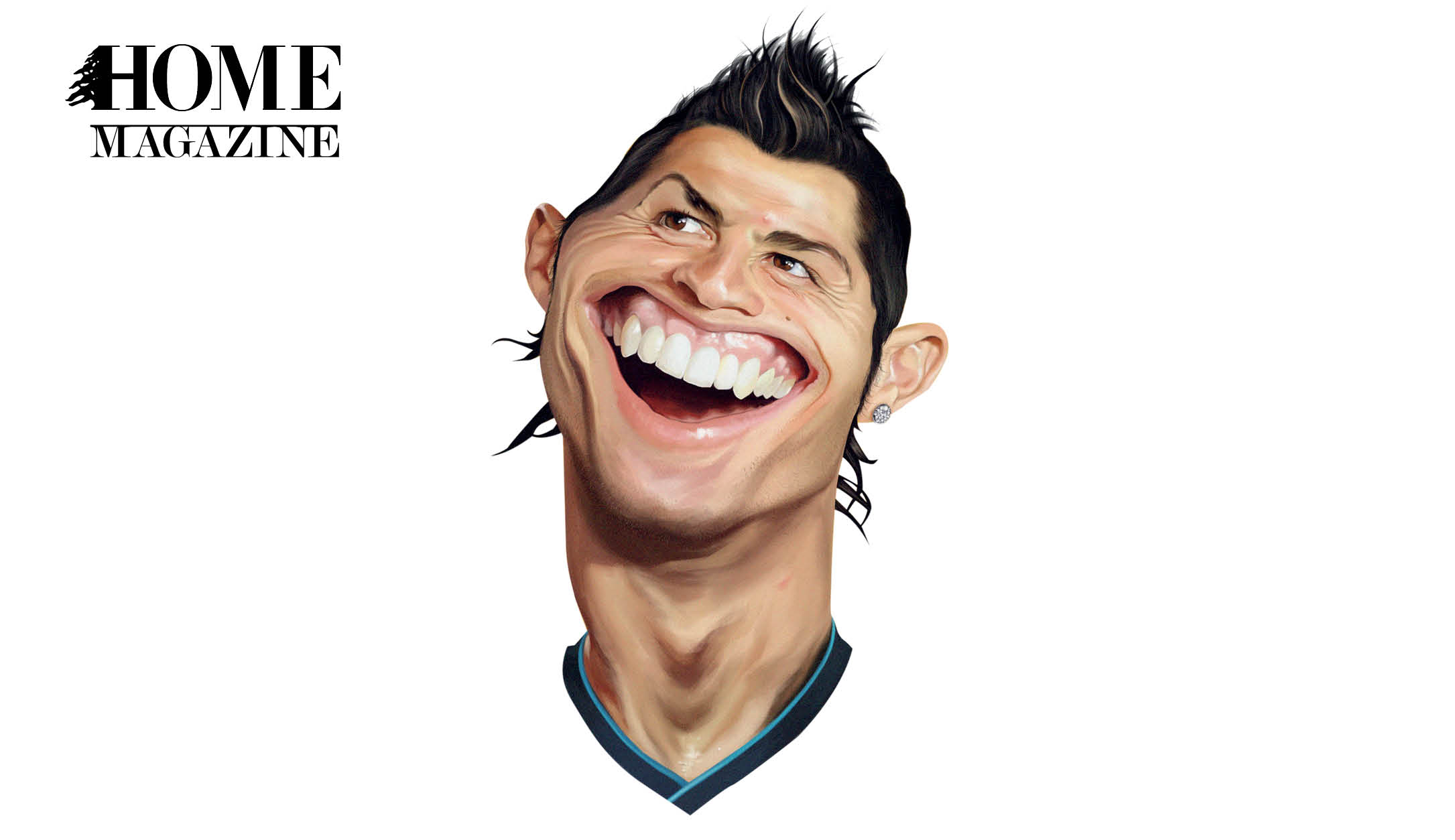
Kabbara’s professional life as an architect started in 2004. He worked in different reputed institutions.
Upon his graduation in 2004, he was offered a job in a company in Jnah, Beirut. In July 2006, the Israeli- Hezbollah war started. Israel’s heavy shelling forced the company to move its quarters to a basement located in Aazarieh. Kabbara and a colleague found themselves in a 2-meter-by-2- meter room with plenty of free time on their hands.
One day, his colleague asked him to draw his caricature, but Kabbara hesitated. “I have never attempted to sketch people before,” he said.
“I will be your first one,” his colleague encouraged.
After years of staying away from his sketches and his talent, Kabbara grabbed his pen and accepted the challenge. The outcome was so lifelike that his friend proudly hung the sketch on their tiny office’s wall. That wall and that caricature became the company’s center of attraction during the difficult times the people and the country were experiencing. Whenever one of Kabbara’s colleagues walked into his tiny office, they immediately asked Kabbara for their sketch. One caricature after another and the basement’s walls were covered with dozens of sketches. Thus, Kabbara’s interest in sketching people was awakened, and he decided to develop his skills.
The first thing he thought he needed was exposure. “I wanted exposure, and what is a better window to the world than Facebook!”
Kabbara started his personal Facebook page in 2007, where he posted his sketches. He followed and friended international professional caricaturists and observed them closely to learn about their techniques, such as the American caricaturist Jason Seiler, the Belgian Jan Op De Beeck and the French Thierry Coquelet.
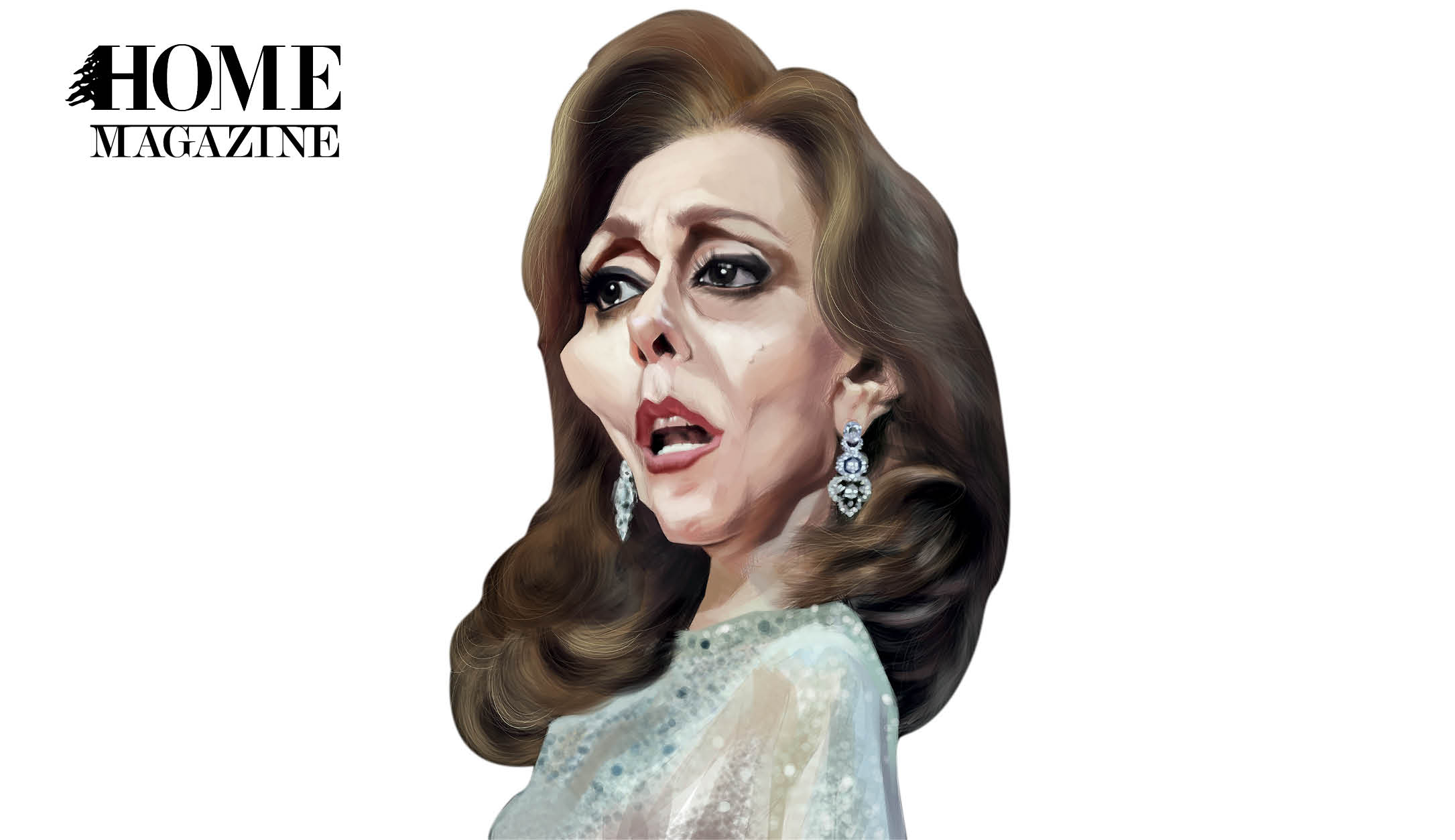
Social media helped Kabbara connect with people and artists that shared his interest and passion. He became known better in Egypt than in his own country, Lebanon. He joined the Egyptian caricature club, where weekly themes were suggested, and caricaturists sketched a certain celebrity and competed on a weekly basis. Kabbara was always voted among the top three.
An Egyptian satirical magazine discovered Kabbara’s talent and asked him to draw its sketches while they added the script. Unfortunately, the magazine had to close its doors, for such kind of art, according to Kabbara, is not very appreciated or encouraged in the Middle East.
Kabbara also joined a European group by the name of Caricaturama, but the competition was fierce, with almost 200 caricaturists from all over the world competing. Twice Kabbara was selected among the top three winners. He specialized in drawing prominent figures such as politicians, renown artists and celebrities, because he noticed that people interacted with the “famous.” They left comments and likes because they recognized the sketched person, consequently interacting with the artist behind the caricature.
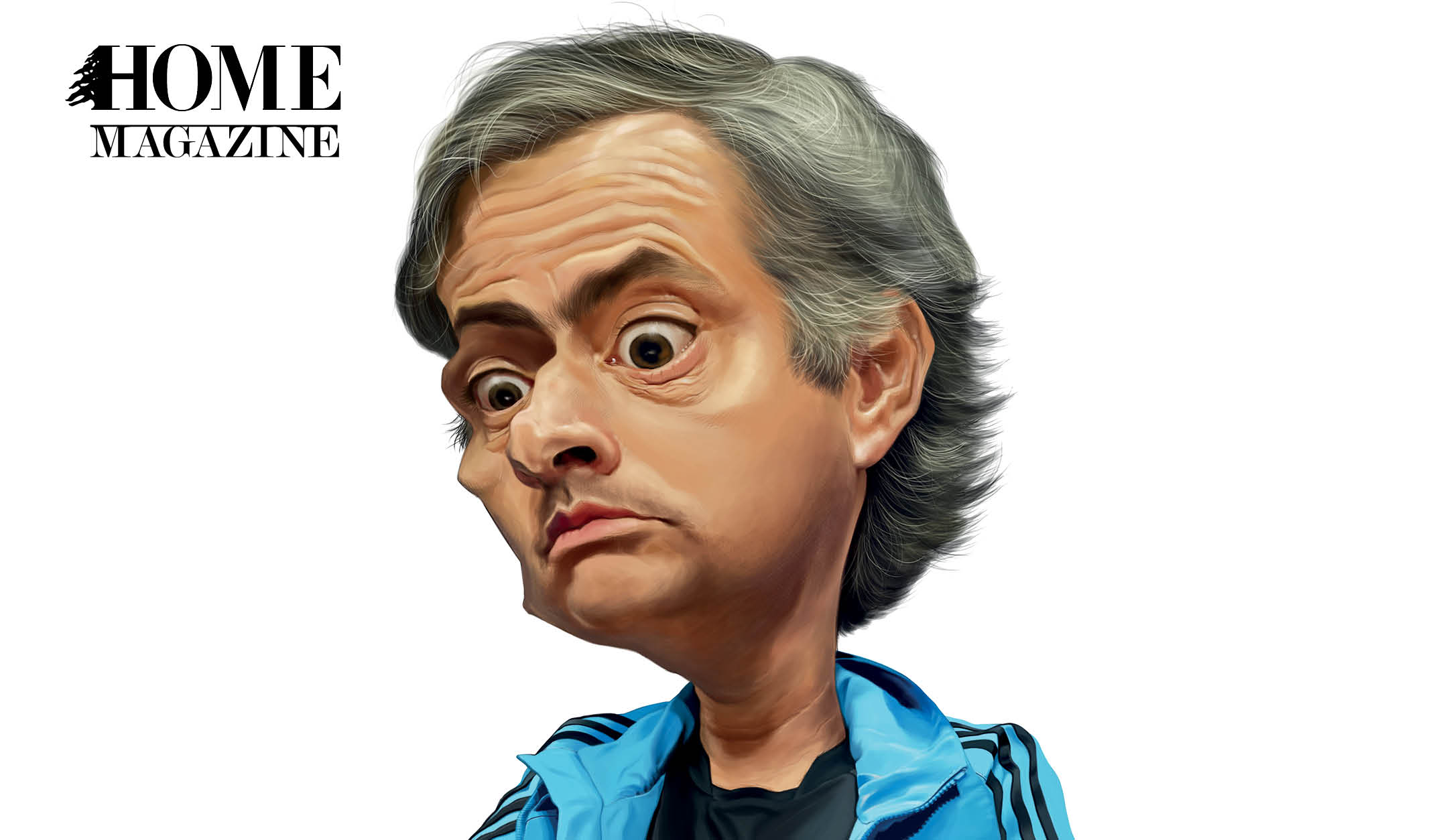
Once Kabbara lays his eyes on people’s faces, he is immediately attracted to their special features. He is careful when it comes to highlighting a person’s special traits, as he is totally against distortion.
“Distorting a human’s features will only cause harm, and art is about beauty even in caricatures, and, frankly, I don’t like to hurt people’s feelings,” he said. He believes that people fear this kind of art due to their self-image. “I guess this is one of the reasons why people keep a certain distance from caricature drawing.”
“Have you ever thought of quitting your job as an architect and fully committing to your art?” I asked.
“This idea is always on my mind. Actually, now I am a freelance architect and I spend more than six to eight hours per day on my sketches.”
Then Kabbara recalled his years as an architect. “I have to admit that being an architect satisfied my desire as an artist for quite a long time, especially when it came to human encounters with people.”
Kabbara took me back to the time when he worked for the United Nations Relief and Works Agency and helped with rebuilding Naher El Bared, a Palestinian refugee camp in northern Lebanon. He remembered people’s stories on loss, pain of homelessness and displacement.
This experience helped Kabbara appreciate and respect people’s feelings, he said.
In 2015, he travelled to Saudi Arabia, but he couldn’t bare staying away from his country and specifically from Tripoli. In 2017, he was back in Lebanon.
“The last 10 years of my life have been the most important ones. During those years, I developed my skills and my tools. I moved from using a pen and a paper to using a digital screen which made sketching easier.”
Kabbara dreams of a wider popularity. He started posting videos of tutorials on digital sketching on Instagram to show the difference between digital sketching and photoshop. He aims to reach a wider audience because he believes that the art of caricature drawing deserves to be appreciated and supported.
 Signature Boutique



Speaking Truth to Power: Pierre Sadek Foundation